


Heat styling can cause irreversible damage to hair extensions if not managed carefully. Extensions lack the natural oils that protect your real hair, making them more vulnerable to high temperatures. If you notice signs like a burnt smell, dry texture, increased shedding, constant frizz, or tangling, it’s time to reassess your styling habits.
Key Takeaways:
- Burnt Smell: Indicates protein breakdown or cuticle damage.
- Dry, Straw-Like Texture: Sign of lost moisture that can't be restored.
- Shedding & Breakage: Weakens the bonds holding extensions together.
- Frizz & Dullness: Persistent dryness signals lasting damage.
- Matting & Tangling: Rough cuticles lead to knots, especially at seams.
Prevention Tips:
- Use heat protectants and lightweight oils like argan or jojoba.
- Keep styling tools below 177°C to avoid heat damage.
- Limit heat styling to 2–3 times per week and explore heatless alternatives.
- Brush gently with specialised tools and avoid sleeping with wet hair.
If your extensions feel lifeless, stiff, or show permanent texture changes, they may need replacing. Opt for high-quality, heat-resistant extensions to avoid rapid wear and tear.
Taking early action and adjusting your routine can save your extensions and keep them looking their best.
How Heat Affects Hair Extensions
Heat Breaks Down Extension Fibres
Excessive heat can wreak havoc on hair extensions by breaking down the delicate keratin bonds that give them flexibility. Once these bonds are compromised, the strands become stiff and prone to snapping. High temperatures don’t just cause minor damage - they leave the entire strand brittle and vulnerable. Unfortunately, this kind of damage is irreversible. No amount of conditioner or treatment can restore the fibres once heat has caused structural breakdown.
Extensions Lack Natural Protection
One major difference between natural hair and extensions is that extensions don’t benefit from the natural protection your scalp provides. Unlike natural hair, extensions are essentially "dead hair." They aren’t connected to the scalp and therefore miss out on sebum, the natural oil that keeps living hair moisturised and shielded. As Hair Wonderland explains:
"Hair extensions are dead hair and do not receive nutrients from your scalp." – Hair Wonderland
Without this natural oil barrier, every time you heat-style your extensions, the heat directly impacts the hair shaft. While natural hair has the advantage of ongoing oil production and a self-repair mechanism, extensions don’t have these safeguards. Any moisture lost during heat styling isn’t naturally replenished, meaning even minor damage to the cuticle becomes permanent.
sbb-itb-dcde78e
Avoiding Heat Damage While Creating Your Beach Waves
5 Signs Your Extensions Need a Heat Break
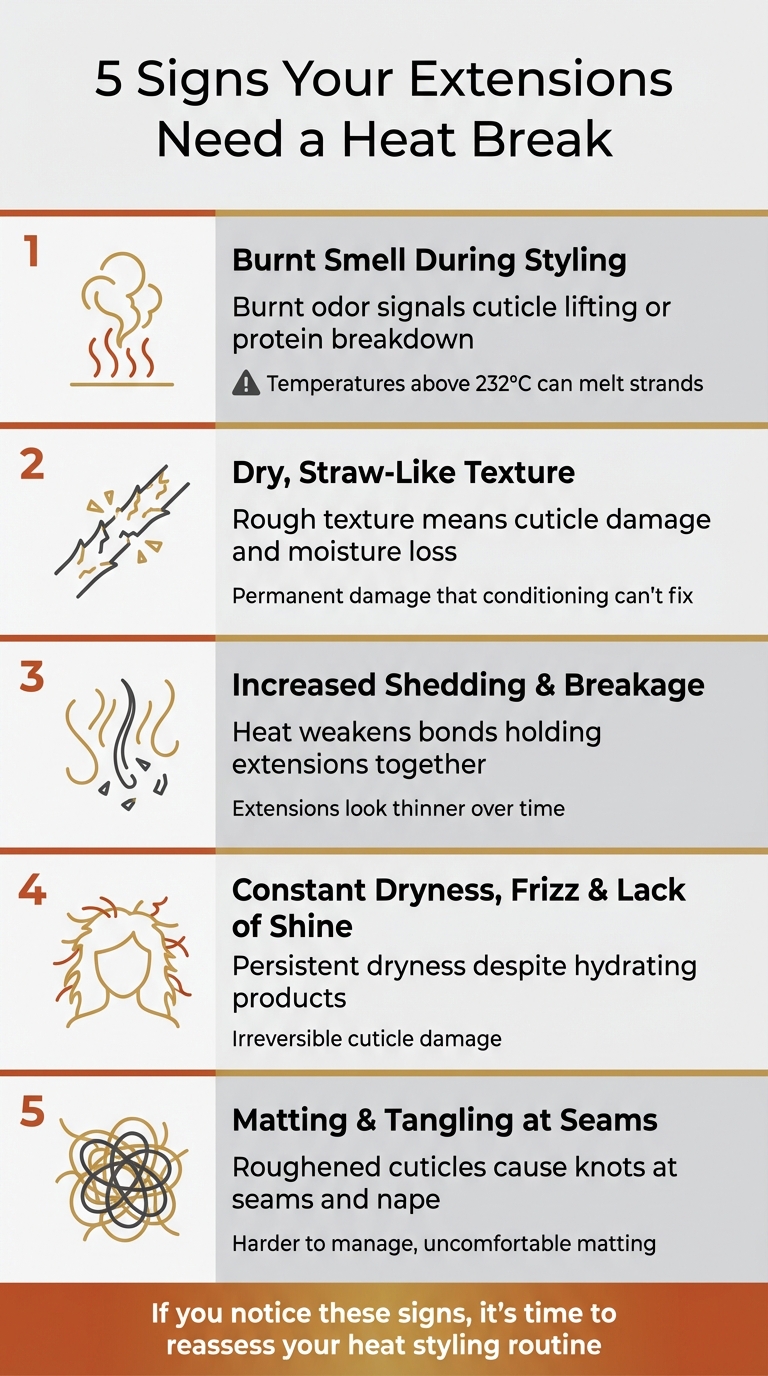
5 Warning Signs Your Hair Extensions Need a Break from Heat Styling
Burnt Smell During Styling
Smelling something burnt while styling your extensions? That’s a red flag. This odour signals that the outer cuticle layer of the hair is lifting or, worse, the internal protein structure is breaking down. If you’re styling wet extensions, the situation worsens due to "fibre shock", which can lead to immediate breakage. Remember, any temperature above 232°C (451°F) can actually melt the strands.
Dry, Straw-Like Texture
Another telltale sign is when your extensions start to feel dry and brittle. This rough, straw-like texture means the cuticle has suffered heat damage, losing its ability to hold moisture. Unfortunately, this kind of damage is often permanent and won’t be fixed by conditioning treatments.
Increased Shedding and Breakage
If you’re noticing more shedding or breakage than usual, heat damage might be the culprit. Overexposure to high temperatures weakens the bonds holding the extensions together, making them prone to shedding during brushing or styling. Over time, your extensions may look thinner as the fibres lose their structural strength.
Constant Dryness, Frizz, and Lack of Shine
When your extensions stay dry and frizzy no matter how many hydrating products you use, it’s a sign of lasting damage. Heat-damaged extensions lose their smoothness and natural shine, leaving them dull and frizzy due to irreversible cuticle harm.
Matting and Tangling at Seams or Nape
Heat damage can roughen the cuticle layer, causing your extensions to tangle and mat, particularly at the seams or nape area. These tangles become harder to manage and often lead to uncomfortable matting, a sign that the hair fibres have been irreparably altered by cumulative heat exposure.
How to Prevent Heat Damage to Your Extensions
If you notice any damage to your extensions, these tips can help protect them from further harm.
Apply Heat Protectant Products
Before styling, always apply a heat protectant to your towel-dried, damp extensions. Extensions, while made from 100% Remy human hair, lack the natural oils and nutrients from your scalp, leaving them more prone to heat damage. For the best defence, start with two pumps of argan oil applied to the mid-lengths and ends, followed by an even layer of heat protectant. Use a wide-tooth comb or a specialised extension brush to ensure the product is evenly distributed before using any heat tools.
"Heat styling is beneficial for extensions; always use high-quality tools like GHD or Cloud 9 with heat protectant spray." - Hair Wonderland
Stay away from products containing protein, keratin, sulphates, or high alcohol content, as these can make your extensions difficult to manage after just one use. Pair your heat protectant with lightweight oils like argan or jojoba to seal the cuticles and restore shine without weighing down the hair at the roots.
Keep Styling Temperatures Below 177°C
Extensions don't have the natural protection of scalp oils, so excessive temperatures can cause permanent damage. Styling tools set above 177°C (350°F) can degrade the hair's protein structure. Keratin starts to soften at 155–160°C, and anything over 180°C can permanently damage your extensions. To avoid this, keep your tools between 120°C and 177°C and limit contact with each section to 5–10 seconds. Work with 2–3cm sections of hair, using a heat-resistant comb to make smooth, single passes to reduce friction and overheating - especially near the seams or nape area. When blow-drying, stick to medium heat settings and avoid letting the heat source directly touch the extension bonds. A consistent, mindful styling routine can go a long way in keeping your extensions in top condition.
Build a Healthy Styling Routine
To give your extensions time to recover, limit heat styling to 2–3 times per week. Frequent heat exposure can weaken the bonds and shorten their lifespan. On your non-styling days, try air-drying with a diffuser or experiment with heatless options like rollers for curls. Washing your hair only 2–3 times a week also reduces the need for full heat styling sessions.
Daily care is equally important. Brush your hair with a soft-bristled or loop brush to prevent tangles that can worsen heat damage - Hair Wonderland’s detangling brushes are a great choice for this. Apply 1–2 pumps of treatment oil in the morning and 2–3 pumps at night to the mid-lengths and ends to replace moisture lost during styling. Avoid sleeping with wet hair; instead, brush it out and loosely plait it to minimise tangles by morning.
When to Replace Your Extensions
Even with the best heat-damage prevention techniques, some extensions may eventually reach a point where they can't be salvaged.
Signs Your Extensions Are Beyond Repair
If your extensions don't respond to conditioning or heat protectants, or if they show permanent texture changes like severe curl loss or persistent brittleness, it’s a sign the hair’s protein structure may be compromised. Damage that extends throughout the length of the hair, instead of just the ends, often indicates the cortex is too degraded to recover.
You can check for severe damage at home with a couple of simple tests. Healthy extensions should stretch up to 30% and then return to their original shape. If your strands snap instead of stretching, or if a 7–10 cm section feels lifeless, stiff, and lacks elasticity, the damage is likely irreversible. Another telltale sign is the presence of white nodules or dots at the tips that easily break off when you run your fingernails over them, indicating the cuticle and cortex are beyond repair.
Other warning signs include frayed ends, severe tangling, and a stiff texture that doesn't improve with treatment. Repeated exposure to unsafe heat levels can cause permanent protein breakdown, leaving no option but to trim or replace the extensions entirely.
If you're noticing these issues, it might be time to invest in new extensions.
Upgrade to Heat-Resistant, Quality Extensions
When it's time to replace your extensions, choosing high-quality, heat-resistant options can make all the difference.
Consider upgrading to premium extensions like Hair Wonderland's double-drawn Russian vs Mongolian human hair extensions. These are designed to handle heat styling better, thanks to their durable construction and seamless clip-in design. Salons across Australia recommend them for their long-lasting performance and natural appearance.
These superior extensions are less prone to protein breakdown and cuticle damage when styled at temperatures below 177°C, significantly extending their lifespan with proper care. They also maintain their shine, elasticity, and texture longer, making them a great option for safe styling without the rapid wear and tear seen in lower-quality options. Especially in Australia's humid conditions - where frizz can be a challenge - Hair Wonderland's premium extensions, combined with tools like detangling brushes, offer both durability and comfort. With over 1,000 glowing reviews and free shipping on orders over $200, they’re a smart investment to avoid repeating heat damage.
Conclusion
Taking care of your extensions and protecting them from heat damage starts with spotting the warning signs: a burnt smell, dryness, noticeable colour changes, excessive shedding, or matting. These are clear indicators that your hair needs immediate attention. Acting quickly and adjusting your styling habits can help stop further damage before it becomes permanent.
Prevention is always better than trying to fix the damage. Once heat damage occurs, it’s tough to reverse completely. While you might restore some bounce and softness, your extensions won’t fully return to their original condition. That’s why using the right products and keeping styling tools at safe temperatures is so important - it reduces the stress that leads to brittle, lifeless hair.
Investing in quality tools and extensions is another crucial step. For instance, Hair Wonderland’s double-drawn Russian/Mongolian human hair extensions are designed to last and maintain their shine, elasticity, and texture when handled with care. Choosing high-quality extensions and pairing them with heat-safe practices is your best defence against lasting damage.
Ongoing care is just as important. At the first sign of trouble, take action to prevent common hair extension problems like breakage or hair loss. Regular upkeep, combined with mindful heat use, not only extends the life of your extensions but also protects your natural hair. By recognising early signs of damage and committing to consistent care, you can keep your extensions and natural hair looking and feeling healthy for longer. With the right routine, beautiful, long-lasting hair is within reach.
FAQs
Can heat-damaged extensions be repaired?
Heat-damaged extensions, unfortunately, can't be fixed. When you notice dryness, frizz, split ends, shedding, or a lack of shine, it's a clear sign they're past their prime. These issues are irreversible, and the best option is to replace them to keep your hair looking healthy and natural.
What’s the safest heat setting for extensions?
For human hair extensions, keeping your heat tools set between 150°C and 180°C is the safest way to style without causing damage. Going beyond 180°C can risk harming the extensions. To protect their quality and extend their lifespan, always apply a heat protectant and minimise the use of heat styling tools.
How can I style extensions without heat?
To keep your extensions looking great without using heat, consider styles like braids, twists, sleek buns, or ponytails. These options not only protect your extensions but also minimise the risk of damage. When detangling, opt for a wide-tooth comb or a detangling brush, and always start from the ends, working your way up to avoid unnecessary breakage. Lightweight leave-in conditioners or detangling sprays can also be a game-changer, helping to maintain their smoothness and extend their lifespan.