


Cambodian hair extensions are loved for their thick texture and natural look, but they need proper care to last. Here’s what you need to know:
- Lifespan: With the right care, raw Cambodian hair can last 3–5 years.
- Daily Care: Brush twice daily, starting from the ends to avoid tangling. Detangle before washing or swimming.
- Washing: Use lukewarm water and sulphate-free shampoo. Avoid protein, keratin, and high alcohol products.
- Styling: Always apply a heat protectant before using tools. Keep temperatures below 180°C.
- Night Routine: Use silk pillowcases or bonnets and avoid sleeping with wet hair. Loosely braid or tie hair to prevent tangling.
- Professional Maintenance: Visit a stylist every 4–6 weeks to prevent breakage and reposition extensions.
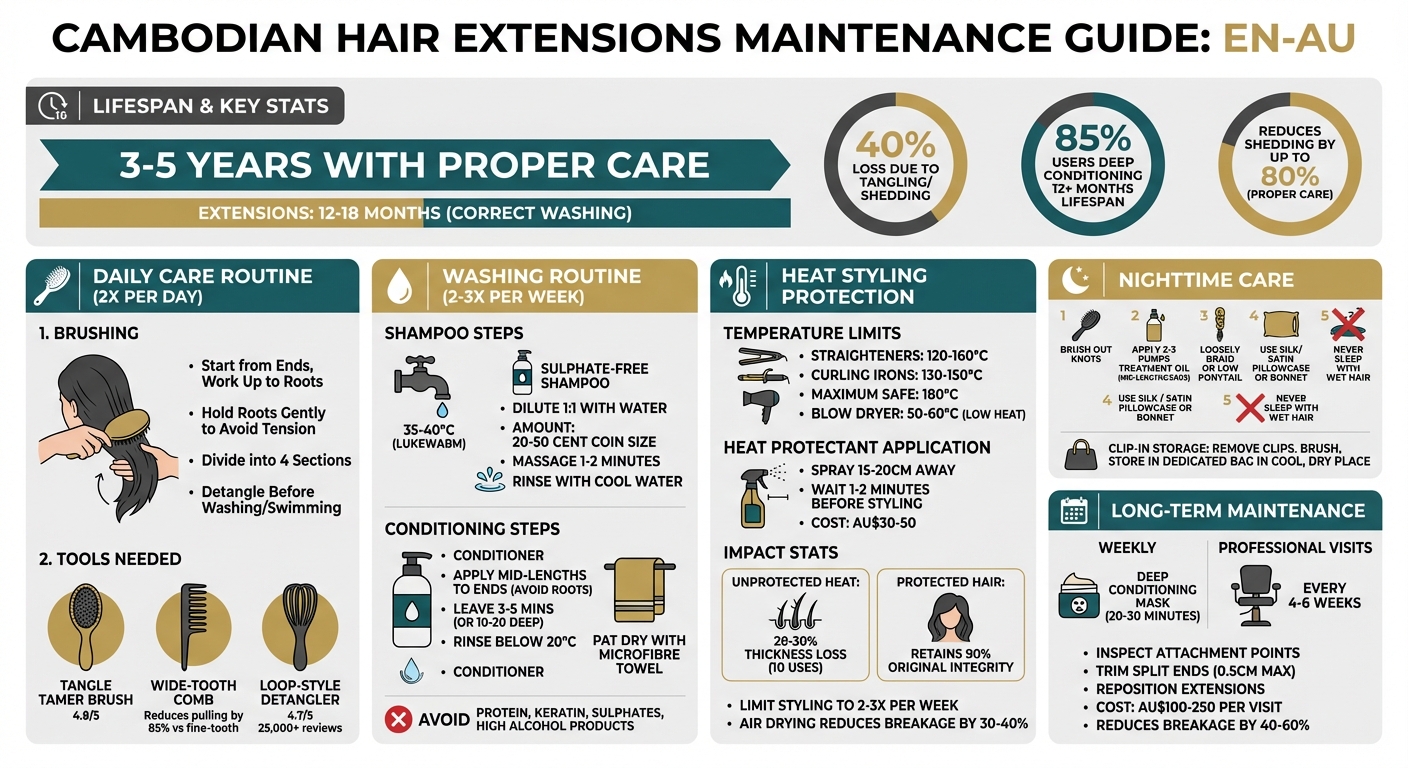
Complete Cambodian Hair Extensions Care Routine Guide
YUMMY EXTENSIONS: Tips to Maintain your Cambodian Blonde Wavy

sbb-itb-dcde78e
Daily Maintenance Checklist
Caring for Cambodian extensions requires attention twice a day. Using a hair extension maintenance planner can help you stay on track. By sticking to this routine, you can minimise tangling and reduce the risk of premature shedding - issues that account for up to 40% of hair extension loss.
How to Brush Your Extensions
Brushing extensions the right way is key to keeping them in good shape. Always start at the ends and slowly work your way up toward the roots. This technique prevents knots from tightening near the attachment points, which could otherwise lead to shedding by pulling the wefts apart.
Hold the roots gently to avoid unnecessary tension. For even detangling, divide your hair into four sections. Always detangle thoroughly before activities like showering or swimming to prevent further tangles.
After washing, apply a treatment oil or heat protectant, then use a wide-tooth comb to gently work through the hair. Wait until the extensions are partially dry before detangling - wet hair is more prone to damage. And remember, never sleep with wet hair, as it’s one of the main culprits behind matting and tangling.
Tools You'll Need
The right tools make a big difference when maintaining Cambodian extensions. For example, Hair Wonderland's Tangle Tamer Brush is a great choice. Its flexible nylon pins are specially designed for premium human hair extensions, detangling without causing pulling or damage. This brush is a favourite among Australian salons and is rated 4.8/5 for its ability to combat humidity-induced frizz in coastal areas.
For wet hair, wide-tooth combs are the go-to option. They reduce pulling by 85% compared to fine-tooth combs, according to a 2023 survey involving 1,200 extension wearers. Another excellent option is a loop-style detangler like The Detangle Brush, which boasts a 4.7/5 rating on Amazon AU from over 25,000 reviews. Users praise its ability to glide through thick extensions effortlessly, describing it as "gentle on extensions, no shedding."
To make brushing easier, apply a lightweight detangler spray beforehand. Collect any loose strands during brushing and save them for professional maintenance to keep your extensions looking their best.
Washing and Conditioning
Keeping Cambodian extensions clean and hydrated is essential for maintaining their thickness and usability for up to 12–18 months. The secret lies in using the right products and techniques that clean effectively without stripping away natural moisture. Here’s how you can shampoo and condition them properly.
How to Shampoo
Start by wetting your extensions thoroughly with lukewarm water - around 35–40°C is ideal. Avoid hot water, as it can damage the hair cuticles. Use a sulphate-free shampoo diluted 1:1 with water. Apply an amount about the size of a 20–50 cent coin to the mid-lengths and ends only. Massage gently in circular motions for 1–2 minutes to remove buildup without causing tangling or damage. Following a proper brushing routine before washing also helps minimize knots.
"Avoid products containing: protein, keratin, sulphates, and high alcohol content. These can damage your extensions and make them unmanageable after just one use." - Hair Wonderland
Rinse thoroughly with cool water to help close the cuticles. If you prefer co-washing - using a conditioner instead of shampoo - do this 1–2 times a week to maintain moisture in the dense hair strands. Aim to wash your extensions fully only 2–3 times per week to prevent over-drying.
How to Condition
After shampooing, gently squeeze out excess water and apply a moisturising, silicone-free conditioner from the mid-lengths to the ends. Avoid applying conditioner to the roots, as this can lead to product buildup and cause extensions to loosen. A Sydney user noted that applying conditioner to the roots during humid summers caused 50% slippage, an issue resolved by focusing only on the mid-lengths and ends.
Let the conditioner sit for 3–5 minutes, or for deeper hydration, leave it on for 10–20 minutes under a shower cap. Use your fingers or a wide-tooth comb to gently detangle before rinsing with cool water (below 20°C). This step seals the cuticles and locks in moisture. Opt for pH-balanced, extension-safe, sulphate-free products for the best results - brands like Hair Wonderland offer options designed specifically for Cambodian hair extensions.
Finally, pat the extensions dry with a microfibre towel. Avoid rubbing them, as this can cause tangling and friction damage, compromising their lifespan and appearance.
Heat Styling and Protection
After washing and conditioning your extensions thoroughly, it's important to protect them from heat damage to keep their strength and natural texture intact. When done right, heat styling can enhance the appearance of Cambodian hair extensions. The secret lies in shielding the hair cuticles from high temperatures while maintaining a safe and effective styling routine. Since extensions don't benefit from your scalp's natural oils, they require extra attention to keep their thick, glossy texture.
Using Heat Protectant Products
Before using any heat styling tools, always apply a heat protectant spray. Hold the bottle about 15–20cm away and mist evenly over the mid-lengths and ends of your extensions. Allow 1–2 minutes for the product to absorb before styling. Lightweight sprays infused with argan oil work particularly well for Cambodian hair. For example, Hair Wonderland's heat protectant, a product tailored for human hair extensions, typically costs between AU$30–50.
When using styling tools, set straighteners to 120–160°C and curling irons to 130–150°C. Avoid exceeding 180°C, as the thick cuticles of Cambodian hair can handle medium heat but will degrade quickly above 200°C, leading to split ends and thinning. Opt for tools with adjustable digital displays to control the temperature precisely. Research shows that unprotected heat can cause a 20–30% loss in hair thickness after just 10 uses, while heat-protected hair retains up to 90% of its original integrity. To prolong the lifespan of your extensions, professional stylists recommend limiting heat styling to 2–3 times per week.
If you have the time, air drying is a gentler option. Otherwise, follow the steps below for safe blow drying.
Air Drying vs Blow Drying
Air drying is the best way to preserve the natural texture of your extensions while reducing breakage by 30–40% per wash cycle. After lightly towel-drying your hair, let your extensions air dry naturally for 4–6 hours to maintain their density over time.
For faster results, blow drying on low heat (50–60°C) is a safe alternative. Apply two pumps of argan oil to the damp mid-lengths and ends to lock in moisture. Use a diffuser attachment and hold the dryer about 15cm away from your hair, focusing on sections that are already 80% air-dried to minimise heat exposure. Finish with the cool shot button to seal the cuticles, and avoid applying direct heat to the bonds or roots to prevent damage.
Nighttime Care
Your extensions endure a lot of friction while you sleep, so looking after them at night is crucial. Cotton pillowcases, for instance, can cause tangling, frizz, and even breakage due to their texture. Switching to silk or satin fabrics can make a world of difference. These materials not only reduce friction but also help retain moisture, which is especially important since extensions don’t benefit from your scalp’s natural oils.
"Satin is your secret weapon for keeping your raw wavy hair extensions looking like new." - Yummy Extensions
Protective Styling Before Bed
Start your nighttime routine by brushing out your extensions with a detangling brush to eliminate any knots. Then, apply 2–3 pumps of treatment oil to the mid-lengths and ends to keep the hair smooth and hydrated while you sleep. To prevent tangling, loosely braid or tie your hair into a low ponytail. Keep the style relaxed to avoid putting strain on the bonds or your natural hair. And here’s a golden rule: never sleep with wet extensions. Damp hair can lead to severe matting, which is incredibly difficult to fix.
For added protection, consider wearing a silk or satin bonnet over your styled hair. If that’s not your thing, a silk or satin pillowcase works just as well. These smooth fabrics are gentle on your hair and help prevent the dryness and brittleness that cotton pillowcases often cause.
If you’re using clip-in extensions, storing them correctly is just as important to maintain their condition.
Storage for Clip-In Extensions
To keep your clip-in extensions tangle-free when they’re not in use, start by removing the clips and brushing through the hair. Store them in a dedicated container like the Hair Wonderland Clip In Bag, which keeps each piece neatly organised and protected. Make sure to place the bag in a cool, dry spot away from direct sunlight. Avoid leaving your extensions loose on countertops or in drawers, as this can lead to unnecessary knotting or damage.
Long-Term Care
Taking care of extensions goes beyond daily upkeep. Adopting consistent long-term habits can keep them looking thick and natural for longer, often extending their lifespan well past six months.
Deep Conditioning Treatments
Unlike natural hair, extensions don’t benefit from the nutrients produced by your scalp. This makes them prone to dryness and brittleness, especially if you wash or heat style them often. To combat this, incorporate a deep conditioning mask into your routine at least once a week. Focus the mask on the mid-lengths and ends, steering clear of the bonds or clips to avoid slippage. Leave it on for 20–30 minutes under a shower cap, then rinse with cool water to help seal the cuticles and lock in moisture.
Choose nourishing, sulphate-free formulas to maintain hydration. A 2023 survey conducted by the Australian Hairdressing Council revealed that 85% of extension users who regularly deep conditioned their hair reported their extensions lasting over 12 months. Most at-home deep conditioning treatments range from AU$35 to $50.
Professional Maintenance Appointments
Weekly treatments at home are vital, but professional check-ups play an equally important role in keeping your extensions in top shape. Aim to visit your stylist every 5–6 weeks for maintenance. If your hair is on the finer side, you might need to schedule these appointments as often as every 4 weeks. During these sessions, your stylist will inspect the attachment points, trim any split ends (usually no more than 0.5 cm), and make any necessary adjustments to ensure everything stays secure.
"If you want your natural hair to grow while wearing extensions, do not leave them in for longer than 6 weeks without maintenance." - Hair Wonderland
Professional upkeep significantly reduces the risk of breakage - by as much as 40–60% compared to at-home care alone. In Australia, these appointments usually cost between AU$100 and $250 every 6–8 weeks, depending on the length and thickness of your extensions. If any extensions fall out between visits, save them and bring them along for re-application at your next appointment.
Summary
Taking care of Cambodian hair extensions involves a mix of consistent daily habits and thoughtful long-term practices. For daily care, gently brush your extensions twice a day using a detangling brush, and wash them 2–3 times a week with sulphate-free products. Always finish with a cool rinse to help seal the cuticles. Before using heat tools, apply a heat protectant and stick to medium heat to minimise potential damage. These simple steps create a solid foundation for maintaining the extensions' health.
At night, avoid sleeping with wet hair. Instead, secure your extensions in a loose, low plait to prevent tangling. For clip-in extensions, always remove them before bed and clean and store them properly to preserve their shape and texture.
Long-term maintenance includes regular deep conditioning treatments to restore moisture that extensions can't absorb naturally. Schedule professional maintenance appointments every 5–6 weeks, where your stylist can inspect attachment points and resection the extensions as needed. With proper care, Cambodian extensions can last over 12 months, and with strategic upkeep, their lifespan can stretch up to two years. This also helps reduce shedding by up to 80%.
For best results, use high-quality tools from Hair Wonderland to ensure a natural blend and minimise damage. Avoid products with sulphates, protein, keratin, or high alcohol content, as these can quickly make your extensions unmanageable. Follow these steps, and your Cambodian extensions will stay flawless and salon-fresh for months.
FAQs
How can I tell if my extensions are too dry?
If your extensions feel rough to the touch, tangle easily, or conditioning treatments no longer seem to improve their texture, it's a clear sign they might be too dry. These issues usually point to dehydration and general wear and tear.
What should I do if my extensions start matting?
To deal with matting, start by gently detangling your extensions using a wide-tooth comb or a detangling brush. Begin at the ends and work your way up to avoid pulling or causing breakage. Applying a leave-in conditioner or a detangling product can reduce friction and make the process smoother. Consistent care, like gentle brushing and storing your extensions correctly, can help prevent matting in the first place. If you encounter severe tangles, it’s best to consult a professional to avoid causing damage to your extensions.
How do I know when it’s time for a maintenance visit?
If you notice signs like product buildup, fading colour, tangling or matting, or severe knots at the roots, it might be time for a maintenance visit. Extensions that feel dry, frizzy, or tangled despite regular care are another red flag. Other indicators include loose extensions, discomfort, or visible damage like split ends and shedding. To keep everything in top shape and avoid bigger problems, it’s recommended to schedule professional maintenance every 5–6 weeks.