


Heat styling human hair extensions requires careful preparation and the right techniques to prevent damage and prolong their lifespan. Extensions lack natural oils, making them more prone to heat-related issues like dryness, frizz, and breakage. Here’s how to protect them while keeping them looking their best:
- Use the right tools and temperatures: Stick to 120–180°C, depending on the hair type. Avoid heat near attachment points like clips, tapes, or bonds.
- Prep extensions properly: Detangle, dry completely, and apply a lightweight, alcohol-free heat protectant spray.
- Style in small sections: Whether straightening, curling, or blow-drying, work in small sections and keep tools moving to avoid overheating any area.
- Limit heat exposure: Restrict heat styling to 1–2 times a week and opt for heatless methods for daily styling.
- Maintain tools and aftercare: Clean tools regularly and use extension-safe products to restore moisture and shine after styling.
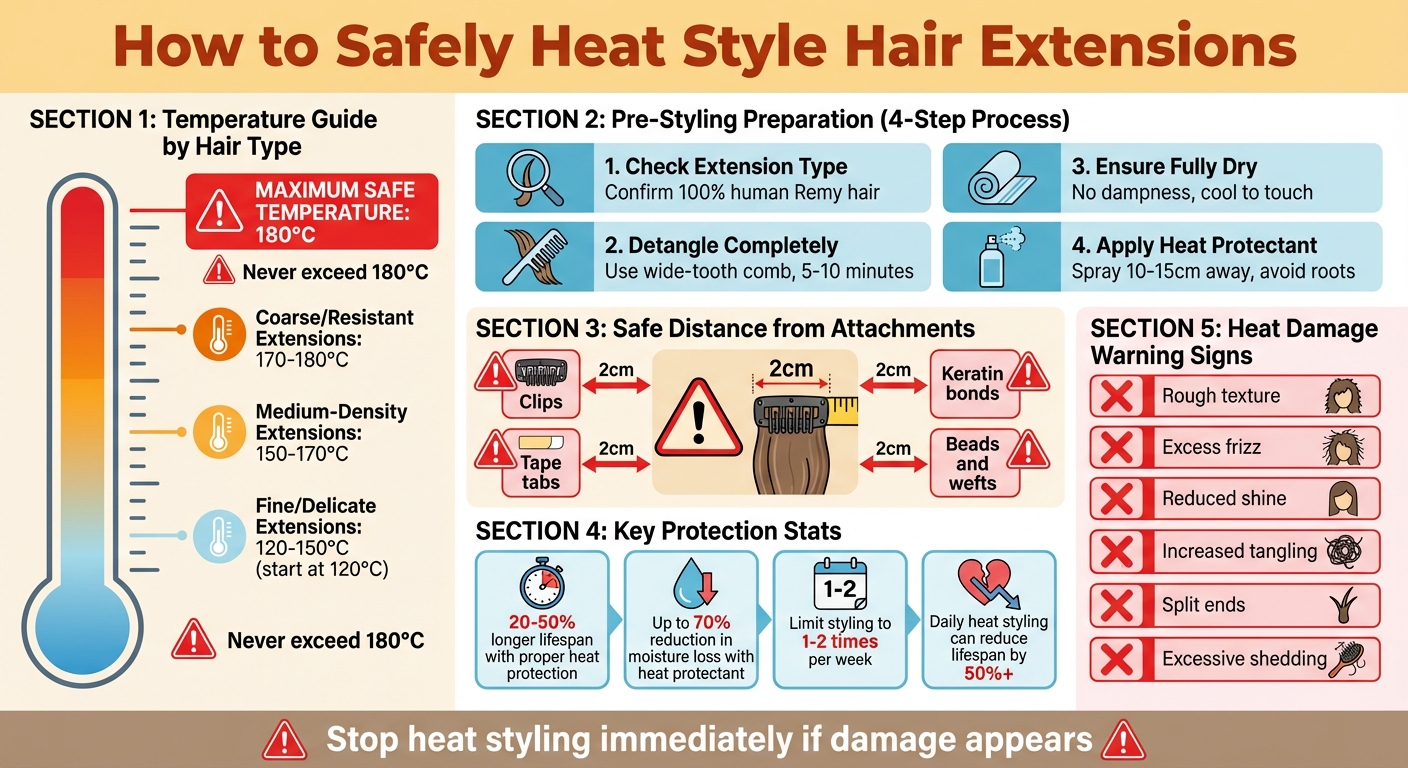
Heat Styling Hair Extensions: Temperature Guide and Safety Steps
RECOMMENDED HEAT FOR STYLING YOUR HUMAN HAIR, FIBER AND HAIR BLEND
Preparing Hair Extensions for Heat Styling
Getting your hair extensions ready for heat styling is crucial to avoid damage and keep them looking their best for longer. A little preparation goes a long way - protecting your extensions from heat can add 20–50% to their lifespan by minimising friction and damage caused by high temperatures. Here’s how to get them heat-styling ready.
Check Extension Type and Attachment Method
First, confirm that your extensions are made from 100% human Remy hair. You can usually find this information on the label or packaging. Remy hair, with its cuticles aligned in one direction, blends smoothly and can handle heat much better than synthetic fibres, which may melt. If you’re unsure about the material, test a hidden strand at 120°C to gauge its heat tolerance.
Next, identify how your extensions are attached. For clip-ins, avoid applying heat directly to the metal clips. Tape-in extensions require extra care - keep hot tools at least 2cm away from the adhesive tabs to maintain their bond. Similarly, keratin bonds (fusion tips) can weaken at temperatures above 180°C, so steer clear of those areas. For wefts and micro-bead extensions, avoid focusing heat on the stitched tracks or beads, as this could loosen them.
Detangle and Dry Extensions
Heat styling should only be done on completely dry extensions. Using heat on wet hair can cause steam damage, leading to bubbles, split ends, and weakened strands. After washing your extensions with sulfate-free products, gently squeeze out excess water using a microfibre towel. Then, either let them air-dry or use a blow-dryer on a cool setting. Make sure the extensions feel cool and smooth, with no dampness left.
When detangling, hold the hair close to the attachment points to minimise pulling. Use a wide-tooth comb or an extension-safe brush like Hair Wonderland's Tangle Tamer Brush (AUD $21.95). Start at the ends and work your way up in sections, spending about 5–10 minutes to ensure the hair is completely smooth. This step prevents breakage and helps heat distribute evenly during styling. Never style over tangles - they can scorch and lead to mid-shaft breakage.
Apply Pre-Styling Products
Before styling, spritz a lightweight, alcohol-free heat protectant spray onto your dry, detangled extensions. Hold the spray 10–15cm away and focus on the mid-lengths and ends, avoiding the roots or attachment points. Product buildup near tapes, bonds, or clips can cause slippage, so be precise.
For added protection, consider layering a leave-in conditioner on the mid-lengths and ends before applying the heat protectant. Let the products dry for a minute or two to form a proper protective barrier. This extra step helps lock in moisture and can reduce moisture loss by up to 70% during styling.
Heat Styling Techniques and Temperature Guidelines
Once your extensions are prepped, follow these temperature ranges and styling tips to keep them looking their best while avoiding damage.
Recommended Temperature Ranges
The ideal heat setting depends on the texture of your extensions:
- Fine or delicate extensions: Stick to 120–150°C. Start at the lower end (120°C) and increase only if absolutely necessary to avoid breakage.
- Medium-density extensions: Use 150–170°C for most styling needs.
- Coarse or resistant extensions: These can handle 170–180°C, but don’t exceed 180°C, especially if styling frequently.
Before committing to a heat setting, always test it on a small, hidden section of the extension. Even high-quality Remy hair can react differently to heat, so this step ensures you won’t cause unintended damage.
How to Straighten Extensions
For straightening, you can either style clip-ins off your head on a heat-resistant surface or straighten them in sections after installation for a flawless blend. Adjust your flat iron to a temperature between 120–180°C, depending on your extension’s texture (start low for finer hair types). Work in small sections, combing through before gliding the iron smoothly from mid-shaft to the ends in a single, continuous pass. Avoid clamping down or lingering in one spot, as this can cause heat damage. One or two moderate passes are safer than a single overly hot pass.
Keep the flat iron’s plates at least 2 cm away from clips, tape tabs, or keratin bonds. Direct heat near these points can weaken adhesives or melt fusion tips, leading to slippage or shedding. A ceramic-plate iron is a great choice, as it distributes heat evenly and reduces the risk of hot spots.
How to Curl Extensions
Set your curling wand or tong between 150–180°C, ensuring each section is prepped with a heat protectant. Take small sections (around 2–3 cm wide) and wrap them around the barrel from the mid-lengths, stopping 2–3 cm before reaching any clips or bonds. Hold the hair for 5–10 seconds, depending on its thickness, then carefully slide the curl off the wand. Let it cool in your palm before releasing it - this cooling step helps the curl set, reducing the need to reapply heat.
For clip-ins, consider curling them off your head first. Allow the curls to cool completely before clipping them in, which helps minimise heat exposure and prolongs the life of your extensions. Try to limit daily curling to prevent the hair from becoming brittle over time.
How to Blow-Dry Extensions
When blow-drying, stick to low to medium heat settings (around 120–160°C) and moderate airflow. Attach a nozzle to your dryer and hold it 10–15 cm away from the hair. Direct the airflow downward from mid-lengths to ends, using a detangling brush to smooth the strands. Start below the attachment points and avoid blasting hot air directly on tapes, beads, or keratin bonds, as this can weaken them.
Keep the dryer moving continuously to prevent overheating any one area. Finish with a cool shot to seal the cuticle and lock in your style. This method protects the hair fibres and ensures your extensions stay secure and smooth.
sbb-itb-dcde78e
Maintaining Heat-Styled Extensions
Taking care of your extensions after styling is key to keeping them looking great and lasting longer.
Reduce Heat Exposure Frequency
One of the best ways to protect your extensions is by cutting back on how often you use heat tools. Aim to limit full heat styling to just once or twice a week. Using high heat daily can shorten the lifespan of human hair extensions by half or more, as they don’t benefit from the natural oils your scalp produces to protect your own hair.
For everyday styling, skip the heat altogether. Instead, try sleeping with your hair in a loose braid or a low ponytail secured with a silk or satin scrunchie. Pair this with a silk pillowcase to reduce friction and tangling. In the morning, you can reshape your hair with your fingers, pin curls, or large foam rollers. If you need a quick touch-up, focus only on the sections that need it rather than re-styling your entire head.
Aftercare Following Heat Styling
After using heat tools, cooling and gentle handling are key. Let each section cool completely before brushing. Allow curls or styles to set naturally or use pins to hold them in place as they cool.
Once cooled, separate curls with your fingers before brushing, starting at the ends and working your way up to minimise breakage. To finish, apply a small amount of lightweight, silicone-free serum or an extension-safe shine spray to smooth the cuticle and add a healthy gloss. If you’re blow-drying, use the cool-shot setting at the end to seal the cuticle and lock in shine.
Regular Maintenance Tips
Routine care goes a long way in protecting your extensions. Wash them only when necessary - clip-ins generally need washing every 10–20 wears or when product build-up becomes noticeable. For permanent extensions, follow your stylist’s advice. When washing, use lukewarm water and a sulphate-free, hydrating shampoo, gently squeezing the water through the hair instead of scrubbing. Apply a moisturising conditioner to the mid-lengths and ends, being careful to avoid bonds or tapes.
Every few washes, use a deep-conditioning or hydrating mask to counteract dryness caused by heat styling. You can find extension-safe shampoos, conditioners, and masks at many Australian salons and chemists. Always make sure your extensions are completely dry before sleeping or storing them to prevent matting and breakage. For clip-ins, store them in their original box or on a hanger, brushed smooth and ideally kept in a loose braid or ponytail to minimise tangling.
Recognising and Treating Heat Damage
Keep an eye out for early signs of heat damage, such as rough texture, excess frizz, reduced shine, or increased tangling. More severe damage might include split ends, excessive shedding, stubborn matting, or areas that appear singed.
If you spot these issues, stop using heat tools immediately and switch to heatless styling methods until the condition improves. Use rich hydrating masks and leave-in conditioners designed for extensions, applying from the mid-lengths to ends and rinsing thoroughly to avoid build-up near the bonds. A professional trim can remove damaged ends and prevent further splitting. For more serious problems like heavy shedding, severe tangling near attachment points, or uneven texture, consult an extension specialist. They can advise whether you need a re-fitting, partial replacement, or a full new set.
For high-quality extensions, like double-drawn Russian or Mongolian hair from Hair Wonderland, early professional care can often extend their lifespan and protect your investment. Regular maintenance and mindful styling will help keep your premium extensions looking their best.
Choosing and Caring for Heat Styling Tools
Taking care of your heat styling tools and choosing the right ones can make a big difference in protecting your premium human hair extensions and keeping them looking their best.
Features to Look for in Heat Tools
When selecting heat styling tools, opt for those with digital temperature controls that allow precise settings between 120°C and 180°C. This range is gentle enough to maintain the integrity of your extensions. Tools with ceramic or tourmaline surfaces are ideal, as they distribute heat evenly and emit negative ions that help seal the hair cuticle. This not only protects your extensions but also helps them retain moisture and shine.
Pay attention to the design of the tool. Smooth surfaces and rounded edges are a must, as sharp corners or rough plates can snag on wefts, tapes, or clips, potentially causing shedding or damage at attachment points. Features like bevelled plate edges, cool tips on curling wands, and swivel cords can also make styling easier while reducing stress on your extensions.
Cleaning and Maintaining Your Tools
Once you’ve invested in the right tools, keeping them clean and well-maintained is just as important. After each use, wait for the tool to cool completely, then unplug it. Use a soft, slightly damp cloth to gently wipe ceramic plates or barrels to remove any product residue. Build-up from styling products can create sticky spots that snag hair and cause uneven heating. Avoid using abrasive pads or harsh chemicals, as these can scratch the protective coating on your tools.
For blow-dryers, clean the filters and vents regularly to maintain proper airflow. Blocked vents can cause overheating, leading to hotter air that may harm your extensions. Always store your tools in a dry place on a heat-resistant mat, and consider using a protective pouch to prevent accidental damage. Be mindful not to wrap cords too tightly, as this can damage the wiring.
Inspect your tools regularly. If you notice frayed cords, chipped plates, or uneven heating, it’s time to replace the tool. Remember, replacing a damaged tool is far more economical than risking damage to your high-quality extensions. Taking these steps ensures your tools perform at their best and keeps your extensions looking flawless.
Conclusion
Styling human hair extensions with heat can be safe and effective if you follow the right steps. Start by thoroughly detangling and drying your extensions, then apply a high-quality heat protectant that can handle temperatures up to 220°C. Keep your styling tools set between 120–180°C, work in small sections, and avoid holding the tool in one spot for too long.
To minimise damage, limit heat styling to once or twice a week. For your daily look, consider heatless options like overnight braids or foam rollers. After styling, apply lightweight serums or moisturisers to bring back shine and softness. Watch for early signs of damage, such as dryness, frizz, or split ends, and treat these immediately with deep conditioning.
Investing in the right tools is just as important. Look for heat styling tools with ceramic plates, digital temperature controls, and smooth surfaces to protect your extensions and prevent snagging. Regularly cleaning your tools also helps maintain even heat distribution and avoids product build-up that could harm your extensions.
For those seeking premium-quality extensions, check out Hair Wonderland. Known for their double-drawn Russian and Mongolian human hair extensions, their range includes seamless clip-ins, detangling brushes, and care products. Trusted by salons across Australia, these extensions are designed for durability, comfort, and a natural look that can last 9–12 months with proper care.
FAQs
What heat styling tools are best for human hair extensions?
When it comes to styling human hair extensions, the top choice is high-quality tools made with ceramic or tourmaline. These materials evenly distribute heat, helping to reduce damage while keeping your extensions smooth, silky, and full of shine.
Before you start styling, always use a heat protectant spray. This is a must to shield your extensions from damage. Also, keep your styling tools set to a low or medium heat - ideally below 180°C. This temperature range helps preserve the texture, quality, and longevity of your extensions. Overexposing them to high heat can lead to dryness and dullness, so it's worth taking the extra care to keep your hair looking its best.
What’s the best way to protect hair extensions from heat damage?
To protect your hair extensions from heat damage, make sure to use a heat protectant spray every time you style them. Keep your styling tools at a low to medium heat setting, with the temperature staying below 180°C. Avoid exposing the extensions to high heat for too long, and try to limit heat styling to special occasions. Always let the extensions cool down fully before handling or reshaping them. Following these tips can help preserve their look and keep them lasting longer.
What are some easy ways to style hair extensions without heat?
Heatless styling offers a gentle way to keep your hair extensions looking their best while creating stunning hairstyles. For natural waves, braid your hair while it's slightly damp. If you're after soft curls, twist small sections into buns. Want to wake up with effortless curls? Foam rollers or flexi rods can work wonders overnight. These techniques not only help you switch up your look but also preserve the quality and lifespan of your extensions.