


Hair extensions shed when individual strands loosen from attachment points like wefts, tapes, or bonds. While minimal shedding (5–15 strands per week for high-quality extensions) is normal, excessive shedding signals issues like poor manufacturing, rough handling, or improper care. Identifying the cause is key to maintaining their thickness and longevity.
Key Causes of Shedding:
- Low-Quality Hair: Misaligned cuticles or overprocessed strands lead to tangling and shedding.
- Improper Installation: Tight application or uneven tension weakens attachment points.
- Rough Handling: Aggressive brushing or tight hairstyles strain the extensions.
- Harsh Products: Sulfates, drying alcohols, and heavy oils weaken adhesives and bonds.
- Inadequate Maintenance: Skipping regular upkeep or improper storage increases shedding risks.
Prevention Tips:
- Use gentle, sulfate-free products.
- Brush carefully from ends to roots with extension-safe tools.
- Avoid heat or oils near tapes, bonds, or wefts.
- Store clip-ins in breathable bags and ensure extensions are dry before storage.
- Schedule professional maintenance every 4–6 weeks for semi-permanent types.
Extensions made from premium, double-drawn Remy hair shed less due to aligned cuticles and stronger construction. Proper care can extend their lifespan to 9–12 months.
How Extensions Are Made and Why They Shed
Extension Construction Methods
The way extensions are made plays a big role in how well they stay intact. For instance, hand-tied or machine-made wefts involve stitching rows of hair onto a fabric base. If the stitching is tight and consistent, it keeps the strands firmly in place. On the other hand, loose stitching can lead to strands slipping out. Tape-ins rely on medical-grade adhesive strips, but these can weaken over time due to heat exposure, product build-up, or repeated pulling. Clip-ins attach hair to a fabric band using pressure clips, but rough handling can loosen the strands. Keratin bonds, I-tips, and micro-rings secure small bundles of hair using melted keratin or metal clamps. However, overheating, improper clamping, or reusing these bonds can cause cracks, leading to strand loss.
Double-drawn Remy hair, such as the premium Russian and Mongolian extensions from Hair Wonderland, is known for shedding far less compared to single-drawn or non-Remy hair. This type of hair is carefully sorted so that most strands are the same length, resulting in thick, uniform bundles from root to tip. The aligned cuticles in double-drawn Remy hair reduce friction and tangling, which means less forceful detangling is required, minimising the risk of pulling strands from the weft. Another important detail is weft sealing. Unsealed wefts leave stitches exposed, allowing movement that can loosen strands. High-quality brands address this by sealing their wefts with fabric glue, which fills the tiny perforations and locks the hair in place. These construction features are key to understanding the difference between everyday shedding and more serious hair loss.
Normal Shedding vs. Excessive Shedding
Understanding how extensions are made helps distinguish between normal shedding and more concerning issues. It's completely normal to see a few loose strands while brushing or washing your extensions - this won't noticeably affect their overall thickness. Unlike natural hair, extensions aren’t connected to follicles, so once a strand comes loose, it won’t grow back. Excessive shedding, however, is a different story. This happens when you start noticing clumps of hair falling out, visible gaps in the extensions, or a rapid decrease in thickness within just a few washes. If you’re regularly finding handfuls of hair in the shower or on your brush, or if your extensions feel half as thick within weeks despite proper care, it’s a sign of either poor manufacturing or installation issues.
Catching excessive shedding early can save you from further problems. Stylists often check for this by brushing through the extensions, inspecting the seams under light, and gently tugging small sections to test how secure the strands are. If you notice significant shedding straight out of the packet, it’s a clear red flag to avoid using that set.
Main Causes of Extension Shedding
Cause 1: Poor Quality Hair and Manufacturing Issues
The quality of hair used in extensions plays a huge role in how long they last. Low-grade hair - especially when it contains short, damaged, or non-Remy strands - can create problems because misaligned cuticles lead to tangling and breakage, which often appear as shedding. Overprocessing with harsh chemicals like strong bleach, multiple colour treatments, or aggressive texturising weakens both the cuticle and the inner structure of the hair, making it more prone to snapping or slipping from the weft. Even the way extensions are constructed matters - poor stitching or overly tight sewing before cutting can cause strands to come loose prematurely.
When choosing extensions, look for 100% human Remy hair with aligned cuticles. Double-drawn extensions, which have thicker, more uniform bundles, are less likely to shed. Pay attention to the stitching - strong, even wefts with no gaps are a good sign of quality.
Cause 2: Improper Installation and Too Much Tension
Even high-quality extensions can shed if they’re not installed properly. If extensions are applied too tightly or the weight isn’t evenly distributed, the stress on attachment points can weaken both the weft stitching and your natural hair. For sew-in extensions, overly tight braiding or stitching can fray the weft and even cause traction damage to your own hair. With tape-ins, placing them too close to the scalp, using too much hair per section, or re-taping over product build-up can cause the adhesive to fail, leading to shedding. Similarly, bead or micro-ring methods can cause breakage if the beads are too small or clamped too tightly.
Proper application is key. Extensions should feel secure but not overly tight. An experienced stylist who knows how to control tension and section hair properly can make all the difference. For semi-permanent extensions, regular maintenance every 6–8 weeks is a must to address any slipping, loose wefts, or damaged bonds. For clip-ins, choose the right weight for your hair type and rotate where you place them to avoid stressing the same areas repeatedly.
Cause 3: Rough Handling and Poor Daily Care
How you handle your extensions daily has a big impact on their lifespan. Brushing roughly from the roots, using fine-tooth combs or stiff brushes, or detangling knots aggressively can put unnecessary strain on the wefts or bonds, causing hair to snap or pull out. Tight hairstyles like ponytails or braids can also add stress. Even sleeping with your hair loose can lead to tangles and matting, which require forceful detangling and can worsen shedding.
To protect your extensions, always detangle from the ends upward using a wide-tooth comb and support the roots with your hand. Before bed, secure your hair in a loose braid or ponytail and consider using a silk or satin pillowcase to reduce friction. Tools designed for extensions, like the Tangle Tamer Brush from Hair Wonderland (priced at $21.95 as of December 2025), can help minimise damage by gliding over bonds and wefts without pulling.
Cause 4: Harsh Products and Heat Damage
The products you use and how you style your extensions also play a role in shedding. Shampoos with sulfates and styling products with high levels of drying alcohol can strip moisture from the hair, leaving it brittle and prone to breakage. On the other hand, applying heavy oils, conditioners, or silicone serums directly onto bonds or tapes can weaken adhesives, causing strands to shed.
Heat styling can also be a culprit. Bleaching, colouring, or texturising weakens the hair, while frequent use of hot tools at high temperatures can cause dryness, split ends, and breakage. Heat applied too close to tape areas, bonds, or stitching can soften adhesives or melt bonds, leading to slippage. To avoid these issues, stick to sulfate-free and alcohol-free shampoos, use lightweight hydrating products on the mid-lengths and ends, and avoid applying oils near the roots. Always use a heat protectant and keep styling tools at safe temperatures, avoiding direct contact with tapes, bonds, or beads. Hair Wonderland's Moisture Magic ($39.95 as of December 2025) is a great option for keeping extensions hydrated without compromising adhesives.
Cause 5: Poor Maintenance and Storage
Proper maintenance and storage are just as important as daily care. Washing extensions too often or too infrequently, leaving sweat or product build-up in the hair, or storing clip-ins while damp can lead to tangling, matting, and weakened fibres. Wearing semi-permanent extensions beyond their recommended lifespan can also cause stress on the wefts and increase shedding.
To keep your extensions in good shape, wash them every 1–2 weeks with lukewarm water and extension-safe products. Always brush and dry them completely before storing them in a breathable bag like Hair Wonderland's Clip In Bag. If you swim often, rinse your extensions immediately after exposure to saltwater or chlorine. Never store extensions while wet or tied up, as this can lead to matting and premature shedding. Replacing or rotating extensions that have reached the end of their lifespan will help maintain a full, healthy look.
Why Is My Hair Extension Falling Out? Is this Normal? #hairfall #hairextensioncare
sbb-itb-dcde78e
Shedding Risks by Extension Type
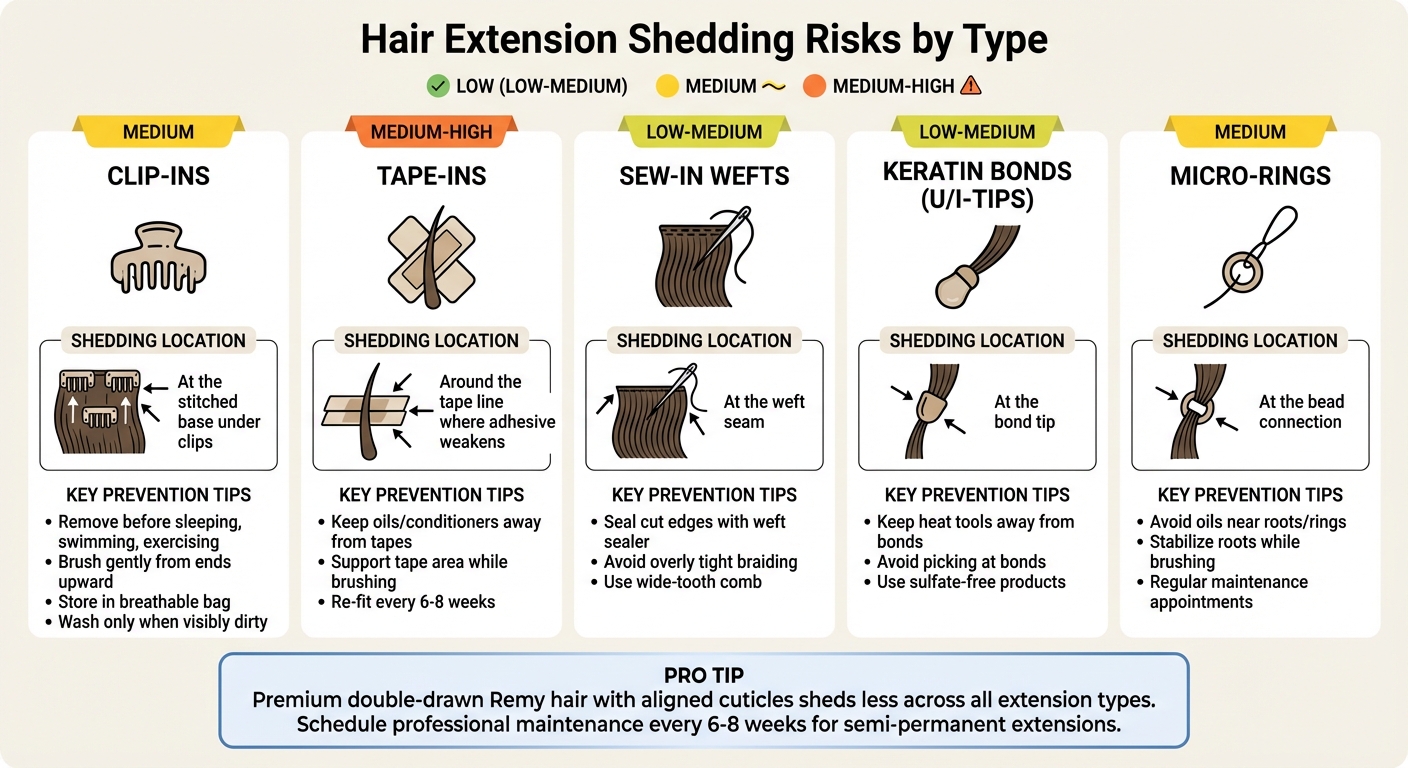
Hair Extension Shedding Risk Comparison by Type
The way hair extensions shed depends on their construction and how they’re attached. Knowing the weak points of each type can help you pick extensions that suit your lifestyle and understand how to care for them properly.
Extension Type Comparison Table
| Extension Type | Shedding Risk | Where Shedding Starts | Main Prevention Tips |
|---|---|---|---|
| Clip-ins | Medium | At the stitched base under the clips, especially with frequent use | Remove before sleeping, swimming, or exercising; gently brush starting at the ends with a loop or wide-tooth comb; store in a breathable bag like Hair Wonderland's Clip In Bag ($54.00); wash only when visibly dirty |
| Tape-ins | Medium–High | Around the tape line, as adhesive weakens from oils or removers | Keep oils, conditioners, and masks a few centimetres away from the tapes; support the tape area while brushing; schedule re-fits every 6–8 weeks to replace old adhesive |
| Sew-in wefts | Low–Medium | At the weft seam, where tight sewing or friction can loosen stitches | Seal cut weft edges with a weft sealer or fabric glue; avoid overly tight braiding; use a wide-tooth comb and avoid brushing directly along the braid or stitch line |
| Keratin bonds (U/I-tips) | Low–Medium | At the bond tip, where heat or picking can crack the keratin | Keep straighteners and curling wands several centimetres away from the bonds; avoid picking or rolling the bonds between fingers; use sulphate-free shampoo and avoid oil-based products near the roots |
| Micro-rings | Medium | At the bead connection, when beads are over- or under-clamped, or tugged during brushing | Avoid applying oils to the roots or rings; use a soft, extension-safe brush while stabilising the roots; attend regular maintenance appointments to tighten or adjust beads before they slip |
Beyond the table, the quality and construction of extensions play a big role in how much they shed. Hair quality is key across all types. Extensions made from premium, double-drawn Remy hair with aligned cuticles - like the Russian and Mongolian hair offered by Hair Wonderland - shed less because shorter strands are removed, creating a more secure attachment. Sturdy wefts and bonds with precise stitching also hold up better under daily wear, particularly in Australia’s warm climate, where swimming, heat styling, and outdoor activities can cause extra strain.
For instance, a Brisbane client noticed her clip-ins shedding at the clip base due to rough brushing and improper storage. A Sydney client experienced shedding around the tape area of her tape-ins from heavy conditioner use. Both issues were resolved by switching to a loop brush, proper storage, and applying lightweight products only to the mid-lengths and ends.
The takeaway: Choose extensions that fit your lifestyle, invest in high-quality construction, and stick to the care tips for your specific type. Semi-permanent extensions also benefit from professional maintenance every 6–8 weeks to keep them secure and reduce shedding.
Daily Routine to Prevent Shedding
In Australia's humid and active climate, maintaining a disciplined daily care routine is essential for minimising shedding in hair extensions. By combining consistent daily care with weekly maintenance and occasional professional check-ups, you can significantly improve the lifespan and appearance of your extensions.
Daily Brushing and Styling
Brush your extensions 2–3 times a day, starting from the ends and working your way up. This method helps reduce tension at the attachment points. Use tools designed specifically for extensions, like Hair Wonderland's Tangle Tamer Brush ($21.95), which gently detangles without pulling. If you're using clip-ins, always remove them before bed to avoid overnight tugging. For semi-permanent extensions, loosely braid your hair or secure it with a silk scrunchie, and sleep on a silk pillowcase to minimise friction and breakage.
When styling with heat tools, keep the temperature below 180°C and always apply a heat protectant beforehand. Avoid tight hairstyles like high ponytails, which can strain the clips, bonds, or tapes. Rotating the placement of your clip-ins daily can also help reduce wear and tear on specific areas.
Weekly Washing and Conditioning
Wash your extensions once a week using a sulphate-free, alcohol-free shampoo and conditioner. Before washing, brush your extensions to remove tangles. Use lukewarm water and focus conditioner on the mid-lengths and ends, steering clear of the roots, bonds, or tapes to prevent slippage. After washing, gently squeeze out excess water - avoid rubbing - and allow the extensions to air-dry flat or in a loose braid.
For clip-ins, air-dry them separately and store them in a dedicated Clip In Bag to keep them in good condition. A lightweight leave-in conditioner is especially useful in Australia's humid environment, helping to keep hair hydrated without weighing it down. Once a week, apply a deep conditioning mask for 5–10 minutes, focusing on the ends. Rinse with cool water to seal the cuticles and avoid using heavy oils or silicones near the attachment points, as these can weaken the bonds over time.
Monthly Inspection and Maintenance
Each month, inspect your extensions for signs of thinning, loose clips, or frayed stitches. If you notice shedding of more than 10–20 hairs per brushing session, it may be time to reassess your routine. Pay attention to patterns, such as increased shedding after swimming or frequent heat styling, which are common in Australia's sunny conditions.
For semi-permanent extensions, schedule a salon visit every 4–6 weeks for professional maintenance. This includes tightening, tape reapplication, or resealing wefts. During these visits, stylists can trim split ends and check for tension issues to prevent long-term damage. Regular professional care can make a big difference, especially for premium double-drawn hair like Hair Wonderland's Russian and Mongolian extensions, which are known to last longer with proper upkeep.
Conclusion
When it comes to minimising extension shedding, it all comes down to four main factors: the quality of the hair, the installation process, your daily care routine, and regular maintenance. Choosing high-quality, double-drawn human hair with secure, properly sealed wefts is the foundation. Pair that with professional installation to avoid unnecessary tension, use of gentle sulphate-free products, and consistent salon visits, and your extensions can maintain their softness and volume for months. If shedding occurs, it’s often a sign that something in your care routine or product selection needs tweaking - it’s not an unavoidable part of wearing extensions.
Starting with quality makes all the difference. Extensions from Hair Wonderland are designed with density, durability, and natural blending in mind. When properly installed and cared for, they’re less prone to shedding.
Be gentle with your extensions - brush softly, protect them while you sleep, and avoid tugging on wefts or bonds. Stick to sulphate-free products, limit heat styling to under 180°C with a heat protectant, and schedule maintenance every 6–8 weeks. These small steps go a long way in keeping your extensions looking their best. With the right care, your extensions can stay beautiful for 9–12 months before it’s time for a refresh.
FAQs
How can I stop my hair extensions from shedding too much?
To keep shedding to a minimum, handle your hair extensions with care. Use a proper brush to gently detangle them, starting at the ends and gradually working upwards. Avoid pulling or tugging, especially when styling, as it can cause the strands to loosen.
Always remove clip-in extensions before going to bed, and store them properly to avoid unnecessary damage. Opt for nourishing, sulphate-free hair care products, and stick to the recommended maintenance routine. Treat your extensions just like you would your natural hair to keep them secure and looking great for longer.
What are the best products to care for hair extensions?
To keep your hair extensions in top condition, opt for sulphate-free, hydrating shampoos and conditioners that gently cleanse while nourishing the hair. Minimise heat styling to avoid damage, and use a lightweight, nourishing hair oil or serum to maintain their softness and shine. Make detangling a regular part of your routine with a suitable brush to prevent knots and reduce shedding. For the best care tips, refer to Hair Wonderland's expert guide designed specifically for their premium extensions.
How often should I maintain my semi-permanent hair extensions?
For the best outcomes and to keep your semi-permanent hair extensions looking their best, aim to schedule maintenance every 6 to 8 weeks. This regular care helps to avoid tangling, ensures the extensions remain secure, and supports the health of your natural hair.
During these appointments, your stylist can also reposition the extensions as your hair grows, keeping everything looking seamless and feeling comfortable. Following this routine not only prolongs the lifespan of your extensions but also preserves their natural look.