


Hair extensions can transform your look, but they don’t last forever. Over time, they can become dry, frizzy, or even cause discomfort. Ignoring these signs can damage your natural hair. Here’s how to tell if it’s time to replace them:
- Dryness, Frizz, and Tangling: If conditioning no longer helps, and your extensions feel rough or tangle constantly, they’re likely worn out.
- Shedding and Thinning: Visible gaps, reduced volume, or clumps of hair falling out are clear signs of wear.
- Split Ends and Dullness: When extensions lose their shine or develop split ends, they can’t be restored.
- Loose Attachments: Slipping tape-ins or unstable clip-ins ruin your look and may harm your natural hair.
- Discomfort or Pain: Persistent itchiness, headaches, or scalp tenderness means your extensions may be causing damage.
Proper care extends their lifespan, but knowing when to replace them protects your hair and ensures you always look your best.
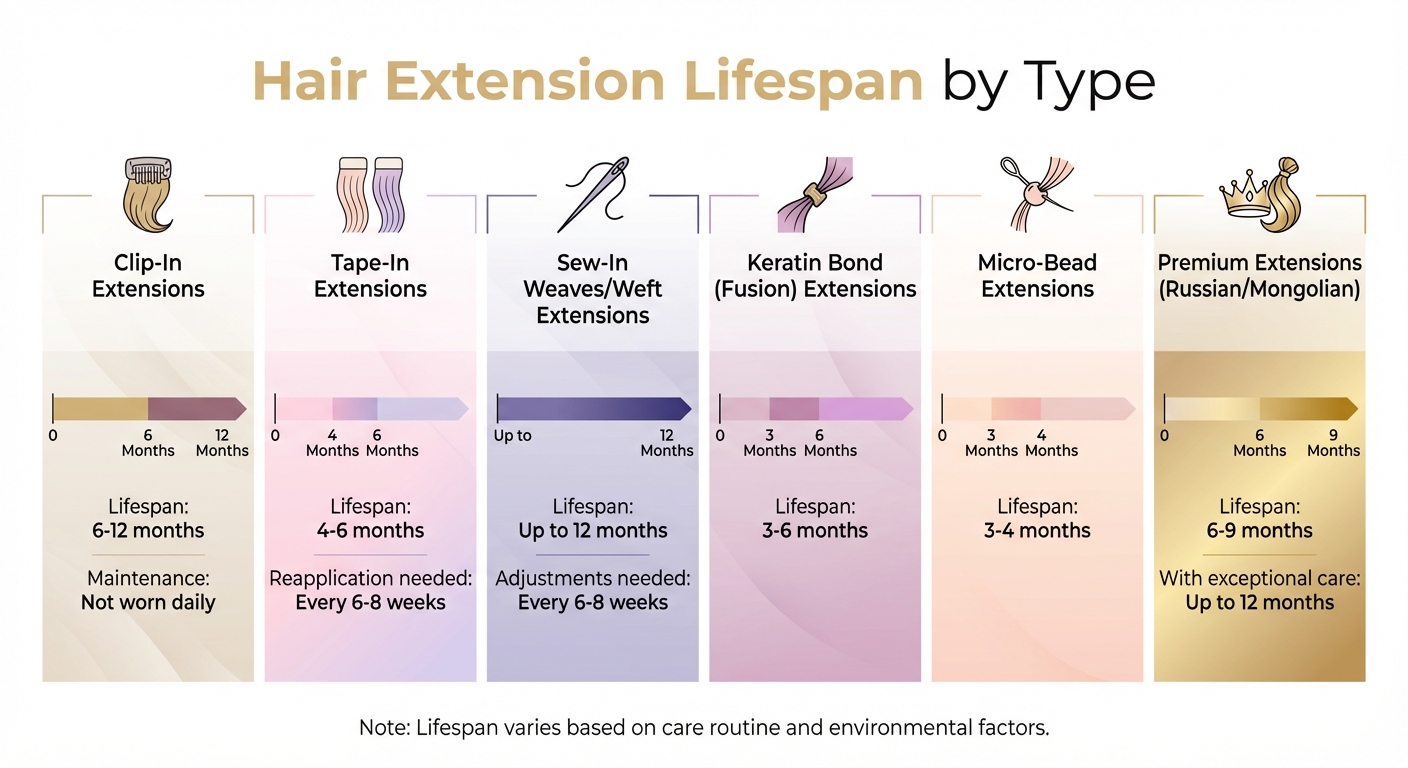
Hair Extension Lifespan by Type: Complete Duration Guide
1. Expected Lifespan of Quality Hair Extensions
1.1 Lifespan by Extension Type
Understanding how long your hair extensions will last helps you know when it's time for a refresh. Clip-in extensions, for example, can last anywhere from six months to a year since they aren't worn every day.
Tape-in extensions are reusable and can last four to six months with proper care. However, you'll need to have them reapplied every six to eight weeks, as the adhesive bonds naturally weaken over time.
For sew-in weaves and weft extensions, their lifespan can stretch up to a year if you’re diligent with maintenance. That said, adjustments or reapplications are usually necessary every six to eight weeks as your natural hair grows and loosens the wefts.
Keratin bond (fusion) extensions typically last between three and six months, while micro-bead extensions have a slightly shorter lifespan of three to four months.
Premium extensions, such as double-drawn Russian or Mongolian hair, are known for their durability, lasting between six and nine months. With exceptional care, they can even reach the 12-month mark, though this is less common. Keep in mind, Australian conditions can influence these timelines.
1.2 How Australian Lifestyle Affects Extension Durability
Australia’s unique environment can impact how long your hair extensions stay in good condition. If you live in humid or coastal regions like Brisbane or the Gold Coast, frequent washing - often necessary due to the climate - can wear out your extensions faster. The harsh Australian sun, combined with wind and pollution, tends to dry out the hair more quickly compared to cooler climates.
Heat styling, which is common for many, further contributes to dryness and damage. Unlike your natural hair, extensions don’t benefit from the scalp’s natural oils, making them especially prone to environmental wear and tear.
How I know when it’s time to replace hair extensions #hairextensions #hairtransformation
2. 5 Signs Your Hair Extensions Need Replacing
Figuring out when to replace your hair extensions might not always be straightforward, but there are clear warning signs that can help you decide. Here are five key indicators that it's time to switch to a new set.
2.1 Constant Dryness, Frizz, and Tangling
Hair extensions don’t benefit from the natural oils your scalp produces. If your extensions start feeling rough, lose their shine, or become unmanageable even with regular conditioning, they’ve likely reached the end of their lifespan.
"Hair extensions don't receive the natural oils from your scalp that are needed to maintain that healthy hair look, which can lead to them drying out faster than your natural hair. Without the correct aftercare they can become frizzy and unmanageable." - Spectrum One Hair
When tangles become impossible to remove, or your extensions snap easily while brushing, no amount of deep conditioning will fix them. According to Filomena Salon & Spa in March 2025, tangled and matted strands are often caused by skipping regular brushing, overusing heat tools, or sleeping with wet extensions.
Even with nourishing oils and moisturising treatments, if your extensions frizz more frequently and lose their vibrancy, it’s a clear sign they need replacing. Zala Hair also noted in October 2024 that once extensions reach this stage, treatments can no longer restore them.
Persistent dryness and tangling often go hand in hand with another issue: heavy shedding.
2.2 Heavy Shedding and Thinning
If your brush, shower drain, or clothes are constantly covered in clumps of hair, it’s a sign that the structure of your extensions is breaking down. This results in reduced volume, visible gaps in the wefts, and extensions that appear significantly thinner or shorter than when you first got them.
"Shedding and tangling are the two most obvious signs that your extensions are on their way out. When you find clumps of extension hair in your hairbrush, shower drain, or on your clothes, it means the structure of the extensions is worn out and breaking down. In time, you'll notice the extensions thinning out and losing volume." - Therapy Hair Studio
As extensions thin, they tangle more easily, lose their ability to hold a style, and may even cause discomfort as tangled strands tug on your scalp. At this point, it’s time to replace them.
2.3 Split Ends and Dull Appearance
Split ends and a dull, lifeless look are tell-tale signs that your extensions have sustained deep damage. If you spot rough, bushy ends or strands with visible splits, it means the extensions have lost their integrity. Unlike natural hair, extensions can’t repair themselves or absorb nutrients from your scalp.
When advanced damage sets in, trims and treatments won’t help. If your extensions look dull and feel coarse, even after using high-quality products, it’s a clear indication that they’ve outlived their usefulness. Wicked Roots Hair pointed out in March 2023 that while deep conditioning might initially help combat dryness and frizz, there comes a point when it’s no longer effective.
2.4 Loose Attachments and Visible Wefts
If your tape-ins start peeling, wefts slip out of place, or clip-ins feel unstable, it’s a sign that the attachments have weakened. Loose extensions not only compromise your look by creating visible gaps but can also make it difficult to blend them naturally with your own hair.
Beyond aesthetics, loose attachments can cause uneven tension on your natural hair, leading to breakage and discomfort. While some methods, like tape-ins, can be re-applied every six to eight weeks, extensions that consistently slip or feel insecure despite proper maintenance should be replaced.
2.5 Discomfort, Itchiness, or Headaches
If you’re experiencing persistent headaches, scalp tenderness, redness, or itchiness, it could mean your extensions are too tight, too heavy, or improperly applied.
While mild discomfort during the first few days after installation is normal, ongoing pain is a red flag. Ignoring these symptoms can lead to serious problems like traction alopecia, which can cause a receding hairline, patchy thinning, or even permanent scarring on the scalp. If your extensions continue to cause discomfort after the initial adjustment period, it’s best to remove or replace them to avoid long-term damage.
sbb-itb-dcde78e
3. Selecting Replacement Extensions for Long-Term Results
When it’s time to replace your hair extensions, choosing the right ones and knowing how to care for them can make all the difference. By selecting high-quality extensions and following proper maintenance routines, you can ensure they last as long as possible while looking their best.
3.1 Features to Look for in New Extensions
For a natural look and durability, Remy Human Hair extensions are the go-to choice. Unlike synthetic options, these extensions offer better longevity and blend seamlessly with your own hair when cared for properly.
The standout feature of Remy Human Hair is the intact cuticle alignment. This ensures the hair retains its natural movement, bounce, and shine, allowing it to mimic the flow and texture of your real hair.
"New Remy Human Hair Extensions are bouncy, just like your natural hair. Plus, they match the movement, flow, and direction of your natural hair, thanks to their intact cuticles." – Zala Hair
Another key factor is colour matching. High-quality extensions often use specialised dyes that maintain consistent colour and resist fading over time. Amanda Moncur Salon highlights how these dyes help extensions stay vibrant and uniform throughout their lifespan. If you’re unsure about finding the right shade, professional colour-matching services can help you achieve a flawless blend.
Length matters too. Extensions should integrate seamlessly with your natural hair length. For those who lead active lifestyles - whether it’s swimming, exercising, or spending time outdoors - semi-permanent tape-ins are a practical alternative to clip-ins, offering more security and convenience.
Once you’ve chosen the right extensions, proper care becomes the next priority.
3.2 Care Practices to Extend Extension Lifespan
To keep your extensions looking their best, adopt a gentle brushing routine. Use a wide-tooth comb or an extension-safe brush, starting from the ends and working your way up. This helps minimise stress on the bonds and prevents unnecessary breakage.
Opt for sulphate-free shampoos and conditioners to protect the hair’s integrity, and apply a nourishing oil to the ends daily to maintain moisture. Adding a deep conditioning treatment to your weekly routine can also help preserve colour and shine.
Heat styling can take a toll on extensions, so limit its use whenever possible. Always apply a heat protectant before styling, and explore heatless styling options to minimise damage. At night, tie your hair in a loose braid or low ponytail and sleep on a satin or silk pillowcase to reduce tangling.
Regular maintenance appointments with your stylist are essential. Visiting every six to eight weeks for touch-ups and trims can prevent split ends and keep your extensions in great condition. Combining these professional check-ins with diligent at-home care will help you get the most out of your extensions, keeping them fresh and vibrant for longer.
Conclusion
Knowing when it's time to replace your hair extensions is key to maintaining both your look and the health of your natural hair. Overused extensions can become dry, frizzy, and difficult to manage. Worse, they can put unnecessary strain on your scalp, potentially leading to breakage, thinning, or even traction alopecia.
"It's important to pay attention to these signs and address them promptly before they cause further damage or discomfort." – Filomena Salon & Spa
FAQs
What can I do to make my hair extensions last longer?
To keep your hair extensions in great condition for longer, here are some easy-to-follow care tips:
- Brush with care daily using a soft-bristle or extension-friendly brush to reduce tangling and minimise wear.
- Stick to sulphate-free shampoos and conditioners designed for extensions to help preserve their quality.
- Limit heat styling as much as possible, and always apply a heat protectant if using tools like straighteners or curling irons.
- Book regular salon check-ups every 6–8 weeks to ensure the attachments are secure and everything is in good shape.
- Keep your extensions moisturised by using lightweight oils or occasional deep conditioning treatments to prevent dryness.
With a little consistent care, your extensions can stay silky, shiny, and comfortable for longer.
What happens if you don’t replace damaged hair extensions?
Failing to swap out worn hair extensions can lead to several problems. Damaged extensions often tug on your natural hair or sit awkwardly, which can cause scalp irritation. Over time, this strain may result in hair breakage, thinning, and even increased shedding, potentially compromising the overall health and appearance of your natural hair.
Extensions that have outlived their lifespan also tend to lose their grip or show visible signs of wear. This not only makes them harder to style but can also leave them looking far less natural. To keep your hair looking great and feeling healthy, it’s crucial to replace extensions as soon as they start showing signs of damage or causing discomfort.
How does Australia's environment impact my hair extensions?
Australia’s harsh climate, with its blazing sun, salty seas, and chlorinated pools, can be tough on hair extensions. The UV rays can fade the colour of your extensions, while saltwater and chlorine often lead to dryness, tangling, and potential damage to both your extensions and your natural hair.
To keep your extensions in top shape, rinse them with fresh water immediately after swimming to remove salt or chlorine. Limit sun exposure during the hottest parts of the day, and consider using a UV protection spray to shield your hair. Maintaining regular hydration and gently cleansing your extensions will also help them stay soft, vibrant, and healthy despite the challenges of Australia’s environment.