


Hair extensions can transform your look, but they often come with challenges like tangling, shedding, dryness, or discomfort. Most of these issues stem from improper care, poor-quality products, or incorrect installation. The good news? You can prevent or fix these problems with the right techniques and tools. Here's a quick breakdown:
- Tangling and Matting: Brush daily with a gentle tool like the Hair Wonderland Tangle Tamer Brush ($21.95). Use sulphate-free shampoo and braid your hair at night to minimise friction.
- Excessive Shedding: Brush gently when dry, avoid oils near attachment points, and use extension-safe products.
- Colour Mismatch and Brassiness: Match extensions to the mid-lengths of your hair, protect against UV exposure, and use purple shampoo sparingly to counteract brassiness.
- Visible Wefts: Proper placement, professional layering, and loose waves can help extensions blend naturally.
- Discomfort: Ensure a proper fit during installation and opt for lightweight extensions if you have fine hair.
- Dryness and Frizz: Hydrate extensions with weekly masks and protect them from heat styling and humidity.
- Slippage: Prep your hair with clarifying shampoo before application and avoid oil-based products near bonds.
- Damage to Natural Hair: Choose high-quality extensions, avoid tight applications, and remove them carefully.
Taking care of your extensions not only keeps them looking great but also protects your natural hair. Investing in quality products and professional services makes all the difference.
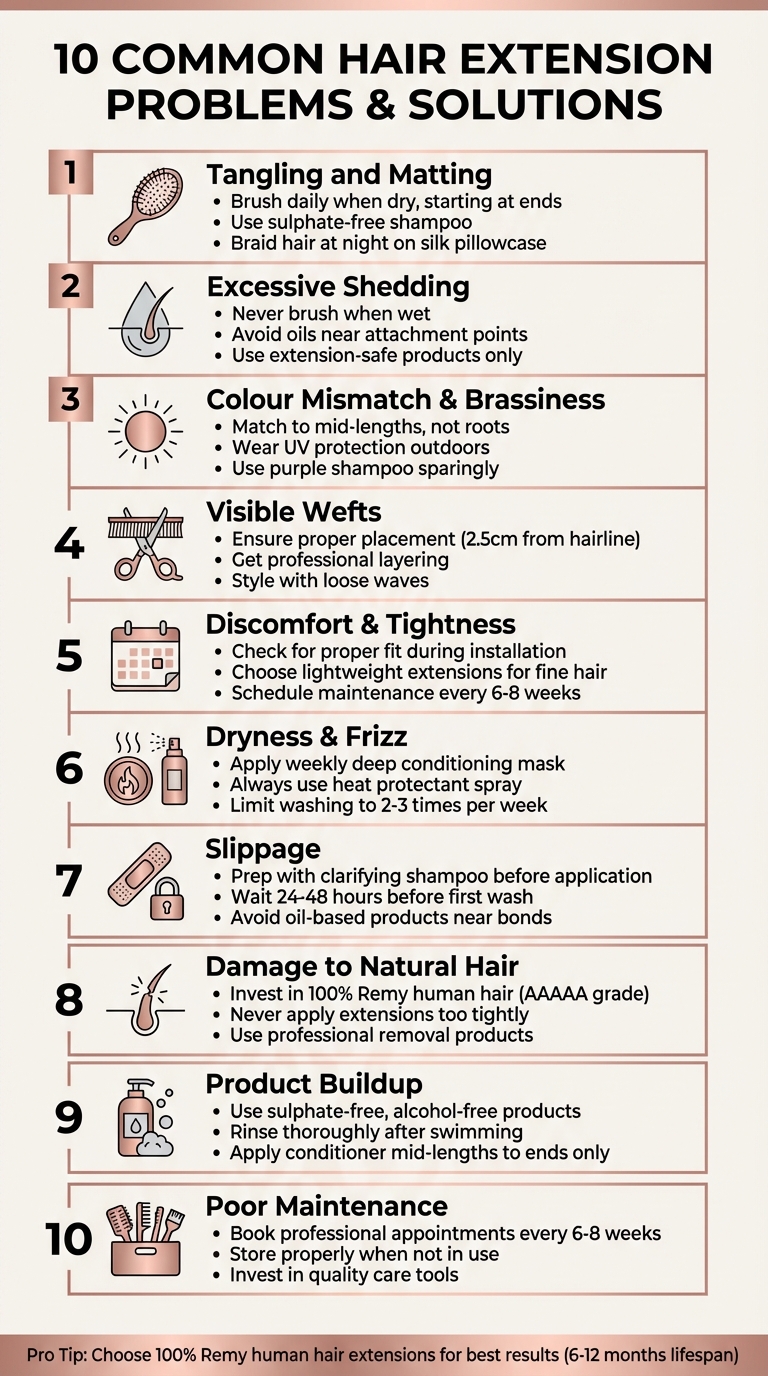
10 Common Hair Extension Problems and Quick Solutions Guide
Hair Extension Mistakes And How To Avoid Them
1. Tangling and Matting
Tangling happens when hair strands twist around each other, creating tight knots. This is particularly common near the roots, at the nape of your neck, or in areas where friction occurs frequently. Unlike natural hair, extensions don’t benefit from your scalp's natural oils, which leaves them drier and more prone to tangles. However, Remy human hair extensions are less likely to tangle because their cuticles remain aligned and intact, reducing friction. A consistent detangling routine can help keep tangles at bay.
Daily Detangling Routine
Always detangle your extensions when they’re dry or just slightly damp - never when soaking wet. Start at the ends and work your way up to the roots to avoid unnecessary stress on the hair shafts. Be gentle and avoid pulling, as this can cause shedding.
The Hair Wonderland Tangle Tamer Brush ($21.95) is specifically crafted for extensions, helping to minimise breakage during detangling. For stubborn knots, apply a small amount of leave-in conditioner or an alcohol-free detangling spray before brushing.
Washing and Night-Time Tips
When washing your extensions, use a sulphate-free shampoo and lukewarm water - hot water can dehydrate the hair and worsen tangling. Be gentle while washing and avoid rough scrubbing. At night, loosely braid your hair or sleep on a silk pillowcase to reduce friction. This is especially helpful for preventing matting around the nape area.
Storage Tips
Proper storage is key to avoiding tangling when your extensions aren’t in use. Brush them gently from the ends to the roots and ensure they’re completely dry before storing to prevent mould. The Hair Wonderland Clip In Bag ($54.00) offers excellent protection against dust and friction. Always store your extensions in a cool, dry place, away from direct sunlight and excess humidity.
2. Excessive Shedding
It's normal to see some shedding during the first few washes as manufacturing hairs naturally fall out. But if you notice consistent hair loss or thinning over several weeks, it could point to issues like rough handling or improper care.
The good news? A few tweaks to your routine can make a big difference in keeping shedding under control.
Gentle Brushing Techniques
Brushing wet extensions can lead to breakage since hair is at its most fragile when wet. To avoid this, brush your extensions before washing and again when they’re dry or just slightly damp. Start at the tips and slowly work your way up toward the roots, all while supporting the hair near the weft or roots with your fingers to minimise tension on the attachments.
For best results, use a soft-bristle brush or a tool specifically designed for extensions, like the Hair Wonderland Tangle Tamer Brush (AU$21.95) or The Detangle Brush (AU$29.95). These tools are gentle enough to remove tangles without harming the bonds. While most hair types benefit from brushing several times a day, curly extensions generally only need brushing twice daily. Proper brushing habits combined with other care tips can help reduce shedding significantly.
Avoid Oils Near Attachments
When it comes to product application, placement is everything. Oils and deep conditioning masks are fantastic for keeping your extensions hydrated, but they should only be applied from the mid-lengths to the ends of your hair. This keeps adhesive bonds - like tape or keratin attachments - secure and intact.
To further protect your extensions, stick to sulphate-free and alcohol-free shampoos and conditioners, as these prevent brittleness. Avoid products loaded with protein, keratin, or alcohol, as they can weaken the bonds and increase shedding risk.
Regular Maintenance
Consistent upkeep is crucial for the longevity of your extensions. For semi-permanent options like tape-ins, plan to re-tape or re-fit them every 6–8 weeks to account for natural hair growth. Skipping this step can strain your natural hair and lead to more shedding.
If you’re wearing bonded extensions, avoid getting them wet for at least 48 hours after application or maintenance services. This gives the adhesive time to properly set, reducing the chances of slippage. Together, these maintenance habits not only cut down on shedding but also help your extensions last longer.
3. Colour Mismatch and Brassiness
When your extensions don't match your hair colour or develop brassy tones, it can ruin the natural look you're aiming for. Whether it's a shade that's slightly off or brassiness that appears over time, these issues can make even the best extensions stand out in the wrong way. Common causes include picking the wrong shade from the start, too much sun exposure, or improper care that strips colour and brings out warm tones.
Like tangling and shedding, keeping your extensions looking natural requires effort and attention, especially when it comes to colour.
Choosing the Right Shade
Getting the colour right is easier than you might think: match your extensions to the mid-lengths and ends of your hair, not the roots. Roots are often a different shade because of regrowth or previous colouring, and they’re usually hidden once extensions are installed.
To find the perfect match, examine your hair in natural daylight - stand near a window or step outside. Look at your hair’s undertones: are they warm (golden, honey, copper), cool (ashy, platinum, beige), or neutral? This will guide you in choosing extensions with complementary tones. If your hair has highlights or natural variations, you can blend two different extension shades by alternating wefts during application. For highlighted hair, match the most dominant shade, and for ombré styles, focus on the base tone. If you're torn between two shades, go for the lighter one - it’s easier to tone down extensions than to lighten them.
Need extra help? Hair Wonderland offers a colour matching service. Simply take clear, close-up photos of your hair’s ends in natural light - no filters or flash - and their team can guide you to the perfect match.
Once your shade is spot-on, the next step is protecting it from environmental and heat-related damage.
Preventing Brassiness
Brassiness, those unwanted orange or yellow tones, often comes from sun exposure. To reduce this risk, wear a hat or use hair products with UV protection when you're outside. If you’re using sunscreen, avoid formulas with Avobenzone or Octocrylene on light blonde extensions, as these can stain. Instead, opt for mineral-based sunscreens with zinc oxide or titanium dioxide, and consider tying your hair up before applying them.
Heat styling can also speed up fading and cause brassiness. Always use a heat protectant spray before styling and keep the temperature settings low. Give your extensions a break from heated tools at least one day a week. To maintain both colour and moisture, switch to sulphate-free shampoos and conditioners. Incorporating a purple shampoo once or twice a week can help neutralise yellow tones - just don’t leave it on too long, as it can over-tone the hair.
Customisation Options
For a flawless match, professional colouring is often the best choice. High-quality human hair extensions can be safely dyed or toned by a stylist to perfectly align with your hair colour. A professional can apply a demi or gloss toner to counteract brassiness, add root shadowing for seamless blending, or darken the extensions by a few shades. Since processed extensions absorb colour more quickly and lack natural oils, they’ll need extra hydration after treatment. This is why professional customisation is ideal - not only can a stylist fine-tune the colour, but they can also trim and texturise the extensions to create face-framing layers and avoid the dreaded "shelf" effect.
4. Poor Blending and Visible Wefts
Getting a natural look with hair extensions isn’t just about proper application and maintenance - it’s also about how well they blend with your natural hair. When extensions stand out, it’s often due to visible clips, tracks, or a noticeable line where your hair ends and the extensions begin. This can happen for several reasons: incorrect placement, skipping professional cutting and layering, improper sectioning during application, natural hair peeking through the bottom layers, or a bulky look caused by too many wefts.
Placement Done Right
Start by figuring out your "extension safe zone." This means keeping extensions at least 2.5 centimetres away from your hairline and parting. To apply, section your hair horizontally, starting at the nape of your neck, and ensure the partings are clean and straight as you work upwards. Attach each weft close to your scalp - tight enough to stay secure but not so tight that it’s uncomfortable. Follow the natural curve of your head for a more realistic flow. If your hair is on the thinner side, place extensions where your hair is thickest to help them blend better. For those with a blunt bob, focus on the lower layers to soften harsh lines. Once everything is in place, having a professional cut the extensions is a must for a polished, natural finish.
The Role of Cutting and Styling
After the extensions are applied, a professional stylist can layer and texturise them to remove bulk and create a smooth transition between your natural hair and the extensions. This step is key to avoiding that telltale "line" where your real hair ends. For shorter styles, like bobs, choosing extensions that match the length of your natural hair can make blending much easier. Once the extensions are cut and styled, you’ll have a solid foundation for maintaining the look every day.
Everyday Styling Tricks
To make your extensions blend seamlessly, try loose waves or big curls - they’re great for hiding attachment points and creating a natural flow. Steer clear of high, tight ponytails or buns, as these can expose the extensions. If needed, lightly backcomb the hair above the wefts to add some texture and disguise them further. For a polished finish, use tools like the Hair Wonderland Styling Comb to refine your layers and keep everything looking flawless.
sbb-itb-dcde78e
5. Discomfort, Tightness, and Itchiness
It’s not uncommon to feel some mild discomfort when your extensions are first installed. However, sharp pain, tightness, or scalp soreness should raise a red flag. These issues are often caused by improper installation, extensions that are too heavy for your hair type, or neglecting scalp care. When extensions are applied too tightly, placed too close to the roots, or pull excessively on the hair follicles, they can cause pain, soreness, and even headaches. Proper fit, lighter extensions, and good scalp care can help resolve these problems.
Checking for Proper Fit
A little tightness is normal as your scalp adjusts, but sharp pain, ongoing discomfort, or a constant pulling sensation means something is wrong. These symptoms shouldn’t be ignored and should be addressed by a professional. If you notice your extensions slipping or tapes becoming loose alongside discomfort, it’s a clear sign to contact your salon for an adjustment. Ensuring the extensions are secure but not overly tight is key to avoiding strain.
Choosing Lightweight Options
For those with fine or sensitive hair, lighter extensions are a better choice to minimise stress on the scalp. Heavier extensions can put unnecessary strain on your hair and scalp, leading to discomfort. A professional stylist should assess the health of your scalp and hair before installation and recommend lighter methods if needed.
Scalp Care Tips
Caring for your scalp is just as important as maintaining your extensions. Use gentle, extension-safe products when washing your hair, and rinse thoroughly to prevent product buildup around the attachment points, which can lead to itchiness and irritation. Regular maintenance appointments, typically every 6 to 8 weeks, are essential. These visits allow your stylist to adjust the extensions as your natural hair grows, helping to prevent unnecessary tension and discomfort.
6. Dryness, Frizz, and Loss of Shine
Extensions don’t benefit from the natural scalp oils that keep hair hydrated, making them more prone to dryness and dullness. Australia's diverse climate adds extra challenges, whether it’s the harsh coastal sun, chlorinated pools, or the high humidity of Brisbane and the tropical north. Everyday factors like saltwater, chlorine, and prolonged sun exposure can strip moisture and fade colour-treated extensions. During summer, these issues often lead to dullness and brassiness, highlighting the need for proper care to maintain vibrant, glossy extensions. Below are practical tips to keep your extensions hydrated, shiny, and frizz-free.
Hydration Strategies
Restoring moisture is key to maintaining healthy-looking extensions. Start by using sulphate- and paraben-free products designed for extensions, and treat your hair to a deep conditioning mask once a week. Leave the mask on for 20–30 minutes, focusing on the mid-lengths and ends - steer clear of the bonds to avoid loosening them. Leave-in conditioners or serums can help tame frizz and make brushing easier. Limit washing to 2–3 times per week, and always rinse your extensions thoroughly after swimming or intense workouts to remove sweat or chlorine.
Styling Techniques for Shine
Once your extensions are hydrated, the way you style them can make all the difference in preserving their shine. Heat styling without protection can cause significant damage, so always use a heat protectant spray before reaching for a straightener, curling iron, or blow dryer. Stick to moderate heat settings to avoid weakening the bonds. When blow-drying, opt for a low heat setting and direct the airflow downward to smooth the hair cuticles. Better yet, let your extensions air dry whenever possible to reduce heat exposure. Regular brushing with a soft-bristle or extension-specific brush - from the tips upward - helps maintain smoothness and distribute any lingering natural oils.
Managing Frizz in Humidity
Humidity, especially in tropical areas like Cairns and Darwin or subtropical cities like Brisbane, can wreak havoc on extensions by lifting the cuticle and causing frizz. To combat this, apply anti-frizz serums or oils that smooth the cuticle and create a barrier against moisture. Avoid products with high levels of humectants, as they can attract excess moisture in humid conditions. Protective hairstyles, like braids, buns, or ponytails, are great for shielding your extensions from constant exposure to humid air. Hair Candy offers this advice:
"Chlorine and saltwater can dry out extensions. Always wear a swim cap or rinse hair thoroughly after swimming. Prolonged sun exposure can fade colour-treated extensions, so consider UV protection sprays."
Finally, ensure your extensions are fully cooled and dry before storing them to maintain their integrity and appearance.
7. Slippage and Extensions Falling Out
Dealing with hair extensions that slip or fall out too soon can be frustrating. Most of the time, this happens because of improper installation - things like poorly clamped beads, incorrect sectioning of hair, or not applying adhesive properly for tape-ins can all lead to issues. Another common culprit is product buildup. Silicones, oils, or heavy conditioners can leave a slippery residue on your natural hair, making it hard for the adhesive to stick and weakening the bonds. Fortunately, these problems are often avoidable with the right preparation and aftercare.
Pre-Application Preparation
Preparation is everything when it comes to preventing slippage. Start by washing your hair with a clarifying shampoo to remove any residue from silicones, oils, or alcohol. Make sure your hair is completely dry before applying extensions, as dampness can interfere with adhesion. Avoid using conditioners, masks, or leave-in products near the roots before installation, as these can make it harder for the adhesive to grip properly. A clean and stable base is essential for secure extensions.
Post-Care Rules
The first 24–48 hours after application (or 48–72 hours for tape-ins) are crucial. During this time, avoid washing your hair to allow the bonds or adhesive to fully set. Once this period has passed, steer clear of oil-based products, conditioners, treatments, hair sprays, dry shampoos, or foam styling products near the attachment points. When conditioning, focus only on the mid-lengths to the ends, keeping products away from the scalp and bond areas. Stick to extension-friendly products that are free of sulphates and alcohol and are low in proteins or keratin, as regular products can weaken the adhesive. If you notice slippage because of product buildup, use a clarifying shampoo to thoroughly cleanse your scalp before reattaching the extensions. Following these rules helps maintain strong bonds and keeps your extensions securely in place.
Secure Attachments
For the best results, combine proper preparation and aftercare with professional installation. A skilled stylist ensures your extensions are applied securely with minimal strain on your natural hair. When installed correctly, products like Hair Wonderland's tape sheets provide dependable adhesion that holds up to daily wear. It's vital that your stylist uses the right sectioning techniques and the appropriate amount of adhesive for a strong hold. Regular maintenance appointments are also important - they allow your stylist to catch and fix any potential issues early, keeping your extensions looking flawless. With quality products and expert application, you can enjoy secure, long-lasting extensions that blend seamlessly with your natural hair.
8. Preventing Damage to Natural Hair
When done correctly and maintained with care, hair extensions won't harm your natural hair. Most damage happens due to improper application or using low-quality materials. Building on earlier advice about secure attachment and maintenance, here are some additional ways to protect your natural hair.
Avoiding Tight Applications
A professional installation is key to evenly distributing the weight of the extensions and securing them without stressing your natural hair. Before applying extensions, your hair should be clean, free of buildup, moisturised, and strong enough to handle the added weight. Dermatologists warn that pain or headaches are signs the style is too tight. If you feel discomfort during the process, ask your stylist to adjust the tension immediately. Opt for high-quality, 100% human hair extensions to reduce unnecessary strain on your scalp and hair.
Safe Removal Practices
Improper removal of extensions can lead to severe issues like breakage, matting, or even permanent hair loss. Use professional tools and products such as Hair Wonderland's Removal Solution ($54.00) for tape-ins, which safely dissolves adhesives. Work slowly in small sections to avoid damage. For more complex types like keratin bonds, fusion, or sew-ins - or if your hair is heavily tangled - it's best to schedule an appointment with a professional stylist.
Protective Styling
Once your extensions are in, choose low-tension hairstyles to avoid putting stress on your natural hair. At night, loosely tie your hair with a soft scrunchie or sleep on a silk or satin pillowcase to minimise friction. During workouts, secure your hair in a loose ponytail or braid to prevent tangling. Avoid hairstyles that create constant tension on your extensions or natural hair, as this can weaken both over time.
Conclusion
Hair extensions can elevate your look, but they require consistent care to avoid common pitfalls like tangling, shedding, mismatched colours, or discomfort. These issues often arise from poor-quality materials, improper maintenance, or incorrect application. The good news? With the right approach and tools, you can prevent these problems and enjoy flawless extensions.
The foundation of great extensions lies in quality. Choosing 100% Remy human hair extensions (graded AAAAA or higher) makes a world of difference. These premium extensions are less likely to tangle or degrade, lasting 6–12 months with proper care. Investing in high-quality extensions not only enhances your style but also protects your natural hair.
Maintaining your extensions is just as important as choosing them. A solid routine that includes daily detangling with gentle tools, careful washing, and protective styling at night keeps your extensions looking fresh and prevents damage to your natural hair. Professional-grade care products are a must to preserve their condition.
Equally essential is professional installation and removal. A skilled stylist ensures proper weight distribution, reducing the risk of traction alopecia, breakage, or matting. This step also guarantees seamless blending and protects both your extensions and natural hair.
Ultimately, the longevity and natural appearance of your extensions depend on the time and effort you invest in their care. By prioritising quality and establishing a consistent maintenance routine, you can enjoy beautiful, long-lasting extensions while keeping your natural hair healthy.
FAQs
What’s the best way to stop hair extensions from tangling and matting?
To keep your hair extensions looking smooth and free of tangles, make it a habit to gently brush them every day. Use a wide-tooth comb or a brush specifically designed for extensions, starting at the ends and working your way up to avoid breakage. Steer clear of brushing your hair when it’s wet, as this is when it’s most vulnerable to damage.
When it comes to washing, stick to sulphate-free shampoo and conditioner to maintain hydration and avoid exposing your extensions to harsh chemicals. At night, consider loosely braiding your hair or sleeping on a satin pillowcase to minimise tangling while you sleep. To keep your extensions in top shape, schedule professional maintenance every 6–8 weeks and follow any specific care guidelines provided for your extensions.
How can I minimise shedding in my hair extensions?
To minimise shedding, always hold and support your extensions while brushing. Use a wide-tooth comb or a brush specifically made for extensions. Stick to sulphate-free, high-quality hair products to keep the hair looking its best, and try to limit heat styling to avoid unnecessary damage. Regular, gentle brushing is key to preventing tangles, but be careful not to tug on the bonds or wefts.
It's also important to book professional maintenance every 6–8 weeks. This ensures your extensions stay secure and in great condition. With proper care, your extensions can stay looking stunning for much longer.
How can I make my hair extensions blend naturally with my own hair?
To get a natural look, start by selecting high-quality Remy human hair extensions that closely match your hair's colour and texture. For the best results, consider having them professionally applied to achieve a polished and seamless finish.
To maintain a flawless blend, gently brush your extensions starting at the ends and working up towards the roots. Avoid using heavy styling products near the bonds, as this can make them more noticeable. Regular care is key - wash your extensions with sulphate-free shampoos and follow up with lightweight conditioners to keep them soft and natural-looking.