


Your heat protectant is essential for safely heat style hair extensions to prevent damage. Without it, extensions - lacking natural oils - become dry, brittle, and prone to breakage. But how can you tell if your heat protectant is actually working? Here are the five key signs:
- Soft, Moisturised Hair: Extensions feel smooth and flexible post-styling, not stiff or brittle.
- No Frizz or Flyaways: The cuticle stays sealed, preventing frizz and static.
- Maintained Shine: Extensions retain their glossy finish and vibrant colour after heat exposure.
- Reduced Breakage: Fewer split ends and less snapping during styling.
- Cooler Hair During Styling: Hair doesn’t overheat, thanks to the protectant’s heat-distributing barrier.
For best results, always apply protectant evenly, let it dry before styling, and avoid excessive heat. These simple steps can help extend the life of your extensions while keeping them looking their best.
Hairdresser’s Guide to Using Heat Protectant Correctly
sbb-itb-dcde78e
1. Hair Stays Soft and Moisturised
When your extensions remain soft and flexible after styling, it’s a clear sign that your heat protectant is doing its job. On the other hand, if they feel stiff, rough, or brittle, the product is falling short.
Heat protectants work by forming a physical shield around each hair strand. Daniel Eldridge, a Senior Lecturer in Chemistry at Swinburne University of Technology, describes it this way:
This coating is a protective layer; it's like putting an oven mitt on your hands before you handle a hot tray from the oven.
This barrier slows down how quickly heat penetrates the hair, ensuring thermal energy spreads evenly. It also helps prevent dryness by sealing the cuticle to lock in moisture.
This is especially crucial for extensions. Unlike natural hair, extensions don’t benefit from a regular supply of sebum (your scalp's natural oils). They rely entirely on external sources to stay hydrated. A quality heat protectant not only locks in moisture but often includes nourishing ingredients like argan oil or shea butter to keep extensions hydrated.
These protective effects make a noticeable difference in how your extensions look and feel during and after styling.
What to Look For
After styling, run your fingers through your extensions. They should feel smooth and supple, not crunchy or straw-like. Pay close attention to the mid-shaft down to the ends - the oldest and most fragile parts of the extensions. If these areas feel brittle or break easily, your heat protectant isn’t providing enough protection. Ideally, the hair should retain its natural movement and bounce, rather than becoming stiff or lifeless.
2. No Frizz or Flyaways After Styling
If your extensions stay sleek and smooth after styling, it’s a good sign your heat protectant is doing its job. Frizz, on the other hand, signals trouble - it’s your hair’s way of showing that the cuticle has been damaged or lifted due to heat exposure.
A heat protectant works by forming a barrier over your hair, keeping the cuticle layers flat and smooth. This protective layer helps prevent the cuticle from lifting when exposed to heat. As cosmetic chemist Michelle Wong explains:
If you heat wet hair this way, "steam will blast through your hair's structure." This steam bubbling or bursting through the hair can cause substantial damage.
This barrier doesn’t just stop frizz; it also reduces static flyaways. For extensions, this protection is even more critical. Unlike natural hair, extensions don’t benefit from the scalp’s natural oils, which keep hair hydrated and shielded. That’s why ensuring they stay smooth post-styling is key to maintaining their quality with a consistent hair extension care routine.
Why This Matters
Frizz-free results mean your heat protectant has done its job - keeping the cuticle sealed and preventing damage. When the cuticle stays intact, your extensions retain their smooth texture and avoid that dry, "fried" appearance. A healthy cuticle isn’t just about looks; it also helps your extensions last longer.
How to Test
To make sure your heat protectant is effective, check your extensions right after styling. They should look glossy and feel smooth. Pay attention during styling - unusual sounds or odours can be warning signs. And on humid days, see how well your extensions resist frizz. A good heat protectant will hold up against moisture in the air.
3. Extensions Keep Their Shine
Beyond guarding against moisture loss and frizz, a reliable heat protectant also helps your extensions maintain their glossy, light-reflecting finish after styling.
When your extensions still look shiny and vibrant post-styling, it’s a clear sign your heat protectant is doing its job. A good product works by keeping the cuticle flat, which not only enhances shine but also protects the protein structure of the hair from heat damage .
Heat damage doesn’t just mess with texture - it can also affect the colour. Styling tools typically operate at temperatures between 150°C and 200°C, which can cause fading or even shift the hair’s pigmentation. Celebrity hairstylist Alex Brown Glover puts it best:
Heat protectants act as a protective barrier between your hair and a hot tool, protecting it from burning, drying out, and becoming dull. It will also help smooth the cuticle and leave hair looking shiny and healthy.
Since extensions don’t produce natural sebum, they’re especially prone to dullness caused by heat exposure. A quality heat protectant steps in to seal moisture within the hair fibres, preventing that dry, "fried" look that can result from water evaporating during styling.
Signs of Effective Protection
Well-protected extensions should look vibrant and glassy, not dull or matte. Their colour should remain true - blondes won’t turn brassy, and darker shades won’t fade into a lifeless brown. After styling, the hair should feel smooth and silky, not stiff or crunchy. If you notice uneven dull patches, it could mean heat wasn’t distributed evenly.
To keep extensions looking their best, seek out heat protectants with UV filters like benzophenone or cinnamate derivatives. These ingredients shield hair from sun-induced oxidation and fading, which is especially crucial under Australia's intense UV rays. Antioxidants in these products also help combat environmental stressors that gradually rob hair of its shine. Keep in mind that heat damage builds up over time - every unprotected styling session weakens your extensions’ ability to hold colour and reflect light.
4. Less Breakage and Split Ends
Using an effective heat protectant can significantly reduce breakage and help maintain healthy ends.
Heat styling damages hair by breaking down cystine bonds, which are essential for hair strength. Dr. Joe Cincotta, VP of Research & Development at Color Wow, explains:
When we experience any type of breakage, it's actually the cystine bonds being forcibly broken causing the hair to weaken.
A good heat protectant works by safeguarding these internal bonds, ensuring your extensions remain strong and flexible rather than becoming brittle and prone to snapping. This is especially important for extensions, as they don’t benefit from the natural oils produced by the scalp. Heat protectants also create a moisture barrier, which helps the hair stay pliable under stress.
Clinical studies reveal that certain heat-activated treatments can reduce hair breakage by up to 50% after just one use. This level of protection is especially vital when using styling tools that operate at temperatures between 150°C and 200°C. For high-quality extensions, like those from Hair Wonderland, proper care is essential to maintain their natural look and durability.
What to Monitor
- Check for broken fragments, split ends that resemble "Y" or "V" shapes, and uneven strands; smooth combing typically indicates intact cuticles.
- Feel the ends of your hair - healthy ends should feel soft and hydrated, not dry or brittle.
- Watch for shorter, uneven strands within your extensions, as this could signal mid-shaft breakage and a need for a stronger heat protectant.
- Avoid using styling tools above 193°C, as excessive heat can degrade the effectiveness of your heat shield.
5. Hair Feels Cool During Styling
When your hair feels cool during styling, it's a reassuring sign that your heat protectant is doing its job. A good heat protectant forms a thin barrier over the hair, slowing heat penetration into the core and spreading warmth evenly across the surface. This prevents dangerous "hot spots" that could lead to localised damage.
Licensed hairstylist Ebony Everette explains:
Heat protectants work by forming a thin, protective barrier over the hair shaft, which reduces direct heat exposure... This barrier distributes heat more evenly to prevent 'hot spots'.
Another key indicator of effective heat protection is the absence of visible steam or a burning smell during styling. If you notice these signs, it could mean your styling tool is too hot, or the protectant hasn't dried completely. Always let the product fully absorb before using tools like flat irons or curling wands to avoid damage.
You can also perform a simple touch test during styling. While your hair may warm up, it should never feel uncomfortably hot. Extensions that stay at a manageable temperature show that heat is being distributed gradually, which helps preserve their health over time. This test is a quick way to confirm your heat protectant is working as intended.
Temperature Guidelines
To keep your extensions safe, always set your styling tools below 180°C. Unlike natural hair, extensions lack scalp oils that provide some protection against heat, making them more prone to damage from high temperatures.
Here are safe temperature ranges for different tools:
- Hair dryers: 150–180°C
- Curling tongs: 130–180°C
- Heated rollers: 100–130°C
Start with the lowest temperature setting - 120–150°C is often enough for most styling needs. Using professional tools with ceramic or tourmaline plates can also help. These materials spread heat more evenly than metal, reducing the risk of overheating specific areas. Another tip: keep hot tools moving to avoid concentrating heat in one spot.
Quick Reference: Signs Your Heat Protectant Works
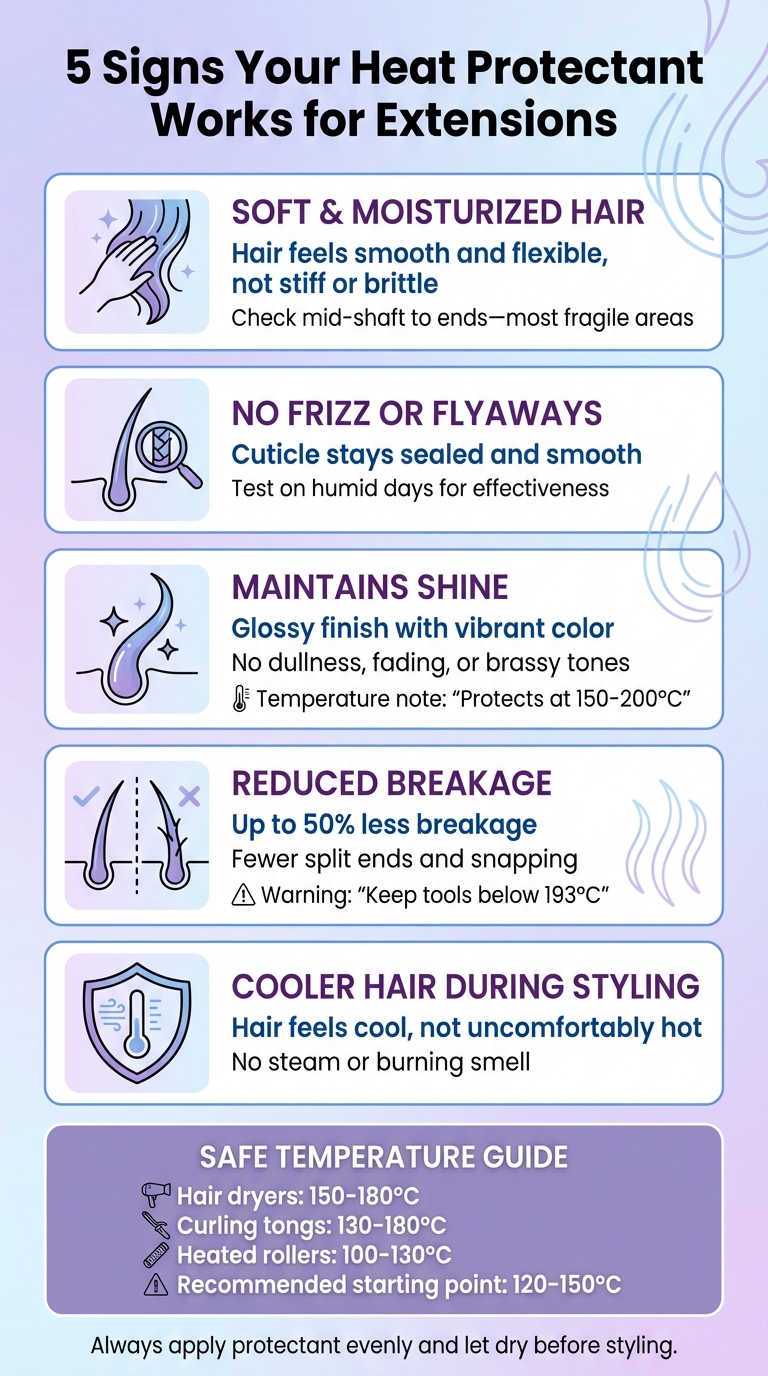
5 Signs Your Heat Protectant Works for Hair Extensions
Here's a handy guide to quickly assess whether your heat protectant is doing its job. Use the table below to confirm your extensions are staying protected while heat styling extensions.
Comparison Table
| Sign | What to Check | Expected Result |
|---|---|---|
| Texture & Moisture | Run your fingers through the mid-lengths and ends after styling. | Hair should feel soft, silky, and hydrated - not dry, brittle, or "crunchy". |
| Frizz & Flyaways | Check the hair surface under bright light for frazzled strands or static. | Expect a smooth, sleek finish with reduced frizz and fewer flyaways. |
| Shine & Lustre | Observe how the extensions reflect light in natural or bright conditions. | Look for a healthy, glossy sheen with vibrant colour - not a dull or matte appearance. |
| End Integrity | Inspect the tips of the extension strands closely. | There should be minimal split ends and no white "dots" that signal breakage. This is one of many common hair extension problems users face. |
| Styling Ease | Pay attention to how your flat iron or curling wand moves through the hair. | The tool should glide smoothly without snagging, sticking, or emitting a burning smell. |
If your extensions match these results, your heat protectant is doing its job. For a deeper dive into each sign, check out the earlier sections.
Conclusion
Your heat protectant isn’t just another styling product - it’s your invisible shield against temperatures soaring up to 220°C. When your hair feels soft and hydrated, shines with a glossy finish, resists frizz, and maintains smooth ends, that’s the protectant doing its job.
Investing in premium double-drawn Russian and Mongolian human hair extensions is no small decision, and they deserve the right care. Without a protective barrier, each styling session chips away at moisture, weakens the keratin structure, and shortens the lifespan of your extensions.
Using a high-quality heat protectant consistently can make a noticeable difference in how long your extensions last. It helps maintain the cuticle alignment that keeps Remy hair tangle-free and preserves the even thickness from root to tip - qualities that make premium extensions stand out.
To keep your extensions looking flawless, stick to a few key habits: keep styling tools at around 185°C, apply protectant from mid-lengths to ends before every heat session, and avoid placing hot tools directly on bonds or wefts. These small steps, paired with a dependable heat protectant, can keep your extensions looking as stunning as the day you got them. Your hair’s health, shine, and longevity all depend on that protective layer doing its job - and now you’re equipped to make sure it does.
FAQs
What are the signs that my heat protectant isn’t working on my extensions?
If your heat protectant isn’t doing its job, your human hair extensions might start to show obvious signs of damage after styling. These can include dryness, breakage, split ends, frizz, or a coarse texture. Such issues clearly indicate that your extensions aren’t getting the protection they need from heat styling tools.
To avoid further harm, make sure you’re using a high-quality heat protectant formulated specifically for human hair extensions. Applying it correctly and distributing it evenly is just as important to keep your extensions looking sleek, healthy, and lasting longer.
What should I look for in a heat protectant to keep my extensions safe?
When selecting a heat protectant for your extensions, it’s essential to focus on products designed to shield against heat damage while preserving the hair's integrity. Key ingredients to look out for include:
- Silicones like dimethicone: These create a protective barrier to guard against high temperatures.
- PVP/DMAPA acrylates copolymer: Offers heat resistance to minimise damage.
- Quaternium-70: Strengthens the hair, making it more resilient.
- Hydrolysed wheat protein: Nourishes and reinforces the hair, keeping it healthy.
These components work together to reduce breakage, tame frizz, and keep your extensions smooth and glossy, even after styling. Be sure to check the label to confirm the product is safe for human hair extensions and suits your specific styling preferences.
Why is it important to avoid overheating your extensions during styling?
Excessive heat can break down the natural proteins in human hair extensions, leaving them dry, brittle, and prone to damage. A good heat protectant acts as a shield, reducing the impact of heat tools and helping your extensions stay smooth, shiny, and healthy.
Styling at lower temperatures also helps preserve the natural texture and strength of your extensions, extending their lifespan and ensuring they blend effortlessly with your own hair.