


Asian hair extensions are strong, sleek, and long-lasting, but they can be stiff and harder to style. Here's what you need to know:
- Strengths: Thick strands resist breakage, handle heat well, and last 1–2 years with care. They dry quickly and are frizz-resistant, perfect for humid climates like Australia's coastal areas.
- Challenges: They can feel stiff, struggle to hold curls, and may not blend easily with finer hair textures. Silicone coatings for shine wear off, leaving the hair dry and less flexible.
If you want sleek, straight styles with minimal upkeep, these extensions are a great fit. For more styling variety, extra care like moisture treatments and proper techniques is essential. Balancing durability with styling ease depends on your needs and preferences, so it helps to compare different hair extension types before deciding.
Strength Benefits of Asian Hair Extensions
Long-Term Durability
Asian hair extensions are known for their round, coarse strands, which contribute to their impressive lifespan - typically lasting 1–2 years with proper care. Their strong structure makes them more resistant to the wear and tear of regular brushing, combing, and styling. This durability is especially useful in Australia, where varying environmental conditions can put hair extensions to the test.
Resistance to Damage and Breakage
Thanks to their sturdy composition, Asian hair extensions offer excellent resistance to breakage during washing, styling, or everyday use. Many salon professionals praise their strength, making them a reliable choice for high-demand settings. Additionally, their low porosity helps minimise frizz and prevents deterioration in humid climates, ensuring they stay in great condition over time. This resilience also makes them ideal for handling heat styling without significant damage.
Heat Styling Tolerance
Asian hair extensions hold up well under high-temperature styling tools, thanks to their robust structure and low porosity. They are less prone to heat damage, making them ideal for achieving sleek, straight looks that are popular among Australian clients. While they may require higher heat settings for curling compared to finer hair types, they generally resist burning or frizzing during straightening. To maximise their lifespan, it’s a good idea to use a heat protectant when styling.
sbb-itb-dcde78e
Flexibility Challenges of Asian Hair Extensions
Asian hair extensions are known for their durability, but their processing often leads to stiffness, making styling more difficult.
Stiffness and Limited Movement
The natural coarseness of Asian hair, combined with factory treatments, often results in reduced flexibility. Many manufacturers use acid baths to strip the hair cuticle for a more uniform appearance. However, as Belle Société explains:
Most extension factories use acid baths to remove the cuticle for uniformity. But without the cuticle: hair becomes dry, moisture escapes, strands break, stiffness begins within days.
To mask this damage, extensions are often coated in silicone, giving them a temporary shine and softness. Unfortunately, once the silicone washes out, the hair becomes noticeably dry, stiff, and more prone to tangling. Excessive steaming during processing can further weaken the hair, causing it to lose its natural flow and appear stringy instead. These factors also make it harder for the extensions to hold curls.
Curl Retention Difficulties
Asian hair extensions often struggle to retain curls due to their naturally straight and heavy structure. The larger strand diameter adds weight, causing curls to fall quickly. Additionally, this type of hair lacks "curl memory", making it difficult for curls to hold their shape.
The thick cuticle and low porosity of Asian hair also make it harder for heat and styling products to penetrate effectively. This is compounded by the smooth, slippery surface created by silicone coatings, which prevents curls from setting properly. As Tasha Nelly from Indique Hair points out:
Extensions that have been chemically treated, heavily steamed, or silicone-coated may look shiny and smooth, but that glass-like look stops curls from setting right.
To improve curl retention, try pinning curls immediately after styling and letting them cool. Follow a guide to heat styling extensions by using heat protectants and higher temperature settings (175°C–210°C) along with smaller curling barrels (3/4-inch or 1-inch) to create tighter curls that last longer.
Blending with Fine Hair
The coarse texture and thicker strands of Asian hair extensions can make blending with finer natural hair difficult. This contrast is particularly noticeable when natural hair is soft and lightweight, as the extensions may appear bulkier and more rigid. Mineral build-up from hard water or heavy oils can further highlight these differences.
To achieve better blending, opt for lightweight, water-based styling products and leave-in mists instead of heavy creams. A clarifying shampoo can help remove silicone or product build-up before styling. Texturising sprays or volumising mousse can also help create a more seamless integration between natural hair and extensions.
Strength vs. Flexibility: Direct Comparison
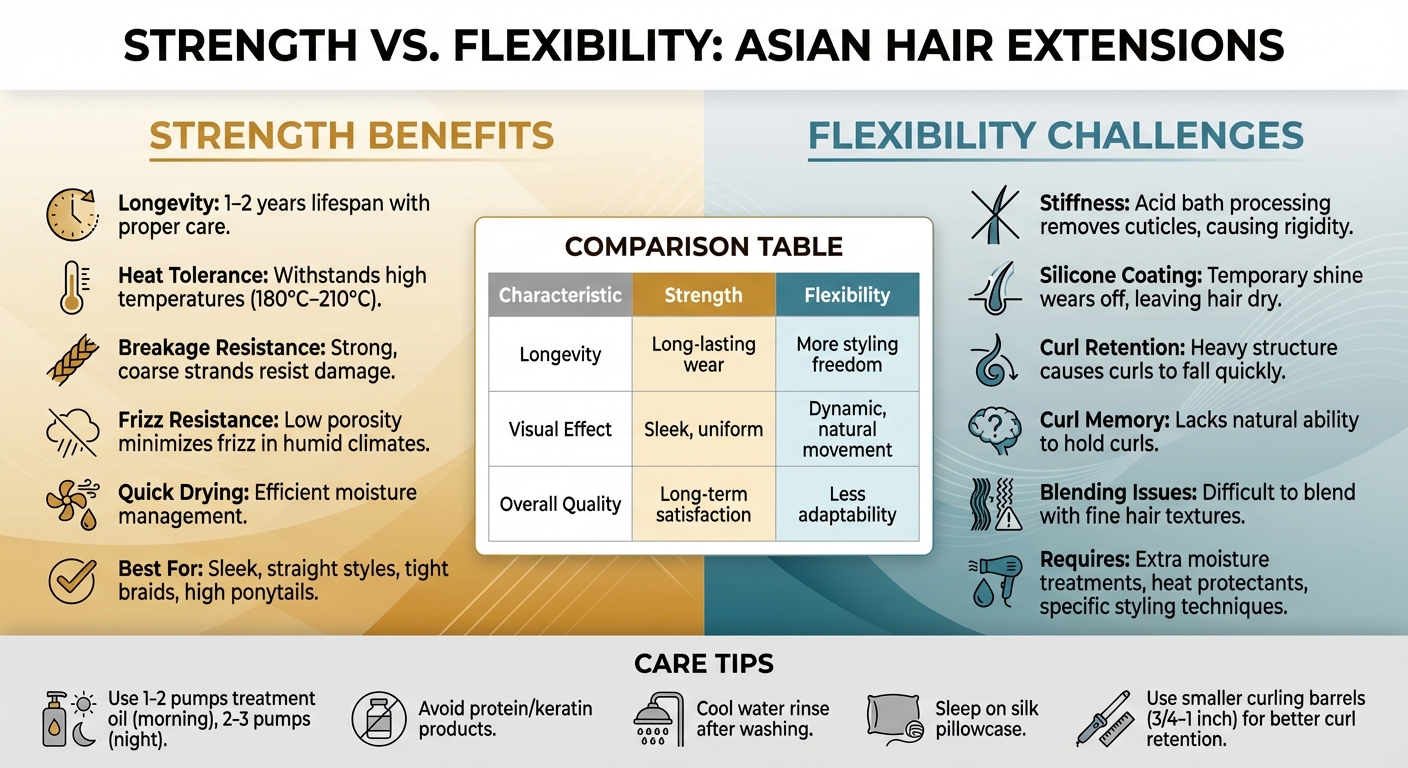
Asian Hair Extensions Strength vs Flexibility Comparison Chart
Asian hair extensions are known for their durability but come with less styling flexibility. The type of hair used in extensions - such as Asian hair - plays a crucial role in how to make hair extensions last longer and the overall appearance they deliver. Striking the right balance between strength and flexibility is all about matching the extension's qualities to your personal needs. You can use a compatibility checker to find your ideal match.
Here's a quick breakdown of how these characteristics compare:
Comparison Table: Key Characteristics
| Characteristic | Durability (Strength) | Styling Versatility (Flexibility) |
|---|---|---|
| Longevity | Focuses on lasting wear and secure results | Offers more freedom for varied styling |
| Visual Effect | Provides a sleek, uniform appearance | Allows for a more dynamic, natural movement |
| Overall Quality | Prioritises long-term satisfaction | Places less emphasis on adaptability |
How Strength and Flexibility Affect Styling
The strength of Asian hair extensions plays a big role in determining which styles work best and which require extra care. Thanks to their high tensile strength, these extensions can handle significant pulling and heat, making them ideal for sleek looks but a bit trickier for curls.
Styles That Highlight Strength
Straight, sleek styles are a perfect match for Asian hair extensions. Their natural thickness and durability allow them to handle ceramic flat irons set at around 180°C without damage, sealing the cuticles for a smooth, polished appearance. Tight braids and high ponytails are also well-suited to this hair type, as the strands can endure tension without breaking.
When it comes to curls, the right technique is key. Instead of relying solely on heat, hold each section with a large-barrel curling iron for 8–10 seconds, then let the curls cool completely before styling. This cooling step is crucial because it helps set the strong protein bonds in the hair, which naturally resists curling.
While these styles showcase the extensions' strength, achieving a more natural flow requires specific methods to improve flexibility.
Tips for Enhancing Flexibility
Balancing strength with flexibility requires targeted care. Since Asian hair extensions lack natural scalp oils, adding moisture manually is essential. Use 1–2 pumps of treatment oil on the mid-lengths and ends in the morning, and increase to 2–3 pumps at night to prevent brittleness. After washing, finish with a cool water rinse to close the cuticles and encourage smoother movement.
Avoid hair products containing protein or keratin, as these can make Asian hair extensions overly stiff and difficult to manage after just one use. Instead, opt for paraben-free conditioners applied to the mid-lengths and ends, along with leave-in serums to add softness and reduce rigidity. For extra care, loosely braid the extensions before bed and sleep on a silk pillowcase to minimise friction and prevent tangling.
Conclusion: Choosing Based on Your Needs
Asian hair extensions offer a distinct balance: they provide incredible strength but come with less flexibility for styling. If your natural hair is thick and straight, and you prefer sleek, polished styles that last with minimal effort, these extensions are a perfect fit. They handle heat styling with ease, but their firmness might make it tough to maintain curls or blend seamlessly with finer hair textures.
For those aiming for more versatile styles with natural movement, you'll need to invest in extra moisture treatments and specific styling methods to work around their stiffness. Ultimately, the best choice comes down to weighing these factors against your personal styling preferences.
Hair Wonderland’s premium double-drawn Russian/Mongolian extensions strike a great balance between durability and natural movement. Thanks to their hybrid weft technology and 100% Remy quality, they retain the cuticles for strength while offering flexibility. With proper care, like using treatment oils and heat protectants, these extensions deliver both long-lasting wear and styling options. Plus, they’re a favourite among salons across Australia, boasting over 1,000 five-star reviews.
FAQs
How can I tell if my Asian extensions are silicone-coated?
You can tell if Asian extensions are coated with silicone by feeling for a slippery or greasy texture when you touch the hair. Another way to check is the burn test: if the hair melts or gives off a chemical smell, it’s probably silicone-coated. This coating is typically applied to make the extensions look shiny and smooth.
What’s the best way to make curls last in Asian hair extensions?
To help curls stay longer in Asian hair extensions, start by using a heat protectant if you're styling with heat, and make sure the temperature doesn't go above 180°C. You can also try non-heat methods like flexi rods or pin curls to keep the curl pattern intact.
Keep the extensions well-hydrated and detangled to maintain their quality. Sleeping on silk pillowcases can also help minimise frizz and protect the curls. Avoid using harsh chemicals, handle the extensions with care, and store them properly to maintain their shape and durability.
Are Asian hair extensions a good match for fine hair in Australia’s humidity?
Asian hair extensions are a fantastic choice for fine hair, especially in Australia's humid conditions. Their lightweight and flexible design makes them easy to wear, while their natural blending ability helps reduce bulk. When styled and cared for correctly, they can even help minimise frizz, which is a common challenge in humid weather.
To get the best results, go for high-quality, double-drawn extensions. Pair them with gentle brushing techniques and protective hairstyles to keep them looking natural and long-lasting, no matter the climate.