


Hand-tied wefts are lightweight, natural-looking hair extensions made from 100% human hair. These extensions are ideal for people with fine or thinning hair, as they provide volume and length without causing damage or adding bulk. Installed using a glue-free, heat-free beaded technique, they sit flat against the scalp, making them nearly invisible - even in high ponytails or buns. With proper care and regular maintenance every 6–8 weeks, they can last up to 12 months.
Key points:
- Natural look: Thin, hand-sewn design blends seamlessly with your hair.
- Gentle application: No glue or heat, minimising damage to natural hair.
- Durable: Lasts 6–12 months with the right upkeep.
- Comfortable wear: Lightweight and suitable for fine or delicate hair.
- Styling flexibility: Easy to style in updos, waves, or braids.
For the best results, professional installation is recommended. Following a daily hair extension care routine, including brushing and using sulphate-free shampoo, are crucial for maintaining the extensions’ longevity and appearance.
Key Features of Hand-Tied Wefts
Lightweight Construction and Natural Look
Hand-tied wefts are known for their thin, flexible design. Each strand is carefully hand-sewn onto a delicate track, often using high-quality Russian or Mongolian hair, resulting in a flatter and more natural-looking weft compared to machine-made options. Thanks to this slim profile, these extensions sit close to the scalp, making them almost invisible - even when styled into high buns or ponytails.
Their lightweight nature reduces strain on your scalp and natural hair, making them an excellent choice for those with fine or thinning hair. Stylists can also customise the width of each weft to create a personalised fit that blends seamlessly with your hair, ensuring it moves naturally. This precise craftsmanship not only enhances their appearance but also allows for a gentle application process that skips harsh chemicals and heat.
Heat-Free and Glue-Free Application
Hand-tied wefts are applied using a beaded foundation technique, steering clear of heat, glue, or strong adhesives. Tiny silicone-lined beads hold your natural hair in place while the wefts are sewn in, protecting your hair's cuticle and structure from damage caused by chemicals or heat.
This adhesive-free method is particularly beneficial for individuals with sensitive scalps, as it reduces the risk of irritation or allergic reactions often linked to tape-in or bonded extensions. Plus, without glue residue, you can maintain your usual hair care routine, including washing and conditioning. Removal is straightforward and quick - usually taking just 5 to 10 minutes - without the need for harsh solvents or excessive pulling. These gentle methods not only safeguard your natural hair but also enhance the longevity of the extensions.
Durability and Lifespan
Thanks to their hand-sewn construction and proper maintenance (recommended every 6–8 weeks), hand-tied wefts can last between 6 and 12 months. Each row typically supports up to 100 grams of weight. The beaded foundation evenly distributes the weight across your scalp, reducing strain on individual strands. This balanced approach helps prevent traction alopecia and ensures the extensions remain comfortable and natural-looking throughout their lifespan.
sbb-itb-dcde78e
How to Install Hand-Tied Hair Extensions on a Client | Step-by-Step Guide for Seamless Results
Benefits of Hand-Tied Wefts
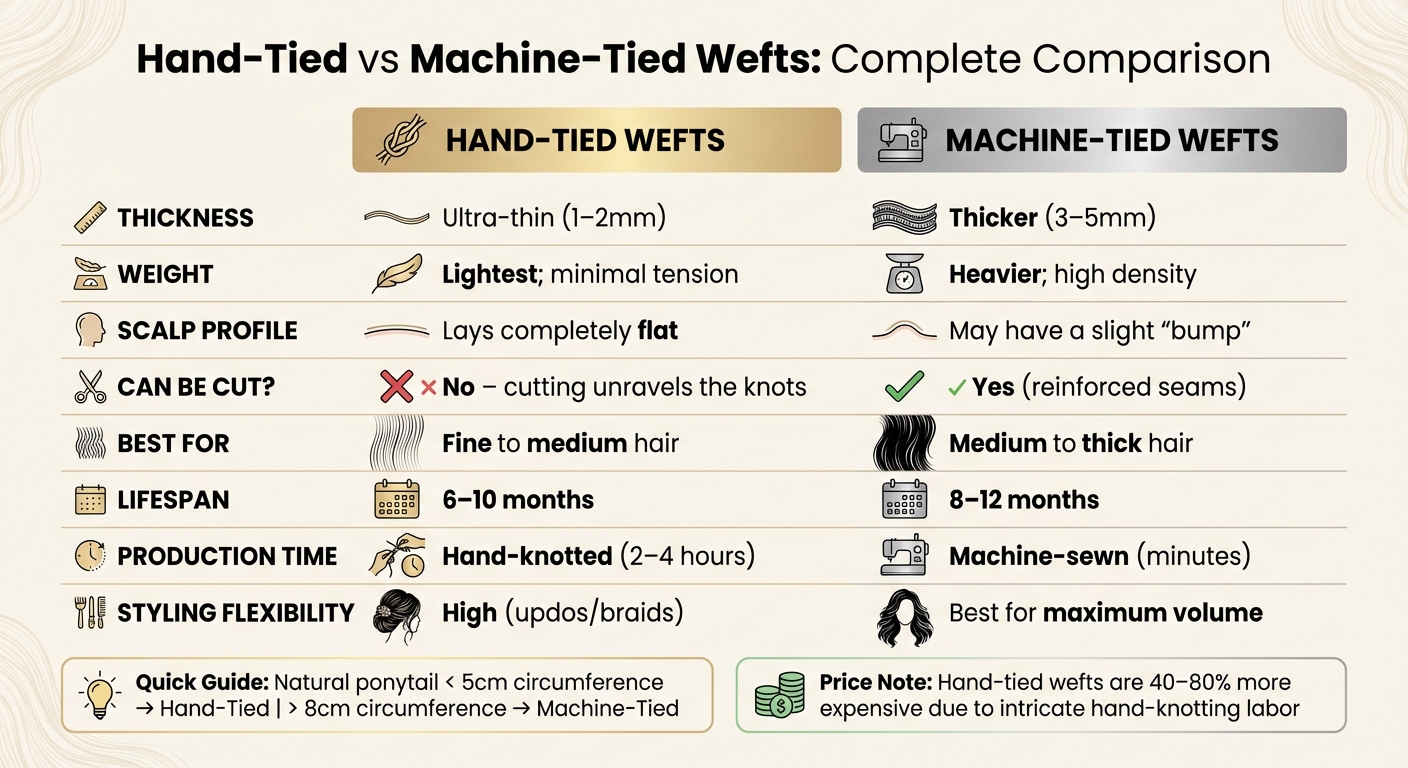
Hand-Tied vs Machine-Tied Hair Wefts Comparison Chart
Comfortable Wear with Less Bulk
Hand-tied wefts are designed for comfort, thanks to their incredibly thin construction. They lie flat against the scalp, avoiding the bumps and pressure points often associated with thicker extensions. Each strand is hand-knotted onto a fine thread, resulting in a lightweight design that puts minimal strain on your scalp. Any initial itchiness tends to be mild and typically fades within a day or two.
Flexible Styling Options
The slim and flexible base of hand-tied wefts allows for a wide range of styling possibilities. Because they sit so close to the scalp, they stay virtually undetectable even in styles like high ponytails, top knots, or intricate braids. The individual knots let each strand move naturally, avoiding the stiff appearance often seen with other extensions. Plus, these wefts can be curled, straightened, or waved (with heat protectant) to blend seamlessly with your natural hair. Stylists can also mix and match shades to create a flawless colour match from root to tip.
Hand-Tied vs Machine-Tied Wefts Comparison
To choose the right option for your hair type and lifestyle, it helps to compare hand-tied and machine-tied wefts. Here’s a quick breakdown:
| Factor | Hand-Tied Wefts | Machine-Tied Wefts |
|---|---|---|
| Thickness | Ultra-thin (1–2mm) | Thicker (3–5mm) |
| Weight | Lightest; minimal tension | Heavier; high density |
| Scalp Profile | Lays completely flat | May have a slight "bump" |
| Can be Cut? | No – cutting unravels the knots | Yes (reinforced seams) |
| Best For | Fine to medium hair | Medium to thick hair |
| Lifespan | 6–10 months | 8–12 months |
| Production Time | Hand-knotted (2–4 hours) | Machine-sewn (minutes) |
| Styling Flexibility | High (updos/braids) | Best for maximum volume |
"Hand-tied wefts are the lightest option available... Women with fine or thinning hair benefit most because the minimal weight reduces tension on fragile natural strands." – Hair Extensions Luxe
Although hand-tied wefts are 40–80% more expensive than machine-tied ones due to the intricate labour involved, they offer unmatched comfort and a natural look. If your natural ponytail measures less than 5cm in circumference, hand-tied wefts are perfect; for thicker hair with a circumference over 8cm, machine-tied wefts may provide better support. These features set the stage for the seamless application process covered in the next section.
How to Apply Hand-Tied Wefts
Preparing and Sectioning Hair
Start by washing your hair with a clarifying shampoo to remove any product buildup and oils. Skip the conditioner - this helps the beads grip better. Make sure to blow-dry your hair completely on a low heat setting, as even a little moisture at the roots can cause the beads to slip.
Next, use a rat-tail comb to create a clean, horizontal parting across the back of your head, usually from ear to ear. Begin at the nape of your neck, leaving a thin "safety layer" of natural hair below the parting. This ensures the beads stay hidden when your hair is down. Clip the rest of your hair out of the way with sectioning clips. Then, gently detangle your hair, starting at the ends and working upward with a wide-toothed comb or detangling brush to minimise breakage. Once your hair is dry and neatly sectioned, you're ready to create the beaded foundation.
Creating the Beaded Foundation
Choose silicone-lined micro beads that closely match your natural root colour. These beads not only blend in better but also protect your hair from the metal and provide a firmer grip. Using a loop wand or threading hook, pull a small section of hair (about 1 cm thick) through a silicone-lined bead. Position the bead close to the scalp and use extension pliers to clamp it securely. Check the tension - it should be snug but still allow you to slide a finger underneath comfortably.
Space the beads evenly along the parting, leaving about 1.5 to 2.5 centimetres between each one. This spacing helps to distribute the weight of the extensions evenly, reducing strain on your natural hair. Avoid applying oils or serums near the roots during this step, as they can make the beads slip.
Sewing the Wefts in Place
With the beads in place, align the hand-tied weft for attachment. Thread a curved needle with a strong, high-quality thread that matches your hair colour. Position the weft flat against the beaded row and begin sewing. Start by threading through the first bead, then continue weaving the thread along the base of the weft in a continuous motion. Maintain consistent tension - too tight, and it could cause discomfort or damage; too loose, and the weft won’t stay secure.
"The hand-sewn technique is a favourite among professionals for its ability to create an undetectable blend with the beaded tracks, giving clients a natural-looking fullness and length without needing heated tools or harsh adhesives." – Platform Hair Extensions
For added thickness, you can stack multiple wefts on the same row without creating extra bulk. However, never cut hand-tied wefts - unlike machine-tied ones, cutting them can cause the extensions to unravel and shed. Once the wefts are sewn in, use point-cutting and thinning shears to blend the ends seamlessly with your natural hair, ensuring a soft and natural finish.
Maintenance and Care Tips
Daily Brushing and Detangling
Brush your wefts twice a day to keep knots at bay. Make sure to give them a thorough brush before showering or swimming, as wet hair tends to tangle more easily. Opt for a specialised extension brush, tangle teaser, or wide-tooth comb - standard brushes can snag the wefts and lead to shedding.
After brushing in the morning, apply 1–2 pumps of treatment oil, like argan oil, to the mid-lengths and ends. In the evening, increase this to 2–3 pumps. Before bed, secure your hair in a low, loose plait or ponytail to reduce friction and tangling as you sleep. Never go to bed with wet hair - this is one of the main causes of severe matting around the attachment points.
The next step is learning proper washing and drying habits to keep your wefts in top condition.
Washing and Drying Techniques
Wash your hand-tied wefts 2–3 times a week to keep them in good shape and avoid unnecessary wear. Use a sulphate-free shampoo, applying it directly to your scalp and gently massaging. Let the lather flow down the wefts naturally. When conditioning, focus on the mid-lengths and ends; steer clear of the roots and attachment points to prevent slippage or added weight.
After rinsing with cool water to close the hair cuticles, gently blot your hair with a towel. Use medium to low heat when blow-drying, paying special attention to thoroughly drying the attachment points to avoid moisture buildup. Before detangling damp hair with a wide-tooth comb or tangle teaser, apply a heat protectant or blow-dry cream.
Managing heat properly is another key to extending the life of your extensions.
Protecting from Heat and Harsh Products
Avoid applying direct heat to the beaded attachment points, as high temperatures can weaken the bonds and cause slippage. When styling, always use a heat protectant and stick to trusted tools like GHD or Cloud 9.
"Avoid products containing: protein, keratin, sulphates, and high alcohol content. These can damage your extensions and make them unmanageable after just one use." – Hair Wonderland
Limit the use of toning or purple shampoos to once every two weeks to prevent over-processing. Extensions, while made from 100% human hair, don’t get natural nutrients from your scalp. This means they need consistent external moisture through treatment oils and weekly deep-conditioning masks, applied only to the ends.
Recommended Tools and Products from Hair Wonderland
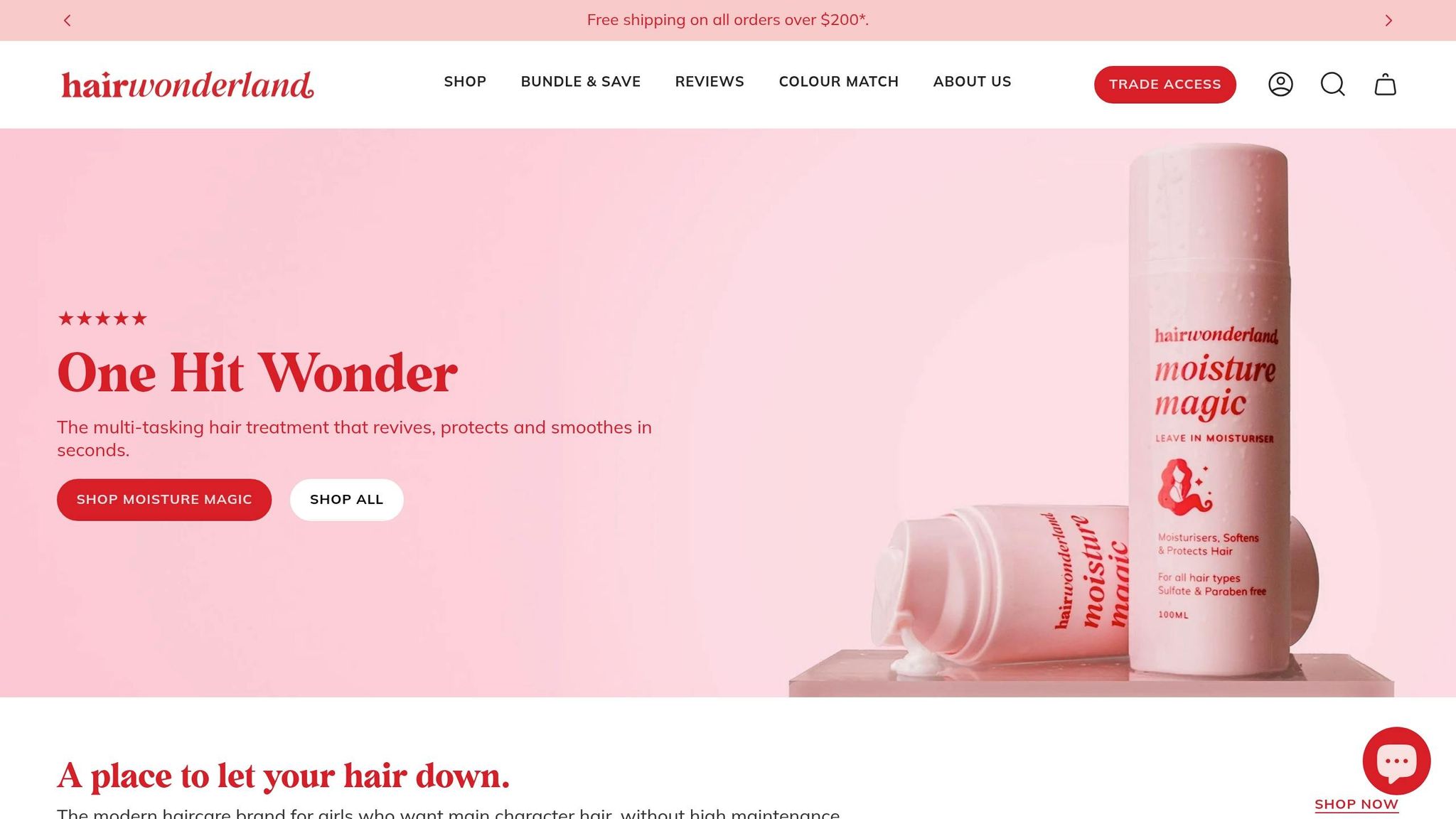
Hair Wonderland provides tools and products tailored for extension care. Their Detangle Brush ($29.95) features flexible teeth that gently work through knots on both wet and dry extensions. For a portable option, the Tangle Tamer Brush ($21.95) is compact and gentle on wefts. To keep your extensions hydrated and soft between salon visits, the Moisture Magic multitasking treatment ($39.95) is an excellent choice.
These tools are designed to complement the lightweight, delicate nature of hand-tied wefts, helping them stay comfortable and natural-looking. However, even with diligent home care, professional maintenance is essential every 5–6 weeks (or 4 weeks for fine hair) to re-section the extensions and redistribute the weight as your natural hair grows.
Conclusion
Hand-tied wefts offer a fantastic way to add volume and length to your hair with their ultra-thin design - less than 1mm thick - ensuring they lie flat and remain practically invisible. The application process is free from heat and glue, which helps maintain the health of your natural hair. Plus, their even weight distribution makes them a great choice for those with fine or thinning hair, as they reduce scalp tension.
To get the most out of your hand-tied extensions, proper care is key. This includes brushing them twice daily, using sulphate-free shampoo 2–3 times a week, and never sleeping on wet hair. Regular professional maintenance every 6–8 weeks is also a must. With these steps, your extensions can last anywhere from 9 to 12 months. Since the extensions don’t receive natural oils from your scalp, using treatment oils and deep-conditioning masks is crucial to keep them hydrated and looking their best.
Hair Wonderland offers premium double-drawn Russian and Mongolian extensions, trusted by Australian salons for their durability and seamless blending. Their accessories, such as the Detangle Brush ($29.95) and Tangle Tamer Brush ($21.95), are designed to make caring for your extensions easier. With over 1,000 five-star reviews and free shipping on orders over $200, Hair Wonderland has become a go-to destination for high-quality hair extensions.
Whether you're looking for a subtle boost with a 50g pack or dramatic volume with 150g or more, hand-tied wefts provide versatile styling options and a natural, comfortable finish. Explore Hair Wonderland's full range of extensions and accessories at hairwonderland.com.au and take the first step toward your next hair transformation.
FAQs
How many rows and grams will I need for my hair?
For a full head of hand-tied wefts, you’ll generally need 100–150 grams, though the exact amount depends on the length and thickness of your hair. The number of rows required can also vary based on your natural hair density and the style you’re aiming for. Typically, two rows are suggested to achieve a natural, layered look. It’s always best to consult your stylist to figure out the perfect amount and arrangement for your hair type and goals.
Can I swim and exercise with hand-tied wefts?
Yes, you can swim and work out with hand-tied wefts, but taking care of them is key. To protect them from chlorine or saltwater, consider wearing a swim cap or applying a protective treatment beforehand. After swimming, rinse your hair thoroughly with fresh water and dry it properly to avoid tangling or damage. When exercising, tie your hair up to minimise friction, and wash it after sweating to keep it clean. With gentle care and regular upkeep, your extensions can stay in great shape for longer.
What are the early signs my wefts need a move-up?
Regular maintenance is key to keeping your wefts secure and natural-looking. Watch out for early signs that they might need a move-up, such as excessive shedding, tangling, or if they start to feel loose - these can suggest they're slipping or growing out.