


Styling hair extensions on thin hair can be tricky, but getting it right is all about choosing lightweight options, careful placement, and gentle maintenance. Thin hair is more prone to breakage, and attachment points can easily show through, so the focus should be on protecting the hair while achieving a natural look. Here’s how to make it work:
- Choose lightweight extensions: Opt for ultra-flat wefts like Invisi® technology to keep attachment points hidden and reduce strain on fragile strands.
- Use clip-ins for safety: Clip-ins are less damaging as they don’t rely on glue or heat, making them ideal for fine hair.
- Backcomb for grip: Teasing the roots helps secure the extensions without slipping.
- Strategic placement: Keep extensions below the crown to avoid visibility through sparse layers.
- Curl and trim for blending: Curling your natural hair with the extensions and trimming blunt ends ensures a seamless finish.
- Regular maintenance: Visit the salon every 4 weeks to adjust placement and prevent damage.
The key is balancing volume and comfort while protecting your natural hair. Lightweight options like the Hair Wonderland Seamless Set (A$499.00) are perfect for fine hair, offering a natural look with minimal tension. Pair them with tools like a Tangle Tamer Brush (A$21.95) for smooth styling and longevity.
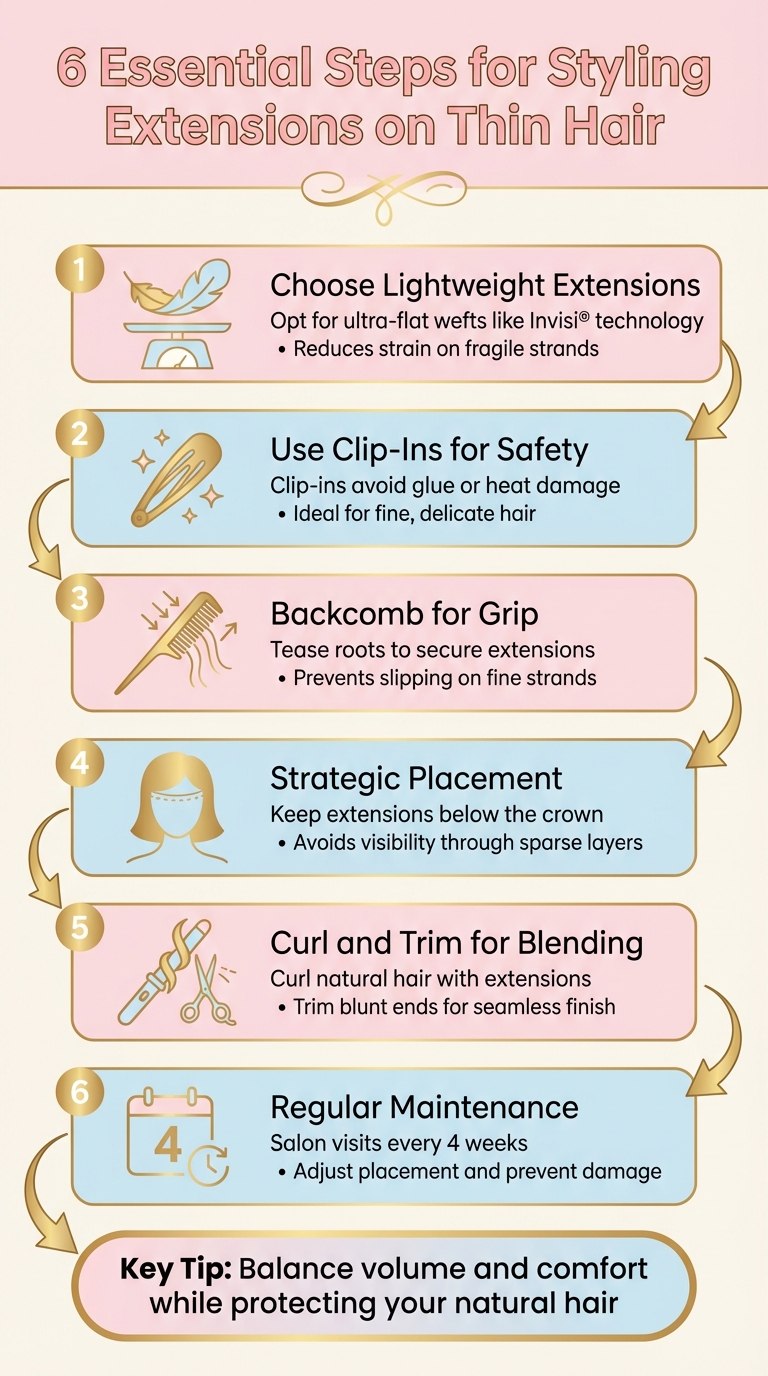
6-Step Guide to Styling Hair Extensions on Thin Hair
Selecting Extensions for Thin Hair
Benefits of Lightweight Extensions
Choosing the right extensions can work wonders for thin hair, but the weight of the extensions is a key consideration. Lightweight options help evenly distribute pressure, reducing the risk of strain on delicate strands and ensuring comfort throughout the day. This is especially crucial for fine hair, which doesn’t have the density to support heavier wefts or thick attachment points.
Seamless clip-ins are a fantastic choice for thin hair. They allow for precise placement, enabling you to strategically position them for maximum coverage while keeping them virtually invisible. Unlike permanent extensions, clip-ins don’t rely on heat, glue, or tape, making them a safer and less damaging option for fragile hair. Plus, their design prioritises comfort and discretion, making them an ideal choice for fine strands.
Clip-In Extension Features
Not all clip-in extensions are created equally, and for thin hair, certain features make all the difference. Extensions that use Invisi® weft technology stand out for their ultra-thin silicone or PU wefts, which lie flat against the scalp. This design ensures the attachment points remain undetectable, even when you style your hair back. For fine hair, this level of invisibility is a game-changer, as traditional lace wefts can often appear bulky and show through sparse strands.
Another feature to look for is double-drawn hair, which provides consistent volume from root to tip without adding unnecessary weight. For example, the Hair Wonderland Seamless Set 22" leverages Invisi® weft technology and 100% Remy European Human Hair. This combination delivers a natural texture that blends effortlessly with fine hair. At 200 grams and priced at A$499.00, this set offers a balance of durability, comfort, and a natural look, all while protecting the health of your natural hair.
Comparison Table: Hair Wonderland Products for Thin Hair
The table below outlines how Hair Wonderland products are designed to meet the needs of fine hair:
| Product | Weight / Key Feature | Blending Ease | Suitability for Fine Hair |
|---|---|---|---|
| Seamless Set 22" | Lightweight Invisi® weft; ultra-flat design | High (Invisible finish) | Excellent (No tension/damage) |
| Tangle Tamer Brush | Extension-safe bristles | High (Smooths transitions) | High (Gentle on fragile strands) |
| Styling Comb | Fine-tooth for precise sectioning | High (Aids placement) | High (Essential for hiding wefts) |
To get the most out of your extensions, pairing them with the right tools is essential. The Tangle Tamer Brush (A$21.95) features bristles designed to glide smoothly through both natural and extension hair without pulling at the roots. Meanwhile, the Styling Comb (A$12.95) makes sectioning a breeze, ensuring your wefts stay hidden under thin layers. Together, these tools can help you achieve a seamless and natural look.
Preparation and Placement Methods for Thin Hair
Using Backcombing
To keep clip-in extensions secure, especially on thin hair, creating a solid base is essential. Backcombing the roots is a simple technique that helps the clips hold firmly, even on fine strands that naturally lack grip.
Start by sectioning off the area where the weft will go. Use a fine-tooth comb and gently tease the roots with short, upward strokes. This adds texture and volume, giving the clips something to hold onto. It’s a small step that makes a big difference in keeping the extensions in place while being gentle on delicate hair.
Once the base is ready, you can focus on placing the extensions for a seamless and natural look.
Placement for Natural Blending
Strategic placement is key to making extensions look invisible. Use the "safe zone" as your guide - imagine a line running from one eyebrow to the other, circling the back of your head. For thin hair, clips placed below this line are hidden under your natural strands. Placing them above this zone can make the wefts more noticeable, especially with sparse top layers.
You don’t need to use every weft in the set. Thin hair often benefits from fewer wefts, so experiment with placements to find what works best. Once you’ve figured out the ideal arrangement, label the wefts for easy replication. This ensures you achieve a consistent, natural blend every time.
Adjusting Weft Volume
After securing and positioning the extensions, fine-tune the volume for balance. Using fewer wefts can help maintain a natural look without adding too much bulk. For thin hair, a 5-piece seamless clip-in set is often enough to add subtle thickness without overwhelming your natural strands. Larger 9-piece sets should only be used if your hair’s condition and the style you want can handle the extra volume.
Extensions naturally add fullness to the mid-lengths and ends, so it’s important to balance the overall look. To avoid a flat appearance at the crown, lightly tease the top sections of your natural hair. This creates a smooth, cohesive silhouette where the extensions enhance your hair rather than overpower it.
Clip-In Extensions for Fine Hair | Pro Tips
sbb-itb-dcde78e
Styling Methods for Blending Extensions
Once your extensions are securely placed and prepped, the right styling techniques can create a flawless, natural finish. These methods work to harmonise your natural hair with the extensions, ensuring a seamless look.
Curling and Texturising to Conceal Extensions
Blending extensions starts with curling your natural hair and extensions together. Using a curling wand, style sections that combine both your hair and the extensions to create a consistent texture. This prevents any noticeable separation between the two layers, making the extensions blend more naturally.
For added grip and to hide the clips, tease the roots above the attachment points. Horlenny, Resident Stylist and Extensions Educator at Bebonia, shares this tip:
This curly hair hack is all about achieving a seamless blend... use a teasing brush and comb lightly right above the clips. Next, you're going to use hairspray to set and lock it into place.
By combining curling with root texturising, attachment points become nearly invisible. This sets the foundation for further blending through trimming.
Layering and Trimming Extensions
Extensions with blunt ends can stand out, especially in thin or fine hair. To create a natural taper, use thinning shears and point-cut the ends to reduce bulk. This softens harsh lines and allows the extensions to blend effortlessly with your hair.
If you have finer hair, it's a good idea to have your extensions professionally trimmed every four weeks. Regular maintenance ensures the extensions sit properly, compensating for natural hair shedding and preventing strain on delicate strands.
Tools for Maintenance and Styling
The right tools are essential for keeping extensions in great shape. Use a specialised extension brush to prevent matting without pulling on the hair. Brush daily to avoid tangles and maintain smoothness. When using heat tools, stick to low or medium settings and always apply a heat protectant - fine hair is particularly vulnerable to heat damage, so moderate temperatures are key to preserving both your hair and the extensions.
To keep extensions manageable, apply 1–2 pumps of treatment oil to the mid-lengths and ends each morning. Since extensions don’t benefit from your scalp’s natural oils, this step helps maintain softness and shine.
Conclusion
Styling thin hair extensions comes down to three key factors: choosing lightweight extensions, using the right techniques, and sticking to regular maintenance. Lightweight clip-in extensions, like the double-drawn Russian/Mongolian human hair options from Hair Wonderland, are perfect for achieving a natural look without putting extra stress on fine strands. Their seamless design adds volume and length while blending effortlessly with your natural hair.
Techniques like careful backcombing, strategic placement, and uniform curling can effectively conceal attachment points. Regular trimming is also essential to avoid blunt ends that might stand out, and adjusting the weft volume ensures a comfortable fit that complements fine hair.
Maintenance is what keeps everything looking great. Gentle daily care - like brushing, applying oil to the mid-lengths and ends, and using heat protection on low-to-medium settings - helps preserve both your natural hair and the extensions. For those with fine hair, visiting the salon every four weeks is a smart move. During these visits, extensions can be re-positioned onto sections of hair that can support their weight, preventing damage as your natural hair sheds naturally. These approaches are designed to protect delicate hair while giving you the confidence that comes with fuller, more voluminous locks.
FAQs
How do I choose the right weight of extensions for thin hair?
When it comes to thin hair, opting for lightweight extensions like nano rings or clip-ins can make all the difference. These types are much gentler and reduce the risk of stress or damage to your natural hair.
Equally important is seeking advice from a specialist who knows how to work with thin hair. Proper placement and managing the weight of the extensions are essential steps. Extensions that are too heavy can lead to breakage, so choosing the right weight ensures your hair stays healthy while achieving a natural, seamless look.
How can I stop clip-ins slipping in fine hair?
To keep clip-ins from slipping out of fine hair, start by teasing the roots where you plan to attach the extensions. This gives the clips something to grip onto, making them stay put. Place the clips in your 'safe zone' - usually below the eyebrow line - so they’re less noticeable and more secure. Try different placements to find denser hair sections that provide extra hold.
How do I hide extension wefts in thin hair?
To keep extension wefts hidden in thin hair, it's all about careful placement and using lighter extensions. Place the wefts in the lower layers of your hair to create a natural appearance. Opt for lightweight options like tape-in or hand-tied wefts - these are gentle on fine hair and minimise the risk of damage.
For extra concealment, tease the roots slightly and clip the extensions below the eyebrow line. This trick helps them blend more discreetly. Finally, ensure the extension colour matches your natural hair perfectly for a seamless and polished finish.