


If your hair is damaged from bleaching, heat styling, or chemical treatments, extensions can help. They add instant length and volume while giving your natural hair time to recover. But choosing the right type and caring for them properly is key to avoiding further damage. Here's what you need to know:
- Best Extensions for Damaged Hair: Lightweight options like tape-ins or halo extensions reduce stress on fragile strands. Avoid heavy styles like weaves.
- Material Matters: Go for 100% Remy human hair, especially double-drawn Russian or Mongolian hair, for a natural look and reduced tangling.
- Care Tips: Use sulfate-free products, apply treatment oils, and brush gently with a specialised extension brush. Never sleep with wet hair, and protect extensions during workouts or swimming.
- Professional Application: Always get extensions applied and maintained by a stylist to prevent breakage or traction alopecia.
Extensions can give you the look you want while protecting your natural hair - just make sure to choose wisely and stick to a consistent care routine.
The Best Extensions for Damaged Hair | Instant Beauty ♡
How to Select Extensions for Damaged Hair
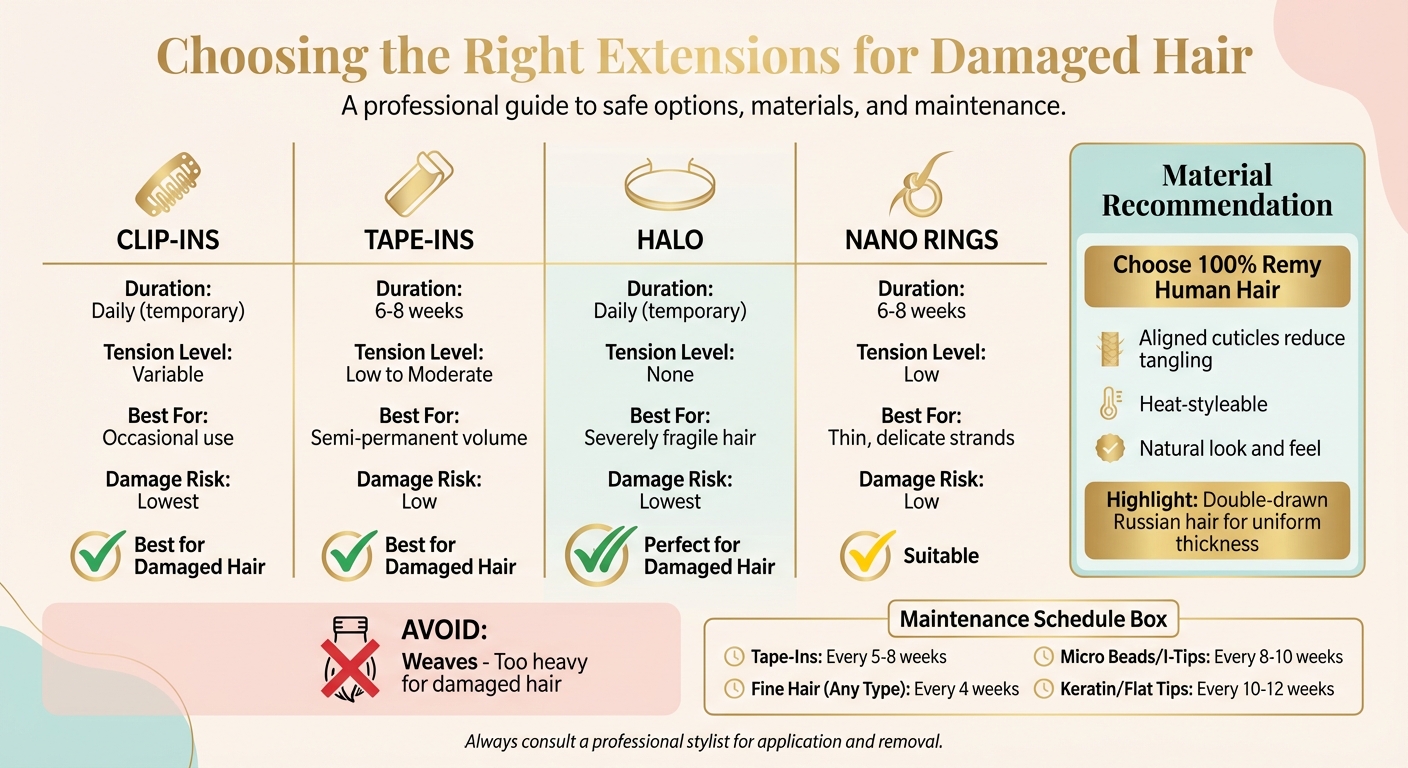
Hair Extension Types Comparison for Damaged Hair
Picking the right hair extensions is a big step towards helping fragile hair recover. The material, application method, and weight of the extensions play a key role in protecting your natural hair while giving you the length and volume you're after.
Human Hair vs Synthetic: Which Material is Better?
When it comes to damaged hair, 100% Remy human hair is the better choice. Its aligned cuticles help reduce tangling, making it much gentler on your natural hair. On the other hand, synthetic hair can't be heat-styled or coloured and often lacks the natural look and feel needed to blend seamlessly with your own hair.
One standout option is double-drawn Russian hair, which is specially processed by hand to remove shorter strands. This ensures uniform thickness without adding extra weight - a crucial factor for fragile hair. Lisa, a professional hairstylist, shared her thoughts:
"The double-drawn Russian human hair is a game-changer." - Lisa, Hairstylist
For example, Hair Wonderland’s 22" Seamless Set uses advanced Invisi® weft technology to evenly distribute around 200 grams of weight. This design helps reduce tension on your natural hair, aligning perfectly with the needs of delicate strands.
Clip-In, Tape-In, or Halo: Comparing Extension Types
Not all extension types are created equal, especially when dealing with damaged hair. Here's how the most popular options stack up:
- Clip-in extensions are a temporary solution and considered the least damaging. Since they’re removed at night, your scalp and roots get a break from any tension. However, be careful not to repeatedly clip them into the same fragile areas.
- Tape-in extensions feature flat adhesive panels that distribute weight evenly, offering a lightweight, semi-permanent option. They’re ideal for those wanting consistent volume but should be professionally applied and removed every six to eight weeks to prevent damage.
- Halo extensions are one of the gentlest choices for damaged hair. They sit on your head using a clear wire, avoiding direct attachment to your natural hair. This makes them a great option for severely fragile strands.
| Extension Type | Duration | Tension Level | Best For Damaged Hair |
|---|---|---|---|
| Clip-ins | Daily (temporary) | Variable | Excellent for occasional use |
| Tape-ins | 6–8 weeks | Low to moderate | Great for semi-permanent volume |
| Halo | Daily (temporary) | None | Perfect for severely fragile hair |
| Nano Rings | 6–8 weeks | Low | Suitable for thin, delicate strands |
Weaves, however, should be avoided as their weight can strain already fragile hair.
Once you’ve chosen the right type of extensions, the next step is ensuring they match and blend seamlessly with your natural hair.
Matching and Blending Extensions with Your Hair
Getting a natural look starts with finding extensions that match your hair’s colour and texture. Picking a shade close to your natural colour is key. If you’re unsure, go for a slightly lighter tone - it’s easier to darken extensions than to lighten them.
Avoid dramatic length changes. Instead, aim for a modest increase in length to create a smoother blend. For texture, 100% Remy human hair can be heat-styled (with a heat protectant) to match your natural wave or curl pattern. If your hair is naturally straight, choose extensions that reflect that texture to avoid unnecessary heat styling.
For permanent or semi-permanent extensions, professional application is crucial. A skilled stylist can ensure even weight distribution, reducing the risk of pulling on delicate strands.
Caring for Extensions and Damaged Hair Together
Taking care of delicate natural hair while maintaining the quality of your extensions requires consistent attention and the right techniques.
Daily Extension Care Basics
Brush your hair twice a day - once in the morning and again before bed - using a specialised extension brush like the Hair Wonderland Tangle Tamer Brush ($21.95). This type of brush glides through extensions without snagging. Hold your hair just above the section you're brushing to support the roots, starting at the ends and working upwards. Avoid pulling or forcing the brush through any knots.
To keep your extensions hydrated, apply 1–2 pumps of treatment oil to the mid-lengths and ends in the morning and 2–3 pumps in the evening. Since extensions don’t benefit from the natural oils produced by your scalp, this step is essential. Be careful to keep the oil away from bonds, tapes, or rings, as this can cause them to loosen.
Stick to sulfate-free and alcohol-free hair products, and avoid formulas with protein or keratin, as they can dry out your extensions, leaving them difficult to manage. When using heat styling tools, keep the temperature below 180°C to protect both your extensions and your natural hair.
Once you’ve mastered daily care, it’s time to learn how to wash and style your extensions without affecting their integrity.
How to Wash and Style Extensions Gently
Wash your hair 2–3 times a week to preserve moisture and prevent weakening the bonds or attachment points. Before washing, detangle your hair with your extension brush to minimise matting.
When shampooing, gently massage the product into your scalp, letting the suds flow down the extensions naturally. Avoid rubbing or twisting the hair. For conditioning, focus on the mid-lengths and ends while steering clear of the bonds or tapes. Let the conditioner sit for 2–5 minutes, then rinse with cool water to seal the hair cuticles and retain moisture.
After washing, dry your hair with care. Gently blot it with a microfibre towel - don’t rub or twist. Make sure the attachment points are completely dry by using a blow dryer on a cool or medium setting. Damp bonds can irritate the scalp and lead to slippage.
"Wet hair extensions are more delicate than dry ones. Avoid wringing, twisting, or rough towel-drying. Instead, gently squeeze out excess water and pat with a microfiber towel." - Shakira Dickinson
Protecting Extensions While Sleeping and Exercising
Proper protection at night and during physical activities is key to maintaining your extensions and natural hair.
Never go to bed with wet hair, as this can cause severe matting and damage to both your extensions and your natural strands. Before sleeping, brush your hair thoroughly, apply a small amount of treatment oil to the ends, and secure it in a low, loose plait with a silk scrunchie. Avoid high buns or top knots, as they can strain the bonds and roots. Switching to a silk or satin pillowcase can also reduce friction, helping to prevent tangling and breakage.
When exercising, style your hair in a way that minimises tension, such as a low ponytail or braid. If you’re wearing clip-in extensions, it’s a good idea to remove them before intense workouts to avoid sweat-related tangling. Before swimming, rinse your hair with fresh water to reduce how much chlorine or salt it absorbs. Apply a leave-in cream to create a barrier, and after swimming, rinse your hair thoroughly and shampoo twice to remove any lingering chemicals.
sbb-itb-dcde78e
Mistakes to Avoid with Extensions on Damaged Hair
Even with the best intentions, small missteps in your routine can make damaged hair worse, especially when extensions are involved.
Using Too Many or Too Heavy Extensions
Extensions that are too heavy can overwhelm fragile hair, leading to breakage. Daily shedding reduces the amount of natural hair available to support extensions, and if the extensions are too weighty, the remaining strands may snap under the pressure. This can even result in traction alopecia. For those with fine or already damaged hair, attaching extensions to small sections can cause discomfort, tension headaches, and even sores. The added weight also increases tangling and puts stress on the roots when detangling.
"As your extensions grow, the section of natural hair they're attached to becomes smaller due to daily shedding. During maintenance, we'll re-section your hair to ensure the extensions are placed on a suitable, weighted section, protecting your natural hair." - Hair Wonderland
To avoid these issues, opt for lightweight options like tape-ins or clip-ins instead of heavier weaves or fusion bonds. Regular maintenance, ideally every 4–6 weeks, is also key to keeping your extensions and natural hair in good condition.
Not Getting Professional Help
Trying to apply or remove semi-permanent extensions on your own is risky. Without proper knowledge, you could end up causing even more damage to your hair. A professional stylist can assess whether your hair is strong enough for extensions or if it needs time to recover first. They also ensure the extensions are attached to hair sections that can handle the weight, reducing the risk of snapping or traction alopecia.
Professionals use specialised tools and solvents to safely remove tape-ins or keratin bonds without harming your natural hair. They can also spot early warning signs of scalp stress, such as redness or irritation, which can worsen if extensions are improperly applied to thin or damaged hair.
| Extension Type | Recommended Maintenance |
|---|---|
| Tape-Ins | Every 5–8 weeks |
| Fine Hair (Any Type) | Every 4 weeks |
| Micro Beads / I-Tips | Every 8–10 weeks |
| Keratin / Flat Tips | Every 10–12 weeks |
Professional expertise makes a world of difference, but even the best application can be undermined by poor everyday habits.
Poor Maintenance Habits
Beyond weight and application, everyday care plays a huge role in protecting fragile hair. Leaving extensions in longer than recommended - typically over six weeks - can weaken the natural hair's ability to support the extensions. This is because daily shedding reduces the number of strands holding up the weight, increasing the chance of tension-related breakage.
Skipping regular detangling or going to bed with wet hair can lead to severe matting near the roots, which is often difficult to fix without causing further damage. Using products with sulphates, high alcohol content, or excessive protein can dry out both your natural hair and extensions, leaving them brittle and prone to breakage. Applying oils or conditioners directly to the bonds can also cause slippage, pulling on your natural hair.
"Common issues like matting near the roots, dryness, and breakage often stem from simple mistakes in your daily routine." - Shakira Dickinson, Stylist, Hair Candy
To keep your extensions and hair healthy, always detangle gently with a specialised extension brush, start brushing from the ends and work upwards, avoid sleeping with wet hair, and stick to sulphate-free products without excess protein or keratin. These simple habits can make all the difference in preserving your hair's health while wearing extensions.
Conclusion
Having damaged hair doesn’t mean you have to give up on volume or length. The secret lies in choosing the right extensions and giving both your natural hair and the extensions the care they deserve. Opt for premium 100% Remy double-drawn Russian or Mongolian hair for consistent thickness without added weight. For fragile hair, lightweight options like seamless clip-ins are a great choice - they reduce stress on your scalp while blending beautifully for a natural look.
Caring for your extensions is just as important as selecting them. Stick to sulphate-free products, avoid overloading your hair with protein or keratin, and always use a heat protectant before styling. Brush gently, starting from the ends and working your way up, and never go to bed with wet hair. A daily routine of applying 1–2 pumps of treatment oil will help keep your extensions hydrated and looking their best.
Professional maintenance is also key. Schedule touch-ups every 4–6 weeks to re-section your extensions and prevent unnecessary tension on your scalp. With proper care, high-quality extensions can last anywhere from nine to twelve months, giving you a polished look while your natural hair has time to heal and grow stronger.
For those ready to invest in premium extensions, Hair Wonderland’s Seamless Set offers 200 grams of double-drawn Russian/Mongolian hair at a 22-inch length for $499.00. This set is designed to blend naturally and provide comfort. Pair it with the Tangle Tamer Brush ($21.95) and Moisture Magic Treatment ($39.95) to maintain a sleek, flawless finish. With a 14-day exchange guarantee and professional colour matching assistance, you can shop with confidence knowing these products are tailored to support and protect fragile hair while enhancing your style.
FAQs
What type of hair extensions are best for damaged or fragile hair?
For hair that's damaged or fragile, Hair Wonderland's premium double-drawn Russian/Mongolian 100% Remy human hair clip-in extensions are a fantastic option. These extensions are crafted to be gentle on your natural hair while providing long-lasting durability, comfort, and a natural, seamless finish.
Clip-in extensions are especially helpful for reducing stress on weakened hair since they’re easy to apply and remove without causing further harm. Hair Wonderland’s premium extensions blend naturally, giving you a fuller, healthier look while your own hair gets the chance to recover.
How can I care for my extensions to avoid damaging my natural hair?
To keep your extensions looking their best and safeguard your natural hair, here are some practical tips to follow:
- Regular check-ups: Book a visit to your stylist every 4–6 weeks. This helps ensure your extensions stay securely in place and your natural hair remains in good shape.
- Choose the right products: Opt for hair care products that don’t contain protein, keratin, sulfates, or high alcohol levels. These ingredients can weaken your extensions and dry out your hair.
- Gentle brushing: Use a brush specifically designed for extensions. Start at the ends and work upwards to avoid tangles and reduce strain on the bonds.
- Limit washing: Wash your hair only 2–3 times a week. Always detangle before washing, and focus conditioner on the mid-lengths and ends. Use cool or lukewarm water for rinsing to help maintain shine.
- Night-time care: Protect your hair while sleeping by loosely braiding it or using a silk or satin pillowcase. This reduces friction and prevents tangling.
Following these tips will help your extensions stay natural-looking and long-lasting, while also keeping your own hair healthy and free from damage.
Why is it important to have extensions professionally applied to damaged hair?
Getting extensions applied by a professional is essential, especially if your hair is damaged or fragile. A trained stylist knows how to attach extensions to properly weighted sections of your hair, reducing tension that could otherwise cause breakage or stress to your natural strands.
Beyond the initial application, professional care ensures both your extensions and natural hair stay in good condition over time. Regular maintenance appointments help keep the extensions secure, ensure they blend seamlessly, and allow your hair to recover without risking further damage.