


Heat styling tools can make your hair extensions look great, but they can also cause serious damage. The signs of heat damage include dryness, brittleness, frizz, and even a burnt smell. Damaged extensions lose their shine, feel rough, and may break easily. The good news? You can restore some of the damage with deep conditioning, protein treatments, and proper care. Prevention is key - always use a heat protectant, stick to safe temperatures (120°C–180°C), and explore heatless styling options. Regular maintenance and quality products can help keep your extensions looking smooth and healthy for longer.
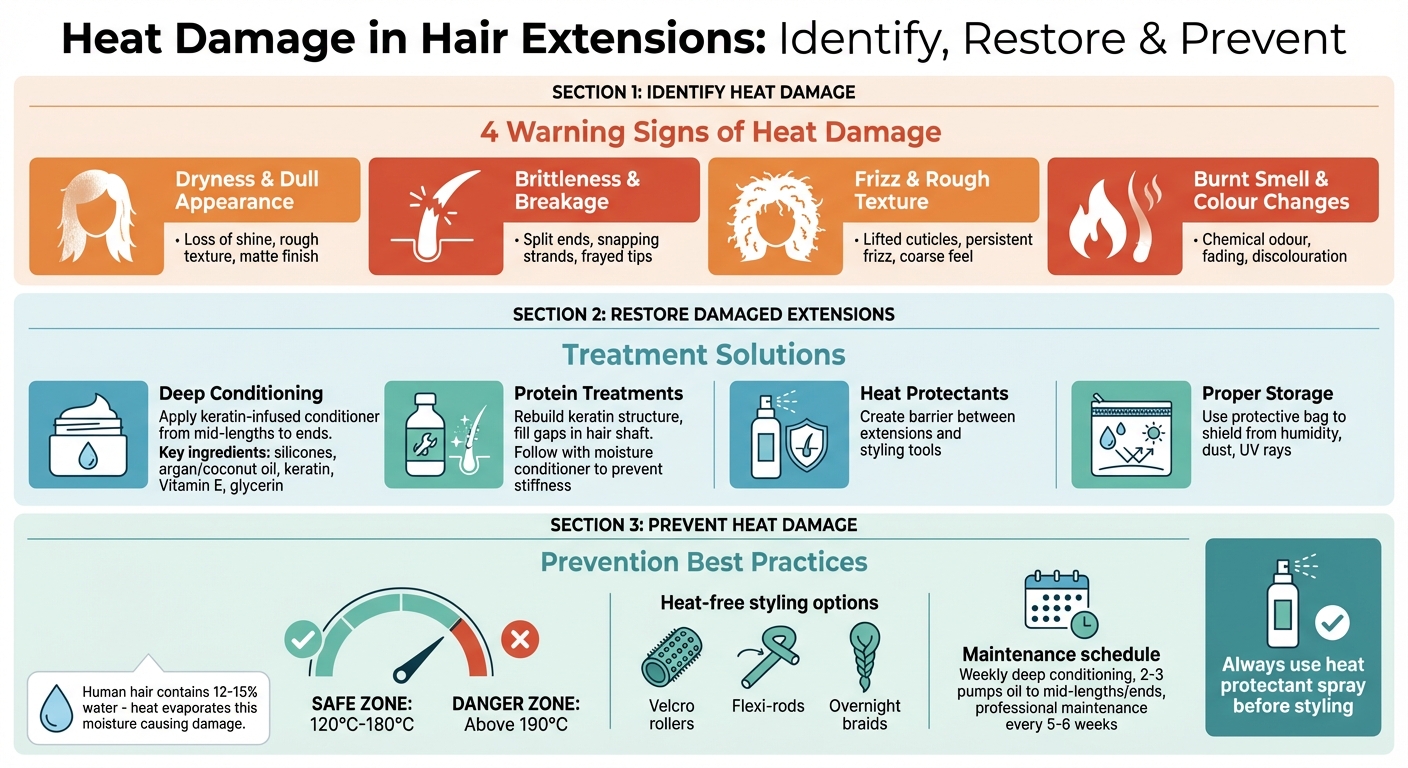
How to Identify, Restore, and Prevent Heat Damage in Hair Extensions
HOW TO: RESTORE/REVIVE YOUR HAIR EXTENSIONS | NICOLETHEATV
Following a daily hair extension care routine is the best way to prevent future damage and keep your extensions looking fresh.
sbb-itb-dcde78e
How to Identify Heat Damage in Hair Extensions
Catching heat damage early can make a big difference in preserving your hair extensions. The signs might not stand out at first, but once you know what to look for, they become much easier to spot.
Dryness and Dull Appearance
A lack of shine is usually the first clue. Healthy extensions have smooth cuticles that reflect light, giving them a natural gloss. When heat damages or lifts these cuticles, the hair loses its shine and starts to look flat and lifeless. Even after washing, heat-damaged extensions often retain a dull, matte finish.
The texture can also reveal a lot. Run your fingers along the strands - if they feel rough, coarse, or stiff (especially at the ends), it’s a sign of heat damage. High temperatures dehydrate the hair by evaporating water from the cortex (natural hair contains about 12-15% water) and stripping away its protective oils. If your extensions feel dry even after conditioning, their ability to retain moisture may be compromised.
"If it's dull, that's one of the first signs you have heat damaged hair." - Dyson
This loss of moisture doesn’t just affect the look and feel of your extensions - it also makes them more prone to breakage.
Brittleness and Breakage
Weak, easily broken strands are another sign of heat damage. Over time, heat breaks down the internal protein structure of the hair. The mid-lengths and ends are most vulnerable since they’re often exposed to styling tools. Split ends, where the tips of the hair look frayed or separated, are a clear indicator that the outer cuticle has been damaged.
If you notice strands snapping during brushing or styling, it’s a sign that the damage has reached a more advanced stage.
Frizz and Rough Texture
Heat damage also shows up as changes in texture. When excessive heat lifts the cuticle, it creates a rough surface that’s hard to smooth out, even with products. The hair feels coarse and develops persistent frizz. Damaged cuticles struggle to retain moisture, which affects the overall body and appearance of the extensions. Unfortunately, this textural damage is often irreversible - once hair is exposed to temperatures above 140°C, the structural proteins undergo permanent changes.
Burnt Smell and Colour Changes
A burnt or chemical smell is a strong warning sign of heat damage. This odour indicates that the keratin structure of the hair has been compromised. It happens when the hydrogen bonds in the proteins break down, leading to weakened strands with reduced elasticity.
Another sign to watch for is fading or discolouration. Damaged cuticles can no longer protect the hair’s internal pigment, making it more vulnerable to UV rays and other environmental factors. Blonde extensions might turn brassy, while darker shades can lose their richness. These changes in colour often go hand in hand with other signs of damage, like dryness or brittleness.
How to Restore Heat-Damaged Hair Extensions
If you've spotted signs of heat damage in your hair extensions, don’t worry - there are ways to bring them back to life. While some damage might be irreversible, the right treatments can significantly improve their look and feel.
Restore Moisture with Conditioning Treatments
Deep conditioning is your first line of defence against dryness. These treatments work by penetrating the hair shaft, helping to strengthen and soften your extensions. Focus on applying conditioners and masks from the mid-lengths to the ends, steering clear of the installation points to keep bonds intact. Look for products with ingredients like silicones (e.g., dimethicone), natural oils (such as argan or coconut), proteins (like keratin or wheat protein), vitamins (e.g., Vitamin E or panthenol), and humectants like glycerin.
For the best results, layer your care routine. After washing, apply a keratin-infused conditioner to add a protective barrier before using any heat protectants. Professional-grade products, when used as part of a system, can improve detangling, smoothness, and conditioning by up to five times. Stick with sulphate-free shampoos and conditioners to prevent moisture loss and product buildup. After conditioning, gently detangle your extensions using tools like the Hair Wonderland Tangle Tamer Brush ($21.95) or The Detangle Brush ($29.95) to avoid further mechanical damage.
Prevent Breakage with Protein Treatments
Heat damage often disrupts the keratin structure of hair, leading to cracks and tears in the cuticle. Protein treatments step in to rebuild this structure by filling in gaps along the hair shaft. Smaller proteins repair damage from within, while larger ones coat the surface to create a protective layer.
"Since heat application can cause damage to your cuticle, a protein treatment can help repair those tears, cracks or breaks in your hair by reconstructing the proteins that have been lost." - Aunt Jackie's Curls & Coils
After using a protein treatment, follow up with a moisture-rich conditioner to prevent stiffness. These treatments are powerful, so use them sparingly - only when necessary. Apply them to damp hair and use low heat to activate the ingredients. For styling, opt for a gentle tool like Hair Wonderland's Styling Comb ($12.95) to minimise strain on weakened strands.
Manage Frizz with Proper Storage and Heat Protectants
Heat protectant sprays are a must - they create a barrier between your extensions and styling tools. If you want to give your extensions a break, try heatless styling methods like braiding, using rollers, or air-drying. Before exposing your extensions to chlorinated or salt water, pre-soak them with fresh water and apply a hydrating conditioner to minimise chemical absorption.
When not in use, store your extensions in Hair Wonderland's Clip In Bag ($54.00). This protects them from humidity, dust, and other environmental factors, keeping them smooth and frizz-free between wears.
Fix Burnt Smell and Colour Fading
A burnt smell is a sign of severe heat damage to the keratin structure. To prevent further issues, reduce heat usage and switch to colour-safe products specifically designed for extensions. UV protection sprays are another great addition, shielding your extensions from sun-induced fading and dryness.
If your extensions have lost their colour, consult Hair Wonderland's colour matching services for tone restoration. For tape-in extensions that require reapplication or repositioning during the restoration process, the Removal Solution ($54.00) is a gentle and effective option.
Next, we’ll dive into how to avoid heat damage altogether by following safe temperature guidelines and maintaining your extensions properly.
How to Prevent Heat Damage in Hair Extensions
Safe Temperature Guidelines and Heatless Styling
Protecting your extensions starts with knowing their limits when it comes to heat. Human hair extensions are more delicate than your natural hair, so you need to be extra cautious. Stick to styling temperatures between 120°C and 180°C, as anything above 190°C can lead to permanent dryness, split ends, colour fading, or even burning of the hair shaft and weakening of the bonds.
"Around 250°F-350°F is generally a safe range for human-hair extensions."
– Daniel Kim, Author, Barely Xtensions
Always begin with the lowest heat setting (around 120°C) and test it on a small, hidden strand before styling the entire set. It’s also essential to use a heat protectant spray on each weft to act as a moisture barrier and reduce damage. When drying your extensions, let them air-dry to about 80% before finishing up with a blow dryer set to cool or warm air.
If you’re looking to avoid heat altogether, heatless styling methods are a fantastic alternative. Try Velcro rollers, flexi-rods, or overnight braids to create stunning styles without any heat exposure. When using hot tools, work in small sections to ensure even heat distribution and avoid going over the same area multiple times.
Combining these heat practices with proper care will help keep your extensions looking their best for longer.
Regular Maintenance with Quality Products
Since extensions don’t benefit from natural scalp oils, they need extra hydration to stay healthy. Adding nourishing oils like Argan Oil or Vitamin E to your routine can help, especially on the mid-lengths and ends. Before styling, make sure to gently brush out tangles using the right tools to ensure even product application and minimise damage.
For tools designed specifically for extensions, check out Hair Wonderland. Their Tangle Tamer Brush ($21.95) and Styling Comb ($12.95) are gentle on your extensions and help reduce breakage. Proper storage is just as important - use the Clip In Bag ($54.00) to protect your extensions from humidity, UV rays, and other environmental factors when not in use. Keep in mind that external stressors like chlorine and sun exposure can worsen heat-related dryness, so a well-rounded maintenance routine is a must.
Conclusion
Catching early signs of damage can save you from needing a full replacement. Look out for changes in texture, like coarseness or stiffness, visible issues such as dullness and colour fading, or physical problems like brittleness and tangling.
To bring your extensions back to life, treatments like deep conditioners, protein masks, and nourishing oils can help restore their moisture and strength. Combine these restorative measures with smart prevention strategies - like using heat protectants and keeping heat settings moderate - to make your extensions last longer. Together, these steps create a solid plan for maintaining quality over time.
Sticking to consistent hair extension care is key. Weekly deep conditioning, applying 2–3 pumps of oil to the mid-lengths and ends, and scheduling professional maintenance using a hair extension maintenance planner every 5–6 weeks can significantly extend the life of your extensions.
For targeted care, Hair Wonderland offers a range of solutions designed specifically for extensions. Products like Moisture Magic ($39.95) deeply hydrate damaged strands, while the Tangle Tamer Brush ($21.95) and Styling Comb ($12.95) are gentle tools for styling. The Clip In Bag ($54.00) provides protection from external damage, keeping your extensions safe.
With proper care, your extensions can maintain their silky texture and natural shine for months. While prevention is always the best approach, acting quickly when damage occurs can make all the difference.
FAQs
Can heat-damaged extensions be fully repaired?
Heat-damaged extensions can't be completely fixed since the protein bonds and cuticles are permanently affected. However, you can improve how they look with the right care. Using deep conditioning treatments and steering clear of additional heat can make a noticeable difference. While these measures won't fully restore the extensions, they can reduce visible damage and help you get more wear out of them.
What’s the safest heat setting for my extensions?
To reduce heat damage, stick to the lowest temperature that works for your extensions - ideally between 120°C and 150°C. Make sure your styling tools are adjusted to stay within this range to help maintain the quality of the hair.
How often should I use protein treatments on extensions?
Protein treatments are generally suggested every 4 to 6 weeks, tailored to the condition and requirements of your extensions. These treatments play a key role in keeping extensions strong and looking their best, particularly if they've been subjected to frequent heat styling or other tools.