


Heat styling tools can severely damage hair extensions if not used correctly. Unlike natural hair, extensions lack natural oils, making them prone to dryness, breakage, and even structural damage. Here’s how to keep them in top shape:
- Always use a heat protectant: Shields extensions from temperatures up to 230°C, preventing split ends and dryness. Choose sprays for finer hair and creams for thicker extensions.
- Set safe temperatures: Stick to 120°C–150°C for most extensions. Never exceed 180°C to avoid irreversible damage.
- Invest in quality tools: Use tools with ceramic or tourmaline plates, adjustable temperature settings, and even heat distribution to minimise damage.
- Apply heat protectant properly: Spray evenly, comb through, and focus on small sections for full coverage.
- Care after styling: Let extensions cool, detangle gently, and apply lightweight, alcohol-free oils to restore moisture and shine.
How I Blend + Protect My Hair With Extensions NO DAMAGE
sbb-itb-dcde78e
Use Heat Protectant Before Styling
A heat protectant acts like armour for your hair. Celebrity hairstylist Alex Brown Glover explains that it helps prevent burning, dryness, and dullness, while also smoothing the cuticle to boost shine and maintain hair health.
Since extensions don't benefit from the natural oils produced by your scalp, they rely entirely on the products you use to stay in good condition. A good heat protectant can shield hair from temperatures up to 230°C (446°F), reducing the risk of split ends and breakage - two common culprits that can quickly wear down even the best-quality extensions.
Now, let’s look at how to find the right protectant for your extensions.
How to Choose a Heat Protectant
Choosing the right heat protectant is key to addressing the unique needs of extensions. For finer extensions, lightweight sprays work best, while thicker extensions benefit from cream-based protectants. Look for formulas that include humectants like glycerin or hyaluronic acid to lock in moisture, and strengthening ingredients such as keratin or amino acids for added durability.
Professional testers have highlighted top heat protectants that are easy to apply, add shine, and provide non-greasy protection. For dependable care, pick products that offer both hydration and strength. Brands like Hair Wonderland specialise in extension-friendly products tailored for Russian and Mongolian human hair extensions, helping to preserve their natural shine and longevity.
How to Apply Heat Protectant to Extensions
Applying a heat protectant properly is just as important as choosing the right one. To ensure even coverage, hold the product about 30 centimetres away from the hair and spray lightly. For mid-to-long extensions, 6–8 sprays should be enough. After spraying, comb through the hair from mid-lengths to ends to distribute the product evenly before heat styling.
Always apply the heat protectant immediately after washing your extensions, before using any volumisers or smoothing products. For the best results, divide your extensions into small sections to ensure every strand is coated, which also helps achieve a smoother finish. Use around 2 to 4 pumps of product per section, adjusting for the length and thickness of your extensions. If you're working with clip-in extensions, gently detangle them with a wide-tooth comb, starting at the ends and working upward, before applying the protectant. For more detailed advice, see our guide to brushing hair extensions to prevent damage during prep.
Set Your Tools to Safe Temperatures
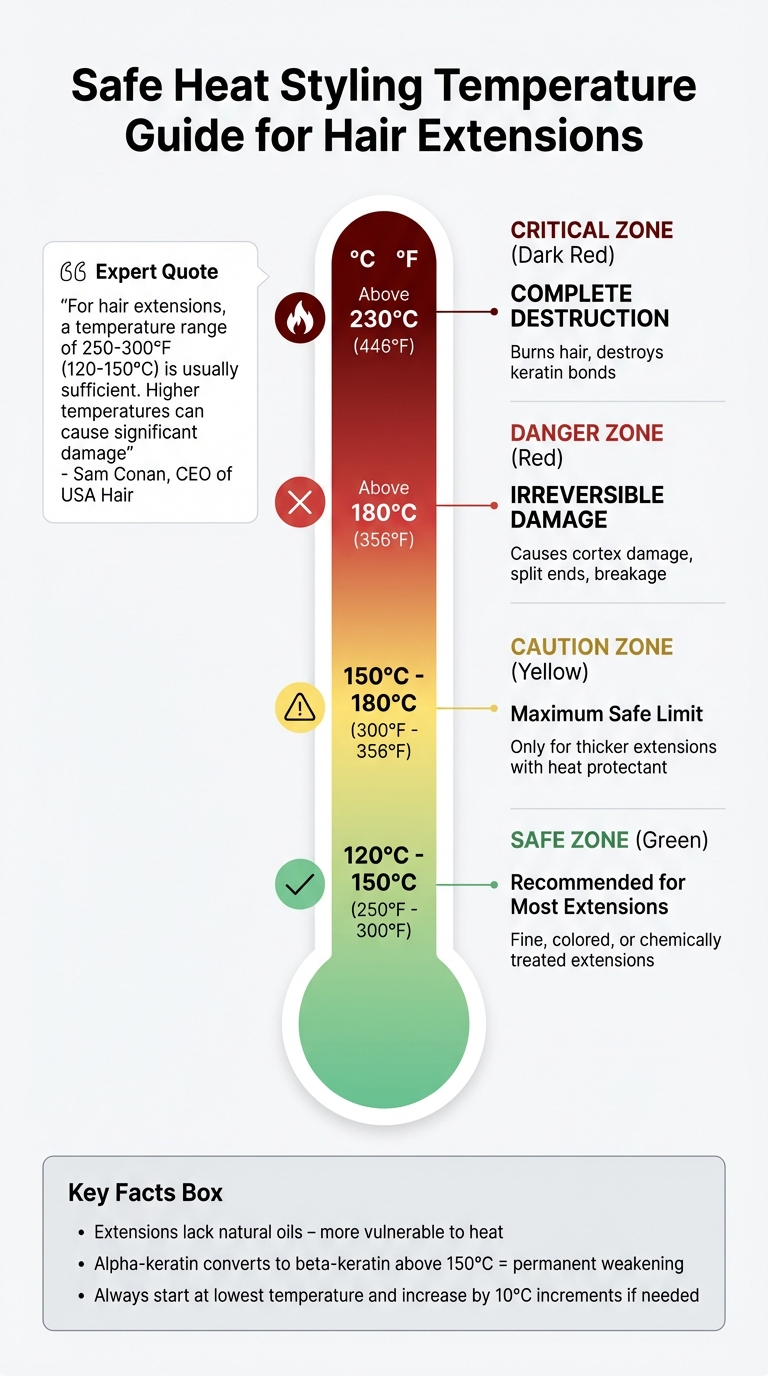
Heat Styling Temperature Guide for Hair Extensions
Styling your extensions isn't just about creating a polished look - it’s also about preserving their quality. Unlike natural hair, extensions lack oils that provide protection, making them more prone to heat damage. If your tools are too hot, you risk drying out the strands, leaving them brittle and dull. On the other hand, setting the temperature too low can harm the outer cuticle and fail to properly hold your style.
Temperatures above 180°C can cause irreversible damage, such as split ends and breakage, by harming the hair's cortex. Excessive heat also weakens the keratin bonds that secure your extensions, leading to slippage or shedding. Knowing the right temperature limits is crucial before you begin styling.
Sam Conan, CEO of USA Hair, advises: "For hair extensions, a temperature range of 250-300°F (120-150°C) is usually sufficient. Higher temperatures can cause significant damage".
The trick is to find a balance between effective styling and safety. While 185°C might work well for natural hair, extensions require a gentler approach. Start with the lowest effective temperature and increase it gradually if necessary.
How Much Heat Extensions Can Handle
Premium human hair extensions, like the Russian and Mongolian varieties used by Hair Wonderland, handle heat better than synthetic ones but still face risks above 150°C. Exceeding 230°C can burn the hair completely, destroying the bonds that maintain its structure. When temperatures go beyond 150°C, the hair’s alpha-keratin begins converting to beta-keratin, permanently weakening the strands.
Great Lengths recommends, "stick to temperatures below 180°C to maintain the integrity of the hair".
Pushing past these limits can result in dryness and cuticle damage, robbing your extensions of their smooth, sleek finish. Unlike natural hair, extensions can’t repair themselves, so damage is permanent. Keeping this in mind, here are the temperature ranges that strike the right balance for straightening.
Best Temperature Ranges for Straightening
Stick to 120°C to 150°C for safe and effective styling. If the lower end of this range doesn’t deliver results, adjust upwards in small 10-degree increments instead of jumping to higher temperatures.
Never exceed 180°C when styling extensions. Temperatures above this threshold can cause irreversible damage to the hair’s cortex. For fine, coloured, or chemically treated extensions, stay within the 120°C to 150°C range. Thicker extensions might tolerate up to 170°C, but only if you use a high-quality heat protectant and minimise exposure time.
Always ensure your extensions are completely dry before styling. Using heat tools on damp hair can cause the water inside to boil, leading to "bubble hair" and immediate breakage. To avoid repeated heat exposure, test a small section first to find the lowest effective temperature, and work in smooth, single passes.
Up next, discover the step-by-step guide to safely straightening your extensions.
Invest in Quality Styling Tools
Choosing the right styling tools is just as important as managing temperature settings when it comes to protecting your extensions. High-quality tools are designed to distribute heat evenly, which helps you achieve your desired look in fewer passes. This reduced exposure to heat can significantly minimise the risk of damage.
Take, for instance, advanced tools like the ghd Platinum+, which uses sensors to maintain a steady 185°C by checking the heat 250 times per second. This level of precision prevents overheating and protects the keratin in your extensions. Unlike natural hair, extensions cannot repair themselves once damaged, making this kind of accuracy crucial.
Astin, Salon Artistic & Education Manager at Hairhouse, explains: "A ceramic straightener may not always be the fastest styling option, but it will be the safest for your hair".
Investing in premium tools pays off in the long run. For example, tools with ceramic or tourmaline plates can result in hair that is up to 70% stronger, with 75% more shine and double the colour protection compared to cheaper alternatives. For premium extensions like those from Hair Wonderland, such tools help maintain their natural blend, shine, and softness even after repeated styling.
What to Look for in Styling Tools
Certain features can make a big difference in how well your tools protect your extensions:
- Plate Material: Ceramic plates heat slowly and evenly, making them ideal for delicate extensions. Tourmaline-infused ceramic plates go a step further by producing 20 times more moisture-locking ions, sealing the cuticle with every pass. Titanium plates heat faster but require careful handling due to their higher temperature capabilities.
- Floating Plates: These plates adjust to the thickness of your hair, gliding smoothly without pulling or snagging. This is especially important for clip-in extensions, where tension can weaken clips or break strands.
- Adjustable Temperature Settings: Digital displays let you set precise heat levels, typically between 120°C and 180°C for extensions. Avoid tools that only offer an on/off function with default high temperatures.
- Advanced Technologies: Features like ionic technology reduce frizz by sealing the cuticle, while infrared heat warms hair from the inside out, preserving the outer layer. Together, these technologies help keep extensions smooth and natural-looking.
Problems with Cheap Tools
Low-cost tools often come with aluminium plates or thin ceramic coatings that heat unevenly, creating hot spots. These hot spots can burn sections of your extensions while leaving others barely styled, forcing you to make multiple passes and exposing the hair to even more heat.
Additionally, the coatings on cheap tools can wear off quickly, leaving rough surfaces that snag and pull on your hair. Without floating plates, these tools fail to adjust to different hair textures, causing uneven tension and breakage. Worse still, many budget tools lack proper temperature controls and can exceed safe limits, sometimes going over 230°C, which can destroy keratin bonds. Basic heating elements without ionic or infrared technologies can also strip away moisture, leaving your extensions dry and brittle.
Quality Tools vs. Cheap Tools
| Feature | High‑Quality Styling Tools | Cheap/Low‑Quality Tools |
|---|---|---|
| Plate Material | Solid ceramic, titanium, or tourmaline-infused | Aluminium or thin ceramic coating |
| Heat Distribution | Even and consistent; sensor-monitored | Uneven with dangerous hot spots |
| Temperature Control | Digital sensors or adjustable settings (120°C–180°C) | Fixed high heat or inconsistent temperatures |
| Plate Design | Floating plates that glide snag-free | Rigid plates that pull or snag hair |
| Technology | Ionic, infrared, and smart sensors | Basic heating element with no regulation |
| Result | Smooth, hydrated hair with fewer passes | Dry, brittle hair requiring multiple passes |
| Price Range | $119–$560 | Often under $50 |
Professional brands like ghd, Dyson, and Silver Bullet offer tools ranging from $119 to over $560, with mid-range options starting at $119. While these tools may seem like a bigger investment upfront, they protect your extensions and deliver consistently better results with less damage. Paired with proper temperature settings and heat protectants, high-quality tools are an essential part of keeping your extensions looking their best.
How to Straighten Extensions Safely
Straightening your extensions the right way is essential to keep them looking their best and to protect your investment. Whether you're working with permanent extensions or clip-ins, a careful approach ensures they stay in great condition while achieving that sleek, polished look.
Step-by-Step Straightening Instructions
The key to safe straightening? Start with the basics: a proper temperature setting and a good heat protectant. Make sure your extensions are completely dry before applying heat - moisture and heat are a bad combination that can weaken or damage the fibres.
Once your extensions are dry and prepped, divide them into 5 cm sections. Set your flat iron between 120°C and 180°C, depending on your hair's texture. Working with small, manageable sections ensures even heat distribution and better results.
When using the flat iron, glide it smoothly from root to tip in one steady motion. As World Hair Extensions advises, "A temperature of 300°F to 350°F will be enough to get even the kinkiest of hair straight as long as you pass it over the section slowly" (approximately 150°C to 177°C). Avoid holding the iron in one spot, as this can cause heat damage.
After straightening each section, allow it to cool completely before brushing. This cooling phase helps lock in the style and reduces frizz. Be cautious near the attachment points - whether bonds, tapes, or clips - and keep the flat iron a few centimetres away to prevent damage. Once you're done, apply a lightweight finishing spray or serum to seal the cuticle and add a touch of shine.
Straightening Clip-In Extensions
Clip-in extensions require a slightly different approach to achieve a smooth, uniform finish. For best results, straighten them before clipping them into your hair. Use an extension holder or secure the weft in a drawer to keep it stable while you work. Straighten several pieces together rather than thin strips to avoid uneven results, especially around the clips.
To preserve the quality of clip-ins, limit heat styling to 3–4 times between washes. Once clipped in, use a wide-tooth comb or paddle brush to blend the straightened extensions with your natural hair for a seamless, polished look. For example, Hair Wonderland's 22″ Seamless Set is a great candidate for this method. Following these steps ensures your clip-ins stay smooth and stylish without compromising their lifespan.
Care for Extensions After Heat Styling
Taking care of your extensions after heat styling is the key to keeping them looking great and lasting longer. Unlike natural hair, extensions don’t benefit from your scalp’s natural oils, which makes them prone to drying out quicker. Because of this, they need a little extra TLC to stay in top shape. These steps will help you maintain gorgeous, healthy extensions after styling.
Let Extensions Cool Before Brushing
Resist the urge to brush your extensions while they’re still warm.
Sam Conan, CEO of USA Hair, advises: "After heat styling, allow your hair extensions to cool completely before touching or manipulating them. This helps to set the style and reduce the risk of damage".
Once they’ve cooled down, gently detangle them using a soft plastic or looped nylon brush, like the Hair Wonderland Tangle Tamer Brush. Always start at the ends and work your way up to minimise pulling or stressing the bond points or clips.
Add Finishing Products
Heat styling can strip moisture from your extensions, leaving them dry and prone to frizz. To combat this, apply a lightweight hair oil or serum to the mid-lengths and ends after they’ve cooled. Products with argan or coconut oil work wonders, but make sure they’re alcohol-free - alcohol can make extensions brittle after heat exposure.
Rub a few drops of oil between your palms and gently smooth it onto the ends, steering clear of the bond areas. This step restores shine and seals the cuticles, keeping your extensions soft and manageable. Once styled and treated, cleaning and storing them properly will further protect your investment.
How to Store Extensions and Extend Their Life
Proper storage is just as important as the styling process. For clip-in extensions, make sure they’re completely dry and cool before placing them in a protective bag, like Hair Wonderland’s Clip In Bag ($54.00). This prevents tangling and keeps dust at bay. Close the clips before storing to avoid snags, and keep them in a cool, dry, shaded spot to prevent discolouration.
To prolong the life of your extensions, limit heat styling to once or twice a week. With the right care, extensions can last anywhere from three to six months. The less heat you use, the longer they’ll maintain their quality and appearance over time.
Conclusion
Protecting your hair extensions from heat damage boils down to a few key practices: always use a quality heat protectant, keep your styling tools set at or below 180°C, and choose professional straighteners with ceramic plates and adjustable settings.
After styling, allow your extensions to cool completely, gently detangle them, and finish with a lightweight, alcohol-free oil. Store them in a protective bag to maintain their condition. Limiting heat styling to just 2–3 times per week can also make a big difference in preserving their lifespan.
At Hair Wonderland, our premium double-drawn Russian and Mongolian human hair extensions are crafted to last when cared for properly. Pair them with the right tools - like the Tangle Tamer Brush ($21.95) for easy detangling and the Clip In Bag ($54.00) for secure storage - to keep your extensions looking flawless and feeling salon-fresh between uses.
FAQs
Can I heat style synthetic extensions?
When it comes to synthetic extensions, you can only use heat styling tools if the extensions are explicitly labelled as heat-friendly. Applying heat to synthetic fibres that aren’t designed for it can lead to serious damage or even melting. To prevent this, always double-check the product label before reaching for your curling iron or straightener.
How often should I straighten extensions to avoid damage?
To keep your extensions in good condition, limit straightening to once a week. Excessive use of heat tools can break down the fibres, shortening their lifespan. Make sure to apply a heat protectant spray before styling - this helps protect your extensions and keeps them looking their best.
What are the signs of heat-damaged extensions?
Heat-damaged extensions typically look lifeless and brittle, often showing split ends and signs of breakage. They may also become prone to tangling, a clear sign that the hair cuticle and inner structure (cortex) have been compromised by too much heat. Consistent maintenance and using proper heat protection can go a long way in reducing these problems.