


Hair extensions can tangle easily, especially in humid climates like Australia. Without proper care, tangles can lead to damage and shorten their lifespan. Here's how to detangle them safely:
- Start with your fingers: Gently separate larger knots before using tools.
- Work from the ends up: Use short, gentle strokes to avoid breakage.
- Use the right tools: Wide-tooth combs, loop brushes, and detangling brushes are ideal.
- Apply detangling products: Lightweight, alcohol-free sprays or leave-in conditioners help reduce friction.
- Care for different types: Clip-ins, tape-ins, sewn-in, and halo extensions each need specific handling.
- Prevent tangles: Brush extensions daily, avoid sleeping with wet hair, and store clip-ins properly.
Regular care and the right techniques will keep your extensions smooth and long-lasting.
Preparing Your Hair Extensions for Detangling
Why Hair Extensions Tangle
Semi-permanent extensions don’t benefit from the natural oils produced by your scalp, which leaves them prone to drying out. This dryness makes them more likely to mat and tangle, especially with daily wear and styling.
Tools You Need for Detangling Extensions
Start with a wide-tooth comb for tackling larger knots, and follow up with a flexible-bristle detangling brush for everyday maintenance. Brushes like Hair Wonderland's Tangle Tamer Brush ($21.95) or The Detangle Brush ($29.95) are designed to minimise breakage while working through tangles.
For tape-in or beaded extensions, loop brushes are a smart choice as they won’t snag on the bonds. Brushes that combine boar bristles with flexible pins can also help distribute moisture evenly and control frizz. Sectioning clips are handy for separating your natural hair from extensions, reducing strain on the bonds during detangling.
Avoid using metal-bristled brushes or fine-tooth combs near the bonds, as these can catch on attachments and cause them to loosen prematurely.
Pairing the right tools with effective detangling products ensures your extensions stay in great condition.
Choosing the Right Detangling Products
Opt for lightweight, alcohol-free leave-in conditioners or detangling sprays. Alcohol-based products can dry out extensions, making them brittle. If you’re working with tape-ins, sewn-in wefts, or beaded extensions, steer clear of oils or heavy conditioners at the bonds. These can weaken adhesives and cause extensions to slip. Instead, focus on applying detangling products from the mid-lengths down to the ends to keep attachment points intact.
Once you’ve got the right tools and products, it’s time to set up your workspace for a smooth detangling process.
Setting Up Your Workspace
If you’re detangling clip-in extensions, remove them first and lay them flat on a clean towel or table. This allows you to work on each weft individually without putting unnecessary tension on your natural hair.
For semi-permanent extensions, use sectioning clips to isolate the area you’re working on. Divide larger wefts into smaller, more manageable sections - two or three parts usually work well. Lightly dampen the hair with water or a leave-in spray to make it more pliable. Be careful not to oversaturate, as wet extensions can stretch and weaken when pulled.
How to Detangle Hair Extensions & Prevent Tangles | Instant Beauty ♡
How to Detangle Hair Extensions Without Damage
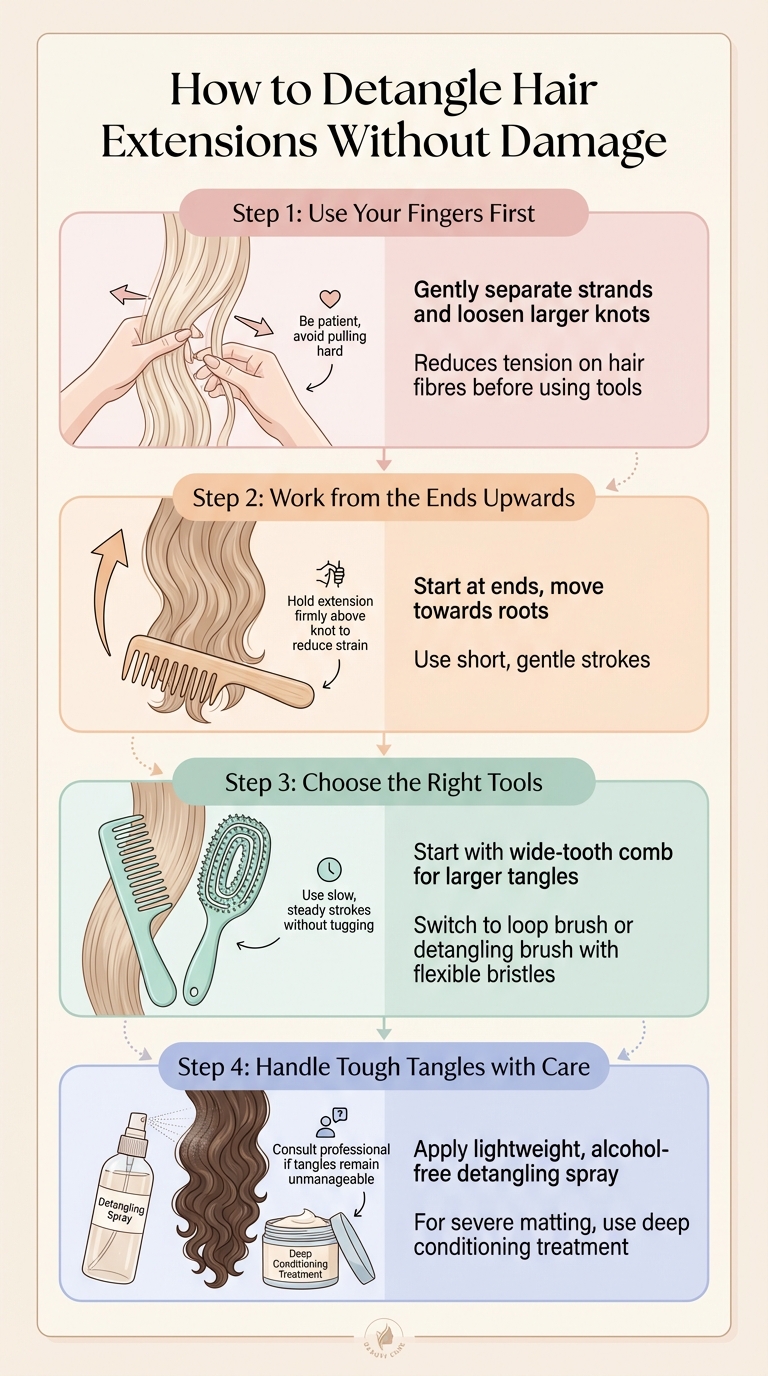
4-Step Process to Detangle Hair Extensions Without Damage
Step 1: Use Your Fingers First
Before grabbing a brush or comb, start by gently working through the tangles with your fingers. Focus on separating the strands and loosening any larger knots. The goal here is to reduce tension on the hair fibres and make the detangling process smoother when you move on to using tools. Be patient, and avoid pulling too hard to minimise stress on the extensions.
Step 2: Work from the Ends Upwards
Once you've tackled the big knots with your fingers, move on to detangling with tools. Always start at the ends of your extensions and work your way up towards the roots. Use short, gentle strokes to avoid breakage and protect the attachment points. To keep the hair secure, hold the extension firmly just above the knot or near the clip base with your other hand. This technique reduces strain on the bonds or clips and helps you maintain better control. Working in small sections makes the process easier and more effective.
Step 3: Choose the Right Tools
Begin with a wide-tooth comb to handle larger tangles, as it’s gentle and helps minimise breakage. After dealing with the bigger knots, switch to a loop brush or a detangling brush with flexible bristles. A loop brush is particularly useful because its bristles glide through the hair without snagging on bonds or wefts. Use slow, steady strokes, and avoid tugging to keep both the extensions and your natural hair in good condition.
Step 4: Handle Tough Tangles with Care
If you’re dealing with stubborn knots, there are a few extra steps you can take. Apply a lightweight, alcohol-free detangling spray to the tangled areas - this adds slip and makes the hair easier to work through. For more severe matting, a deep conditioning treatment can help soften the hair before you continue detangling. Stick to the ends-to-roots method, and take your time to avoid causing damage. If the tangles remain unmanageable, it’s best to consult a professional stylist who specialises in extensions. They’ll have the expertise to safely resolve the issue while preserving the quality of your extensions.
sbb-itb-dcde78e
Detangling Different Types of Hair Extensions
Each type of hair extension requires its own specific care routine when it comes to detangling. Here's how to handle different extensions effectively.
Clip-In Extensions
Always remove clip-in extensions before detangling to protect both the extensions and your natural hair. Lay each weft flat on a clean surface or use an extension holder to keep everything organised. This setup helps you work more efficiently and prevents unnecessary strain on the clips.
Divide the hair into small, manageable sections using a pintail comb. Hold the weft securely at the clip base to avoid tugging on the clips, which can lead to shedding or loosening. Work gently from the ends toward the roots, using a lightweight detangling spray for any stubborn knots. Once you're done, store the clip-ins in a silk bag or hang them on a dedicated extension hanger to keep them smooth and tangle-free.
Tape-In Extensions
Tape-in extensions need extra care due to their adhesive bonds. Only detangle them when dry, as wet hair is more fragile and can damage the bonds. Start by using your fingers to gently separate any larger knots, then switch to a tool like a loop brush.
Hold the hair firmly at the weft line to support the bonds and prevent pulling. The loop brush is ideal because its bristles glide over the adhesive without snagging. When applying leave-in conditioner or detangling spray, keep these products away from the tape area to avoid loosening the adhesive. To keep your tape-ins in top shape, schedule regular maintenance with your stylist every 6–8 weeks.
Sewn-In and Beaded Wefts
For sewn-in or beaded wefts, focus on protecting the attachment points along the weft line. Work in small sections, supporting the hair just above the attachments to minimise tension on the stitching or beads. Start detangling from the ends and move upward using a wide-tooth comb or loop brush, which is less likely to catch on the attachments.
The area near the beads or thread is prone to tangling, so take extra care here. If you encounter resistance, apply a lightweight, alcohol-free detangling spray and work gently through the knot. Regular professional check-ups help maintain these extensions and prevent severe tangles over time.
Halo Extensions
Halo extensions are best detangled when they're off your head. Lay them flat on a clean surface to avoid distorting the wire, which, while durable, can lose its shape if handled roughly.
Use the same ends-to-roots technique, holding the weft line firmly as you work through tangles. A loop brush or soft-bristle detangling brush is ideal, as these tools won't snag on the wire. Be especially gentle around the wire attachment points. Once detangled, store your halo extension flat or hanging to preserve its shape and prevent future tangling.
Each extension type has its quirks, but with the right tools and techniques, you can keep them looking their best.
Preventing Tangles with Daily and Weekly Care
The easiest way to avoid tangles in your hair extensions is to stop them from forming in the first place. Regular care not only saves time but also helps your extensions stay in great condition for longer.
Daily Brushing Routine
Make it a habit to brush your extensions twice a day - once in the morning and again before bed. Start brushing at the ends and work your way upward to the roots, holding the hair firmly at the weft or bond to avoid pulling. This helps distribute natural oils along the hair, reduces friction, and keeps knots at bay.
For best results, use extension-friendly tools like a loop brush or wide-tooth comb, which minimise breakage and prevent snagging on the bonds. If your extensions have been exposed to wind or moisture, brush them immediately to avoid matting. Before washing, give your hair a good brush to ensure knots don’t tighten when wet.
Protecting Extensions While You Sleep
Nighttime care is just as important as your daytime routine. Never go to bed with wet or damp extensions - this is a surefire way to cause severe matting. Always ensure your hair is completely dry, then brush it thoroughly. Braid your extensions or tie them into a loose updo with a silk scrunchie to reduce movement and friction while you sleep.
Switching to a silk or satin pillowcase is another smart move. These materials create less friction than cotton, helping prevent tangles while you rest. If you wear clip-in extensions, take them out before bed to protect both the extensions and your natural hair.
Washing, Drying, and Heat Styling Tips
Your washing and styling habits also play a key role in keeping tangles under control. Wash your extensions only when necessary - overwashing can strip them of moisture, leaving them dry and prone to tangling. Use sulphate-free and alcohol-free shampoos and conditioners to keep the hair hydrated and soft. Keep in mind that extensions are especially delicate when wet, so handle them gently during washing.
After washing, pat your extensions dry with a towel and let them air-dry until about 80% dry. If needed, use a blow dryer on a low to medium heat setting. Always apply a heat protectant before using any styling tools to prevent damage and dryness, which can lead to tangles.
Storing Clip-In Extensions
Proper storage is essential for maintaining the smoothness of your clip-in extensions. After detangling and ensuring they’re completely dry, store them in a dedicated storage solution like Hair Wonderland's Clip In Bag ($54.00). This keeps them neat and prevents tangling. Alternatively, you can hang them on an extension hanger to maintain their shape and texture. Avoid tossing them loosely into a drawer, as this will lead to tangling and potential damage from debris.
Conclusion
To keep your extensions in top shape and avoid unnecessary damage, it all comes down to gentle techniques, the right tools, and a consistent care routine.
Start detangling from the ends and work your way up - this reduces strain on both the fibres and the bonds holding your extensions in place. Using specialised tools like loop brushes or wide-tooth combs ensures a smooth glide without snagging, while high-quality detangling products, such as leave-in conditioners or lightweight oils, help maintain hydration and smoothness.
Preventing tangles is always easier than fixing them. A daily routine that includes brushing, proper storage, and using sleep protection can make a huge difference in stopping knots before they even begin. By combining these tips with the care strategies outlined earlier, you’ll keep your extensions looking flawless for longer.
FAQs
How often should I detangle my hair extensions to keep them looking their best?
To keep your hair extensions smooth and free from tangles, make it a habit to detangle them every 2–3 days or whenever you spot knots forming. This regular care helps preserve their condition and avoids unnecessary wear and tear.
Use a wide-tooth comb or a detangling brush, and always start at the ends, working your way up slowly to prevent pulling or breaking the strands. For an easier and gentler process, apply a leave-in conditioner or detangling spray beforehand. This not only makes brushing simpler but also adds an extra layer of protection to your extensions.
What are the best products for detangling different types of hair extensions without causing damage?
To safely detangle hair extensions, use a lightweight, sulphate-free leave-in conditioner or detangling spray. These products minimise friction, making it easier to work through knots without causing damage to the extensions.
Choose high-quality products tailored to your extension type - whether they're synthetic or human hair. Look for gentle detangling conditioners or sprays specifically formulated for extensions. For the best results, pair these with a wide-tooth comb or a detangling brush to achieve a smooth, tangle-free look.
What’s the best way to keep my hair extensions from tangling overnight?
To keep your hair extensions smooth and free from tangles while you sleep, try securing them in a loose braid or a low ponytail. Switching to a silk or satin pillowcase can also work wonders by reducing friction and minimising knots. Just make sure your extensions are completely dry before heading to bed, as damp hair is more likely to tangle and sustain damage. These easy habits can go a long way in maintaining your extensions.