


Heat styling can make or break your hair extensions. Without proper care, tools like straighteners and curling irons can leave extensions dry, brittle, and damaged. Extensions don’t have the natural oils your scalp provides, so they’re more prone to heat damage than natural hair. But with the right techniques, you can style them safely while keeping them smooth and shiny.
Here’s what you need to know:
- Safe Temperature Ranges: Stick to 120°C–150°C for most human hair extensions. Never exceed 180°C, as this causes irreversible damage.
- Use Heat Protectants: Always apply a lightweight, alcohol-free heat protectant to lock in moisture and protect the cuticle.
- Avoid Attachment Points: Keep heat tools away from tape, keratin bonds, or clips to prevent slippage or melting.
- Dry Before Styling: Never apply heat to wet extensions - it can cause severe damage.
- Limit Heat Use: Style with heat only 1–2 times a week and use heatless techniques on other days.
Hair Extension Types and Heat Tolerance
Human Hair vs. Synthetic Extensions
When it comes to heat styling, not all hair extensions are created equal. Human hair extensions, especially those made from Remy hair, are designed to handle heat styling tools like straighteners, curling irons, and blow dryers. Since the cuticles remain intact, they behave much like natural hair, making them a reliable choice for styling - as long as you stick to safe temperature ranges.
On the other hand, synthetic extensions are a whole different story. Made from plastic-based fibres like acrylic, nylon, or polyester, these extensions can melt, frizz, or even shrivel when exposed to high heat. While some synthetic options are labelled as "heat-tolerant", they typically max out at around 120°C–130°C. Even then, repeated styling can degrade their quality. If you're unsure about your extension type, try testing a hidden strand - if it gives off a burnt plastic smell, it's synthetic and should be kept far away from heat tools.
These material differences play a critical role in determining the heat limits and styling methods you can use.
Heat Limits for Different Extension Methods
The way your extensions are attached also affects how much heat they can handle. While human hair extensions can typically withstand temperatures up to 175°C, the attachment points are much more fragile. For example, tape adhesives can soften, keratin bonds may melt, and even metal clips can transfer heat, potentially damaging the weft.
Here’s a quick guide to the heat compatibility of various extension methods:
| Extension Method | Heat Compatibility | Safe Temperature Range | Specific Precautions |
|---|---|---|---|
| Clip-in (Human Hair) | High | 120°C – 175°C | Avoid direct heat on metal or silicone clips. |
| Tape-in | Moderate | 120°C – 150°C | Keep tools at least 2.5 cm away from adhesive tabs. |
| Sew-in / Weave | High | 120°C – 175°C | Ensure the braid and thread are completely dry before styling. |
| Keratin Bond | Moderate | 120°C – 150°C | Keep heat tools 2.5–5 cm away from the bonds to prevent melting. |
To protect your extensions and your styling investment, always start with the lowest effective temperature - around 120°C - and work your way up only if needed. Keeping heat tools away from attachment points is key to maintaining both the look and longevity of your extensions.
Do You Let Your Extensions Fully Dry Before Heat Styling?
Safe Temperature Settings for Heat Tools
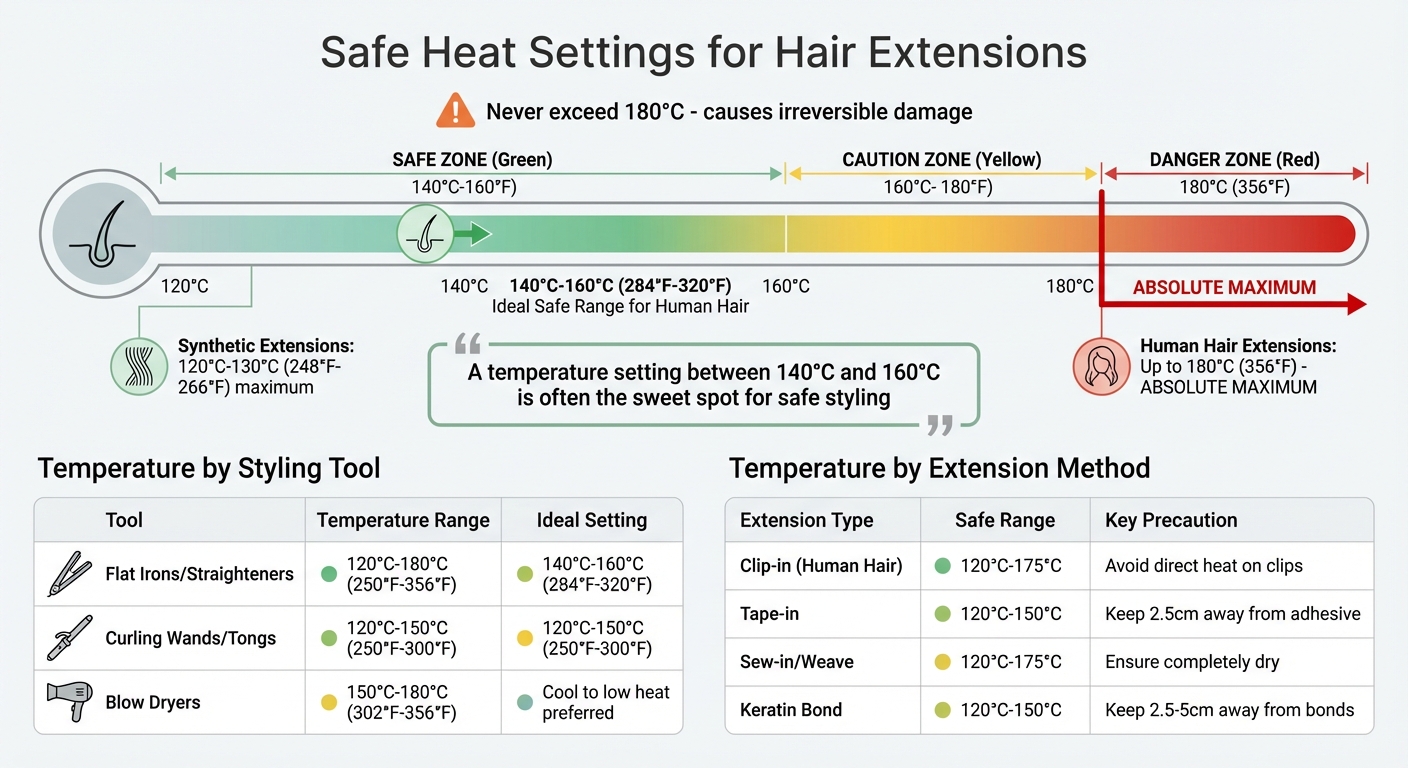
Heat Styling Temperature Guide for Hair Extensions by Type and Tool
Temperature Ranges by Tool
Getting the right heat setting can make all the difference between flawless styling and damaging your extensions. While human hair extensions can handle heat up to 180°C (356°F), that doesn’t mean you should crank up your tools to the maximum. Studies show that hair keratin undergoes irreversible changes above 180°C, so consider this the absolute limit.
For flat irons and straighteners, aim for 120°C–180°C (250°F–356°F), with the ideal range being 140°C to 160°C (284°F–320°F). Curling wands and tongs work best between 120°C and 150°C (250°F–300°F), as the hair wraps tightly around the tool. When it comes to blow dryers, stick to the cool setting whenever possible. If you need warmth, keep it between 150°C and 180°C (302°F–356°F).
"A temperature setting between 140°C and 160°C is often the sweet spot for safe styling." - Veaudry
It’s crucial to avoid going above 180°C to maintain the integrity of your extensions. Unlike natural hair, extensions don't benefit from the scalp's natural oils, which provide a protective layer. These guidelines can help you make smarter choices when setting your heat tools.
How to Adjust Heat for Your Extensions
Once you know the safe ranges, fine-tuning your heat settings is the next step. Start with a low temperature - around 120°C (250°F) - and test on a small, hidden strand. Gradually increase the heat in small steps until you find the perfect setting. For example, a single, steady pass at 140°C is far gentler on your extensions than several quick passes at a higher temperature.
When curling, hold each section on the wand for just 5–10 seconds before letting it cool naturally or pinning it with a clip to set the shape without applying extra heat. This method not only protects your extensions but also helps them stay sleek and styled for longer. By following these steps, you can keep your extensions looking their best while minimising heat damage.
Preparing Extensions Before Heat Styling
Using Heat Protectant Products
Extensions lack the natural scalp oils that keep hair hydrated, making them more prone to drying out when exposed to heat. To combat this, always use a heat protectant to help lock in moisture and minimise damage to the cuticle.
Opt for a lightweight, alcohol-free formula specifically designed for extensions. Alcohol-based products can strip away moisture, leaving the hair brittle and prone to breakage. Spray the protectant evenly from the mid-shaft to the ends - these areas are most vulnerable - and allow 1–2 minutes for the product to absorb before applying heat. Afterward, gently detangle the hair to reduce tension and ensure your extensions are ready for styling.
Detangling Before Styling
Detangling your extensions before styling is key to preventing snags and ensuring even heat application. Start at the ends and work your way up using a wide-tooth comb or a specialised extension brush, such as Hair Wonderland's detangling brushes. Hold the top of the weft while brushing to protect the bonds or clips from unnecessary strain. Proper detangling not only makes styling easier but also helps maintain the integrity of your extensions by distributing heat more evenly.
Drying Extensions Completely
Once detangled, make sure your extensions are completely dry before using any heat tools. Applying heat to damp extensions can cause the moisture to turn into steam, leading to frizz, breakage, and even permanent damage. As Daniel Kim from Barely Xtensions explains:
Styling wet extensions with a curling or flat iron can cause serious damage - moisture + heat = fried hair.
Let your extensions air-dry until they are about 80% dry, then use a blow dryer on a cool or low-heat setting to finish the process. If you're pressed for time, gently pat the hair with a microfiber towel and direct the dryer nozzle downward to smooth the cuticle. Avoid brushing until the extensions are at least 90% dry, as wet hair is especially fragile and more likely to break.
sbb-itb-dcde78e
How to Use Heat Tools on Extensions
Once your extensions are prepped and dry, it's time to use heat tools with care. Here's how to style them safely and effectively.
Flat Irons and Straighteners
Choose a straightener with ceramic or tourmaline plates to ensure even heat distribution and avoid damaging the hair. Start by dividing your hair into sections about 5cm wide. Working with smaller sections helps distribute heat evenly, letting you achieve a sleek look in just one smooth pass.
Keep the straightener moving steadily to avoid overheating any one spot. Moving too slowly can dry out the hair and cause breakage, while rushing through won't give you the polished finish you're aiming for. Avoid applying heat directly to the attachment points - whether they're tape-ins, keratin bonds, or clip-ins - as this can weaken the bonds. After straightening, let the extensions cool completely before brushing to lock in the style.
For curls, the process requires similar attention to detail.
Curling Wands and Tongs
Opt for curling wands with ceramic or tourmaline barrels for consistent heat. Divide your hair into sections between 2.5–5cm wide to ensure each strand gets equal exposure to the heat. Wrap each section around the barrel once for even, well-formed curls.
Hold the hair on the wand for no more than 5 to 10 seconds. As Shakira Dickinson from Hair Candy advises:
Ideally, curl each section for about 5-10 seconds, depending on the thickness of the hair and the type of curl you want to achieve.
Keep the wand away from the roots and attachment points to protect both your natural hair and the extension bonds. Once you release a curl, let it cool in your hand or secure it with a clip to set the shape. After all sections have cooled, gently separate the curls using your fingers or a wide-tooth comb for a softer, more natural finish.
Blow Dryers
Use blow dryers cautiously to maintain your style without damaging the extensions. Always stick to low or medium heat settings to avoid compromising the keratin bonds, which could lead to shedding or bond resetting. Christina Jones from Studio She highlights this risk:
If you have ktips, try not to put any heat on the bonds because it can cause the bond to reset.
Keep the dryer moving and maintain a safe distance from the roots and attachment points to prevent over-drying. Direct the nozzle downward to smooth the cuticle and minimise frizz. For added control, consider using a concentrator nozzle to focus the airflow on specific sections while keeping heat exposure minimal.
Heat Styling Mistakes That Damage Extensions
Even the best styling tools can harm your extensions if used incorrectly. Knowing what to avoid is just as crucial as mastering good techniques. Missteps like these can shorten the lifespan of your extensions and diminish their appearance.
Excess Heat at Bond Points
Applying direct heat to the attachment points of your extensions is a surefire way to cause damage. Whether you're working with tape-ins, keratin bonds, or wefts, excessive heat can soften or melt the adhesive, leading to slippage or even complete detachment. Wendy Guppy from Instyle Hair & Beauty emphasises:
Keep your straightener plates away from the top bond of the hair extensions. Any kind of high temperature directly applied can cause the bond to become loose and slip or even fall out.
When blow-drying, aim the nozzle downward and away from the bonds to avoid concentrated heat that could cause tangling or matting at the attachment points. This simple precaution can make a big difference in preventing damage.
Not Using Heat Protectant
Skipping a heat protectant is another common mistake that can wreak havoc on your extensions. Unlike natural hair, extensions lack the natural oils from your scalp that provide protection against heat damage. Without this shield, heat can dry out the hair, leaving it brittle, frizzy, and prone to breakage. Great Lengths explains the long-term effects:
Repeated exposure without protection can also compromise the keratin bonds that secure the extensions to your natural hair, leading to slippage or premature shedding.
To safeguard your extensions, apply a sulfate- and alcohol-free heat protectant to the mid-lengths and ends before styling. This creates a barrier that locks in moisture and shields the hair from thermal damage, keeping your extensions smooth and healthy-looking.
Heat Styling Wet Extensions
Using heat tools on damp extensions is one of the most harmful practices. When you apply a flat iron or curling wand to wet hair, the water inside the strand turns to steam, effectively "cooking" the hair from the inside out. Tara Hair highlights the risks:
Styling wet or damp extensions can lead to severe damage, as the heat can cause the moisture to turn into steam, which can weaken the hair strands.
Always ensure your extensions are completely dry before using any heat-styling tools. Wet extensions are far more vulnerable to breakage, burning, and irreversible damage, so take the time to dry them thoroughly first.
Caring for Extensions After Heat Styling
Taking care of your extensions after heat styling is key to keeping them looking great and lasting longer.
Cooling and Brushing
Let your extensions cool completely before brushing to help the style hold. Daniel Kim from Barely Xtensions offers this advice:
After curling a section, allow it to cool in shape so the curl 'memorizes' that form. Once all the extensions are curled, avoid brushing them out until they've cooled off completely.
If you've curled your extensions, don’t rush to brush them out. Once they’ve cooled to room temperature, start by gently loosening the style with your fingers. When brushing, opt for a wide-tooth comb or a paddle brush made for extensions - regular brushes can tug at the bonds and cause damage. Work carefully from the ends upward to avoid pulling the extensions from your scalp.
Once you've brushed them, it's time to add some finishing touches to enhance shine and manage frizz.
Finishing Products for Shine and Frizz
A small drop of serum or oil, like argan or jojoba, can work wonders for the mid-lengths and ends of your extensions. Be careful to avoid the roots and bonds, as oil can weaken the adhesive.
If you prefer a spray, hold it about 15–20 centimetres away and apply lightly. To blend your natural hair with the extensions for a smooth finish, use a boar bristle brush. This step ensures a polished, seamless look.
After taming frizz and adding shine, you might want to explore styling options that don’t rely on heat every day.
Mixing Heat and Heatless Styling
To protect your extensions, limit heat styling to once or twice a week. On other days, try heatless techniques like braiding damp extensions overnight for loose waves or using Velcro rollers on dry hair for added volume without heat.
Alternating between heat and heatless methods not only reduces thermal damage but also keeps your extensions looking fresh. Sam Conan, CEO of Canada Hair, suggests:
Limit heat styling to once or twice a week to prevent damage and extend the lifespan of your extensions.
Conclusion
Styling extensions with heat can be done safely if you follow the correct steps. Start by ensuring your extensions are completely dry and free of tangles. Then, apply a heat protectant to act as a barrier against potential damage. These initial precautions align with earlier advice on maintaining the quality of your extensions.
Once prepared, selecting the right heat settings is essential. For most human hair extensions, stick to temperatures between 120°C and 150°C. Opt for ceramic or tourmaline tools, which help distribute heat evenly . Work on small sections, keep the tool moving to avoid overheating any spot, and stay clear of the attachment points - this protects bonds, tapes, or clips from heat damage . To prolong the lifespan of your extensions, limit heat styling to once or twice a week and use heat-free styling techniques on other days .
Equally important is the cooling phase. Allow your extensions to cool completely before brushing them. This step helps set the style and reduces frizz .
FAQs
What temperature should I use when heat styling hair extensions?
To keep your hair extensions safe from heat damage, it's crucial to adjust your styling tools to the right temperature based on the type of extensions you're using:
- Remy human hair extensions: Stay under 180°C.
- Non-Remy human hair extensions: Stick to a range of 150–170°C.
- Seamless extensions: Limit the heat to a maximum of 120°C.
- Synthetic extensions: Never go above 120°C, as higher temperatures can melt the fibres.
Always apply a heat protectant spray before styling to reduce the risk of damage and help your extensions last longer. Also, avoid holding heat tools in one spot for too long and work in small sections for more even and effective styling.
How can I check if my hair extensions are human hair or synthetic before using heat styling tools?
If you're trying to figure out whether your extensions are made of human hair or synthetic fibres, a simple heat test can help. Take a hidden strand and apply heat using a curling iron or straightener at a moderate temperature. Human hair typically withstands heat styling, while synthetic strands might melt or show signs of damage.
You can also look at the product packaging or care instructions. These often indicate the material and whether heat styling is safe. If you're still uncertain, play it safe by using minimal heat or seeking advice from a professional stylist.
What are some safe and easy ways to style hair extensions without using heat?
Heatless styling offers a gentle way to achieve gorgeous hairstyles while safeguarding your hair extensions. Techniques like braiding slightly damp hair before bed or wrapping small sections around soft foam rollers can create lovely curls or waves without any heat. Another option is twisting your hair into loose buns or using fabric strips to form natural waves as you sleep.
These methods are especially kind to extensions, particularly those made from high-quality human hair, as they help preserve their condition and extend their lifespan. Skipping the heat means you can enjoy stylish results without the risk of damage, keeping your extensions looking fresh and full of life.