


Taking care of hair extensions can be tricky - they don't get natural oils from your scalp and are prone to damage from heat, chemicals, and daily wear. Here’s a quick guide:
- Heat Damage: Styling tools like flat irons and curling wands can leave extensions brittle and dry, especially without heat protectants.
- Chemical Damage: Harsh treatments (like formaldehyde-based smoothers) and products with sulfates, alcohol, or protein can weaken extensions.
- Daily Wear Issues: Friction, UV rays, salt water, and chlorine strip moisture, making extensions more fragile.
To repair damage:
- Use deep conditioning masks weekly and avoid products with harsh ingredients.
- Apply natural oils like argan or coconut to restore moisture.
- Safely remove or trim extensions if damage is severe.
To prevent future issues:
- Always use heat protectants before styling.
- Stick to sulfate-free shampoos and wash extensions 2–3 times a week.
- Store extensions properly after cleaning them and apply treatment oils daily.
If your extensions are beyond repair, replacing them with high-quality options, like 100% Remy human hair, can save money over time. Extensions are an investment - regular maintenance and care are key.
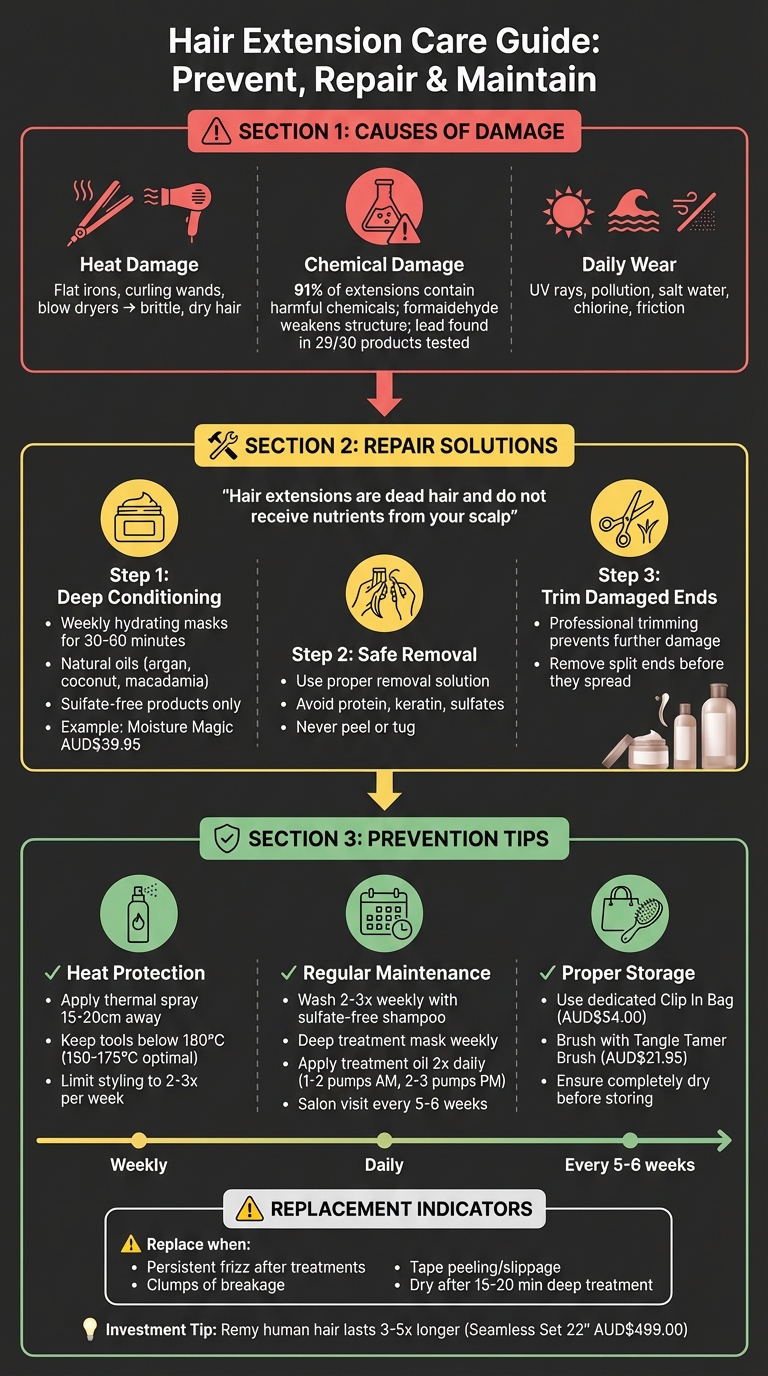
Complete Hair Extension Care Guide: Prevention, Repair, and Maintenance Steps
What Causes Damage to Human Hair Extensions
Heat Damage from Styling Tools
Styling tools like flat irons, curling wands, and blow dryers can wreak havoc on hair extensions. The intense heat from these tools alters the cuticle, leaving the hair rough, brittle, and prone to breaking. Without proper heat protection, the damage can become permanent.
The issue becomes even worse with chemically treated extensions. Heat doesn't just weaken the hair - it can also release fumes from leftover processing chemicals, further compromising the structure of the extensions. If your extensions feel dry, stiff, or lose their shine after styling, it's a clear sign that heat has damaged the delicate cuticle layer.
Chemical Damage from Treatments
Chemical treatments are another major culprit behind damaged extensions. A study conducted in 2026 found that 91% of hair extension samples contained chemicals linked to cancer or reproductive harm. These harmful substances, often used during processing, can leave the extensions severely weakened.
One of the most damaging treatments involves formaldehyde-based smoothing solutions. As Prolonged Hair explains, "While Formaldehyde is used to smooth cuticles, it actually weakens the hair structure and increases breakage in the hair, resulting in a shorter life span". Additionally, many manufacturers use industrial textile dyes instead of cosmetic-grade alternatives. These dyes strip the hair of its natural moisture, leaving it dry and brittle. To mask this damage, silicone coatings are applied to create a temporary shine. However, once the silicone washes off, the underlying damage becomes evident.
Another alarming discovery: lead was found in 29 out of 30 tested braiding hair products, with human hair extensions showing the highest levels. Dr Elissia Franklin from Silent Spring Institute cautions, "If you're introducing all these different products and it's all compounding and you're using them consistently every day, that increases your risk of these harmful outcomes".
Environmental and Daily Wear Issues
Beyond heat and chemicals, everyday environmental factors also take a toll on extensions. Exposure to UV rays, pollution, salt water, and chlorine strips moisture from the hair shaft. Unlike natural hair, extensions don’t benefit from the scalp’s natural oils, making them more prone to dryness.
Daily wear and tear can add to the damage. Friction from sleeping, tight hairstyles like top knots, and proper brushing techniques can cause tangling and breakage. Swimming is especially harsh on extensions, as salt water and chlorine penetrate the hair, further drying it out and weakening its structure. To combat these effects, applying treatment oil daily is essential.
These environmental and mechanical stresses often amplify damage caused by heat and chemical treatments, making proper care even more critical.
sbb-itb-dcde78e
How to Repair Damaged Hair Extensions
Deep Conditioning and Hydration
Hair extensions don’t benefit from the natural oils your scalp produces, so giving them a weekly deep conditioning treatment is a must to bring back moisture and shine. Focus on the mid-lengths and ends with a hydrating mask, steering clear of the bonds or attachment points. For better results, wrap the extensions in a plastic bag or shower cap for 30–60 minutes to lock in heat and help the mask penetrate deeper.
Natural oils like argan, coconut, and macadamia can do wonders for smoothing split ends and reviving shine. For extensions that feel extremely dry, try this: warm 60 mL (1/4 cup) of good-quality oil in the microwave for about a minute, coat the extensions thoroughly, seal them in a plastic bag for an hour, and then wash with a sulfate-free shampoo.
Stick to sulfate-free and alcohol-free products to avoid stripping moisture from already fragile strands. A great option is Hair Wonderland's Moisture Magic (AUD$39.95), which is formulated without protein, keratin, sulfates, or high alcohol content, making it gentler on damaged extensions. After washing, skip the rough towel and gently blot your extensions with a soft cotton t-shirt to keep the hair cuticle intact.
If these treatments don’t resolve severe damage, it might be time to remove the extensions safely.
Safe Removal Techniques for Extensions
Avoid peeling or tugging at the edges of tape-ins that are coming loose. Instead, use a proper removal solution designed to dissolve adhesives without harming your natural hair. Be cautious with any product containing protein, keratin, sulfates, or high alcohol content, as these can worsen damage. Take your time and work gently - rushing the removal process can lead to further harm, both to your extensions and your own hair.
Trimming Damaged Ends
If conditioning and careful removal don’t fully restore your extensions, trimming may be the only way to stop the damage from spreading. Regular trims can prevent frayed or split ends from travelling up the hair shaft. Since extensions can’t heal themselves, cutting off the damaged sections is often the most effective solution. Hairstylist Shell J Hunt emphasises:
A precise trim prevents further damage.
For the best outcome, have a professional stylist handle the trimming and layering to ensure your extensions blend seamlessly with your natural hair. A light trim or "dusting" right after installation can also help the extensions integrate better. If your extensions have become dull or frizzy from exposure to sun, salt water, or chlorine, a trim can refresh their appearance in ways conditioning treatments alone cannot. After trimming, use treatment oils on the mid-lengths and ends to maintain softness and elasticity.
How to Prevent Future Damage to Extensions
Using Heat Protectants
Before you reach for your styling tools, make sure to apply a thermal protection spray. As Great Lengths explains, "A thermal protection spray forms a barrier between the heat and your hair, locking in moisture and preventing frizz". For the best results, spritz the product evenly from about 15–20 centimetres away onto hair that’s around 70–80% dry. Comb it through and give it 30–60 seconds to absorb before styling.
Keep your styling tools set to temperatures below 180°C to avoid harming your extensions. Flat irons and curling wands work best between 150°C and 175°C, while blow dryers should be on medium heat and held at least 15 centimetres away from the bonds. Make sure to avoid aiming concentrated heat directly onto keratin or tape bonds, as this could cause slippage or shedding. If you want to be extra cautious, invest in ceramic tools - they distribute heat more evenly, reducing the risk of damage.
Try to limit heat styling to 2–3 times a week. On other days, opt for heatless alternatives like foam rollers or overnight braids. And when you do use heat, stick to a single-pass technique with flat irons instead of repeatedly going over the same section. Regular care, such as keeping your extensions moisturised and free of build-up, is just as important as heat protection.
Regular Maintenance and Cleaning
Wash your extensions 2–3 times a week using sulphate-free shampoo and conditioner. When conditioning, focus on the mid-lengths and ends, leaving the product on for about five minutes. To give your extensions an extra moisture boost, use a deep treatment mask once a week. If you use toning or purple shampoos, limit them to once every two weeks to avoid product build-up.
After washing, pat your extensions dry with a soft cotton T-shirt instead of rubbing them. Avoid brushing or styling while they’re still soaking wet. Air drying is the gentlest option, but if you must use heat, wait until they’re mostly dry. To keep them hydrated, apply treatment oil twice daily - 1–2 pumps in the morning and 2–3 pumps in the evening. For long-term care, visit a salon every 5–6 weeks (or every four weeks if your hair is fine) for professional maintenance.
Storing Extensions Properly
Proper storage is key to keeping your extensions in great shape when they’re not in use. Use a dedicated Clip In Bag (AUD$54.00) to protect them from dust, friction, and tangling. Before storing, brush them with a specialised extension brush, like the Tangle Tamer Brush (AUD$21.95), to prevent matting. Apply 2–3 pumps of treatment oil to the mid-lengths and ends to maintain their softness.
Always make sure your extensions are completely dry before putting them away. If you wear them to bed, brush them beforehand and secure them in a low, loose braid or ponytail to minimise friction with your pillow. For swimming, apply a leave-in cream or conditioner beforehand to create a protective barrier.
When to Replace Damaged Extensions
Signs Extensions Are Beyond Repair
Even with the best care, some extensions reach a point where they can't be salvaged. If deep conditioning treatments fail to bring back softness or manageability, it might be time to consider a replacement. Extensions rely entirely on the moisture and care you provide.
Here are some key warning signs to look out for: persistent frizz, clumps of breakage, or tangling that doesn't improve even after professional treatments. For tape-in extensions, check for peeling tape edges or noticeable slippage - these are clear indicators that the adhesive has failed. Additionally, using products with harsh ingredients can cause damage that can't be undone.
A quick way to assess the condition of your extensions is to apply a deep treatment mask and leave it on for 15–20 minutes. If the extensions remain dry and unmanageable after air-drying, they might be beyond repair. Similarly, if high-quality heat tools no longer improve their appearance, the hair structure could be too damaged. Extensions worn for over six weeks without proper maintenance may also lose their integrity as natural hair shedding affects their weight and structure.
If these issues persist despite your best efforts, replacing the extensions is the most practical solution.
Investing in High-Quality Extensions
When repairs no longer work, upgrading to premium extensions can save you time and money in the long run.
High-quality extensions, particularly those made from Remy human hair, offer better durability and value. For example, Remy human hair can last three to five times longer than lower-grade options. This longevity means you’ll need fewer replacements over time. A great choice is Hair Wonderland's Seamless Set 22" (AUD$499.00), which uses 100% Remy European human hair and Invisi® weft technology for a natural look and long-lasting wear.
Premium extensions are more resistant to damage and respond better to proper maintenance compared to cheaper, over-processed alternatives. On the other hand, synthetic extensions are often more cost-effective to replace than repair, as they tangle easily, burn under heat, and quickly lose their texture. Choosing Russian or Mongolian human hair (double-drawn) ensures you’re getting extensions that can handle regular styling, stay soft with proper care, and blend seamlessly for a longer period.
How To Fix Damaged Dry Hair Extensions
Conclusion
Taking care of your hair extensions requires regular upkeep, timely repairs, and smart preventive measures. Heat from styling tools, chemical treatments, and daily wear can lead to damage, but many issues can be managed with deep conditioning treatments and routine trims. Consistency is key - weekly deep conditioning masks, bi-weekly treatments, and proper storage can make a huge difference, especially in Australia's humid climate.
Preventing damage is always simpler than fixing it. Applying heat protectants before styling, using sulphate-free shampoos, and brushing gently from the ends upward can significantly extend the lifespan of your extensions. These tips, along with the FAQs, are designed to help you maintain extensions that look and feel their best.
"Hair extensions are dead hair and do not receive nutrients from your scalp." – Hair Wonderland
Since extensions don’t receive natural oils or nutrients from your scalp, keeping them hydrated with oils and masks is essential to prevent brittleness and breakage. Scheduling professional maintenance every 5–6 weeks is also crucial, as it ensures your natural hair stays protected from the weight of the extensions.
If your extensions become severely brittle, persistently dull, or unresponsive to conditioning treatments, it might be time to replace them. Opt for premium double-drawn Russian or Mongolian hair from Hair Wonderland for better durability and a natural, seamless look that saves you time in the long run.
Keep this guide handy for all your extension care needs, ensuring they stay in top condition for as long as possible.