


Tangled hair extensions can be a hassle, but you don’t need scissors to fix them. With the right tools and techniques, you can restore their smoothness and keep them looking great for months. Here’s what you need to know:
- Use proper tools: Wide-tooth combs, detangling brushes, and loop brushes are gentle on extensions. Always start brushing from the ends and work upward.
- Apply detangling products: Leave-in conditioners or sprays reduce friction and make knots easier to remove. Choose sulphate-free, alcohol-free formulas.
- Handle with care: Hold the extensions firmly above knots to avoid pulling on attachment points. Mist with water or spray before detangling to prevent breakage.
- Prevent tangling: Brush daily, store extensions properly, and avoid product buildup by washing every 5–7 days with gentle shampoos and conditioners.
How to Detangle Hair Extensions & Prevent Tangles | Instant Beauty ♡
Tools You Need for Detangling Hair Extensions
Having the right tools can make detangling your hair extensions much easier, while also protecting them from damage. These essentials work hand-in-hand to keep your extensions smooth and in great condition.
Wide-Tooth Combs and Detangling Brushes
Wide-tooth combs are perfect for detangling wet hair or hair that's been treated with a deep conditioner. They gently separate strands without pulling or causing breakage. Similarly, detangling brushes with flexible bristles are designed to glide through knots without tugging.
Hair Wonderland offers two excellent options for maintaining your extensions: the Tangle Tamer Brush for $21.95 and The Detangle Brush for $29.95. Both are specifically crafted to handle extensions with care during daily upkeep. Another great option is a loop brush, which features bristles engineered to slide over wefts without snagging.
When detangling, always start at the ends and work your way up to the roots. This technique minimises breakage. Hold the extension weft firmly above any knots to avoid putting stress on the attachment points. Also, steer clear of brushes with worn or frayed bristles, as they can catch on the extensions and cause damage.
Leave-In Conditioners and Detangling Sprays
Adding leave-in conditioners or detangling sprays to your routine can make a huge difference. These products provide "slip", which reduces friction and allows brushes to move smoothly through the hair. Many of these sprays are made with lightweight ingredients like silicones or oils to loosen knots without breaking the fibres.
When choosing a product, look for sulphate-free and alcohol-free formulas to keep your extensions in top shape. Apply these treatments only to the lengths and ends, steering clear of the roots and attachment points to prevent loosening or slipping.
Sectioning Clips, Microfibre Towels, and Spray Bottles
A few additional accessories can help you stay organised and make detangling easier. Sectioning clips and combs let you divide your hair into smaller portions, reducing strain on individual strands and ensuring no knots are overlooked.
Microfibre towels are another must-have. They absorb water gently without roughing up the hair cuticle, which helps prevent tangles while drying. Spray bottles are also handy for evenly applying water or detangling solutions to your extensions, ensuring every strand is treated before you start combing.
These tools and accessories work together to streamline the detangling process, helping you keep your extensions looking flawless. More step-by-step tips on detangling will follow later.
What Causes Hair Extensions to Tangle
Knowing why hair extensions tangle can save you a lot of trouble. The main issues usually come down to how you store them, product buildup, and your brushing habits. Once you understand these factors, you'll be better equipped to prevent tangling and manage your extensions more effectively.
Poor Storage Practices
If you toss your extensions into a drawer or leave them in a messy pile, you're setting yourself up for trouble. Improper storage causes the strands to rub against each other, creating friction and tangles. Storing damp extensions makes things even worse, leading to matting, bad odours, and even mould.
"Storing your clip in extensions haphazardly can lead to unnecessary tangling." - Heather Collier, Author, Cliphair
The fix? Always brush your extensions before putting them away and ensure they're completely dry. Use a dedicated storage solution like the Clip In Bag ($54.00) from Hair Wonderland to keep them neat and protected. For long-term storage, loosely braid the extensions and place them in a satin-lined case or silk pouch to minimise friction and movement.
Product Buildup and Infrequent Washing
Styling products like hairspray, mousse, and gels can leave behind a sticky residue, causing the strands to clump together. Over time, this residue mixes with scalp oils, dust, and pollutants, creating a gritty layer that increases tangling.
"Excessive use of styling products can make hair sticky and prone to knots." - Love the Style Hair Extensions
To avoid this, wash your extensions every 5–7 days, especially if they lose their shine, feel crunchy, or are difficult to brush. Stick to sulphate-free and paraben-free shampoos and conditioners to maintain the hair's moisture and softness.
Incorrect Brushing Techniques
Brushing the wrong way can do more harm than good. Starting at the roots can push knots down into a tangled mess, while brushing wet extensions or using brushes with protective balls on the bristles can cause breakage and snagging.
"Brushes with bobbles on the ends of the teeth can catch on the attachments causing slippage and tension on the scalp." - Cliphair
The best approach? Start brushing from the ends and work your way up in small sections. Use tools designed for extensions, like loop brushes or wide-tooth combs, along with a lightweight detangling spray to make the process easier. Make it a habit to brush your extensions twice a day - morning and night - to keep tangles at bay before they get worse.
sbb-itb-dcde78e
How to Detangle Hair Extensions: Step-by-Step Process
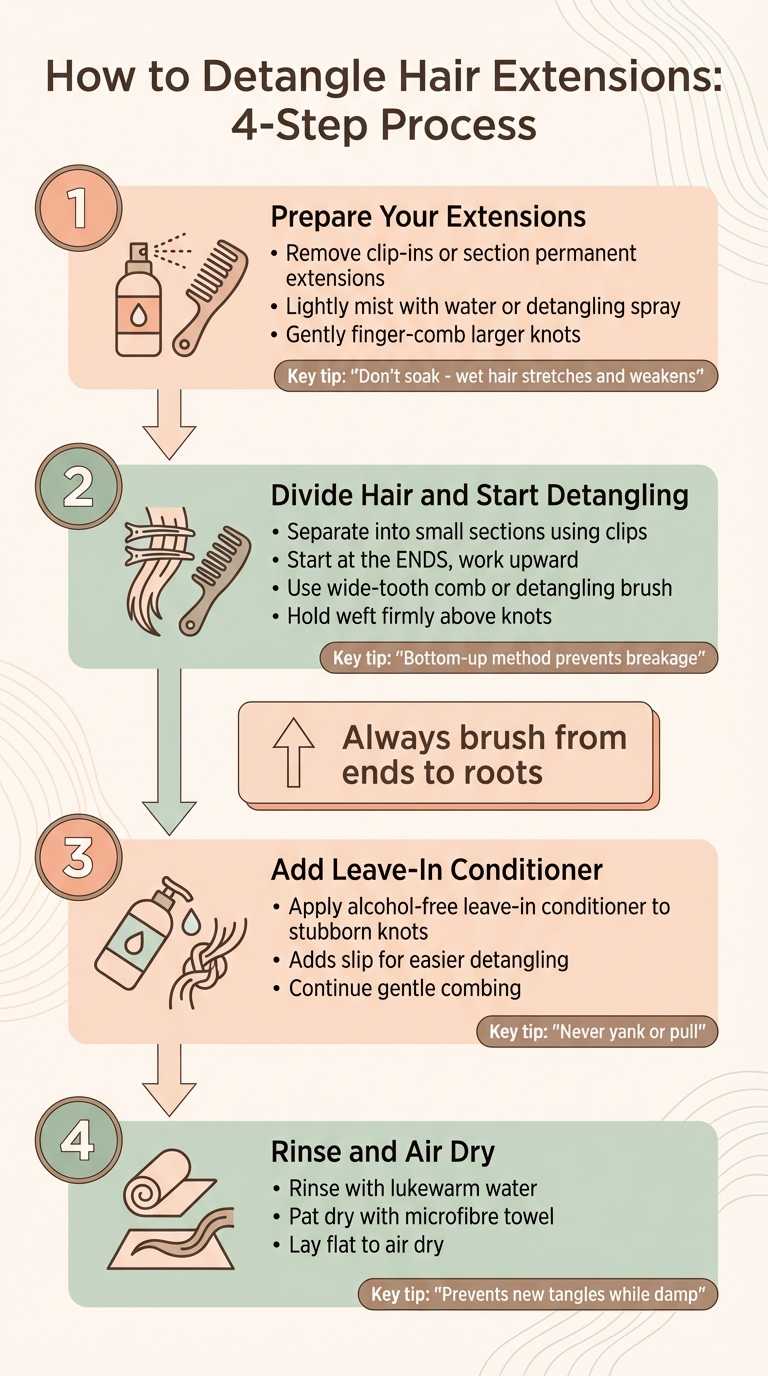
4-Step Process to Detangle Hair Extensions Without Damage
Tangled hair extensions can be frustrating, but with the right approach, you can restore their smoothness without causing damage. Here’s how to do it step by step.
Step 1: Prepare Your Extensions
If you're working with clip-in extensions, take them off and place them on a clean, flat surface. This prevents unnecessary strain on your natural hair and gives you better control. For sewn-in or tape-in extensions, use sectioning clips to pin back your natural hair, isolating the extensions for easier handling.
Lightly mist the extensions with water or a detangling spray to make the hair more manageable. Avoid soaking them entirely, as wet hair can stretch and weaken when handled too roughly. Start by gently finger-combing larger knots to minimise breakage.
"If you try to detangle your extensions while they're dry, you may cause breakage and shedding."
– Madeleine Johnson, Hair Stylist and Hair Extensions Specialist
With your extensions prepped, you're ready to move on to detangling.
Step 2: Divide Hair and Start Detangling
Separate the extensions into small, manageable sections using clips. Starting at the ends, gently comb through each section, working your way upward. A wide-tooth comb is ideal for tackling major tangles, but for general detangling, consider using a tool like the Tangle Tamer Brush ($21.95) from Hair Wonderland.
Hold the extension firmly just above the knot with your free hand to stabilise the hair and reduce tension. This helps prevent unnecessary pulling and damage. Work methodically, addressing one section at a time.
Step 3: Add Leave-In Conditioner
If you encounter particularly stubborn knots, apply a lightweight, alcohol-free leave-in conditioner to add extra slip. This makes the hair more pliable and easier to detangle. Continue combing gently through each section, taking care not to yank or pull, as this can lead to splits or kinks in the hair.
Step 4: Rinse and Air Dry
Once all tangles are gone, rinse the extensions with lukewarm water if you've used products like conditioner. Pat them dry with a microfibre towel to gently remove excess moisture, then lay them flat to air dry. This step helps prevent new tangles from forming while the hair is still damp and fragile.
How to Prevent Tangling in Hair Extensions
Once your extensions are detangled, the key to keeping them smooth and knot-free lies in a few simple daily habits. These practices can also help prolong their lifespan.
Brush Daily and Store Properly
Brushing your extensions twice a day is essential. Use the bottom-up brushing method - start at the ends and work your way up to the roots. Hold the weft or clip base firmly to avoid unnecessary pulling, which can stress the hair and cause damage.
"Always begin brushing from the ends of the hair, gradually working your way up to the roots. This method minimises breakage and reduces stress on the hair shafts."
– Heather Collier, Cliphair
For clip-in extensions, proper storage is just as important as brushing. When not in use, store them neatly to prevent tangling. If you have permanent extensions, consider using a silk or satin pillowcase or loosely braiding your hair before bed. These steps reduce friction, which is a common cause of knots. Pair these habits with proper washing and product use to keep your extensions looking their best.
Choose Sulphate-Free Hair Products
Extensions are more prone to dryness since they don’t benefit from your scalp’s natural oils. To combat this, opt for sulphate-free shampoos and conditioners, which help maintain moisture without stripping the hair. Products like Matrix Length Goals and Davines NOUNOU are specially designed to hydrate extensions and keep them smooth.
Limit washing to once or twice a week for best results. When shampooing, focus on the scalp and let the suds naturally cleanse the lengths as they rinse out - avoid scrubbing vigorously. Always apply conditioner from the mid-lengths to the ends, steering clear of the attachment points to prevent slippage.
Reduce Heat Styling and Environmental Damage
Weather can be tough on extensions. Humidity, for instance, can make them swell and frizz. If you’re caught in windy or humid conditions, gently brush out any knots as soon as possible to stop them from turning into more stubborn tangles. Keeping a small brush handy can save you a lot of frustration later on.
Conclusion
Detangling hair extensions doesn’t have to mean reaching for the scissors. A step-by-step approach, combined with the right tools and moisture-rich products, can transform even the most matted extensions back to their smooth, silky state. The trick lies in using tools like a loop brush or wide-tooth comb alongside quality detangling products. By mastering these techniques, you can not only tackle tangles but also reduce the chances of them forming in the first place.
Preventative care is just as essential as detangling. Daily maintenance plays a big role in keeping tangles away. Remember, extensions don’t benefit from natural scalp oils, so they need a little extra attention to stay in good shape.
"Extensions are 100% Remy European human hair, but they require moisture and care. Avoid products with protein, keratin, sulphates, or high alcohol content. These can damage your extensions and make them unmanageable after just one use." – Hair Wonderland
In addition to detangling, maintaining the overall condition of your extensions is critical. Tools like Hair Wonderland’s Tangle Tamer Brush ($21.95) and their Moisture Magic treatment ($39.95) are specially designed for premium extensions. Using these products not only keeps your extensions looking their best but also ensures they remain under warranty for the first six weeks.
With regular care and the methods outlined in this guide, your Hair Wonderland extensions can stay soft, natural-looking, and tangle-free for months, helping you enjoy their beauty and longevity.
FAQs
How often should I wash my hair extensions to keep them tangle-free?
To keep your hair extensions in great shape and minimise tangles, aim to wash them once or twice a week. Washing too often can strip them of moisture, while washing too little may cause product build-up and tangling.
Stick to a gentle shampoo and conditioner, and follow up with a detangling spray or leave-in conditioner to keep them soft and easy to manage. Handle the extensions carefully during washing to prevent knots or damage.
What are the best products to detangle hair extensions without damaging them?
To gently and effectively detangle hair extensions, reach for a wide-tooth comb or an extension-safe brush. Combine this with a detangling spray or leave-in conditioner to make the process easier and minimise the chance of damage.
Always begin detangling at the ends, gradually working your way up toward the roots. These tools and products not only help with removing tangles but also maintain the softness, shine, and durability of your extensions.
What’s the best way to store hair extensions to prevent tangling?
Keeping your hair extensions tangle-free starts with proper storage. Begin by gently brushing the extensions to remove any knots or tangles. Once detangled, store them in a cool, dry place to avoid damage from humidity or heat.
To minimise friction and static - two common culprits behind tangling - wrap your extensions in a breathable silk or satin scarf, or place them inside a silk or satin bag. These materials are gentle on the hair and help maintain its smoothness.
For added protection, consider using a dedicated storage container or a specialised hanger for hair extensions. These options not only keep your extensions organised but also help preserve their quality, ensuring they last longer.