


If you’ve ever dealt with knots in your hair extensions, you know they’re not all the same. Tangling and matting are two different problems, and understanding the difference is crucial for proper care.
- Tangling: Everyday knots caused by friction, dryness, or product buildup. These are minor and can be brushed out easily.
- Matting: Severe clumps of hair caused by neglect, moisture, or improper care. These are dense, harder to fix, and often form near the scalp or extension bonds.
Key Differences:
- Tangling is manageable with regular brushing and hydration.
- Matting requires more effort, often needing deep conditioning, specialised tools, or professional help.
Prevention is key for both. Use detangling brushes, sulphate-free conditioners, and avoid sleeping with wet hair. For permanent extensions, separate bonds daily to prevent matting. Proper care can extend the life of your extensions and keep them smooth and knot-free.
Hair 101- Matting & Tangling | Hidden Crown
If you're currently dealing with knots, it's important to detangle hair extensions without damage to preserve their quality.
sbb-itb-dcde78e
What is Tangling?
Tangling happens when loose knots and snarls form along the hair shaft. This is a common issue for anyone wearing extensions, as the strands can naturally twist and wrap around each other instead of lying flat. The good news? With the right tools and techniques, tangles can be managed and brushed out effectively. Let’s dive into what causes tangling and how to spot the signs early.
Extensions are more prone to tangling because they lack sebum - the natural oil produced by your scalp. Since extensions are essentially "dead hair", they tend to dry out faster, making them more vulnerable to friction. To counter this, it’s important to manually replace moisture by using oils or specialised hair products.
Causes of Tangling
Everyday activities and environmental factors can lead to tangling in hair extensions. Here are some common culprits:
- Friction: This can happen when your hair rubs against your pillow at night, comes into contact with clothing, or moves during daily activities.
- Environmental factors: Wind, humidity, salt water, and chlorine all contribute to tangling.
- Product buildup: Styling products containing sulphates, alcohol, or heavy agents like hairspray and gel can leave residue, creating a rough texture that easily snags.
- Poor brushing habits: Brushing incorrectly or too harshly can worsen tangles. Hair is especially fragile when wet, so it’s best to wait until your extensions are about 90% dry before detangling to avoid unnecessary breakage.
Signs of Tangling
Spotting tangles early makes them much easier to manage. Here are a few signs to watch for:
- Resistance: You might notice some tugging or resistance when running your fingers through your hair.
- Visible knots: Small knots often appear near the ends of your hair or around the nape of your neck, where friction is most common.
- Dryness: Extensions can start to feel dry, straw-like, or brittle - an early warning sign of tangling.
- Bond issues: If you have bonded extensions, you might feel the bonds at the root sticking together or twisting.
What is Matting?
Matting happens when shed hairs get tangled up with hair extensions, forming dense, stubborn clumps. Unlike regular tangling, which you can usually sort out with some careful brushing, matting creates tight knots that are much harder to deal with. It often starts at the roots - especially around the nape of the neck and crown - and requires specific care to prevent and manage.
Abbey Wilson from Cliphair explains: "Loose hairs that naturally fall out become wrapped around or entwined with attached hair to form lumps and clumps of knots, otherwise known as matting."
Causes of Matting
There are several reasons why matting occurs, and one of the biggest culprits is sleeping with wet or damp extensions. Abbey Wilson from Cliphair warns: "Never go to bed with wet hair! This is the number one cause of matted hair extensions; the hair is more fragile when it's wet so it naturally knots quicker than when it's dry." Moisture combined with the friction from your pillow creates the perfect storm for severe knotting overnight.
Another common cause is neglecting to separate the bonds after washing, which allows loose hairs to tangle into tight clumps. Incorrect installation techniques, particularly with permanent extensions like tapes or nano rings, can also contribute to matting. On top of that, overdue maintenance plays a big role. Sam Conan, CEO of USA Hair, explains: "Hair extensions often become matted due to improper care, including lack of regular brushing, excessive heat styling, and exposure to water." Leaving extensions in beyond the recommended 4–6 weeks gives shed hair time to build up within the bonds, leading to dense mats near the roots.
Signs of Matting
If you feel hard, rough clusters near your scalp, it’s a sign of matting. These clumps are tight and difficult to comb through. You might also notice that your extension bonds start sticking together or feel tangled when you run your fingers through your hair at the roots. Another red flag is when your brush no longer moves smoothly from root to tip, or you feel extra tension at the base of your hair - this indicates that tangling has escalated into matting.
Tangling vs Matting: Main Differences
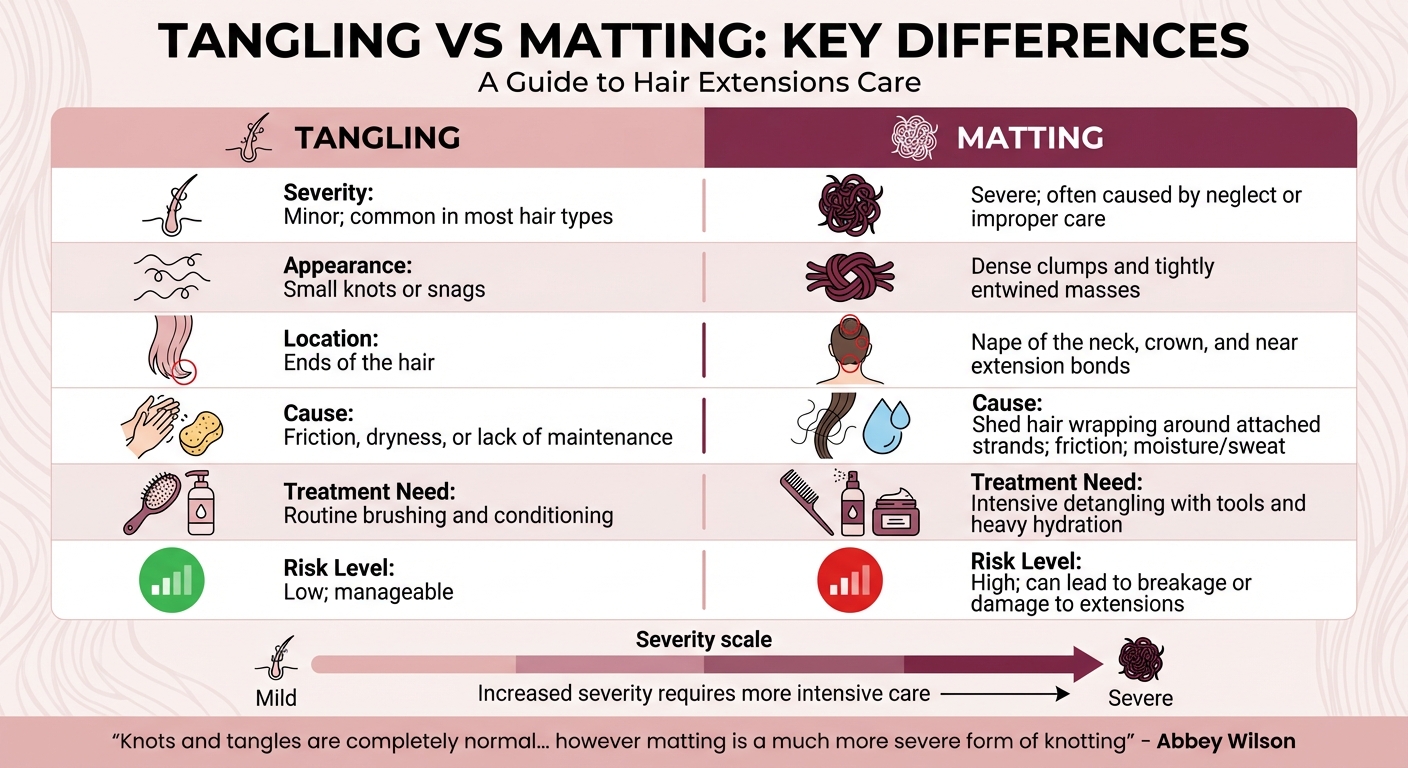
Tangling vs Matting in Hair Extensions: Key Differences Comparison Chart
We’ve already looked at what causes tangling and matting and how to spot them, but now it’s time to see how they stack up against each other. While both involve knots in hair extensions, the key difference lies in their severity - tangling is more of a minor inconvenience, while matting is a serious issue.
Abbey Wilson explains: "Knots and tangles are completely normal in even the sleekest, smoothest of hair types however matting is a much more severe form of knotting that can be very uncomfortable to remove and also damaging."
Tangling usually shows up at the ends of your hair, especially after exposure to wind or skipping a brushing session. On the other hand, matting tends to occur closer to the scalp, particularly at the nape and crown, where warmth from your head encourages the formation of dense, rough clumps.
Tangling happens because of everyday factors like friction or dryness and is relatively easy to fix with regular care. Matting, however, is more complicated. It occurs when shed hairs don’t fall away as they should and instead wrap around extension bonds due to prolonged friction or moisture. This creates tight, stubborn lumps that require more effort - and often specialised tools - to remove.
Comparison Table
| Feature | Tangling | Matting |
|---|---|---|
| Severity | Minor; common in most hair types | Severe; often caused by neglect or improper care |
| Appearance | Small knots or snags | Dense clumps and tightly entwined masses |
| Location | Ends of the hair | Nape of the neck, crown, and near extension bonds |
| Cause | Friction, dryness, or lack of maintenance | Shed hair wrapping around attached strands; friction; moisture/sweat |
| Treatment Need | Routine brushing and conditioning | Intensive detangling with tools and heavy hydration |
| Risk Level | Low; manageable | High; can lead to breakage or damage to extensions |
Understanding these differences can help you tailor your hair extension care routine to address each issue effectively. Up next, we’ll dive into specific ways to prevent both tangling and matting from happening in the first place.
How to Prevent Tangling and Matting
Keeping your extensions smooth and manageable is all about prevention. It also helps to blend extensions with natural hair correctly from the start to avoid friction and tangling. A few simple habits and the right tools can make a big difference.
Preventing Tangling
To keep tangles at bay, brush your extensions twice a day using the Tangle Tamer Brush ($21.95) or The Detangle Brush ($29.95). These brushes are designed to glide through extensions without pulling or snagging. After washing your hair, apply a sulphate-free conditioner to the mid-lengths and ends. This is key because sulphates can strip moisture, and extensions don’t get natural oils from your scalp. Between washes, use 1–2 pumps of argan or coconut oil to keep your extensions hydrated.
Before bed, secure your hair in a loose braid or low ponytail to minimise friction while you sleep. If you’re using clip-in extensions, remove them before going to bed and store them in a Clip In Bag ($54.00) to keep them neat and tangle-free.
Preventing Matting
While regular brushing and hydration help with tangling, matting requires a bit more attention. For permanent extensions, make it a habit to check your bonds daily. Use your fingertips or a Styling Comb ($12.95) to gently separate any bonds that might be starting to stick together.
"As soon as you start to feel any bonds at the roots becoming attached together you should gently remove with your fingertips" – Abbey Wilson
Never go to sleep with wet hair, as damp extensions are much more likely to mat. For clip-in extensions, when not in use, store them in a cool, dry place using a proper storage bag. These small, daily actions take only minutes but can save you hours of untangling and frustration later on.
How to Fix Tangling and Matting
Even with the best care, tangles and mats can happen. The good news is that with the right technique, you can address them without harming your extensions.
How to Detangle Extensions
When tangles start to form, always begin at the ends of your hair and work your way up. This method reduces stress on the hair shaft and helps avoid unnecessary breakage. Before grabbing a brush, use your fingers to gently separate larger knots - this helps protect both your natural hair and the bonds of your extensions.
For better control, divide your hair into small sections and secure them with clips. This way, you can focus on one section at a time without feeling overwhelmed. To make the process easier, apply a lightweight, alcohol-free detangling spray or a leave-in conditioner. This adds slip, making the hair easier to work through. Use a wide-tooth comb or a specialised detangling brush like the Tangle Tamer Brush ($21.95) or The Detangle Brush ($29.95) to gently comb through each section.
If you're working with clip-in extensions, remove them first and place them in a holder before detangling. Avoid brushing soaking-wet extensions, as they are most vulnerable when wet. However, brushing them while damp and conditioned is fine.
By detangling carefully, you can prevent matting from worsening. Once the tangles are under control, you can move on to tackling tighter mats.
How to Remove Matting
Matting can be more challenging, but it’s manageable with patience. For dense clumps, start at the nape of your neck and work your way upwards, keeping the rest of your hair secured with a clip. Apply a deep moisture conditioner to the matted sections to soften the hair, then use your fingers to gently loosen the clumps before introducing any tools.
If you're dealing with permanent extensions, a Styling Comb ($12.95) can help separate any bonds that may have stuck together at the roots. Hold the extensions firmly at the bond or clip base with one hand to minimise tension on your scalp while brushing with the other hand. After de-matting, give your hair a good wash and follow up with a strengthening mask, leaving it on for 30 minutes to restore moisture and elasticity.
If the matting is severe or won't budge, it’s best to consult a professional stylist who specialises in Russian vs Mongolian human hair extensions. This ensures that your extensions remain intact and your natural hair stays healthy.
Conclusion
Understanding the difference between tangles and matting is essential for keeping your extensions in top condition. Tangles are minor, everyday knots that can be easily sorted with regular brushing, while matting involves tightly packed clumps that demand more intensive care.
To keep your extensions looking their best, focus on daily maintenance and care. This includes brushing regularly, ensuring your hair is dry before bed, and using high-quality products. Opting for premium double-drawn Russian or Mongolian human hair extensions, along with the right tools, can make a noticeable difference. Since extensions don’t benefit from your scalp’s natural oils, they need extra hydration. Incorporate sulphate-free conditioners and treatment oils, applying them to the mid-lengths and ends. As Hair Wonderland explains, “Hair extensions are dead hair and do not receive nutrients from your scalp. Avoid using products with protein, keratin, sulphates, and high alcohol contents”.
For long-lasting, healthy extensions, consider specialised tools like Hair Wonderland’s Tangle Tamer Brush or The Detangle Brush. With consistent care and these strategies, you can enjoy smooth, manageable extensions for 9–12 months.
FAQs
How can I stop my hair extensions from matting while I sleep?
To keep your hair extensions tangle-free overnight, start by gently brushing them with a soft-bristle or detangling brush, moving from the tips upward to the roots. Secure them in a loose braid or twist to reduce friction as you sleep. Switching to a silk or satin pillowcase can also make a big difference, as it helps minimise tangles and keeps the extensions smooth. Lightly applying an extension-safe leave-in conditioner can add a touch of moisture, which helps prevent knots. Treat your extensions gently to ensure they stay in great condition for longer.
What are the best tools for detangling hair extensions?
When it comes to caring for hair extensions, the right tools can make all the difference. Hair Wonderland suggests two must-have brushes: a detangle brush and an extension brush, both designed to protect your extensions and natural hair.
The detangle brush is your go-to for working through tough knots and mats. Its flexible bristles glide effortlessly through tangles without yanking or causing damage. On the other hand, the extension brush is perfect for daily upkeep. With its soft bristles, it gently smooths out minor tangles and keeps your extensions looking sleek and polished.
Incorporating these brushes into your routine is a simple way to ensure your clip-in, tape-in, or weft extensions stay smooth, tangle-free, and in great condition.
Why do my hair extensions tangle more than my natural hair?
Hair extensions tend to tangle more easily because they don't benefit from the natural oils your scalp produces. These oils help keep your natural hair smooth and protected. On top of that, the cuticles on hair extensions can be more exposed, leaving them vulnerable to friction, dryness, and product buildup if they're not properly cared for.
To reduce tangling, make it a habit to brush your extensions gently and regularly with a detangling brush. Limit the use of excessive heat styling tools, and keep your extensions hydrated by using high-quality hair care products. A little effort in maintenance goes a long way in keeping your extensions smooth and free of tangles.