


Maintaining the correct temperature is key to protecting your hair extensions from damage. Here’s what you need to know:
- Human hair extensions (like premium Russian and Mongolian types) are more delicate than natural hair due to the lack of scalp oils. Stick to 150°C–180°C for styling, and for fine or coloured extensions, keep it even lower at 150°C–170°C.
- Synthetic extensions are highly heat-sensitive, with a safe range of 120°C–150°C. Exceeding this can cause melting.
- Always use a heat protectant to reduce breakage by up to 90%, and avoid frequent heat styling to prolong the lifespan of your extensions.
- Tools like straighteners and curling irons should be set between 180°C–210°C for Remy human hair but tested on a small section first. Hot brushes are gentler, working well at 150°C–170°C.
Key tip: Start with the lowest temperature and increase only if necessary. Proper care ensures your extensions last 6–12 months while maintaining their quality.
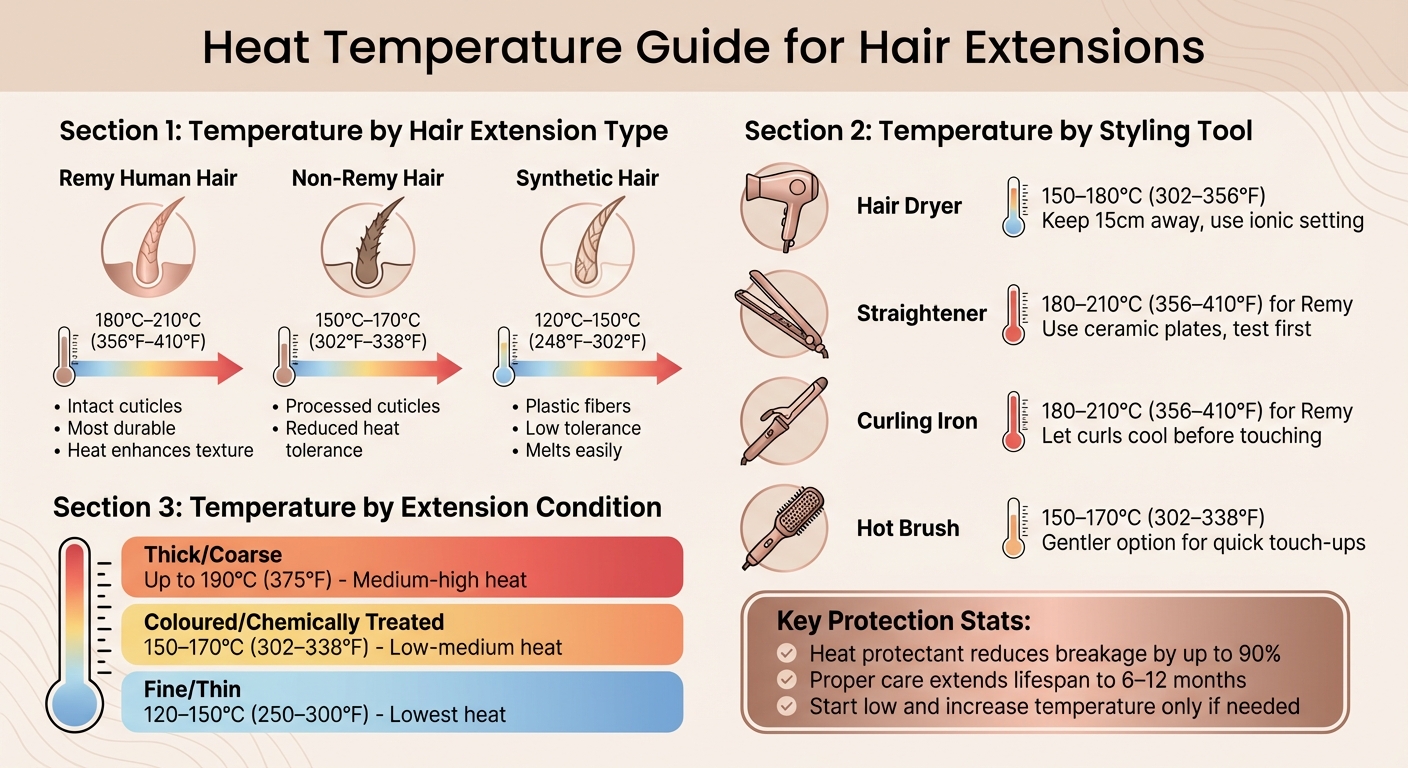
Hair Extension Heat Temperature Guide by Type and Tool
How Different Hair Types React to Heat
Remy, Non-Remy, and Synthetic Hair Extensions
When it comes to heat tolerance, not all hair extensions are created equal. Remy human hair stands out as the top choice. Its intact cuticles make it highly resistant to heat and durable during styling. On the other hand, non-Remy hair, while also human hair, undergoes processing that strips or misaligns the cuticles, leaving it more fragile when exposed to high temperatures. Then there's synthetic hair, made from plastic or polymer fibres, which has the least heat tolerance. Too much heat can melt these fibres or cause permanent damage.
Hair Wonderland offers premium extensions made from 100% Remy hair, designed to withstand professional heat styling. Unlike synthetic options, heat styling can even enhance the texture and appearance of these Remy extensions. However, keep in mind that extensions don’t benefit from natural scalp oils, which makes them more prone to dryness caused by heat.
Temperature Ranges for Each Hair Type
Each type of hair extension has its own safe temperature range:
- Remy human hair: Safely styled between 180°C and 210°C, making it ideal for most styling techniques.
- Non-Remy hair: Requires more caution, with a safe range of 150°C to 170°C to avoid damage.
- Synthetic extensions: Need the gentlest care, with a maximum safe temperature of 120°C to 150°C.
It’s always best to start styling at the lowest temperature that gets the job done. Gradually increase the heat only if necessary. Before using heated tools, apply a heat protectant spray or blow-dry cream. Proper maintenance also includes following a guide to brushing hair extensions to prevent mechanical damage before styling. After styling, work 1–2 pumps of treatment or argan oil through the mid-lengths and ends to restore moisture.
The next section will explain how to adjust your styling tools to suit these temperature ranges.
Hair Type and Temperature Comparison Table
For a quick overview, refer to the table below:
| Hair Extension Type | Max Safe Temp (°C) | Max Safe Temp (°F) | Key Characteristics |
|---|---|---|---|
| Remy Human Hair | 180°C – 210°C | 356°F – 410°F | Intact cuticles; durable; heat styling enhances texture and shine. Featured in Hair Wonderland's premium range. |
| Non-Remy Hair | 150°C – 170°C | 302°F – 338°F | Processed cuticles; reduced heat tolerance. |
| Synthetic Hair | 120°C – 150°C | 248°F – 302°F | Made from plastic fibres; low heat tolerance; prone to melting. |
sbb-itb-dcde78e
RECOMMENDED HEAT FOR STYLING YOUR HUMAN HAIR, FIBER AND HAIR BLEND
Temperature Settings for Different Styling Tools
Styling tools heat hair in different ways, so knowing how to safely heat style hair extensions is key to protecting them. With the right approach, you can achieve your desired look without causing unnecessary damage.
Hair Dryers
Set your hair dryer to medium heat, ideally between 150°C and 180°C, and keep it at least 15 centimetres away from your hair. Constant movement is essential - holding the dryer in one spot risks scorching the hair or damaging attachment points. If your dryer has an ionic setting, make use of it. Ionic technology helps reduce negatively charged particles, which can improve shine and maintain hair health.
Straighteners and Curling Irons
When using straighteners or curling irons on Remy human hair extensions, aim for a temperature between 180°C and 210°C. These tools can reach very high heat levels, so always test on a small, hidden section first to avoid mishaps. Opt for tools with ceramic or tourmaline plates, as they distribute heat evenly, reducing the risk of hot spots or localised damage. Glide the tool smoothly through each section, avoiding repeated passes over the same area, and ensure the extensions are completely dry to prevent burning or bubbling.
Hot Brushes
Hot brushes are a gentler choice for styling and work well for quick touch-ups. Use a temperature range of 150°C to 170°C, especially for fine or chemically treated extensions. These tools provide quicker results with less direct heat exposure compared to flat irons, making them ideal for refreshing your style. The lower heat range helps prevent scorching while still delivering a sleek, polished finish.
Styling Tool Temperature Guide Table
| Tool Type | Recommended Temp (°C) | Recommended Temp (°F) | Usage Tips |
|---|---|---|---|
| Hair Dryer | 150–180°C (Medium) | 302–356°F | Keep 15cm away; use ionic settings for added shine |
| Straightener | 180–210°C (Remy) | 356–410°F | Use ceramic plates; test on a small section first |
| Curling Iron | 180–210°C (Remy) | 356–410°F | Wrap hair evenly; let curls cool before touching |
| Hot Brush | 150–170°C | 302–338°F | Great for quick refreshes; lower heat risk |
Next, we'll look at how to adjust heat settings based on the texture and condition of your extensions.
Adjusting Heat for Extension Texture and Condition
Hair extensions aren't one-size-fits-all when it comes to heat styling. Factors like thickness, texture, and chemical treatments play a big role in determining the safest heat levels, and choosing between Russian vs Mongolian hair extensions can also impact your styling approach. Adjust your tools accordingly to keep your extensions looking their best and lasting longer.
Fine and Thin Extensions
Fine extensions are particularly fragile and require extra care. Stick to temperatures between 120°C and 150°C to avoid damage like breakage or split ends. Using ceramic or tourmaline plates can help distribute heat evenly, reducing the risk of overheating. If you heat style often, applying 2–3 pumps of treatment oil every night can help restore moisture and keep the extensions hydrated.
Thick and Coarse Extensions
Thicker extensions are more resilient due to their denser structure, allowing them to handle higher temperatures. You can safely style them at up to 190°C without risking damage. However, because extensions lack natural scalp oils, they tend to dry out more easily. After styling, use 1–2 pumps of treatment oil on the mid-lengths and ends to replenish moisture. For frequent heat styling, nightly hydration with 2–3 pumps of treatment oil is a smart move.
Coloured or Chemically Treated Extensions
Extensions that have been dyed, highlighted, or chemically processed are more delicate. Keep your styling tools within the 150°C to 170°C range to avoid colour fading and structural damage. Using heat above 190°C can lead to noticeable issues like split ends and premature fading of human hair extensions. Always apply a heat protectant, focusing on the mid-lengths and ends, and look for formulas enriched with keratin or argan oil for added nourishment. Steer clear of alcohol-heavy finishing sprays, as they can make chemically treated extensions even drier.
Extension Texture Temperature Chart
| Extension Condition | Recommended Temp (°C) | Recommended Temp (°F) | Reason for Setting |
|---|---|---|---|
| Fine / Thin | 120–150°C | 250–300°F | Prevents breakage of delicate, thin strands |
| Thick / Coarse | Up to 190°C | Up to 375°F | Dense structure handles higher heat for styling |
| Coloured / Highlighted | 150–170°C | 302–338°F | Prevents colour fading and protects fragile cuticles |
| Chemically Treated | 150–170°C | 302–338°F | Minimises breakage in chemically weakened fibres |
Up next, we’ll explore specific strategies to protect your extensions from heat damage during styling.
Heat Styling Protection Tips
To keep your extensions looking flawless and lasting longer, it’s essential to go beyond just selecting the right heat settings. Taking extra precautions will help maintain their quality and keep them in top condition. Here are a few key tips to protect your extensions from heat damage.
Apply Heat Protectant Products
Using a heat protectant is a must. These products act as a shield, protecting your extensions from dryness, breakage, and split ends. A good-quality spray can guard your extensions against temperatures up to 230°C. Make sure to apply it evenly, focusing on the mid-lengths to the ends before you start styling.
Reduce Heat Styling Frequency
To minimise damage, try to limit your heat styling sessions to just 2–3 times per week. Opt for styling techniques that don’t require constant heat application - this can make a big difference in maintaining the health of your extensions.
Keep Heat Away from Attachment Points
Heat and adhesives don’t mix well. Whether you’re wearing clip-ins, tape-ins, or keratin bond or tape-in extensions, direct heat at the attachment points can weaken bonds or adhesives, causing your extensions to loosen or slip out. Always start styling from the mid-lengths downward, and if you need to style closer to the roots, lower the temperature setting to avoid damage.
After-Styling Care Tools
Once you’ve finished styling, use the right tools to keep your extensions smooth and tangle-free. Hair Wonderland’s Tangle Tamer Brush ($21.95) is perfect for gently detangling, while their Styling Comb ($12.95) helps refine your look. These tools not only maintain your style but also ensure your extensions stay manageable between washes.
Conclusion
Selecting the right heat settings for your extensions depends on factors like hair type, the styling tool you're using, and the condition of the extensions themselves. Generally, human hair extensions can withstand temperatures between 120°C and 190°C, while heat-friendly synthetic fibres should stay below 150°C. For finer or chemically treated extensions, stick to gentler heat between 150°C and 170°C. Thicker or coarser extensions, however, may handle temperatures closer to 190°C. These ranges provide a helpful starting point for safe styling.
To avoid damage, always test the heat on a small, dry section of hair first and keep your styling tool in motion. Tools with ceramic or tourmaline plates are ideal, as they ensure even heat distribution.
When working with Hair Wonderland’s premium double-drawn Russian and Mongolian extensions, proper heat management and care are key to preserving their quality. These extensions are built for durability and heat styling, but maintaining them requires attention. Incorporating a professional-grade heat protectant can reduce breakage by up to 90%. With mindful heat practices, you can enjoy your extensions for 6 to 12 months.
FAQs
How do I tell if my extensions are Remy, non-Remy or synthetic?
To figure out whether your extensions are Remy, non-Remy, or synthetic, look for these distinguishing features:
- Remy hair: The cuticles are aligned, giving it a soft texture and making it resistant to tangling. It often feels smooth and natural to the touch.
- Non-Remy hair: The cuticles are not aligned, which can make it look dull and harder to manage. It may tangle or feel rough compared to Remy hair.
- Synthetic hair: This type tends to feel stiff and lacks the natural look of human hair. Unlike human hair extensions, synthetic ones can melt or become damaged when exposed to high heat, making them unsuitable for most heat-styling tools.
What’s the safest way to test a new heat setting without ruining my extensions?
To test a new heat setting safely, begin with a low temperature and gradually increase it while keeping an eye on the results. Start by doing a patch test on a small section of your extensions to see how they react. Always apply a heat protectant beforehand, ensure your styling tools are clean, and use the lowest temperature that gets the job done, raising it only if absolutely necessary to prevent damage.
Why do my extensions feel dry after heat styling, and how can I fix it?
Extensions often feel dry after heat styling because excessive or improper heat can harm the hair fibres. To address this, start by applying a high-quality heat protectant before styling. Use the lowest heat setting that works for your hair type and stick to proper styling techniques to minimise damage. After styling, focus on post-care with nourishing treatments and try to limit heat exposure to help maintain moisture and keep your extensions looking their best.