


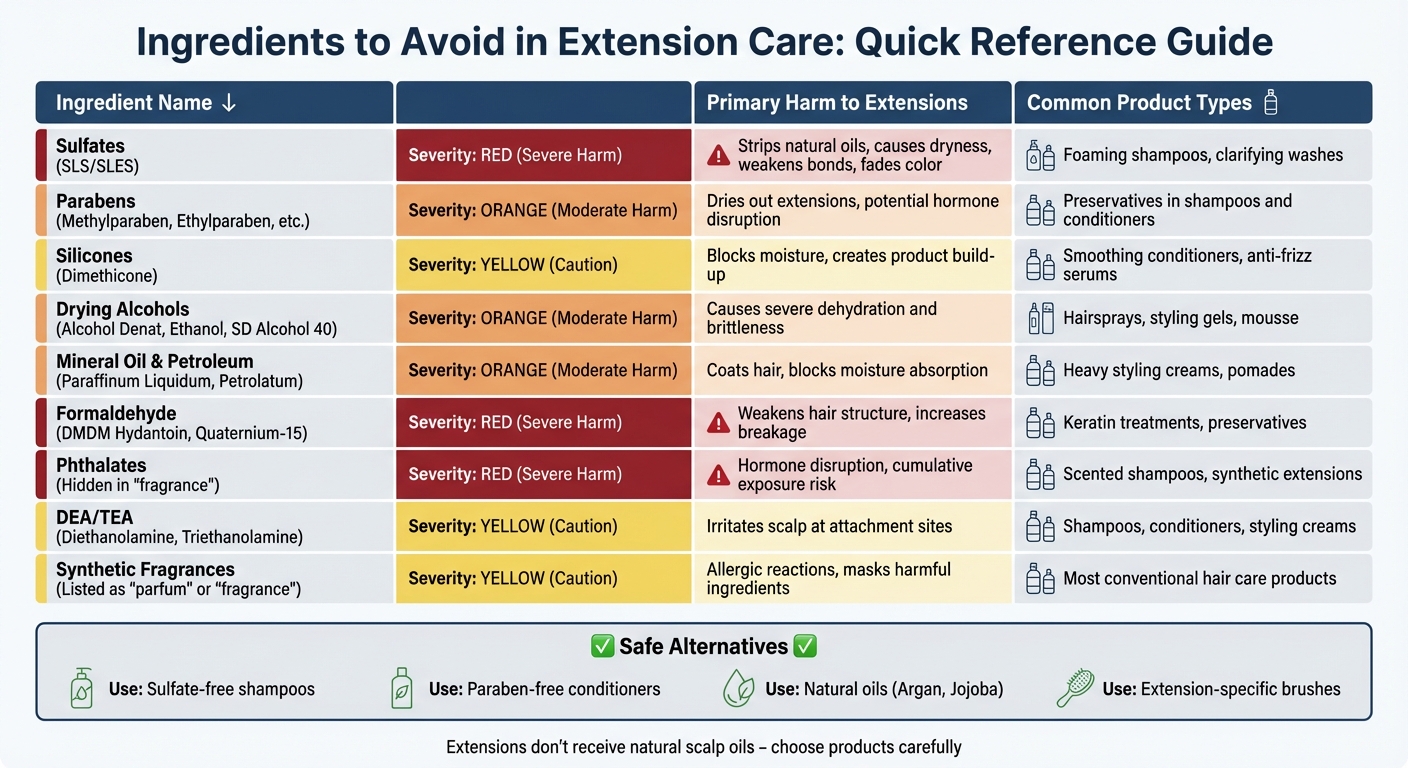
Taking care of hair extensions requires avoiding certain ingredients that can cause dryness, tangling, and damage. Extensions don’t receive natural oils from your scalp, so the products you use are the only source of nourishment. Here’s what to steer clear of:
- Sulfates: Found in many shampoos, these strip moisture, weaken bonds, and fade colour.
- Parabens: Synthetic preservatives that can dry out extensions and potentially disrupt hormones.
- Silicones: Non-water-soluble types block moisture and lead to product build-up.
- Drying Alcohols: Quick-drying alcohols dehydrate extensions, making them brittle.
- Mineral Oil & Petroleum: These coat extensions, blocking hydration and causing build-up.
- Formaldehyde: Present in some treatments, it weakens hair and poses health risks.
- Phthalates, DEA/TEA, Synthetic Fragrances: Hidden chemicals that can irritate and damage extensions over time.
To keep extensions in good condition, use sulphate-free and paraben-free products, avoid high alcohol content, and opt for natural oils like argan or jojoba. Proper tools, like brushes designed for extensions, also help prevent damage.
Avoiding harmful ingredients is key to maintaining the longevity of your hair extensions based on their hair type.
9 Harmful Ingredients to Avoid in Hair Extension Care Products
New study finds over 90% of hair extensions tested contain harmful chemicals
sbb-itb-dcde78e
Sulfates Strip Natural Oils
Sulfates are surfactants - cleansing agents that create that satisfying foam when you wash your hair. The most common ones you'll spot on product labels are Sodium Lauryl Sulfate (SLS) and Sodium Laureth Sulfate (SLES). While they do an excellent job of cutting through grease and dirt, they can be far too harsh for hair extensions.
Here’s why: sulfates strip away protective oils and moisture, leaving extensions dry and fragile. As KmXtend Hair Extensions puts it:
Sulfates and shampoos containing sulfates are worse for hair extensions than they are on natural hair. They are especially harmful to the hair extensions because these extensions are not attached to the scalp, and with that, there are no natural oils that are transferred onto the hair shaft.
Unlike your natural hair, extensions don’t benefit from the scalp’s natural sebum. Once moisture is lost from extensions, it can’t be replenished. This leads to hair that’s dry, brittle, and prone to tangling beyond repair.
Sulfates can also weaken the keratin bonds in extensions, which are crucial for maintaining their structure. For sew-in or tape-in extensions, this means the bonds at the attachment points can break down, causing premature shedding or even complete failure of the extensions. What’s more, sulfate exposure can significantly shorten the lifespan of high-quality extensions, which typically last 6–12 months. On top of that, sulfates accelerate colour fading, leaving extensions dull, frizzy, and more likely to shed.
Recognising the damage sulfates can cause is a critical step in understanding how to properly care for your extensions. Avoiding sulfate-heavy products is essential for maintaining the integrity, appearance, and longevity of your hair extensions. Following a structured hair extension care routine can help mitigate this chemical damage.
Parabens and Their Risks
Parabens are synthetic preservatives found in many hair care products, designed to prevent microbial growth and extend shelf life. On ingredient labels, you’ll usually see them listed as methylparaben, ethylparaben, propylparaben, butylparaben, or benzylparaben.
The problem with parabens is that they mimic oestrogen, potentially disrupting hormonal balance. This has raised concerns about links to reproductive issues and an increased risk of breast cancer. On top of that, they can irritate the scalp, causing dermatitis, allergic reactions, and even compromising the bonds of hair extensions.
Hair extensions, which don’t benefit from natural oils, are especially vulnerable to parabens. Exposure can lead to dryness, thinning, dullness, and frizz - leaving extensions brittle and lifeless over time. It’s a lot like the damage caused by sulfates, as parabens contribute to cumulative chemical wear and tear.
To keep extensions smooth and resilient, it’s essential to choose paraben-free hair care products. Always check labels thoroughly to avoid these harmful ingredients and protect the integrity of your extensions.
Silicones Create Product Build-Up
Silicones are synthetic compounds designed to smooth the hair's cuticle and lock in moisture. The most common one, Dimethicone, creates a seal around each strand of hair that prevents external moisture from penetrating. While this might seem like a good thing, it can be a real issue for extensions. Why? Because extensions, unlike natural hair, don’t get oils or nutrients from the scalp. They rely entirely on outside hydration to stay soft and manageable. When silicones coat the hair, they block the moisture that extensions desperately need, leaving them dry and brittle.
The situation gets worse with non-water-soluble silicones. These are thicker and heavier, leaving behind a waxy residue that gentle, sulphate-free shampoos can’t wash away. Removing them requires sulphate-based shampoos, but here’s the catch: sulphates can weaken extension bonds and strip away protective treatments. Since most extension care routines recommend sulphate-free shampoos, non-water-soluble silicones can build up over time. This buildup forms a stubborn layer that makes extensions feel heavy, look dull, and become harder to manage.
To avoid this, it’s better to steer clear of products with non-water-soluble silicones. If you do use silicone-based products, choose those with water-soluble silicones. These are lighter, add shine and softness, and can be rinsed out easily with water - no need for harsh shampoos. Always read ingredient labels carefully, and when in doubt, go for silicone-free options to keep your extensions hydrated and looking their best. This is especially important when trying to protect extensions from sun damage and environmental stressors.
Drying Alcohols Cause Dehydration
Not all alcohols in hair products are created equal - some can be harmful, while others are beneficial. Drying alcohols like Alcohol Denat, Ethanol, SD Alcohol 40, Propanol, Isopropyl, and Propyl are short-chain compounds known for their quick evaporation. They're often used in products for their fast-drying properties, but they come with a downside: they strip moisture from hair. This is particularly problematic for extensions, which don’t benefit from the natural oils produced by the scalp.
Extensions rely entirely on external care, and drying alcohols can deplete their limited moisture, leaving them dry and brittle. This lack of hydration leads to increased friction, causing flyaways, tangling, and even matting. Hair Wonderland explains:
Hair extensions are dead hair and do not receive nutrients from your scalp. Avoid using products with... high alcohol contents.
Even a single use of a product with high alcohol content can leave extensions feeling unmanageable.
Over time, alcohol-heavy products can dull extensions, making them rough and frizzy. Prolonged exposure can weaken the hair structure, resulting in breakage and thinning, leaving extensions looking lifeless and unconditioned. This highlights the need to carefully check product labels for harmful ingredients.
To keep your extensions in good condition, always read ingredient lists thoroughly. Drying alcohols can appear anywhere on the list, so it’s worth being vigilant. Avoid hairsprays and gels that often contain these alcohols, and instead, choose moisture-focused products like argan oil or specialised treatment oils. Applying 1–2 pumps of oil daily to the mid-lengths and ends can help compensate for the absence of natural sebum.
Mineral Oil and Petroleum Coat Extensions
Mineral oil and petroleum-based products may not strip moisture, but they create a thick, non-breathable layer over hair cuticles. This layer essentially "suffocates" hair extensions, making it harder for them to absorb nourishing treatments.
Vixen Hair highlights the issue:
Mineral oil is made from a petroleum by-product, which can suffocate your hair by creating a dense layer over your hair cuticles.
These substances are notoriously hard to wash out and often lead to stubborn buildup. Removing this buildup requires frequent washing, which can strip colour and leave extensions looking dull. Since extensions don’t benefit from natural scalp oils like real hair, this repeated washing can speed up their wear and tear. As a result, these petroleum derivatives not only block moisture but also make it harder to maintain the extensions' quality over time.
You might find these ingredients listed under names like Paraffinum Liquidum, Petrolatum, Cera Microcristallina, Ozokerite, Ceresine Isoparaffin, Paraffin, or Synthetic Wax. They’re often added to heavy styling waxes and gels that promise shine, but what they really provide is a temporary coating. This coating prevents moisture from reaching the hair shaft, offering no genuine nourishment.
NaturAll Club further warns:
These are petroleum products that coat your hair and scalp so effectively, they suffocate them! These ingredients can cause acne, hindered skin respiration, imbalanced oil levels in your scalp, and skin irritation.
To avoid these issues, steer clear of sticky styling products with petroleum derivatives. Instead, opt for natural alternatives like jojoba or argan oil. These provide shine without creating a barrier that locks out moisture.
Formaldehyde and Related Preservatives
Formaldehyde and its derivatives are ingredients that can cause serious harm, especially when it comes to hair extensions. Formaldehyde, a colourless preservative, is classified as a Group 1 carcinogen and has been linked to DNA damage and oxidative stress in salon professionals who are exposed to it.
Here’s the tricky part: many products don’t openly list "formaldehyde" on their labels. Instead, they use formaldehyde-releasing agents - compounds that slowly break down and release small amounts of formaldehyde, particularly when exposed to water. These include substances like DMDM hydantoin, quaternium-15, diazolidinyl urea, and methenamine. In keratin treatments, methylene glycol is often used; this liquid form of formaldehyde releases gas when heated.
For hair extensions, the risks come from two main sources. First, manufacturers may use formaldehyde-based treatments during production. Second, heat from styling tools can cause formaldehyde to be released, even at exposure levels as low as 0.05 ppm, which are enough to cause irritation.
The health risks linked to formaldehyde are severe. It has been associated with nasopharyngeal cancer, leukaemia, respiratory damage, and contact dermatitis. Beyond health concerns, it also weakens the hair itself. According to Prolonged Hair:
While Formaldehyde is used to smooth cuticles, it actually weakens the hair structure and increases breakage in the hair, resulting in a shorter life span.
This breakdown leads to extensions becoming dry, brittle, and prone to splitting, ultimately reducing their longevity.
To make matters worse, the European Union's Rapid Alert System has flagged and recalled multiple hair extension products imported from China for exceeding safe formaldehyde levels. To minimise exposure, carefully review ingredient labels for hidden names like formalin, methanal, methyl aldehyde, and methylene oxide. Opt for formaldehyde-free products, and avoid using high-heat styling tools on chemically treated extensions. If you notice symptoms like headaches, eye irritation, or scalp sensitivity, it could be a sign of formaldehyde exposure.
Additional Harmful Ingredients
In addition to the main offenders we've already covered, there are other chemicals that can compromise the quality of your human hair extensions - and even pose risks to your health. Ingredients like phthalates, DEA/TEA, and synthetic fragrances are particularly concerning because manufacturers often don't disclose them on product labels.
Phthalates, for instance, are solvents that help fragrances last longer. These are frequently hidden under the vague term "fragrance" on ingredient lists. As NaturAll Club explains:
Fragrance is often a term used to hide Phthalates as an ingredient.
A 2026 study revealed that chemicals like dibutyl phthalate were detected in 91% of extension samples, raising concerns about hormone disruption. Since hair extensions are worn for extended periods, the risk of these chemicals being absorbed into the bloodstream increases significantly.
DEA (Diethanolamine) and TEA (Triethanolamine) are pH stabilisers commonly found in shampoos, conditioners, and styling products. While they serve a functional purpose, they are known allergens and can irritate the scalp - especially at the points where extensions are attached.
Synthetic fragrances are another hidden danger. Besides triggering allergic reactions and respiratory issues, they often mask other harmful ingredients like phthalates. When heat-styling extensions that contain these undisclosed chemicals, the heat can release harmful fumes, further adding to the risk. A 2025 report found that while the presence of some harmful chemicals in beauty products has declined since 2016, synthetic fragrances remain a stubborn problem. Researchers identified 933 unique chemical signatures in a test of 43 extension samples.
The Environmental Working Group (EWG) highlights a major challenge:
Ingredient labelling for hair extensions is minimal or nonexistent, so it is nearly impossible for consumers to make informed choices and avoid harmful ingredients.
To minimise exposure, steer clear of products that list "fragrance" or "parfum" unless they explicitly state they are phthalate-free. Tools like the EWG Skin Deep® database or the Healthy Living™ app can help you check product ingredients before making a purchase.
These additional ingredients emphasise the importance of carefully checking labels and being informed about what goes into your hair care products.
Ingredient Comparison Table
| Ingredient | Primary Harm to Extensions | Research-Backed Risks | Common Product Types |
|---|---|---|---|
| Sulfates | Strips natural oils, causing dryness | Scalp irritation, brittleness, colour fading | Foaming shampoos, clarifying washes |
| Parabens | Contributes to hormone disruption | Increased sensitivity, potential endocrine disruption | Preservatives in shampoos and conditioners |
| Silicones | Blocks moisture, causing build-up | Dehydration, dullness, added weight | Smoothing conditioners, anti-frizz serums |
| Drying Alcohols | Causes severe dehydration | Cuticle lifting, increased breakage | Hairsprays, styling gels, mousse |
| Mineral Oil/Petroleum | Coats hair, blocking moisture | Suffocates fibres, attracts dirt | Heavy styling creams, pomades |
| Formaldehyde | Weakens hair structure | Linked to cancer, respiratory issues, dermatitis | Keratin treatments, preservatives |
| Phthalates | Leads to cumulative exposure | Cancer, reproductive harm, hormone disruption | Scented shampoos, synthetic extensions |
| DEA/TEA | Irritates scalp at attachment sites | Common allergens, eye irritants | Shampoos, conditioners, styling creams |
| Synthetic Fragrances | May damage fibres over time | Allergic reactions, potential neurotoxicity | Most conventional hair care products |
Safe Product Alternatives from Hair Wonderland
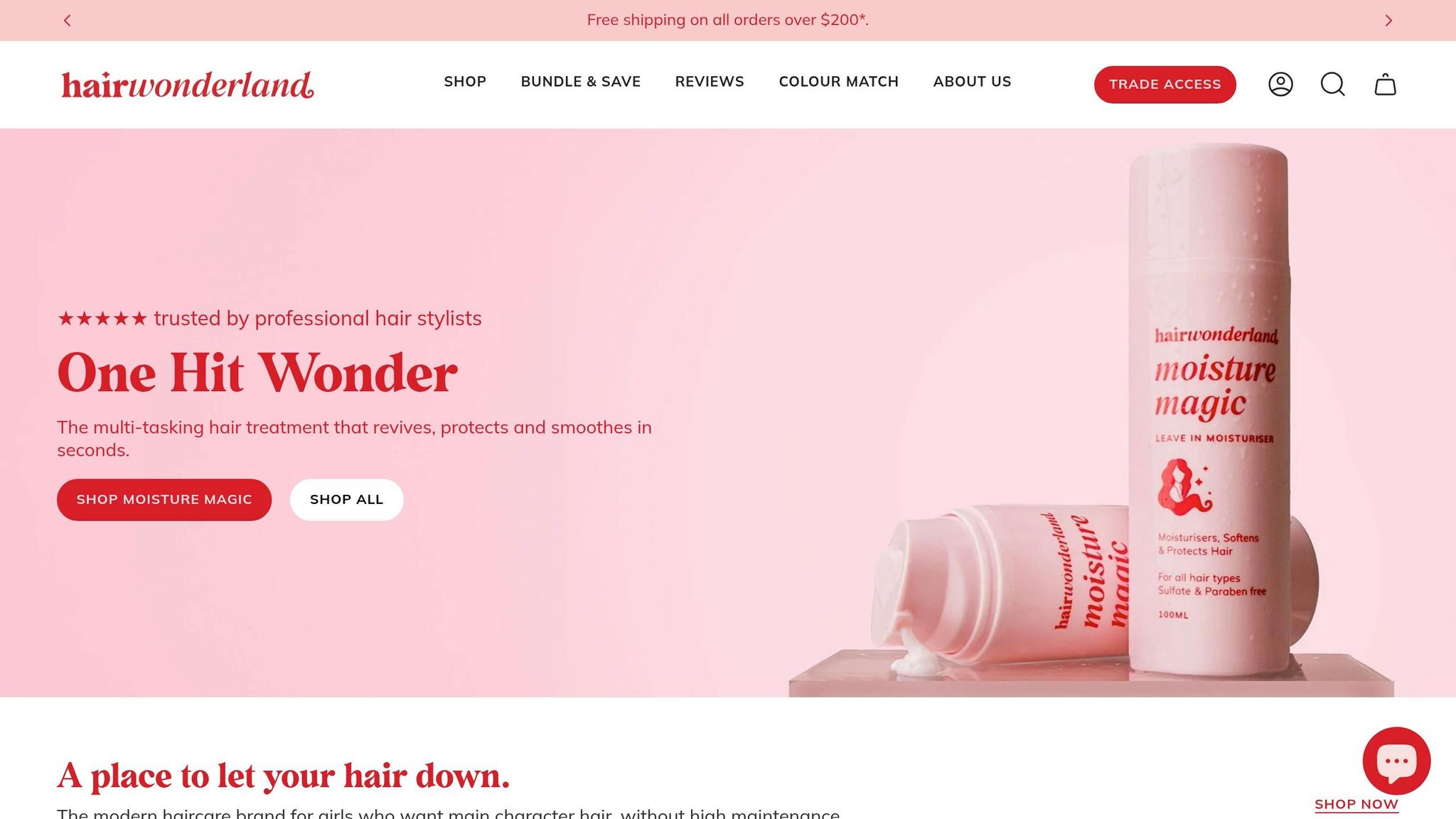
Now that you're aware of the ingredients to avoid, it's time to focus on products and tools that help maintain the quality of your extensions. As Hair Wonderland explains:
Hair extensions are dead hair and do not receive nutrients from your scalp. Avoid using products with protein, keratin, sulfates, and high alcohol contents.
This makes choosing the right care products even more important.
Start with sulphate-free and paraben-free shampoos and conditioners, as recommended by Hair Wonderland. For tape extensions, sulphate-free formulas are especially important because they help prevent the tapes from loosening during washing. When applying these products, focus shampoo on your scalp and keep conditioner on the mid-lengths and ends to protect the bonds.
Beyond products, the tools you use are just as important for maintaining your extensions. Hair Wonderland offers brushes specifically designed to care for extensions, such as the Tangle Tamer Brush ($21.95) and The Detangle Brush ($29.95). These brushes work through your hair without pulling on the bonds. Make it a habit to brush your hair every morning, evening, and before showering to avoid matting and damage. After washing, use the Styling Comb ($12.95), a wide-tooth comb, to evenly distribute heat protectant spray or treatment oils through wet hair without disturbing the attachment points.
To keep your extensions hydrated, apply 1–2 pumps of treatment oil or argan oil to the mid-lengths and ends each morning, and 2–3 pumps each evening. This step is crucial since extensions don’t benefit from the natural oils produced by your scalp. Before bed, brush your hair and secure it in a low, loose plait to minimise friction damage while you sleep. For more detailed instructions, refer to Hair Wonderland's care guide. Keep in mind that extensions are only under warranty for six weeks when used with the recommended products.
Conclusion
Taking care of your extensions starts with steering clear of harmful ingredients. Sulphates strip away much-needed moisture, drying alcohols weaken strands and lead to breakage, and silicones create a coating that blocks essential nutrients. Ingredients like parabens, formaldehyde-releasing preservatives, mineral oil, and petroleum-based products can also irritate the scalp and cause long-term damage, ultimately affecting the quality of your extensions.
Because extensions don’t benefit from natural oil replenishment like your own hair, they are particularly vulnerable to these harsh ingredients. As one expert points out:
Sodium Lauryl Sulfate (SLS) is referred to as a 'surfactant'... These are fancy words that mean that the product will damage Remy human hair.
To avoid these risks, opt for sulphate-free and paraben-free products specifically designed for extensions, like those from Hair Wonderland. Pair these with tools designed to minimise damage, such as the Tangle Tamer Brush ($21.95) or the Detangle Brush ($29.95), to ensure your extensions stay in top condition.
FAQs
How can I identify hidden sulfates and parabens on labels?
To spot hidden sulfates, keep an eye out for names like sodium lauryl sulfate, sodium laureth sulfate, ammonium laureth sulfate, or sodium coco sulfate. For parabens, they might be listed as alkyl parahydroxy benzoates or similar variations.
Pay close attention to the ingredient labels, particularly the bottom sections, where these chemicals can sometimes be disguised under less obvious terms. Knowing these names makes it easier to steer clear of them.
Which silicones are safe for extensions and which ones build up?
Water-soluble silicones are a safe choice for hair extensions since they rinse out easily and don’t cause buildup, making them suitable for occasional use. On the other hand, silicones with names ending in "-cone" or "-oxides" are known to accumulate on the hair. This can result in issues like buildup, tangling, and dryness. To maintain your extensions in top condition, it’s best to steer clear of these types.
What ingredients can weaken tape or keratin bonds?
Ingredients such as sulfates, excessive alcohol, protein, and keratin can harm tape or keratin bonds in hair extensions. These components tend to strip away moisture and weaken the adhesives, which can lead to slippage or even breakage over time.