


Australia’s scorching summer sun can wreak havoc on hair extensions. Without natural oils for protection, extensions are prone to dryness, tangling, and fading. UV rays, combined with saltwater, chlorine, and wind, can cause blonde tones to turn brassy, darker shades to dull, and fibres to weaken. But with the right care, you can keep your extensions looking their best.
Key Tips to Protect Extensions:
- Use UV-protective sprays: Apply daily and reapply every 2–4 hours outdoors.
- Wear hats or scarves: Wide-brimmed hats or silk scarves offer physical sun protection.
- Pre-soak before swimming: Rinse extensions with fresh water and apply leave-in conditioner before entering saltwater or chlorinated pools.
- Rinse and hydrate after swimming: Use sulphate-free shampoo and deep-conditioning treatments to restore moisture.
- Minimise heat styling: Opt for lower temperatures or heat-free styles on sunny days.
By following these simple steps, you can prevent sun damage, maintain softness, and extend the life of your extensions. Whether you’re at Bondi Beach or out for a summer stroll, proper care ensures your extensions stay vibrant all season long.
How Sun Damages Hair Extensions
What UV Rays Do to Hair Extensions
UV radiation can wreak havoc on hair extensions by oxidising proteins and pigments, which lifts and roughens the cuticle. This process increases porosity, leading to moisture loss that leaves extensions dry and brittle. Over time, daily wear makes extensions feel rough, tangle more easily, and lose their shine. The damage also makes them prone to split ends and breakage, especially during brushing or styling.
One of the most noticeable effects of UV damage is colour change. Blonde and light balayage extensions often develop brassy tones or lose their vibrancy, while darker shades can appear dull and lifeless. Fashion-forward colours like coppers, reds, and pastels fade particularly quickly under intense sunlight. If you spend a lot of time outdoors in Australia, you’ll notice these changes happen faster unless you take precautions like using UV-protective products or wearing hats and scarves.
UV damage also roughens the cuticle, creating a coarser texture. When the cuticles are raised, strands catch on each other more easily, leading to tangles, knots, and splits. This is especially noticeable in areas that experience frequent friction, like the nape of your neck, under hats, or where beachwear straps rub against the hair.
Other Environmental Factors That Cause Damage
High temperatures and intense sunlight in summer speed up moisture loss from extension fibres, worsening the drying effects of UV exposure. Combined with frequent hot-tool styling without proper heat protection, extensions can lose their elasticity, become brittle, and snap under tension. Extension specialists often recommend using heat-protectant sprays and keeping styling tools on lower settings, especially for clients who spend a lot of time outdoors.
Wind is another culprit, as it creates constant friction between hair strands and against clothing, headwear, or car headrests. This friction roughens the cuticle, leading to tangling and split ends. Activities like beach trips, coastal walks, or boating - favourites in Australia - can leave long, loose extensions in tight, wind-driven knots. Untangling these often requires vigorous brushing, which can weaken bonds and damage fibres further.
Saltwater is also harsh on extensions. It pulls moisture from the hair shaft and leaves behind a salty residue that makes extensions feel rough, stiff, and even "crunchy" once dry. Over time, this dehydrates the hair, increases porosity, and speeds up colour fading - especially in lighter or highlighted extensions often worn at the beach. Similarly, chlorinated pool water strips the hair of natural oils and weakens the protein structure, leaving extensions dry, brittle, and prone to snapping. Chlorine exposure can also cause unwanted colour changes, such as dullness or discolouration, which is particularly noticeable in blonde or light-toned extensions popular during Australian summers.
Even sunscreen can cause problems. Certain ingredients, like avobenzone and some chemical UV filters, may discolour blonde or light balayage extensions, sometimes turning them orange or brassy. This is especially common in high-UV environments, such as Australian beaches, where sunscreen and spray products are frequently applied. To minimise this risk, experts suggest tying extensions up while applying sunscreen, avoiding problematic ingredients near the hair, and washing out any residue promptly. These challenges highlight the importance of daily UV protection and a proper care routine for maintaining the look and health of your extensions.
How to Take Care of Your Hair Extensions in the Summer
Daily Sun Protection Routine
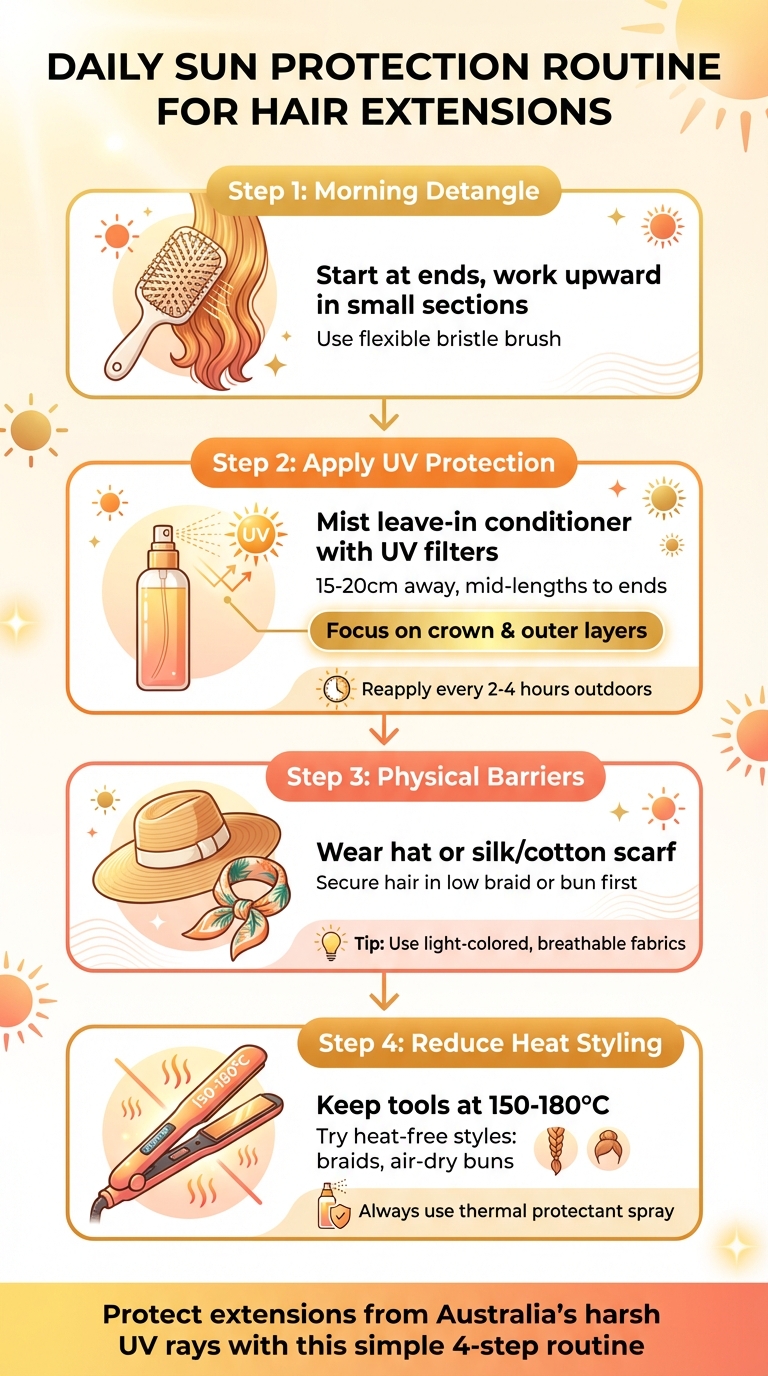
Daily Sun Protection Routine for Hair Extensions
Creating a simple and consistent routine is key to protecting your extensions from Australia's intense UV rays. Begin each morning by gently detangling your hair with an extension-safe brush featuring flexible bristles. Start at the ends and work your way up in small sections to avoid putting unnecessary stress on the bonds, especially if your extensions have already been exposed to the sun. This step lays the groundwork for the protection methods outlined below.
Apply UV Protection Products
After detangling, use a lightweight leave-in conditioner with UV filters. Mist it onto the mid-lengths and ends from about 15–20 cm away to ensure even coverage without overloading your extensions. Pay extra attention to the outer layers and crown, as these areas are most exposed to sunlight and prone to fading. Avoid spraying near the bonds, tapes, or clips to prevent product build-up, which could weaken the attachment points.
If you prefer a cream-based leave-in conditioner, apply a small amount evenly from the ears down. Follow up with a dedicated UV-protection spray for added defence before heading outside. On particularly long days outdoors - whether you're at the beach, bushwalking, or enjoying a cricket match - reapply the spray every 2–4 hours to maintain coverage.
Use Physical Barriers
Physical barriers provide excellent protection against UV damage. A wide-brim hat shields your scalp, face, and much of your hair, which is especially important under Australia's harsh sun. For additional coverage, consider wrapping your hair in a cotton or silk scarf. These materials offer a breathable layer that also helps retain moisture on hot days. Alternatively, UV-blocking hair wraps made from fabrics with built-in sun protection can cover more of your extensions than a hat alone.
Before putting on a hat or scarf, secure long extensions in a low braid or twisted bun at the nape of your neck. This not only reduces the amount of hair exposed to the sun but also prevents tangles caused by wind, which are common at the beach or outdoor events. Opt for light-coloured, breathable fabrics to keep your scalp cool in the summer heat. For shorter extensions, styles like half-up twists or mini braids paired with a hat can help keep the top layers secure. Combining these physical barriers with your daily UV protection routine offers a comprehensive defence against sun damage.
Reduce Heat Styling on Sunny Days
Both sun exposure and heat styling can strip moisture from your extensions, which lack the natural oils that protect your own hair. This combination of stressors can lead to dryness, frizz, and breakage, especially in hair already weakened by UV rays. To minimise damage, many extension experts recommend keeping hot tools at a temperature between 150–180°C when styling human hair extensions.
On days with intense sunlight, consider skipping heat tools altogether. Instead, opt for heat-free styles like braids for natural waves or air-drying your hair in a low bun. If you need to style your hair for an event, make sure it’s completely dry before using hot tools, and always apply a thermal protectant spray. Work quickly, avoiding repeated passes over the same section of hair. For added protection, look for multi-purpose products that combine UV and heat defence without weighing down fine or clip-in extensions. These small adjustments can help maintain the health and longevity of your extensions.
sbb-itb-dcde78e
Protection at the Beach, Pool, and Outdoors
To keep your extensions looking their best, it's essential to adapt your daily sun protection routine when heading to the beach, pool, or spending time outdoors. Australia's love for beach days and its intense summer sun can be tough on extensions. Whether you're swimming at Bondi, lounging by the pool, or soaking up the sun, these steps will help your extensions stay healthy and vibrant, even in challenging conditions.
Prepare Extensions Before Swimming
Before taking a dip, start by pre-soaking your extensions with fresh water. This simple trick helps your hair absorb less salt or chlorine, reducing dryness and chemical damage.
Once damp, apply a leave-in conditioner or hair oil to the mid-lengths and ends of your extensions. This creates a protective barrier against harsh pool chemicals and saltwater. Be thorough - ensure every strand is coated to lock in moisture.
To prevent tangling, secure your hair with a loose braid or low bun before swimming. These styles minimise exposure to water and reduce knots. For extra protection during longer swims, consider wearing a swim cap. While it might not win any style points, it’s the most effective way to shield your extensions from chlorine and UV rays.
After-Swim and Sun Recovery Care
As soon as you’re out of the water, rinse your extensions with fresh water using beach showers or pool taps. Follow up with a sulphate-free shampoo to gently clean away any lingering chlorine or salt without stripping moisture. After shampooing, apply a deep-conditioning treatment or hydrating mask enriched with argan or coconut oil. Let it sit for 5–10 minutes to repair any dryness and restore softness.
If your extensions have endured several beach or pool days, step up your care routine with a weekly intensive conditioning session. This helps maintain their texture and prevents brittleness, keeping them soft and manageable.
Prevent and Remove Sunscreen Stains
Chemical sunscreens containing ingredients like avobenzone, oxybenzone, and octinoxate can stain extensions, especially lighter shades like blonde. To avoid yellowing, secure your hair in a bun or braid before applying sunscreen to your skin. Let the sunscreen fully absorb - this usually takes 2–3 minutes - before letting your hair down to avoid direct contact.
For a safer option, opt for mineral-based sunscreens with zinc oxide or titanium dioxide. These are less likely to transfer and discolour your hair. If stains do appear, wash the affected sections once with a clarifying shampoo to remove the residue. Follow up with a deep-conditioning mask to restore hydration. Avoid repeated use of clarifying shampoos, as extensions are more prone to dryness due to their lack of natural oils.
Long-Term Care and Product Recommendations
Taking care of your extensions goes beyond just daily and outdoor maintenance - it’s about ensuring their longevity. With consistent care, especially during Australia's sunny summers, you can protect your extensions from sun damage and keep them looking like they just came from the salon. Proper storage, regular rest days, and using high-quality products are key to achieving this.
Store Clip-In Extensions Properly
Before storing your clip-in extensions, make sure they’re completely cool and dry. Even slight moisture can lead to odour, bacteria build-up, or matting, especially in Australia’s warm climate. Always detangle gently, starting at the ends and working your way up to the roots.
Once detangled, lay them flat and store them in a dedicated storage bag like Hair Wonderland's Clip In Bag ($54.00) or a breathable, satin-lined case. Keep them in a cool, shaded cupboard, away from windows and bathrooms where humidity and UV exposure are higher. Australia’s high humidity and heat make proper storage essential. Avoid leaving them near heaters or in hot cars, as repeated heat exposure can dry out the hair’s cuticle and cause the colour to fade. If you’ve been near the coast, ensure all salt and sand are rinsed out, then condition and air-dry the extensions before putting them away.
Give Extensions Rest Days
Since extensions don’t produce natural oils, they lose moisture more quickly when exposed to UV rays and heat. To counter this, aim for 2–3 rest days per week during summer. On these days, avoid wearing clip-ins or, if you have permanent extensions, stick to heat-free styles.
On rest days, try to stay out of the midday sun or wear a hat for protection. Let your hair air-dry indoors instead of blow-drying, and focus on hydration. Use a leave-in conditioner or a light oil to replenish moisture, gently detangle, and style your hair in a loose braid or low bun to reduce friction and tangling. Mid-week, dedicate some time to a "spa night" for your extensions: deep cleanse if needed, apply a hydrating mask, detangle with an extension-safe brush, and store them properly to keep the cuticle intact.
Select the Right Products for Sun-Exposed Extensions
When it comes to washing your extensions, opt for sulphate-free, moisturising shampoos. Sulphates can strip moisture, leaving hair more vulnerable to UV damage. Look for shampoos with hydrating ingredients like glycerin, aloe, argan oil, or coconut oil. Avoid high-protein shampoos for regular use, as too much protein can make sun-dried hair feel stiff.
For UV protection, use lightweight sprays that are either alcohol-light or alcohol-free and contain UV filters along with nourishing oils. Spray these on the mid-lengths and ends of your extensions before heading outdoors, and use a detangling brush like Hair Wonderland's Tangle Tamer Brush ($21.95) or The Detangle Brush ($29.95) to evenly distribute the product. Reapply every few hours when exposed to the sun. Once a week, treat your extensions to a deep-conditioning mask. Leave it on for 5–15 minutes - or longer under a shower cap for extra hydration - then rinse with cool water to seal the cuticle.
Investing in high-quality double-drawn human hair extensions, like Hair Wonderland's premium Russian/Mongolian range, ensures they can handle multiple Australian seasons with proper care. A consistent long-term routine will keep your extensions looking fresh and fabulous, no matter the season.
Conclusion
Australia's intense UV index can take a toll on hair extensions, even on cloudy days. To keep them looking their best, daily UV protection is a must. A quick spray of UV-protectant in the morning, combined with a wide-brim hat or a silk scarf, helps prevent colour fading, dryness, and brittleness.
Incorporating protective hairstyles into your routine also safeguards your extensions from wear and tear. Styles like loose braids or low buns not only minimise friction but also keep your hair secure in high-UV conditions. Whether you’re strolling along the beach, enjoying a backyard barbie, or commuting under the summer sun, these simple steps work well for both clip-ins and permanent extensions. Don’t forget pre-swim preparation, rinsing hair gently after swimming, and storing clip-ins in a cool, shaded place - these habits help avoid the extra damage caused by chlorine and saltwater.
Choosing the right products also makes a big difference. Sulphate-free shampoos, hydrating conditioners, and lightweight UV sprays help reduce shedding and tangling while maintaining softness and shine. Giving your extensions regular breaks from constant wear and heat styling allows them time to recover, extending their lifespan. These small but consistent efforts save both money and time by cutting down on the need for repairs or replacements.
With the right care, quality extensions can stay beautiful for 9–12 months, making them a worthwhile investment when maintained properly.
FAQs
How often should I use UV-protective spray on my hair extensions?
To shield your hair extensions from the effects of sun exposure, use a UV-protective spray every 3 to 5 wears or whenever you’ll be spending a lot of time in direct sunlight. This step helps preserve their colour, texture, and durability.
When applying, pay extra attention to the mid-lengths and ends of your extensions, as these areas tend to dry out more easily. Adding this quick step to your routine can keep your extensions looking vibrant and feeling soft, even under Australia's intense sun.
What are the best hairstyles to protect hair extensions from sun and wind damage?
To keep your hair extensions safe from the sun and wind, try hairstyles like braids, buns, or updos. These styles help reduce exposure to harsh weather, prevent tangling, and preserve the overall condition of your extensions.
You can also take extra precautions by wearing a wide-brimmed hat or a light scarf when you're outside. This not only protects your extensions from UV damage but also keeps them secure and looking great.
Can I apply regular sunscreen to protect my hair extensions from sun damage?
It's best to avoid using regular sunscreen on hair extensions, as the ingredients in these products can lead to buildup or even damage the hair. Instead, choose UV protection sprays or hair care products made specifically for protecting hair. These are designed to guard your extensions from harmful UV rays while keeping them in great condition.