


Taking care of Indian hair extensions is straightforward but requires consistency. These extensions, popular for their durability and versatility, can last 6–12 months with proper care. Since they don't receive natural scalp oils, external hydration and careful handling are key. Here’s a quick guide:
- Before Use: Inspect the weft stitching for flaws and detangle the hair gently with a vent wig brush.
- Washing: Use a sulfate-free shampoo every 7–10 days (or after 10–15 uses for clip-ins). Always detangle before washing and rinse with cool water.
- Conditioning: Apply conditioner to mid-lengths and ends after every wash. Deep condition every 2–3 washes for extra hydration.
- Brushing: Brush twice daily with a detangling brush, starting from the ends. Avoid harsh tools that can damage the wefts.
- Drying & Styling: Air-dry when possible. Use low heat and heat protectants for styling, limiting heat tools to 2–3 times a week.
- Night Care: Secure extensions in loose braids or a low ponytail before bed. Use silk pillowcases or bonnets to reduce friction.
- Storage: Clean and air-dry completely before storing in a satin or silk bag.
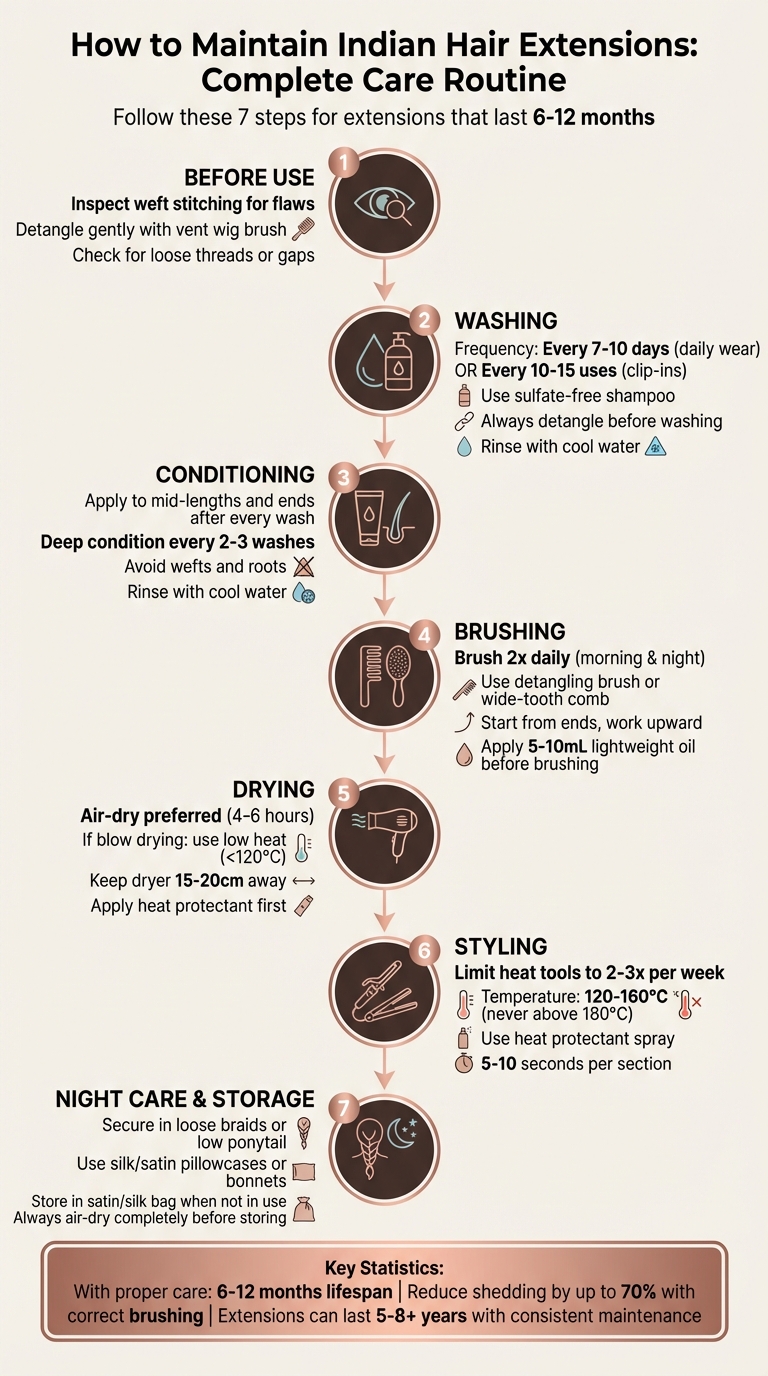
Indian Hair Extensions Care Guide: 7-Step Maintenance Routine
How to take care of RAW INDIAN HAIR EXTENSIONS| The PERFECT hair product guide!
sbb-itb-dcde78e
Preparing Your Indian Hair Extensions Before First Use
Getting your Indian hair extensions ready before installation is an important step to avoid any complications later. Start by inspecting the weft construction carefully - ensure the stitching along the weft is tight and even. Loose threads or uneven stitching can cause hair extension shedding once the extensions are installed.
Prior to using your hair, double check that the weft stitching is tight. If you find irregular stitching or looseness, please contact us right away for an exchange. – World Hair Extensions
If you notice any defects, reach out to your supplier immediately before washing, cutting, or installing the hair. Reputable sellers typically offer exchanges for faulty extensions as long as they remain unaltered. Once you've ruled out any issues, move on to detangling the hair.
Inspecting Weft and Stitching
Run your fingers along the weft to check for weak spots or gaps in the stitching. Examine the thread securing the hair - it should be consistent, with no fraying or loose ends. Pay extra attention to the edges of the weft, as these areas are more likely to unravel.
Detangling and Preparing the Extensions
After confirming the wefts are in good shape, detangle the hair. Use a vent wig brush to gently work through the hair, starting from the ends and moving upward. This method helps protect the weft from damage.
Make sure hair is completely combed through and detangled before washing (we recommend a vent wig brush). – World Hair Extensions
For added care, apply a light conditioner to the hair and leave it on for about five minutes before brushing through again. This step hydrates the hair and makes detangling easier, especially if the extensions have been in storage. Proper detangling ensures your extensions are ready for safe washing and styling in the next phase.
Washing Your Indian Hair Extensions
Once you've prepped your extensions, keeping them clean the right way is key to making them last.
Choosing the Right Products
Stick to a sulfate-free shampoo - it helps retain moisture and keeps frizz at bay. Since extensions don't get natural oils like your own hair, using hydrating products is essential.
Look for shampoos and conditioners with ingredients like argan oil, coconut oil, or shea butter. These add hydration without making the hair feel heavy.
"Avoid products containing: protein, keratin, sulfates, and high alcohol content. These can damage your extensions and make them unmanageable after just one use." – Hair Wonderland
Once you've got the right products, the next step is washing your extensions properly to keep them looking their best.
Washing Technique and Frequency
Before you even get your extensions wet, use a wide-tooth comb to detangle them. This simple step helps prevent matting during the wash. When you're ready to rinse, use lukewarm water and let it flow from roots to ends - steer clear of hot water, as it can dry out the hair.
Apply a small, coin-sized amount of sulfate-free shampoo to your scalp. Gently massage it in, letting the suds work their way through the hair without harsh scrubbing. Rinse thoroughly in a downward motion; this smooths the cuticles and adds shine. Finish with a cool rinse to lock in moisture.
How often you wash depends on how you use your extensions. If you wear them daily, aim for a wash every 7–10 days. For occasional use, like clip-ins, clean them after every 10–15 wears. If you're using a lot of styling products, you might need to wash them every 5–7 days. Just be cautious - washing too often can strip moisture and lead to tangling.
| Washing Frequency | Usage Scenario |
|---|---|
| Every 5–7 days | Heavy product use |
| Every 7–10 days | Daily wear |
| Every 10–15 uses | Occasional (clip-ins) |
Conditioning and Hydrating Indian Hair Extensions
Conditioning is key to keeping your extensions soft, smooth, and easy to manage. Unlike your natural hair, which benefits from the scalp’s natural oils, extensions depend entirely on external hydration to maintain their flexibility and shine. Without regular conditioning, they can become dry, brittle, and prone to tangling. After every wash, conditioning is essential to replenish the hydration that shampooing may strip away.
Applying Conditioner the Right Way
When conditioning your extensions, focus on the mid-lengths and ends - steering clear of the wefts and roots. This prevents product buildup near the wefts, which could weaken them over time. Apply a generous amount of a moisturising conditioner to the mid-lengths and ends, and let it sit for 5–10 minutes to allow the product to properly penetrate the hair. Rinse thoroughly with cool water to help seal the cuticles, locking in moisture and adding a healthy shine.
Deep Conditioning for Extra Care
In addition to regular conditioning, deep conditioning treatments are a great way to deliver intense hydration. Aim to use a deep conditioning mask every 2–3 washes, or roughly 3–4 times a month. Products like Aussie 3 Minute Miracle, TGIN Honey Miracle Hair Mask, and Moroccanoil Hydrating Conditioner are excellent options for restoring moisture. To use, apply the mask to the lengths and ends, leave it on for 5–20 minutes, and rinse thoroughly with cool water.
For added nourishment between deep conditioning sessions, lightweight oils like argan or coconut oil can work wonders. Simply apply a small amount to the ends of your extensions after conditioning to keep them hydrated without weighing them down.
| Treatment Type | Frequency | Application Area |
|---|---|---|
| Regular Conditioner | After every wash | Mid-lengths and ends only |
| Deep Conditioning Mask | Every 2–3 washes | Mid-lengths and ends only |
| Lightweight Oil | As needed | Ends only |
Daily Care: Detangling and Brushing Techniques
Daily brushing plays a big role in keeping Indian hair extensions looking their best. Brushing twice a day - once in the morning and once at night - helps prevent common hair extension problems like tangles and keeps the hair smooth and easy to manage.
Using the Right Brush
Once you’ve made brushing a habit, the next step is choosing the right brush to protect your extensions. Tools like wide-tooth combs and detangling brushes are gentle on knots and minimise stress on the wefts. Avoid brushes with plastic ball tips or metal pins, as these can snag the hair and lead to shedding. A great option is Hair Wonderland's Tangle Tamer Brush ($21.95 AUD), which is specially designed for extensions.
"This hair brush glides through wet and dry hair helping to reduce hair breakage and splitting, it works wonders on natural hair, hair extensions, wigs and weaves." – Hair Wonderland
For curly Indian extensions, start by finger-detangling to maintain the curl pattern. Follow up with a wide-tooth comb to minimise frizz and keep the curls intact.
Proper Brushing Technique
When brushing, always begin at the ends and work your way up in small sections. This approach avoids pulling on the wefts and helps prevent breakage. Stylists suggest that this method can reduce shedding by up to 70%. Avoid brushing from roots to ends in one go, as this can cause matting and put unnecessary stress on the attachments.
Before brushing, apply a small amount of lightweight oil - about 5–10 mL, like argan oil - to the mid-lengths and ends. This reduces friction, adds slip, and makes the process easier. If you encounter stubborn knots, gently separate them with your fingers before reaching for the brush.
Next, we’ll cover drying and styling techniques to complement your brushing routine.
Drying and Styling Indian Hair Extensions
Taking the right approach to drying and styling Indian hair extensions can help them last longer and avoid unnecessary heat damage.
Air Drying vs. Blow Drying
Air drying is the gentlest way to dry Indian hair extensions. After washing, gently press out the excess water using a microfibre towel - avoid rubbing, as it can damage the hair. Lay the extensions flat on a clean towel in a well-ventilated space, away from direct sunlight, to prevent the colour from fading. It usually takes about 4–6 hours for them to dry completely. Flip them occasionally to ensure even drying. This method helps retain moisture and keeps the cuticle smooth, allowing the extensions to maintain their natural shine for 6–12 months or even longer with proper care.
If you prefer blow drying, it’s best to use low heat. Before drying, apply a lightweight, silicone-free heat protectant spray to shield the hair from temperatures up to 230°C. Use a diffuser attachment and set the dryer to low heat (under 120°C), keeping it 15–20 centimetres away from the hair. Work on the hair from mid-lengths to ends, and finish with a blast of cool air to seal the cuticle. Experts suggest limiting blow drying to once a week, as frequent heat exposure can dry out the hair and weaken the wefts.
Heat Styling and Protection
Once the extensions are dry, you can safely heat style hair extensions to enhance their look - but it needs to be done carefully. Start by spraying a heat protectant evenly over the hair from about 20 centimetres away, focusing on the mid-lengths and ends. Keep your styling tools at a temperature between 120–160°C. Work in small sections, limiting the tool’s contact to 5–10 seconds per 2–3 cm segment. Avoid going above 180°C, as excessive heat can strip the natural oils from the extensions, causing dryness and split ends. This can reduce their lifespan from 12 months to as little as 3–6 months.
To protect your extensions, limit heat styling to 2–3 times a week and explore heat-free options like braids or other no-heat styles. This approach not only minimises damage but also keeps the extensions looking healthy and vibrant for longer.
Protective Styling and Nighttime Care
Once your extensions are dry and styled, keeping them protected during daily activities and while you sleep is key. Taking steps to minimise friction, tangling, and strain can go a long way in preserving the quality and lifespan of your Indian hair extensions.
Protective Hairstyles
When it comes to sleep or exercise, loose braids or low buns are your best friends. Always detangle your extensions before styling to prevent knots. To retain moisture - since extensions don’t benefit from your scalp’s natural oils - try setting your hair in one or two loose plaits or a low ponytail. Avoid styles like high buns or top knots during activities such as swimming or workouts, as they can put unnecessary tension on the attachment points and cause matting. Also, make sure your extensions are completely dry before securing them in any style.
Nighttime Storage and Pillowcase Tips
Nighttime care is just as important as daytime protection. Swap out your cotton pillowcases for silk or satin ones - these materials reduce friction and won’t absorb moisture like cotton does. For added protection, wear a silk bonnet to keep your extensions secure while you sleep. If you’re using clip-ins, properly clean and store them in a satin bag to keep them dust-free while they air dry. When you stick to a consistent nighttime routine, your extensions can maintain their quality for as long as 5–8+ years.
Storing and Caring for Extensions Between Uses
Proper care and storage can help your extensions last for 5–8+ years.
Cleaning and Conditioning Before Storage
Always clean your extensions before putting them away. Storing them dirty can lead to tangling, mould, or unpleasant odours. Start by ensuring they're tangle-free, then wash them with a sulphate-free shampoo and conditioner. When conditioning, focus on the mid-shaft to the ends and avoid the wefts. If they feel particularly dry, consider using a deep conditioning treatment for added hydration. Once washed, let your extensions air-dry completely - trapped moisture can cause damage over time.
Using Proper Storage Solutions
After cleaning and drying, the next step is finding the right storage method. Opt for breathable materials like satin or silk bags, as these help prevent moisture buildup better than plastic. For clip-in extensions, a product like Hair Wonderland's Clip In Bag can keep your wefts organised and protected. To maintain their shape and avoid tangles, you can loosely braid the extensions before storing them. Always keep them in a cool, dry place, away from direct sunlight or heat. Following these steps ensures your extensions stay in great condition and ready for your next use.
Conclusion
Taking care of Indian hair extensions is all about consistency and following a custom maintenance routine. With proper attention, these extensions can last between 6 to 12 months, offering a great return on investment while keeping you looking fabulous. Since they depend entirely on external hydration, treating them like the valuable asset they are is essential.
The basics of maintenance are simple yet effective: wash your extensions 1–2 times a week using sulphate-free products, apply a light oil daily to the mid-lengths and ends, and brush gently, starting from the tips and working upward. Avoid sleeping on wet hair - always secure your extensions in a low, loose braid or ponytail before bed to prevent tangling or matting.
Regular professional upkeep every 4–6 weeks is also crucial. Re-sectioning the extensions during these appointments helps prevent unnecessary strain on your natural hair. By pairing daily care with periodic professional maintenance, you can ensure your extensions stay in top condition.
"If you follow these simple maintenance basics, you can extend the life of your hair and get increased value from longer use." - World Hair Extensions
Using the right tools and products also plays a big role in keeping your extensions looking their best. Opt for breathable satin storage bags, heat protectant sprays before styling, and a detangling brush designed for extensions. These small steps make a big difference in maintaining the natural look and feel of your hair.
FAQs
Can I use purple shampoo on Indian hair extensions?
Yes, but proceed with caution. Purple shampoo can tone down brassy hues, but Indian hair extensions need extra gentle handling. Stick to products designed for extensions, such as sulfate-free shampoos, and use purple shampoo sparingly to prevent drying them out. Always follow up with a deep conditioner to keep the extensions soft and manageable. Before applying it all over, test on a small section to ensure there are no unexpected results.
What should I do if my extensions start tangling or matting?
To keep tangling or matting under control, gently work through your extensions using a wide-tooth comb, loop brush, or detangling brush. Always begin at the ends and work your way up with short, gentle strokes. Make sure the hair is either dry or around 80% dry before detangling to minimise the risk of breakage. Lightweight, alcohol-free sprays or leave-in conditioners can help reduce knots. Also, handle your extensions with care and store them properly to keep them smooth and manageable.
How do I know when my extensions need a professional refit?
If you’re experiencing severe tangling or matting at the roots, discomfort, or pain, it’s likely time for a professional refit. These issues often signal damage or improper attachment. To keep your extensions in good shape and avoid tension or breakage, regular maintenance every 5–6 weeks is essential. If your extensions feel loose, start shedding excessively, or no longer feel comfortable or look shiny, it’s best to consult a professional.