


Hair extensions require special care to maintain their look and longevity. Unlike natural hair, extensions don’t benefit from scalp oils, so proper washing is essential. This guide breaks down the process into simple steps to keep your extensions smooth, shiny, and tangle-free.
Key Steps:
- Detangle First: Use a wide-tooth comb or extension-safe brush on dry hair.
- Choose Products Wisely: Use sulphate-free shampoo and silicone-free conditioner.
- Wash Gently: Use lukewarm water and avoid circular motions to prevent tangles.
- Condition Properly: Apply conditioner only to mid-lengths and ends.
- Dry Carefully: Air-dry when possible or use low heat with a heat protectant.
Washing Frequency:
- Permanent Extensions: 1–2 times per week.
- Clip-Ins: Every 10–15 wears.
- Halo Extensions: Every 4–6 weeks.
Proper care ensures your extensions stay in great condition for up to 12 months. Let’s dive into each step for more details.
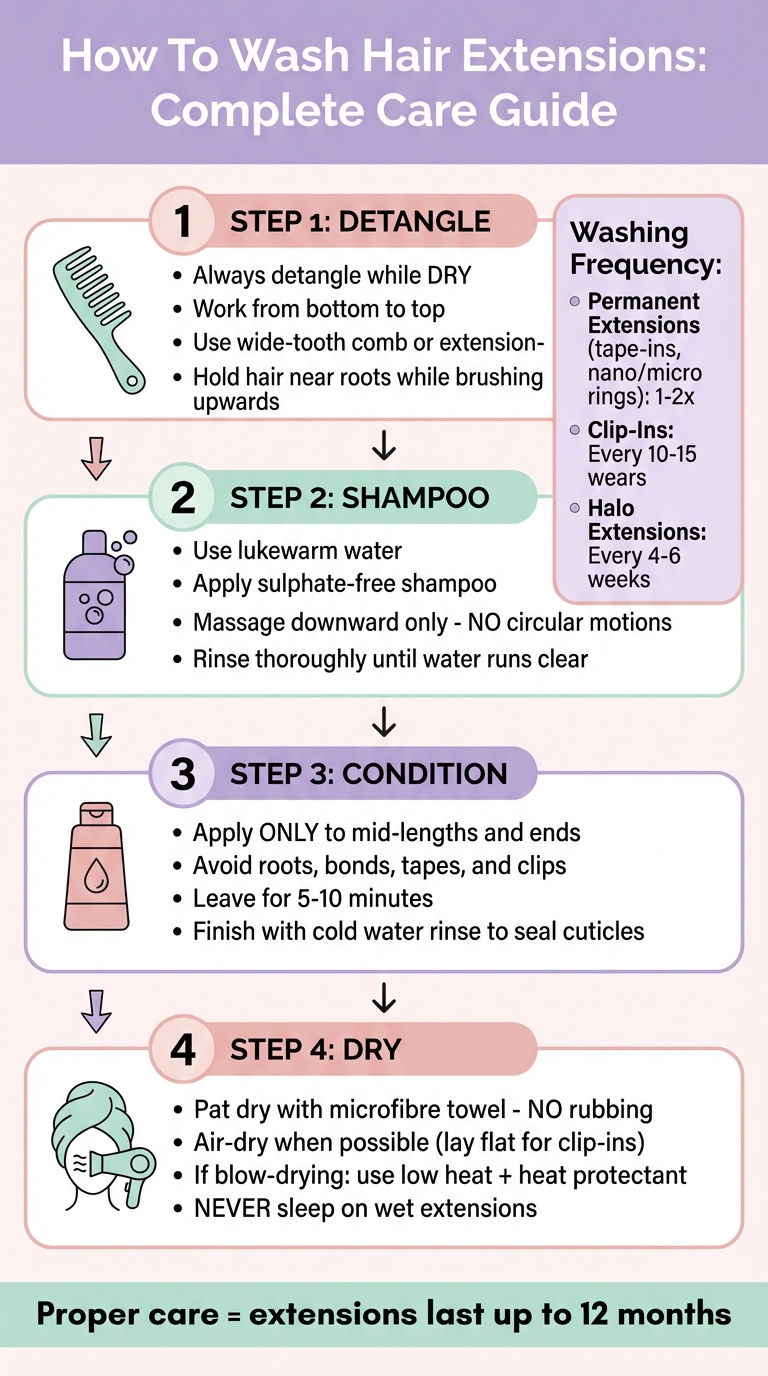
How to Wash Hair Extensions: 4-Step Care Guide
How to Wash Hair Extensions
What You'll Need Before You Start
Before diving into washing your extensions, it's important to gather the right tools and products. Extensions lack natural oils, so they rely entirely on proper care to stay in good shape. Once you’ve got everything ready, you’ll be set to move on to detangling techniques in the next section.
Get Your Tools Ready
Start with a wide-tooth comb or a gentle brush to detangle your extensions before washing. This step is crucial to avoid knots forming when the hair gets wet. Use a clean sink or basin for rinsing, and for drying, stick to a microfibre towel - it helps minimise friction and keeps frizz at bay. If you prefer air-drying, lay your extensions flat or use an extension hanger to maintain their shape. For blow-drying, don’t skip the heat protectant to shield the hair from damage.
Pick the Right Products
Choose a sulphate-free shampoo and a silicone-free conditioner to maintain the health of your extensions. Sulphates can strip away moisture, which extensions desperately need. Steer clear of products with protein, keratin, or high alcohol content, as these can lead to brittleness and make your extensions harder to handle. Instead, opt for products with moisturising ingredients like argan oil, coconut oil, or shea butter. To boost hydration, consider using a deep conditioning mask once a week.
Getting the Water Temperature Right
The temperature of the water you use matters more than you might think. Lukewarm water is your best bet - it’s gentle yet effective at cleaning without drying out the hair. Avoid hot water, as it can weaken the bonds in tape-ins or wefts and damage the hair fibres. On the other hand, cold water might not be as effective at removing product build-up. After conditioning, finish with a cold rinse to seal the cuticles and lock in moisture.
Step 1: Detangle Your Extensions
Always detangle your extensions while they're dry to minimise breakage and keep the attachment points intact. Getting rid of knots before washing makes the entire process easier and helps protect the bonds.
Work from Bottom to Top
Start brushing at the ends of the hair and gradually work your way upwards. This approach stops small knots from clumping into larger, trickier tangles that could harm the hair. Hold the hair near the roots with one hand to steady it, while brushing upwards with the other. If you're dealing with clip-in extensions, take them out first and lay each weft flat on a towel before brushing.
Use the Right Brush or Comb
Using the right tool is key. A wide-tooth comb or a brush specifically designed for extensions is your best bet for gently detangling without damaging bonds or tapes. For example, Hair Wonderland's Tangle Tamer Brush ($21.95) is made for this job - its gentle design helps to prevent breakage. Stay away from fine-tooth combs or standard paddle brushes, as they can snag on the attachment points and cause shedding. If you run into stubborn knots, a soft-bristle brush can help smooth things out after the major tangles are removed. Once your extensions are detangled and secure, you're ready to move on to the shampooing step.
Step 2: Shampoo Your Extensions
Now that your extensions are detangled, it’s time to give them a gentle shampoo. Handle them with care during this step to avoid causing tangles or damage.
Prepare the Water and Soak
Start by filling a clean basin with lukewarm water. The temperature is key - lukewarm water helps maintain the hair's moisture while effectively removing build-up. Wash each weft separately, holding it near the clips and gently massaging the shampoo downward. This "shampoo bath" method ensures even coverage without overloading any one area with product. If you’re working with permanent extensions like tape-ins or nano rings, leave them attached and thoroughly wet the hair under lukewarm running water before applying shampoo.
Apply Shampoo Carefully
Once the shampoo is applied, work it through the hair with care. Hold each weft at the top and use downward strokes to massage the shampoo into the hair. Avoid circular motions, as they can lead to matting or knots, especially near the roots. For permanent extensions, focus on cleansing your scalp by gently massaging with your fingertips. Let the lather naturally flow down the lengths of the hair without scrubbing the attachment points - this helps maintain the strength of the bonds. After shampooing, make sure to rinse thoroughly.
Rinse Thoroughly
Extensions often need extra time to rinse compared to natural hair. Use lukewarm water and rinse until the water runs completely clear - leftover shampoo can weigh down the extensions and make them look lacklustre. Pay special attention to rinsing around the attachment points to ensure there’s no residue. Always rinse from roots to ends, avoiding any flipping or twisting that could put strain on the bonds. To finish, give the hair a quick cool rinse to close the cuticles, then gently squeeze out excess water without wringing or twisting the extensions.
sbb-itb-dcde78e
Step 3: Condition and Treat
After washing your extensions, conditioning is key to keeping them hydrated and extending their lifespan.
Focus on the Mid-Lengths and Ends
Once you've rinsed out the shampoo, it's time to bring back moisture with conditioner. Make sure to avoid applying it to the roots, bonds, tapes, or clips, as this can weaken the attachment and cause slipping. Instead, concentrate on the mid-lengths to the ends - this part of the hair tends to be drier and needs more care. Gently spread the conditioner through these sections, steering clear of any rubbing or twisting. Let it sit for 5 to 10 minutes to give the hair plenty of time to soak up the moisture it needs.
Use a Hair Mask for Extra Hydration
If your extensions feel especially dry or you've been using heat tools often, a deep conditioning mask can work wonders. Apply the mask only to the mid-lengths and ends, then leave it on for 30 to 60 minutes for a more intensive treatment. Depending on how dry your extensions feel, use a deep treatment weekly or monthly. Look for sulphate-free masks with nourishing ingredients like argan oil, coconut oil, or shea butter. However, steer clear of heavy protein or keratin-based treatments, as these can make the hair brittle over time.
Seal with a Cold Water Rinse
Once you've thoroughly rinsed out the conditioner or mask with lukewarm water, finish with a quick blast of cold water. This step helps seal the hair cuticles, locking in moisture and leaving the extensions smoother and shinier. The cold water also helps minimise frizz. After rinsing, gently press out the excess water - avoid wringing or twisting the hair to keep the extensions in top condition.
Step 4: Dry Your Extensions
Once you've conditioned your extensions, drying them the right way is key to keeping them looking great and lasting longer.
Let Them Air-Dry
Air-drying is the gentlest way to dry your extensions since it avoids heat exposure. For clip-in extensions, lay them flat on a clean, dry surface - preferably on a silk or satin cloth. This helps prevent water weight from loosening the clips. If you’re caring for micro-ring, nano-ring, or weft extensions, let them air-dry during the day, but first, gently brush through and separate the bonds to avoid tangling. However, tape-ins and fusion bonds require a different approach. These types shouldn’t be left to fully air-dry because excess moisture can weaken the adhesives. Instead, try the "80/20" method: let the extensions air-dry until about 80% dry, then use a blow-dryer on a cool setting to finish drying the roots and wefts. Once they’re partially dry, gently pat away any remaining moisture with a towel.
Pat Dry with a Towel
Before air-drying or blow-drying, use a microfibre towel to gently press out excess water. Avoid rubbing, twisting, or wrapping the extensions in a turban style, as this can stress the bonds and create tangles. Instead, lightly drape the towel over the hair to reduce friction. Microfibre towels are a better choice than cotton ones because they absorb water faster and are gentler on the hair.
Blow-Dry on Low Heat if Needed
If you’re short on time, blow-drying is an option - but it needs to be done carefully. Always apply a heat protectant first, and use a dryer on a low or cool setting with downward airflow to smooth the cuticles and minimise frizz. Pay special attention to thoroughly drying the roots and attachment points, as dampness in these areas can weaken adhesives or lead to matting. Keep the dryer moving to avoid heat damage, and never go to bed with wet extensions. Sleeping on damp hair can cause severe tangling and long-term damage.
How Often to Wash Your Extensions
Once you've nailed your washing routine, the next step is figuring out how often to clean your extensions. Regular, proper washing not only keeps them looking great but also helps them last longer.
Standard Washing Schedule
How often you should wash your extensions depends on the type you have. For permanent extensions like tape-ins, nano, and micro rings, aim for 1–2 washes per week. For weaves, stick to once a week - washing them more than three times weekly can strip them of moisture and weaken the bonds .
Clip-in extensions don’t need as much attention; wash them every 10–15 wears . Halo extensions, on the other hand, usually only need a wash every 4–6 weeks, depending on how much product buildup they accumulate.
Unlike your natural hair, extensions don’t benefit from the scalp’s natural oils. As Abbey Wilson from Cliphair points out:
Over washing your hair extensions can actually cause them to deteriorate faster whilst not washing them enough can also be harmful.
Following a consistent schedule is essential to keep your extensions in top shape.
Signs Your Extensions Need Washing
It’s time to wash your extensions if they start to feel heavy or sticky, lose their shine, show visible product buildup, or become more prone to tangling . Paying attention to these signs can help you decide whether you need to adjust your routine.
When to Wash More Often
Certain situations call for extra care. If your extensions have been exposed to smoke, heavy pollution, or chlorine (like after a swim), they’ll need an immediate wash . For active lifestyles, you might consider a "half wash" - rinsing the roots with warm water and conditioning the mid-lengths. Between washes, a good dry shampoo can help keep your extensions fresh.
Conclusion
Caring for your extensions comes down to gentle handling, using the right products, and drying them with care. Unlike natural hair, extensions don't benefit from your scalp's natural oils, so your routine is key to keeping them hydrated and shiny. Remember, extensions are especially fragile when wet, so avoid rough treatment that could stretch or damage the strands.
A good routine includes detangling, cleansing, conditioning, and drying carefully. These steps not only ensure the longevity of your extensions but also help maintain the health of your natural hair.
To stick to this routine, it’s worth investing in high-quality tools. Products like Hair Wonderland's Tangle Tamer Brush and Moisture Magic treatment oil are specifically designed to protect your extensions. Plus, using recommended products isn’t just smart - it’s often required to keep your warranty valid and get the most out of your extensions.
FAQs
How do I stop my hair extensions from tangling when washing them?
To keep your hair extensions smooth and tangle-free while washing, preparation is everything. Start by gently brushing them with a soft-bristle detangling brush or a wide-tooth comb. Always work from the ends upwards to carefully remove knots without causing any pulling or damage. Before washing, make sure to separate the wefts so they don’t stick together.
When it’s time to wash, use lukewarm water (around 35°C) and a sulphate-free shampoo. Gently submerge the extensions and swirl them lightly in the water - don’t scrub, as this can lead to tangles. Rinse with cool water (about 20°C) to help seal the cuticle and minimise friction. Then, apply a lightweight, silicone-free conditioner to the mid-lengths and ends of the extensions, avoiding the roots entirely.
Once rinsed, pat the extensions dry with a soft towel - don’t twist or wring them. Detangle them again while they’re still damp. For an added touch of smoothness, spray a light, extension-safe mist before brushing. By following these steps, you’ll help keep your extensions soft, manageable, and free of tangles after every wash.
How can I tell when my hair extensions need washing?
Your hair extensions will let you know when they need a wash. Signs like product buildup, a sticky or oily feel, dullness, or even excess shedding are clear indicators that it's time for a gentle cleanse to bring back their softness and natural look.
To maintain their quality, avoid washing them too often and stick to products made specifically for human hair extensions. With the right care, your extensions will stay silky, shiny, and blend beautifully with your own hair.
Why should I avoid using products with sulphates and silicones on my hair extensions?
Using products containing sulphates and silicones can seriously affect the longevity and quality of your hair extensions. Sulphates, which are strong detergents, strip moisture from the hair, leaving extensions dry, fragile, and more likely to break. Silicones, meanwhile, tend to build up on the hair, creating a heavy, dull appearance and blocking nourishing products from doing their job.
To keep your extensions looking soft, shiny, and natural for longer, choose sulphate-free and silicone-free products specifically formulated for human hair extensions. These products help maintain their health and ensure they look as flawless as the day you got them.