


When your hair extensions frizz after washing, it’s usually due to dryness, improper washing techniques, or external factors like humidity and hard water. Extensions don’t receive natural scalp oils, making them more prone to dryness and frizz. Here’s how to fix and prevent it:
- Choose quality extensions: Opt for Remy human hair, which has aligned cuticles to reduce tangling and frizz.
- Use the right products: Sulphate-free shampoos and moisturising conditioners help maintain hydration.
- Wash gently: Use lukewarm water, avoid scrubbing, and finish with a cool rinse to seal the cuticle.
- Dry carefully: Blot with a microfibre towel and avoid vigorous rubbing. Blow-dry with medium heat or air-dry clip-ins.
- Protect against humidity: Use smoothing creams or oils like argan oil to lock in moisture and reduce frizz.
- Avoid over-washing and heat damage: Wash extensions less frequently and use heat protectants when styling.
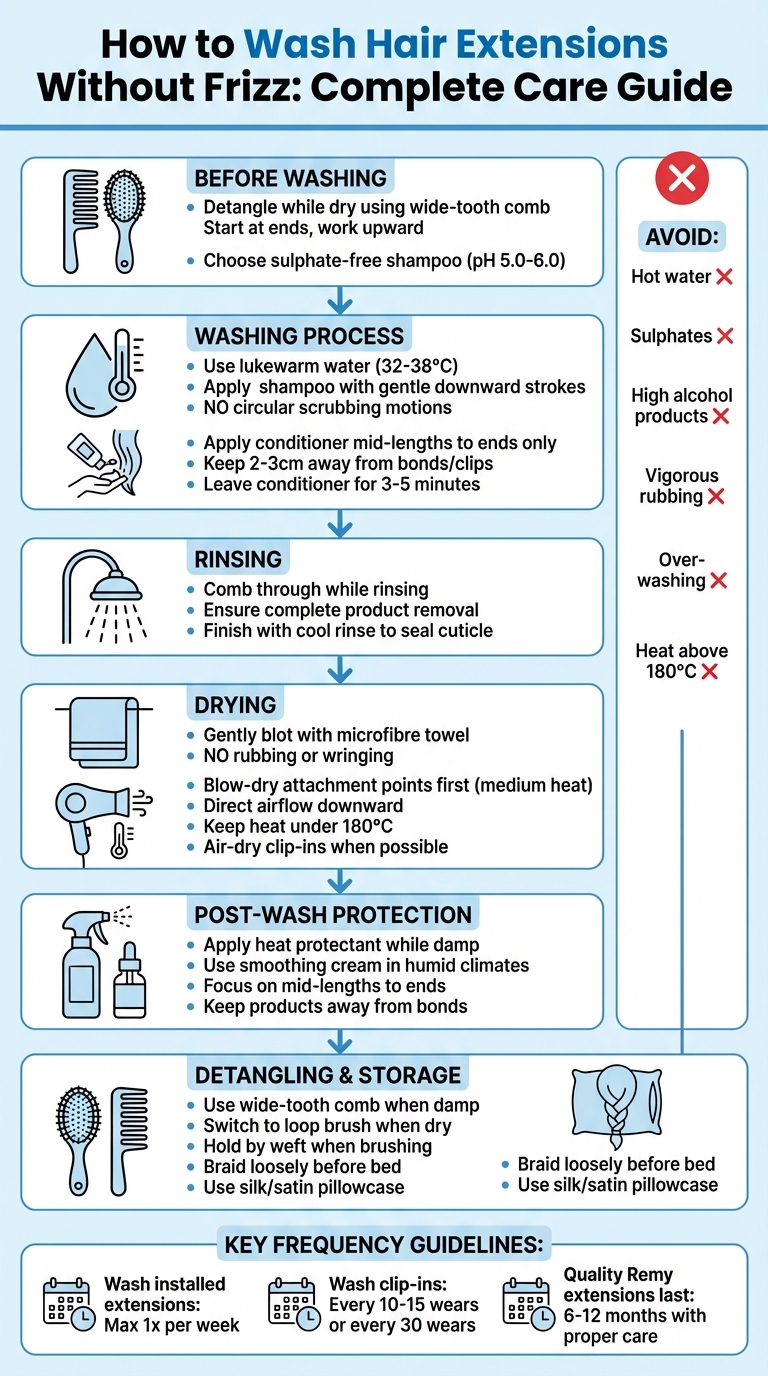
Complete Hair Extension Washing and Care Process Guide
how to wash & style hair extensions
Why Hair Extensions Become Frizzy After Washing
Frizz in hair extensions can be frustrating, but understanding its causes can help you manage it better. There are three primary factors at play: the quality of the extensions, the lack of natural oils, and the washing methods. Let’s break these down.
Extension Quality and Hair Type
The type and quality of extensions you choose have a huge impact on how they behave after washing. Human hair extensions, for instance, can absorb moisture and respond to treatments like natural hair. On the other hand, synthetic extensions - made from plastic fibres - don’t absorb oils, making them more prone to static and frizz after being washed.
For the best results, opt for Remy extensions. These have cuticles aligned in the same direction, which reduces tangling and friction. In contrast, non-Remy extensions often have misaligned or stripped cuticles, making them more likely to mat and frizz. High-quality Remy human hair extensions can last six months to a year with proper care, while lower-quality options might only last a few months.
Another factor to consider is chemical processing. Hair that has been heavily bleached, toned, or treated becomes more porous, loses moisture faster, and frizzes more easily. Additionally, lower-quality extensions often come with a silicone coating that temporarily masks their flaws. Once this coating washes off, the hair is more likely to frizz.
Missing Natural Scalp Oils
Unlike your natural hair, extensions don’t benefit from the nourishing effects of sebum - the oil your scalp produces to keep hair soft and moisturised. Without this protective layer, extensions are more prone to dryness and frizz.
"Hair extensions are dead hair and do not receive nutrients from your scalp." - Hair Wonderland
Environmental factors like sun and wind can further dry out extensions. To combat this, you can manually replace the lost oils by applying a small amount of argan or Moroccan oil to the mid-lengths and ends. This helps maintain moisture and keeps frizz at bay.
Wrong Washing Methods
Even the best-quality extensions can frizz if they’re not washed properly. Using hot water, for example, strips moisture and opens the hair cuticle, leaving the strands vulnerable to damage. Washing with lukewarm water and finishing with a cool rinse can help seal the cuticle and maintain smoothness.
Another culprit is harsh hair products. Sulfates and products high in alcohol can strip moisture, leaving extensions dry and brittle. As Hair Wonderland explains:
"Avoid products containing: protein, keratin, sulfates, and high alcohol content. These can damage your extensions and make them unmanageable after just one use." - Hair Wonderland
The way you handle extensions during washing also matters. Vigorous scrubbing or towel-drying can roughen the cuticle and create tangles, which lead to frizz. Instead, apply shampoo gently at the roots and let the suds flow down the lengths without scrubbing. For clip-in extensions, a gentle wash every 30 wears is enough to keep them in good condition.
Outside Factors That Cause Frizz
Even if you wash your extensions perfectly, external factors and everyday habits can still lead to frizz. Australia's climate and water quality are bigger culprits than you might expect, and small missteps in your routine can undo all that careful maintenance. Let’s look at how humidity, water quality, washing habits, heat styling, and storage can all contribute to frizz.
Humidity and Hard Water
Australia’s humid weather is a major contributor to frizz in hair extensions. Professor Rodney Sinclair, a dermatologist researcher at the University of Melbourne, explains:
"Humidity is moisture in the air: it breaks the hydrogen bonds, causes the hair to swell a little bit, and that means the hair becomes wavy or frizzy when it dries in its new shape".
On top of that, hard water - water containing high levels of calcium and magnesium - makes things worse. These minerals leave a residue on your extensions, making them feel dry, stiff, and more likely to tangle. Unlike natural hair, extensions don’t benefit from the scalp’s natural oils, leaving them especially vulnerable to mineral buildup. Together, humidity and hard water create a cycle where your extensions absorb moisture from the air while being dried out by mineral deposits. Installing a filtered showerhead can help by removing chlorine and heavy metals that strip moisture.
Over-Washing and Heat Styling
Washing your extensions too often - more than once a week - can strip away moisture and weaken the hair fibres. This also fades colour faster and shortens the life of your extensions. For clip-in extensions, washing every 10–15 wears is enough to keep them clean without overdoing it.
Heat styling makes matters worse. Temperatures above 180°C can damage the cuticle, leading to split ends and brittleness. As Canada Hair points out:
"Unlike natural hair, extensions do not benefit from the natural oils produced by your scalp, making them more susceptible to damage from heat".
To minimise damage, always use a heat protectant before styling, and try heatless options like braids or silk rollers between washes.
Handling and Storage Mistakes
How you handle and store your extensions daily is just as important as how you wash them. Vigorous towel-drying creates friction that roughs up the cuticle, leading to tangles. Instead, gently blot them with a microfibre towel and let them air dry partially before styling.
Sleeping with extensions loose or using cotton pillowcases can also cause unnecessary friction overnight. Switching to silk or satin pillowcases can help reduce static and keep the cuticle smooth. For removable extensions, proper storage is key - leaving them tangled or bunched up after wearing them invites matting and frizz before the next wash. Always store them neatly to keep them in good condition.
sbb-itb-dcde78e
How to Wash Extensions Properly
Taking the right approach to washing your extensions can help keep them smooth, frizz-free, and easy to style. Here’s how you can do it the right way.
Choose Sulphate-Free Products
Using a sulphate-free shampoo is key to maintaining the health of your extensions. Heather Collier from Cliphair US explains:
"Sulphates strip the hair of moisture, and since extensions don't receive natural oils from your scalp, they need all the hydration they can get".
Look for shampoos and conditioners with a pH between 5.0 and 6.0 to keep the cuticle smooth and intact. Also, steer clear of products with high alcohol content, which can dry out your extensions and leave them looking dull. When washing, stick to lukewarm water (32–38°C) to help prevent colour fading and cuticle swelling.
Detangle Before Washing and Condition with Care
Before you even get your extensions wet, gently brush through them while they’re dry to remove tangles. Use a wide-tooth comb or a detangling brush, starting at the ends and working your way up. When shampooing, avoid circular scrubbing motions - these can cause knots. Instead, use gentle, downward strokes.
When it’s time to condition, focus on the mid-lengths to the ends of your extensions. Keep the product at least 2–3 centimetres away from any bonds, tapes, or clips to avoid loosening them. Let the conditioner sit for 3–5 minutes to give your extensions the hydration they need.
Rinse Thoroughly to Avoid Residue
Extensions tend to hold onto product more than natural hair, so take extra care when rinsing. Comb through your extensions while rinsing to make sure all shampoo and conditioner is completely washed out. Finish with a cool rinse to seal the cuticle, lock in moisture, and add shine.
If you have installed extensions, it’s crucial to blow-dry the attachment points right after washing. Use medium heat to dry these areas completely - this prevents odours and ensures the bonds stay secure. Following these steps will leave your extensions clean, hydrated, and ready for styling.
Caring for Extensions After Washing
Taking care of your extensions after washing is just as important as the washing process itself. The right post-wash routine helps lock in moisture, keep frizz at bay, and maintain a smooth, polished look.
Dry Extensions Without Damage
Drying extensions correctly is crucial to avoid damage. Start by gently pressing them with a microfibre towel - never rub or wring them, as this can damage the cuticle. As Jiffy Hair explains:
"Rubbing can cause the hair cuticles to lift, resulting in frizz".
If your extensions are installed, use a blow dryer with a nozzle attachment on medium heat. Focus on drying the attachment area first, then work your way down the lengths, directing the airflow downward. Emilly Hadrill Hair & Extensions highlights:
"Blow-drying your hair downwards will help prevent frizz by smoothing the cuticle".
Keep the heat setting low to medium. While extensions can typically handle up to 180°C, lower temperatures are safer since extensions don’t benefit from natural scalp oils. For clip-in extensions, air-drying is the best option to preserve their quality over time.
Once your extensions are dry, it’s time to protect them with the right products.
Apply Leave-In Products for Protection
While your extensions are still damp, apply a heat protectant or leave-in conditioner, focusing on the mid-lengths to the ends. In humid climates, a smoothing cream with UV protection can help keep frizz under control. Since extensions don’t receive natural oils from the scalp, these products are essential for maintaining moisture.
Devin Graciano from Goldie Locks® recommends:
"If you live in a humid climate, incorporate Goldie Locks® Hair Smoothing Cream to help your extensions stay smooth, polished, and frizz-free".
Be mindful to keep these products at least 2–3 centimetres away from bonds, tapes, or clips to avoid loosening the attachments. After applying these protective products, proper detangling is the next step.
Use Quality Brushes for Detangling
Detangling is easier - and safer for your extensions - with the right tools. When your extensions are damp, use a wide-tooth comb, starting at the ends and working your way up. Wet hair is more prone to breakage, so handle it carefully. Once dry, switch to a loop brush or soft-bristle brush that won’t tug on bonds or wefts.
Invest in professional detangling tools designed specifically for extensions. For instance, Hair Wonderland’s Tangle Tamer Brush ($21.95) is gentle and helps minimise breakage, while The Detangle Brush ($29.95) works well for all hair types and reduces tangling.
When brushing, hold your extensions by the weft or bond to avoid putting stress on the attachment points. Love the Style Hair Extensions advises:
"Hold your extensions by the weft when brushing to reduce stress on the bonds and keep them intact".
For extra care, braid your extensions into a loose plait or tie them into a ponytail before bed. This minimises friction against your pillow, keeping your extensions smooth and tangle-free.
Conclusion
Frizzy extensions after washing often result from a lack of natural scalp oils, improper washing habits, harsh product ingredients, or exposure to environmental elements. However, as we've discussed, adopting the right washing and aftercare techniques can make frizz a thing of the past.
To keep frizz at bay, focus on a few key steps: opt for sulphate-free products, use lukewarm water, apply conditioner from the mid-lengths to the ends, and dry gently with a microfibre towel. Adding a high-quality leave-in protectant and using proper detangling tools will help maintain that fresh-from-the-salon look between washes.
Equally important is choosing high-quality extensions. Premium Remy extensions, such as those offered by Hair Wonderland, are designed specifically for Australian conditions, from coastal humidity to hard water. With proper care, these extensions can last anywhere from six months to a year.
The tools you use also play a big role. Products like Hair Wonderland's Tangle Tamer and Detangle Brushes are excellent for reducing breakage and keeping extensions in top condition. As Devin Graciano aptly puts it:
Hydration, protection, thoughtful styling, gentle handling, and the right products form the foundation for extensions that remain beautiful, long-lasting, and naturally radiant.
FAQs
How can I stop my hair extensions from getting frizzy after washing?
Frizz in hair extensions after washing usually happens because the hair cuticle swells when exposed to moisture. To keep this under control, start with a gentle washing routine. Use a sulfate-free shampoo, rinse with lukewarm water, and finish with a cool rinse to help smooth the cuticle. After that, apply a lightweight conditioner or deep treatment to hydrate the hair without making it feel heavy.
Once your extensions are clean, use an anti-frizz serum or leave-in conditioner to shield them from humidity. If you're styling with heat tools, don't skip the heat protectant and make sure the extensions are fully dry before heading outside. Damp hair can hold onto moisture from the air, leading to unwanted puffiness. To keep things sleek, consider humidity-friendly styles like braids or low buns.
For added care, sleep on a silk pillowcase to reduce friction and prevent tangling. Use a wide-tooth detangling brush to gently work through any knots. Hair Wonderland’s premium Russian and Mongolian extensions are designed to retain their natural texture, and the brand also offers anti-frizz products specifically tailored to keep your extensions smooth and easy to manage.
How can I keep my hair extensions smooth and moisturised after washing?
Hair extensions can often become dry and frizzy since they don’t get the benefit of your scalp’s natural oils. To keep them looking smooth and feeling hydrated, stick to a sulphate-free shampoo and a hydrating conditioner specifically made for extensions or delicate human hair. These products clean gently while helping to lock in moisture.
For extra care, add a weekly deep-conditioning treatment into your routine to boost hydration. Daily application of a light argan oil or leave-in moisturiser to the mid-lengths and ends can also work wonders. This not only helps to seal in moisture but also prevents split ends and keeps the hair soft. Products like those from Hair Wonderland’s premium Russian/Mongolian extensions range are designed to maintain a soft, natural feel. With the right moisture-focused care, you can enjoy a glossy, frizz-free finish every time you wash your extensions.
How can I prevent my hair extensions from becoming frizzy after washing?
To keep frizz under control, limit washing your hair extensions to 2–3 times a week or only when there’s noticeable product buildup. Washing too often can strip the extensions of moisture, leaving them dry and prone to frizz.
When it’s time to wash, stick to a sulphate-free shampoo and follow it up with a deeply hydrating conditioner. This combo helps keep your extensions smooth and soft. After washing, gently pat them dry with a microfibre towel - don’t rub, as this can lead to tangling and frizz. If possible, let your extensions air dry, or use a blow dryer on a low heat setting to minimise damage.
To maintain a sleek look, brush your extensions regularly using a detangling brush. Choosing high-quality extensions, like those from Hair Wonderland, can also make a big difference in durability and help reduce frizz over time.