


If your scalp feels itchy after getting extensions, you’re not alone. This common issue can stem from several factors, including:
- Tight application: Excessive tension on hair follicles can lead to irritation or even hair loss.
- Product buildup: Oils, dirt, and styling products can accumulate, causing discomfort.
- Dry scalp: Extensions may block natural oils, leading to dryness and flaking.
- Allergic reactions: Materials like adhesives or clips can irritate sensitive skin.
Quick Solutions:
- Use gentle cleansers every 2–3 days to prevent buildup.
- Apply lightweight oils like jojoba to hydrate your scalp.
- Perform daily scalp massages to improve circulation.
- Adjust or remove extensions if tightness persists.
- Try anti-inflammatory remedies like tea tree oil or chamomile rinses.
Prevent future issues by choosing high-quality extensions and maintaining a regular care routine. Your scalp deserves as much attention as your hairstyle - start with these tips for a more comfortable experience.
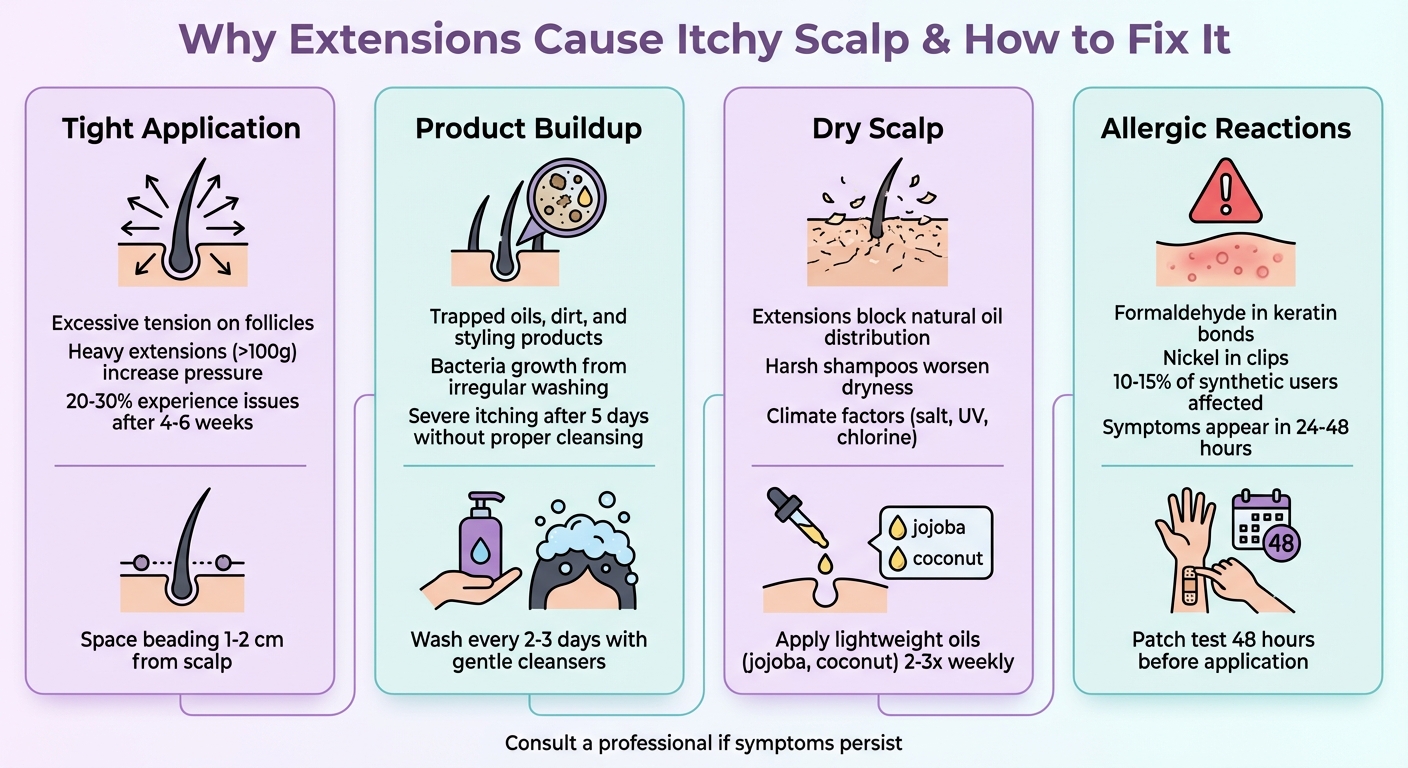
4 Main Causes of Itchy Scalp from Hair Extensions and Quick Solutions
Why Are Your Hair Extensions Itchy? | Hair Extension Magazine
What Causes Itchy Scalp from Extensions
Figuring out why your scalp feels itchy is key to finding relief. Extensions can irritate the scalp in several ways, often linked to how they interact with your natural hair and skin. Let’s break down the main culprits behind that uncomfortable itch.
Tension from Tight Extensions
When extensions are applied too tightly, they tug on your hair follicles, which can disrupt blood flow and irritate the scalp. This often leads to inflammation, redness, and that persistent itch. The problem gets worse with heavy extensions - those weighing over 100 g - because they put extra pressure on the scalp, sometimes causing discomfort within just a few days. Proper installation techniques, like spacing beading or micro-rings 1–2 centimetres away from the scalp, can help reduce the tension. Ignoring these issues might lead to more serious conditions like folliculitis or even hair loss, which can affect 20–30% of people after 4–6 weeks. Addressing tightness early is crucial to avoid these complications.
But tension isn’t the only issue. Hygiene plays a big role in scalp health too.
Product Buildup and Poor Hygiene
Extensions can trap oils, sebum, dirt, and leftover hair products against your scalp. When this buildup isn’t cleaned regularly - every 3–4 days - it creates the perfect environment for bacteria, leading to irritation. For example, clip-in extensions that aren’t brushed can collect dead skin, which adds to the itch. Only washing your hair once a week can make things worse, as hardened residues irritate the scalp even more. Festival-goers relying heavily on dry shampoo often notice bacterial odours and severe itching after five days, with double-cleansing needed to restore balance. Keeping your scalp clean is essential for avoiding these problems.
Another common issue is dryness.
Dry Scalp Due to Extensions
Extensions can block the natural distribution of sebum, leaving your scalp dry and flaky. This problem is often made worse by harsh shampoos or low humidity. In Australia, the climate adds another layer of complexity. For instance, beachgoers in Queensland might notice white flakes after just a week or two if they skip regular moisturising, especially with the added effects of salt and UV exposure. Frequent swimming in chlorinated pools can strip even more natural oils, leaving the scalp feeling parched and irritated. Experts suggest applying scalp oils weekly to help maintain hydration and prevent these dryness-related issues.
Lastly, allergic reactions can sometimes be the root of the problem.
Allergic Reactions to Materials
Adhesives, metal clips, and certain extension materials can cause allergic reactions in some people. Common irritants include formaldehyde in keratin bonds, nickel in clips, synthetic fibres, and para-phenylenediamine (PPD) in glues. These allergens can lead to red rashes, swelling, and intense itching that doesn’t go away with washing. Symptoms usually appear 24–48 hours after the extensions are applied. Experts point out that a mild adjustment itch, which lasts 2–5 days, is different from a true allergic reaction. The latter often involves redness, blisters, or pain that may require immediate removal. Around 10–15% of synthetic extension users experience persistent allergic reactions, making it critical to patch-test clips and adhesives 48 hours before applying them fully. People with sensitive skin may also experience dermatitis with lower-quality synthetic materials, so opting for hypoallergenic, high-quality options is essential. Identifying allergens early can help you avoid discomfort and find safer alternatives.
How to Relieve Itchy Scalp
Once you've identified what’s causing your itchy scalp, the next step is to address it with the right approach. These remedies are designed to tackle specific issues, helping to ease discomfort and bring relief.
Use Gentle, Extension-Safe Cleansers
Opt for a hypoallergenic, fragrance-free shampoo designed for sensitive scalps. This type of cleanser will clean effectively without damaging adhesives or causing your extensions to tangle. Stick to washing your hair every 2–3 days and incorporate a clarifying shampoo once a month to remove buildup. Always use warm or tepid water - not hot - as hot water can dry out your scalp further.
Moisturise the Scalp with Light Oils
Lightweight oils like jojoba or coconut oil can work wonders for soothing an itchy scalp. Gently massage a small amount into your scalp 2–3 times a week, using your fingertips. Follow up with a hydrating leave-in conditioner that’s safe for extensions to lock in moisture and calm irritation. For an extra boost, try Hair Wonderland's Moisture Magic ($39.95), a product designed to provide targeted hydration for both your scalp and extensions.
Perform Daily Scalp Massages
A daily scalp massage can help improve circulation and ease tension. Spend 5–10 minutes massaging your scalp in circular motions with your fingertips or a soft-bristled tool like Hair Wonderland's Tangle Tamer Brush ($21.95). This not only stimulates blood flow but also helps loosen any buildup. For an added soothing effect, prepare chamomile tea, let it cool completely, and massage it into your scalp. If you’re wearing clip-in extensions, it’s best to remove them beforehand to ensure full access to your scalp.
Adjust or Remove Extensions If Necessary
If the itchiness persists for several days, it might be time to have your extensions professionally adjusted or temporarily removed to relieve tension. For sensitive scalps, lighter options like Hair Wonderland's Seamless Set 22" ($499.00) can reduce pressure, as they’re non-adhesive and more comfortable to wear. Additionally, removing clip-in extensions each night can give your scalp a well-deserved break.
Use Anti-Inflammatory Remedies
If inflammation or an allergic reaction is the culprit, anti-inflammatory solutions can help. Add 2–3 drops of tea tree oil to 100 mL of an extension-safe shampoo for its soothing properties. You can also rinse your scalp with cooled chamomile tea and apply aloe vera gel for instant relief. To support scalp health from within, stay hydrated by drinking at least 2 litres of water daily and include omega-3-rich foods, such as salmon (2–3 servings per week), in your diet.
sbb-itb-dcde78e
How to Prevent Itchy Scalp with Extensions
Choose Extensions That Prioritise Comfort
Preventing an itchy scalp often starts with picking the right extensions. High-quality human hair extensions, such as double-drawn Russian or Mongolian hair, are thinner at the root and maintain consistent thickness along the length. This design reduces the weight and tension on your scalp, helping to minimise pulling and friction. Plus, they blend seamlessly with your natural hair while avoiding synthetic materials that could cause allergic reactions.
Take Hair Wonderland's Seamless Set 22" extensions ($499.00), for example. These clip-ins are crafted with comfort in mind, featuring premium double-drawn construction that eliminates bulky wefts and evenly distributes weight across your scalp. Trichologists have noted that double-drawn extensions can reduce irritation by up to 50% during the initial adjustment period. Their lightweight, breathable design is especially beneficial in humid climates like Australia, allowing air to flow more freely and reducing discomfort.
"I'm a hairstylist, and I swear by Hair Wonderland for my clients' hair extensions. The double-drawn Russian human hair is a game-changer." – Scarlett, Hairstylist
When getting extensions installed, ensure your stylist avoids applying excessive tension at the roots. You should never experience pain or severe tightness after the fitting process.
Stick to a Regular Maintenance Routine
Even with premium extensions, consistent care is key to keeping your scalp itch-free. Experts estimate that 90% of itchiness cases are caused by product buildup or tension from poorly maintained extensions, and regular maintenance can reduce irritation by up to 80% post-adjustment.
Wash your extensions every 2–3 days using a sulphate-free shampoo, and gently massage your scalp with lukewarm water to remove sweat, sebum, and styling products. Daily brushing is also essential - use a detangling tool like Hair Wonderland's Tangle Tamer Brush ($21.95) to prevent tugging, especially near the roots.
Hydration is another crucial factor. Extensions don’t get natural oils from your scalp, so apply lightweight oils or specialised products like Hair Wonderland's Moisture Magic ($39.95) to keep them moisturised and prevent dryness that could lead to irritation. Staying hydrated by drinking at least 2 litres of water daily and eating omega-3-rich foods like salmon (2–3 servings per week) can also support scalp health.
Lastly, schedule maintenance appointments every 6–8 weeks. These check-ups allow your stylist to look for signs of irritation, adjust the extensions as your hair grows, and ensure the weight and tension remain evenly distributed for maximum comfort.
Conclusion
An itchy scalp doesn't have to be the price you pay for gorgeous, voluminous hair. By identifying the main culprits - like tight extensions, product buildup, dryness, or allergies - you can take precise steps to ease the irritation and find relief.
Start with gentle cleansing using products that are safe for extensions, keep your scalp hydrated with lightweight oils, enjoy daily scalp massages, and make timely adjustments to your extensions. These simple habits can make a big difference in reducing discomfort and letting you wear your extensions with ease.
But it’s not just about fixing the problem - prevention matters too. Opt for high-quality, double-drawn human hair extensions, and pair them with the right care products to minimise tension and keep your scalp happy from the beginning. With a mix of premium extensions, consistent upkeep, and proactive scalp care, you can enjoy extensions that not only elevate your style but also protect your scalp's well-being. This balance of beauty and comfort ensures you can confidently rock your extensions while keeping your scalp healthy.
FAQs
How do I know if my itchy scalp is caused by an allergic reaction to extensions?
If your scalp feels itchy and you start noticing redness, swelling, soreness, or even a rash, particularly around where the extensions are attached, you might be dealing with an allergic reaction. These signs often show up not long after getting extensions or using products associated with them.
To figure out if it’s truly an allergy, it’s a good idea to consult a dermatologist or a hair specialist. They can pinpoint the cause and suggest the most effective ways to relieve your discomfort.
How can I keep my scalp healthy while wearing hair extensions?
To keep your scalp in good shape while wearing extensions, it’s important to wash it regularly with a gentle shampoo to clear away any buildup. Stay away from tight hairstyles that pull or create tension, as these can cause discomfort or even damage. Also, avoid applying heavy oils or thick products directly onto your scalp.
Incorporating scalp massages into your routine is a great idea. They can boost circulation and help spread your scalp's natural oils, which supports overall health.
Whenever you can, take breaks from wearing extensions to let your scalp rest and recover. Opt for lightweight, high-quality extensions that are crafted for comfort and durability - this can make a big difference in keeping your scalp healthy. With the right care, you’ll not only protect your scalp but also help your extensions last longer.
How often should I adjust or take out my extensions to avoid an itchy scalp?
To keep your scalp feeling comfortable and healthy, it's essential to manage your hair extensions properly. If you have permanent extensions, schedule maintenance appointments every 6–8 weeks to prevent excessive tension or irritation. For clip-in extensions, always take them out before going to bed. This gives your scalp a break and reduces strain on your natural hair. With proper care and installation, you can maintain both your extensions and scalp in good condition.