


Hair extensions can transform your look, but they require daily scalp care to prevent discomfort, irritation, and potential damage. Here's what you need to know:
- Daily Care Basics: Check your scalp for tightness or irritation, brush gently to avoid tension, and hydrate the extensions' mid-lengths and ends.
- Washing: Cleanse your scalp 1–2 times weekly with sulphate-free shampoo, focusing on roots and attachment points. Dry thoroughly to prevent mildew or bacteria.
- Non-Wash Days: Use dry shampoo sparingly and refresh with scalp sprays if needed.
- Australian Climate Tips: Protect your scalp from UV rays, manage sweat in humid conditions, and rinse hair after swimming to combat salt and chlorine damage.
- Night Care: Brush, secure hair in a loose braid, and use a silk pillowcase to reduce friction.
Consistency in these steps ensures your scalp stays healthy, and your extensions last longer. Tailor your routine to your extension type - whether tape-ins, wefts, keratin bonds, or clip-ins - and Australia's climate for the best results.
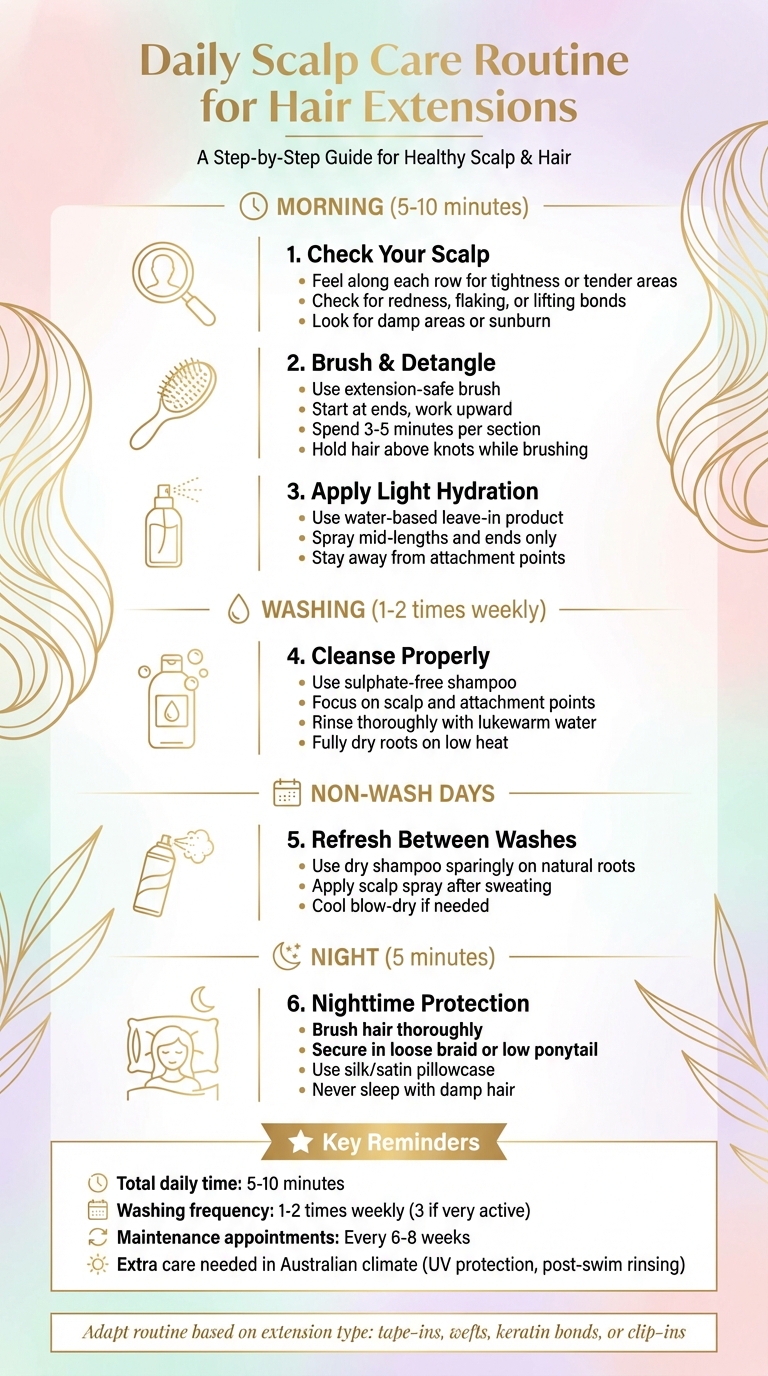
Daily Scalp Care Routine for Hair Extensions Step-by-Step Guide
How to clean your scalp while wearing extensions | Sew In maintenance
How Extensions Impact Your Scalp
Tightly fitted extensions can limit airflow to your scalp, trapping heat, sweat, and oils. The tension from methods like tape-ins, wefts, keratin bonds, or microbeads can put constant pressure on your hair follicles and surrounding skin. If not applied carefully, this can lead to tenderness or discomfort.
Extensions also interfere with the natural distribution of scalp oils. While your scalp continues to produce oil, it often gets trapped beneath the extensions instead of spreading along your hair. This means your scalp care routine needs to shift, focusing on lightweight products and targeted cleansing to address both your natural hair and the extensions. Without proper care, these changes can lead to common challenges for extension wearers.
Common Scalp Problems with Extensions
It’s not unusual to experience mild itching, tightness, or tenderness as your scalp adjusts to extensions. Product buildup around attachment points can also cause irritation, flaking, and odours. These issues often settle within the first three weeks after installation. However, if you experience ongoing or worsening pain, redness around the attachments, or visible bumps, it could indicate problems like excessive tension, contact dermatitis, folliculitis, or even infection. In such cases, it’s important to consult your stylist or a trichologist.
Daily care plays a key role in preventing these issues. Gently brushing your scalp and the roots of your extensions can remove debris, while using lightweight, sulphate-free shampoos helps keep the scalp clean. Pay close attention to drying your roots thoroughly after washing or sweating to avoid mildew and unpleasant smells.
Wearing extensions for longer than recommended - for instance, keeping tape-ins beyond four to six weeks - can lead to matting at the roots, prolonged stress on the follicles, and even traction alopecia (hair loss caused by tension). Scheduling regular maintenance appointments every six to eight weeks allows your stylist to check your scalp, adjust tension, and safely remove or refit extensions, reducing the risk of long-term damage.
These challenges highlight the importance of adjusting your routine, especially in Australia’s unique climate.
Adapting Your Routine for Australian Weather
Australia’s weather brings its own set of challenges for those with extensions. High temperatures and strong UV rays can make your scalp prone to sweating, sunburn, and dehydration. Extensions further limit ventilation, which can exacerbate these issues. In humid coastal or tropical areas, lingering sweat and moisture can increase the risk of yeast or bacterial overgrowth, leading to itching and odour if your scalp isn’t properly cleaned and dried. Chlorine from pools and saltwater from the ocean can also dry out both your natural hair and extensions, causing tangles and roughness. On the other hand, drier inland climates can leave your scalp feeling tight, flaky, or irritated, making the friction from extensions more noticeable.
To manage these challenges on hot, humid days, try the following:
- Style your hair in a loose braid or ponytail to reduce tension on your scalp and keep hair off your neck.
- Wear a breathable hat outdoors to protect your scalp from UV rays without trapping heat.
- Dry your roots and scalp gently after sweating, using either air-drying in the shade or a blow-dryer on a cool, low setting.
- Rinse your hair and scalp with fresh water immediately after swimming in the ocean or a pool to minimise salt and chlorine damage.
- Apply a light, extension-friendly moisturiser sparingly between rows if your scalp feels dry or tight.
Incorporating these steps into your daily routine can help maintain a healthy scalp, even in Australia’s diverse climates. On particularly hot or humid days, you might need to cleanse your scalp more frequently and take extra precautions against UV rays, salt, and chlorine to keep your extensions and scalp in good condition.
Morning Scalp Care Routine
Starting your day with a proper scalp care routine can help you stay ahead of any potential issues and maintain a healthy scalp. A quick five-minute morning check is all it takes to ensure everything is in good shape. Use your fingertips to feel along each row, looking for signs of tightness, tender areas, or new bumps. A hand mirror can help you inspect the back for redness, flaking, or any lifting of tapes or bonds. If anything seems off, it’s best to consult your stylist.
Check Your Scalp Daily
Make it a habit to check your scalp every morning, especially during the first few weeks of wearing extensions. While it’s normal to feel light pressure around bonds or wefts as your scalp adjusts, sharp pain, swelling, or yellowish crusting could indicate a problem that needs professional attention. Also, be on the lookout for damp areas, which can lead to bacterial growth. If you’ve been outdoors, check for signs of sunburn or sensitivity along your part lines. If needed, adjust your part or use a UV-protective spray to shield exposed areas.
Brush and Section Your Hair
Morning detangling is key to preventing root matting and reducing scalp tension. Start by clipping the top layers of your hair up, then work on the underneath sections with an extension-safe brush, like Hair Wonderland's Tangle Tamer Brush ($21.95). Begin brushing at the ends, move to the mid-lengths, and finish by gently brushing just above the bonds or wefts. To protect your extensions and minimise tension on the scalp, hold the hair above any knots with one hand as you brush. Spend 3–5 minutes on each section to keep your bonds neat and tangle-free. Once done, move on to hydrating your extensions.
Apply Light Hydration to Extensions
Since extensions don’t produce natural oils, they need extra moisture to stay soft and manageable. On dry or slightly damp hair, spray a water-based leave-in product like Hair Wonderland's Moisture Magic ($39.95) on the mid-lengths and ends. Hold the spray a few centimetres away from your scalp and attachment points to avoid slippage or buildup. This keeps your scalp hydrated and helps maintain the integrity of your extensions. If you’re heading out on a sunny day, consider a UV-protective or anti-frizz spray for added protection. Styling your hair in a loose braid or low ponytail can also reduce scalp stress and keep your hair looking polished throughout the day.
Daily Cleansing and Scalp Refreshing
Washing Your Hair and Extensions
To keep your scalp healthy and your extensions in great shape, aim to wash your hair 1–2 times a week - or up to 3 times if you're very active or have an oily scalp. Before stepping into the shower, gently detangle your hair with an extension-safe brush. This helps minimise tension on the attachment points and prevents unnecessary pulling.
When washing, let your hair fall naturally and use a small amount of sulphate-free shampoo. Focus on applying it directly to your scalp and between the attachment points, as these areas tend to collect sweat and oils. Avoid scrubbing the mid-lengths and ends; they don’t need as much attention. Use gentle downward motions and rinse thoroughly with lukewarm water until all shampoo residue is gone - this step is crucial to avoid itching and buildup around your tapes, beads, or wefts.
For conditioning, apply the product from the mid-lengths to the ends, keeping it a few centimetres away from the attachment points to prevent loosening the bonds. After rinsing, gently press out excess water with a microfibre towel. When drying, make sure to fully dry your roots using a low heat setting. Leaving your scalp damp can create the perfect environment for mildew or bacteria, which you definitely want to avoid.
To keep your scalp feeling fresh between washes, use targeted products designed to manage oil and sweat.
Refreshing Between Washes
On days when you’re not washing your hair, dry shampoo can be a lifesaver. Spray it onto your natural roots (not the attachment areas) from about 15–20 cm away. Let it sit for a minute, then lightly massage with your fingertips to absorb excess oil without disturbing your extensions.
If you’ve had a sweaty workout or it’s one of those scorching Aussie days, a scalp-refreshing spray or an alcohol-free micellar mist can help. Apply it to your roots, then follow up with a cool blow-dry on your scalp. This step helps prevent sweat from building up around the bonds. Just a heads-up: dry shampoo is a great in-between option, but it’s no substitute for proper water-based cleansing. Overusing it can lead to buildup, so keep it light and occasional.
sbb-itb-dcde78e
Daily Scalp Hydration and Protection
Moisturising Your Scalp Safely
Wearing extensions can restrict airflow and limit the natural distribution of oils on your scalp, often leaving it feeling dry and tight. To keep your scalp hydrated without causing issues, stick to lightweight, water-based serums, tonics, or sprays. Avoid heavy oils and butters, as they can lead to buildup, matting, or even weaken your extension attachments.
To apply, part your hair into sections and place a few drops of product along the visible scalp lines, ensuring you stay at least one centimetre away from tapes, bonds, beads, or wefts. Gently tap the product into your scalp to boost circulation without oversaturating the roots. For your mid-lengths and ends, a light leave-in conditioner or hydrating serum works well, but avoid the attachment areas to prevent loosening. If you prefer oils like argan or jojoba, use them sparingly and only on the ends, steering clear of tape-ins or keratin bonds.
Once you've moisturised, it's just as important to protect your scalp during physical activity.
Protecting Your Scalp During Exercise
Before exercising, secure your hair in a loose braid or bun to minimise tangling and reduce tension on your scalp and extensions. Tight hairstyles can strain your hair follicles, so it's best to avoid them. Australia's warm and humid climate can make sweat a bigger issue, leading to itchiness, odour, and irritation. After your workout, gently blot your scalp with a soft towel and allow your hair to air-dry.
If your scalp feels tight or salty after exercising, a light, extension-safe refresher spray can help. Apply it to your natural roots rather than the extension hair. Dry shampoo can also be used sparingly to absorb excess oil between washes, but be cautious - overuse can lead to buildup, which may cause further issues.
Once your day winds down, shift your focus to nighttime care to keep your scalp healthy while you sleep.
Protecting Your Scalp While Sleeping
Before heading to bed, detangle your hair using an extension-safe brush. Start from the ends and work your way up, supporting the roots as you go. This helps distribute natural oils, improves circulation, and prevents tangling or matting overnight. Secure your hair in a loose braid or low ponytail to keep it in place while you sleep.
Switching to a silk or satin pillowcase can make a big difference. Unlike cotton, these materials reduce friction, helping to prevent frizz, irritation, and damage to your extensions. Avoid sleeping with wet or damp hair, as this can lead to matting, mildew, or scalp irritation. If you must sleep with damp hair, loosely braid it and dry the roots on a low-heat setting beforehand. If you wake up with sore spots or tightness, it might be time to visit your stylist to adjust your extensions.
Daily Care Checklist by Extension Type
Here’s a tailored guide for maintaining your hair extensions. Adjust these steps to suit your extension type while keeping your scalp healthy and comfortable.
Tape-In Extensions
- Keep the root area completely free of oils. Apply conditioners, serums, and oils only from the mid-lengths to the ends, avoiding contact with the tape.
- Brush your hair twice a day, starting at the ends and working upward. Support the hair above the tape lines to reduce strain on your scalp.
- Avoid scratching the tape area. If it feels itchy, use a scalp spray designed for extensions.
- After washing or exercising, ensure the roots are fully dried using a low-heat setting with the airflow directed downward.
- Check your tape rows twice daily for any lifting, stickiness, or discomfort. If issues persist, make a note for your stylist.
Weft and Sewn-In Extensions
- After washing, separate each track and dry thoroughly using air or low heat. Damp tracks can lead to irritation.
- Each morning, gently run your fingers along the braids to check for tenderness, bumps, or unusual odours that could indicate moisture or buildup.
- Use a soft, extension-friendly brush to carefully detangle above and between the tracks. Avoid pulling on the stitch lines.
- Blot sweat from the tracks with a towel and allow extra time for the roots to air-dry.
- Secure your hair at night in a loose braid or low ponytail to minimise tangling and pulling.
Keratin Bonds and Microbeads
- Refrain from touching, rolling, or playing with the bonds. Excessive friction can weaken keratin or loosen the beads.
- Brush your hair twice daily by sectioning it horizontally. Use a soft brush, starting at the ends and working upward, while keeping 1–2 cm away from the bonds or beads.
- If the bonds tangle, gently separate them with your fingers instead of pulling them apart.
- Apply conditioners, masks, and oils only to the mid-lengths and ends to avoid softening the keratin or causing slippage.
- Avoid tight ponytails or slick buns that place pressure on the bond line, especially during the first couple of weeks after installation.
- After washing, thoroughly dry the roots and bond area on a low-heat setting, ensuring the airflow is directed down the hair shaft.
Clip-In Extensions
- Remove your clip-ins every night to give your scalp a break and to prevent traction or tangling.
- Before applying them each day, brush both your natural hair and the clip-ins separately using a detangling or extension brush.
- If you experience pressure or discomfort during the day, reposition or remove any clips causing the issue.
- In the evening, gently brush your clip-ins and store them in a dedicated bag (such as Hair Wonderland's Clip In Bag, priced at $54.00) to prevent tangling.
- Consider taking regular "no-clip" days to allow your scalp to recover from the weight and pressure of the extensions. On these rest days, a gentle scalp massage while shampooing can improve circulation and clear product buildup.
Conclusion
A healthy scalp is the foundation for both stunning extensions and strong natural hair. By following this simple daily routine - gentle brushing, focused cleansing 1–2 times a week, light hydration for mid-lengths and ends, and proper protection during sleep and exercise - you can keep build-up, irritation, and tangling at bay. The best part? It only takes 5–10 minutes a day. The key here isn’t complexity, but consistency. These small, everyday habits shield your scalp from friction, sweat, and product residue, all of which can cause discomfort, breakage, and reduce the lifespan of your extensions.
To get the most out of this routine, adapt it to suit your specific extension type and Australia’s unique climate. Investing in quality tools like soft-bristle brushes and lightweight products - such as those offered by Hair Wonderland - can make all the difference, helping you maintain your extensions and stretch the time between replacements.
FAQs
How can I protect my scalp from sun damage while wearing hair extensions in Australia?
To protect your scalp from sun exposure, consider wearing a wide-brimmed hat when spending time outdoors. Alternatively, you can use a UV-protectant spray specifically made for hair and scalp. Limit your time in direct sunlight, particularly during peak UV hours, and opt for shaded spots whenever you can. These easy measures can help maintain a healthy scalp while ensuring your extensions stay in great condition.
What should I do if my scalp feels itchy or tender while wearing extensions?
If your scalp feels itchy or sore while wearing extensions, it’s essential to address the issue right away to prevent further discomfort. Start by carefully removing the extensions, ensuring you don’t tug or pull excessively. Avoid scratching the irritated area, as this can worsen the sensitivity. Gently cleanse your scalp using a mild, fragrance-free shampoo to wash away any buildup or irritants that might be causing the problem.
After cleansing, apply a soothing treatment to your scalp. A small amount of aloe vera gel can work wonders to calm irritation and add moisture.
Should the irritation continue or get worse, it’s a good idea to consult a professional stylist or a healthcare provider. They can help assess your scalp’s condition and provide guidance on how to keep it healthy. Acting quickly not only protects your comfort but also ensures your extensions remain in good condition for future use.
How often should I book maintenance appointments for my extensions?
Scheduling maintenance appointments for your extensions every 6 to 8 weeks is a smart move. This routine helps keep your extensions secure, ensures they look natural, and preserves their overall quality.
These regular visits also give your stylist the chance to tackle any potential issues, like tangling or slipping, while ensuring your scalp stays in good condition during the time you're wearing extensions.