


When choosing hair extensions, comfort is key. Poorly fitted or heavy extensions can cause scalp irritation, headaches, or even hair damage over time. Here’s what to focus on for a stress-free experience:
- Weight and Density: Lightweight extensions (8–50g) are easier on your scalp. Match the weight to your hair type - fine hair handles less weight than thicker hair. Double-drawn vs single-drawn hair options differ in weight; double-drawn ensures even distribution, reducing strain on your scalp.
- Attachment Method: Clip-ins are gentle and flexible, ideal for sensitive scalps or occasional wear. Tape-ins offer a lightweight, semi-permanent option that sits flat against your scalp.
- Hair Quality and Texture: Premium human hair, like Virgin Remy, feels softer, tangles less, and blends naturally. Choose extensions that match your hair’s texture to avoid unnecessary styling stress.
- Maintenance: Regular brushing with a detangling brush, washing with sulphate-free products, and keeping extensions clean prevents discomfort.
How Weight and Density Affect Comfort
Why Weight Matters for Your Scalp
The weight of hair extensions, measured in grams, plays a big role in how comfortable they feel on your scalp. For most people, "light" extensions - typically around 16–25g - add volume without causing the pulling sensation that might lead to headaches or scalp discomfort.
If you have fine or thinning hair, ultra-light extensions (8–15g) are often the best choice, as fine hair can usually handle up to 15–20g without risking damage. Medium-thickness hair can comfortably support 20–35g, while thicker, more resilient hair can manage 35–50g. Extensions designed with multiple wefts are particularly helpful in spreading the weight evenly, avoiding excessive tension in one spot.
Hair length also impacts how the weight feels. Longer extensions, like a 22-inch set weighing 25g, create more leverage on the roots compared to shorter ones of the same weight, such as 14 inches.
"The right weight feels weightless - you should forget you're wearing extensions after the first hour." – Naturyl Extensions
It’s important to watch for signs that your extensions might be too heavy. Persistent headaches, redness or soreness at attachment points, or sensations like itching or burning could all indicate that the weight is too much. A simple four-hour test can help you assess whether tension builds up over time.
Next, let’s explore how double-drawn hair can improve weight distribution and overall comfort.
Double-Drawn Hair for Even Weight Distribution
Even weight distribution is key to avoiding strain on your scalp, and double-drawn hair excels in this area. Unlike single-drawn hair, which tapers at the ends and can create uneven pull, double-drawn hair maintains consistent thickness from root to tip. This ensures the weight is evenly spread along the entire length of the extension.
This feature is especially valuable for Australians with active lifestyles, whether you're wearing extensions during long workdays or intense workouts. When the weight is evenly distributed, the extensions not only feel more comfortable but also blend extensions with natural hair seamlessly, making them easy to wear all day. Double-drawn options, like those from Hair Wonderland, are designed to offer this seamless experience.
sbb-itb-dcde78e
Selecting Attachment Methods for Sensitive Scalps
Seamless Clip-Ins for Flexible Wear
If you’re dealing with scalp sensitivity, seamless clip-ins could be your go-to option. They’re not only chemical-free but also avoid heat and adhesives, making them gentle on your scalp. Plus, you can apply them yourself in just 5–15 minutes and remove them whenever you need a break. The clips are designed to snap securely, distributing weight evenly to prevent tension points.
Hair Wonderland's seamless clip-in extensions are crafted with sensitive scalps in mind. These extensions are lightweight - usually around 100–140g per set - and feature Invisi® weft technology, which allows them to lie flat against your head. This means they’re almost undetectable and avoid the bulk that can cause discomfort. You have complete control over how long you wear them, whether it’s for 8–12 hours during the day or just for special occasions, letting you adjust based on how your scalp feels.
What makes clip-ins stand out is their damage-free design. There’s no sticky residue, no adhesive reactions, and a very low risk of scalp irritation. This makes them a safe choice, especially if you’re trying extensions for the first time or managing ongoing scalp sensitivity. Their thoughtful design ensures you can enjoy all-day comfort without worry.
For a more semi-permanent option, tape-in extensions might be worth exploring.
Tape-Ins for Low-Profile Attachment
Tape-ins offer a semi-permanent alternative to clip-ins, providing a flat and lightweight solution. They use thin adhesive strips - only 1–2mm thick - that sandwich sections of your natural hair, keeping them close to the scalp without adding bulk. Each row weighs just 50–60g, and the sandwich-style application avoids the need for heat, beads, or sewing.
Professionally applied in about 45–60 minutes, tape-in extensions can last 6–8 weeks. Many Australian stylists note that 90% of clients with sensitive scalps prefer tape-ins for their natural feel and easy upkeep. When hypoallergenic adhesives are used, sensitivity issues drop to under 5%, which is much lower than the 20–30% strain risk associated with weaves or bonds.
Preparation is key for a smooth application. Your stylist should start with a clarifying shampoo to clean your hair, section it into rows spaced 1–2cm apart, and press the tape firmly - no excessive heat required. While some may experience mild discomfort for the first 1–2 days, it usually fades quickly. This method ensures a comfortable, long-lasting fit for everyday wear.
Choosing Hair Quality and Texture for Comfort
Why Premium Human Hair Matters
Premium Virgin Remy hair stands out because its cuticles are aligned, creating a smooth texture that feels gentle on the scalp and significantly improves comfort.
Hair Wonderland’s double-drawn Russian and Mongolian Remy extensions are a great example, as their aligned cuticles help minimise friction and tangling. On the other hand, non-Remy hair, which has cuticles facing in mixed directions, is prone to tangling and can irritate the scalp. To disguise its rough texture, lower-quality hair is often coated with silicone. However, once this coating wears off, the hair becomes dry, brittle, and uncomfortable to wear - not to mention harder to manage.
Premium human hair maintains a soft, natural feel, handles heat styling well, and moves effortlessly with your own hair. This is a sharp contrast to synthetic fibres, which can feel rigid and may not tolerate heat. For the best results, it’s essential to choose extensions that not only offer these premium qualities but also match your hair’s natural texture.
Matching Texture to Your Natural Hair
Beyond quality, matching the texture of your extensions to your natural hair is key to achieving comfort. When the textures complement each other, the extensions blend seamlessly, reducing the need for constant styling. This means less heat exposure, less manipulation, and less stress on your scalp over time.
For example, if your hair is naturally straight but you opt for wavy extensions, you’ll find yourself frequently styling them to match. This can lead to extra weight from styling products and potential heat damage. The same problem arises if wavy hair is paired with straight extensions. Choosing the right texture ensures the extensions feel like a natural extension of your hair, evenly distributing weight and avoiding the uncomfortable pulling sensation caused by a poor match. This thoughtful selection allows for all-day ease and confidence.
Your Ultimate Guide to Hair Extensions | Halo, Tape-Ins, Fusion, Weft, etc.
Extension Types Compared by Comfort
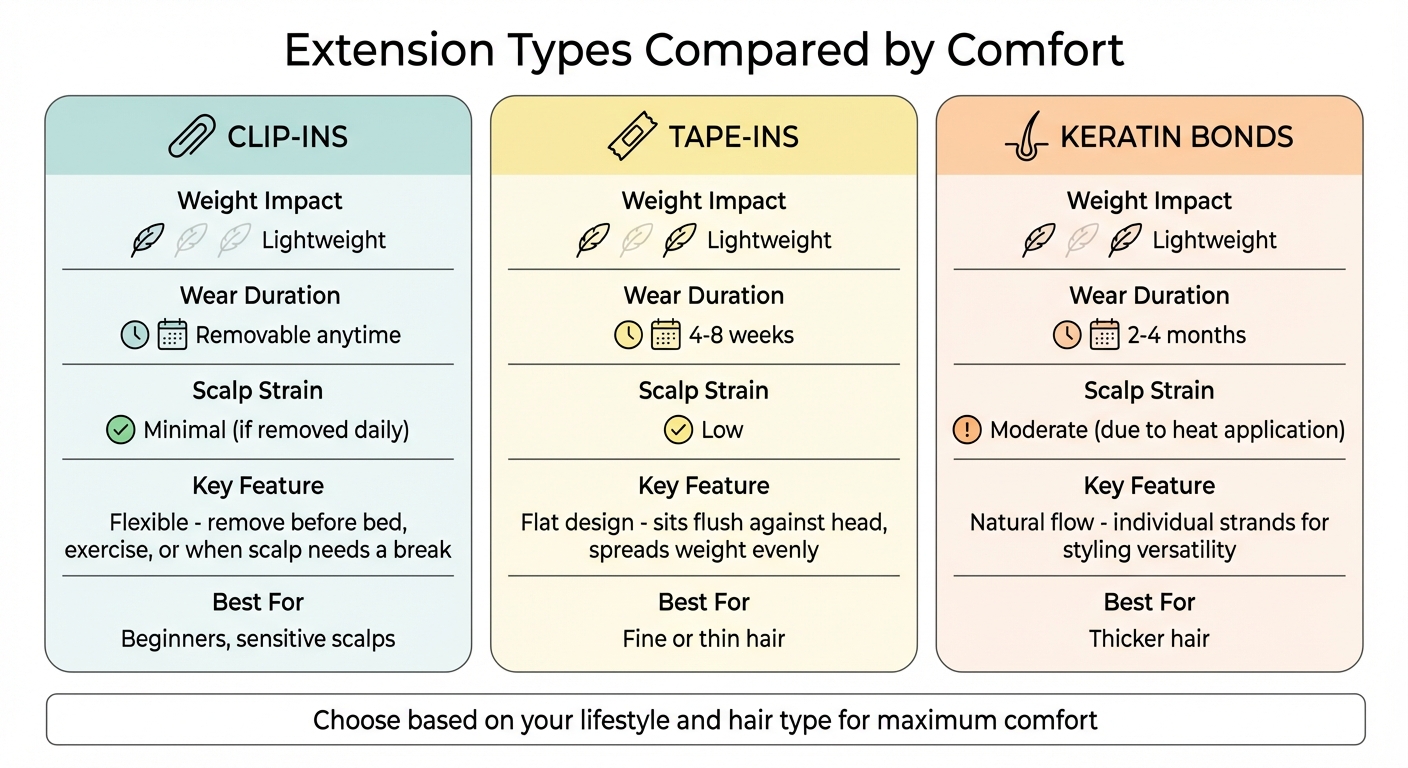
Hair Extension Types Comfort Comparison Guide
When it comes to choosing hair extensions, comfort is a big deal. The weight of the extensions and how they attach to your natural hair can make all the difference. Let’s break down some popular extension types to see how they stack up in terms of comfort, especially for those with active lifestyles.
Clip-ins are a favourite for flexibility. You can pop them in and out whenever you like - whether it’s before bed, during exercise, or simply when your scalp needs a breather. This makes them a great choice for beginners or anyone with a sensitive scalp. Plus, giving your scalp regular breaks can prevent tension and discomfort.
Tape-ins are designed to sit flat against your head, making them a comfortable option for people with fine or thin hair. They spread out the weight evenly, which means less irritation and no bulky feeling at the roots.
Keratin bonds attach individual strands of hair, allowing for a natural flow and plenty of styling options. They work particularly well for thicker hair, but keep in mind that they involve heat during application and need replacing every 2–4 months. This process may cause moderate strain on the scalp.
Comfort Comparison Table
| Extension Type | Weight Impact | Wear Duration | Scalp Strain |
|---|---|---|---|
| Clip-Ins | Lightweight | Removable anytime | Minimal (if removed daily) |
| Tape-Ins | Lightweight | 4–8 weeks | Low |
| Keratin Bonds | Lightweight | 2–4 months | Moderate (due to heat application) |
Weighing these comfort factors can help you pick the right extensions that not only feel good but also fit seamlessly into your routine with minimal hassle.
Maintenance Tips for Lasting Comfort
Taking care of your extensions is just as important as picking the right type and weight. Even the best-quality extensions need proper upkeep to avoid common hair extension problems like tangles and buildup that lead to discomfort.
Using Detangling Brushes to Prevent Pulling
Brushing your extensions the right way is key to staying comfortable throughout the day. A specialised detangling brush, like Hair Wonderland's Tangle Tamer Brush, is perfect for extensions. It gently removes knots without putting pressure on the attachment points. Aim to brush 2–3 times daily - starting at the ends and working your way up in small sections. This method helps avoid matting, which can cause discomfort.
Always brush your extensions before they get wet - whether you're about to shower or swim. Wet hair tangles more easily, and trying to detangle it afterward can strain your scalp unnecessarily. According to Australian extension experts, using the correct brush can help clip-ins last 6 to 12 months with regular use, compared to just 1–2 months when using a standard brush.
In addition to gentle brushing, keeping your extensions clean is vital for maintaining their lightweight feel.
Keeping Extensions Clean and Light
Washing your extensions regularly is essential to avoid the buildup of styling products, oils, and natural scalp oils, which can make them heavier and strain your scalp. Clean them 2–3 times a week using lukewarm water and a sulphate-free shampoo (focus on the scalp) and apply conditioner only to the mid-lengths and ends.
"Never go to bed with wet hair!" - Hair Wonderland
Sleeping with wet extensions can cause matting and increase tension on your scalp overnight. After washing, always blow-dry the attachment area using medium heat, and finish with a cool rinse to seal the cuticles. To keep them soft without adding weight, apply a small amount of treatment oil daily. Following this routine will keep your extensions light and comfortable, just like when you first got them.
Conclusion
Finding the right hair extensions for maximum comfort comes down to four key factors: weight, attachment method, hair quality, and maintenance routine. Each of these aspects contributes to how natural and comfortable your extensions feel throughout the day.
Lightweight extensions are easier on the scalp, reducing tension and discomfort. Attachment methods like seamless clip-ins or tape-ins lie flat against your head, making them perfect for fine hair or sensitive scalps. These options not only feel more natural but are also less likely to cause irritation.
The quality of the hair is just as crucial. Extensions made from premium 100% Remy hair offer natural movement and reduce tangling, blending effortlessly with your own hair. When the texture matches your natural hair, the extensions move with you, avoiding the stiff, unnatural feel of lower-quality options.
Maintenance is another big factor in achieving lasting comfort. Using a specialised detangling brush, washing with sulphate-free products 2–3 times per week, and keeping your extensions clean prevents unnecessary weight from product build-up. Professional maintenance every 5–6 weeks ensures your extensions stay secure and balanced.
Hair Wonderland’s double-drawn Russian and Mongolian extensions are designed with comfort and blending in mind. Trusted by Australian salons and backed by over 1,000 five-star reviews, their premium range delivers a natural look and feel that lasts.
Discover the difference for yourself by exploring their collection at hairwonderland.com.au. These extensions are crafted to feel as good as they look, giving you confidence and comfort every day.
FAQs
How do I know if my extensions are too heavy?
If your extensions feel too heavy, it’s important to pay attention to warning signs like scalp pain, headaches, or tenderness. Extensions that are too weighty can also lead to shedding, thinning, or unnecessary strain on your natural hair. To avoid these issues, opt for extensions that match your hair type and ensure they don’t cause ongoing discomfort. Managing the weight properly is essential for keeping your hair healthy and making sure your extensions remain comfortable to wear.
Which is better for a sensitive scalp: clip-ins or tape-ins?
For those with sensitive scalps, clip-in extensions are often the gentler option. These extensions use small, pressure-sensitive clips that attach easily and can be removed at the end of the day, reducing the chance of irritation. In contrast, tape-in extensions rely on semi-permanent adhesive strips that stay in place for weeks, which might lead to discomfort over time. Since clip-ins don't involve adhesives, they tend to be a more scalp-friendly and comfortable choice for individuals with delicate skin.
How can I prevent itching and discomfort with extensions?
To reduce itching and discomfort from hair extensions, it’s essential to prioritise scalp health well before installation. Start by giving your scalp some extra attention at least two weeks in advance - cleanse thoroughly, exfoliate gently, and keep it hydrated. Once the extensions are in, stick to gentle, sulfate-free shampoos to maintain cleanliness without stripping moisture. Avoid applying heavy oils near the roots, as they can cause buildup and irritation. Choosing high-quality extensions and focusing on scalp care can make the entire experience much more comfortable.