


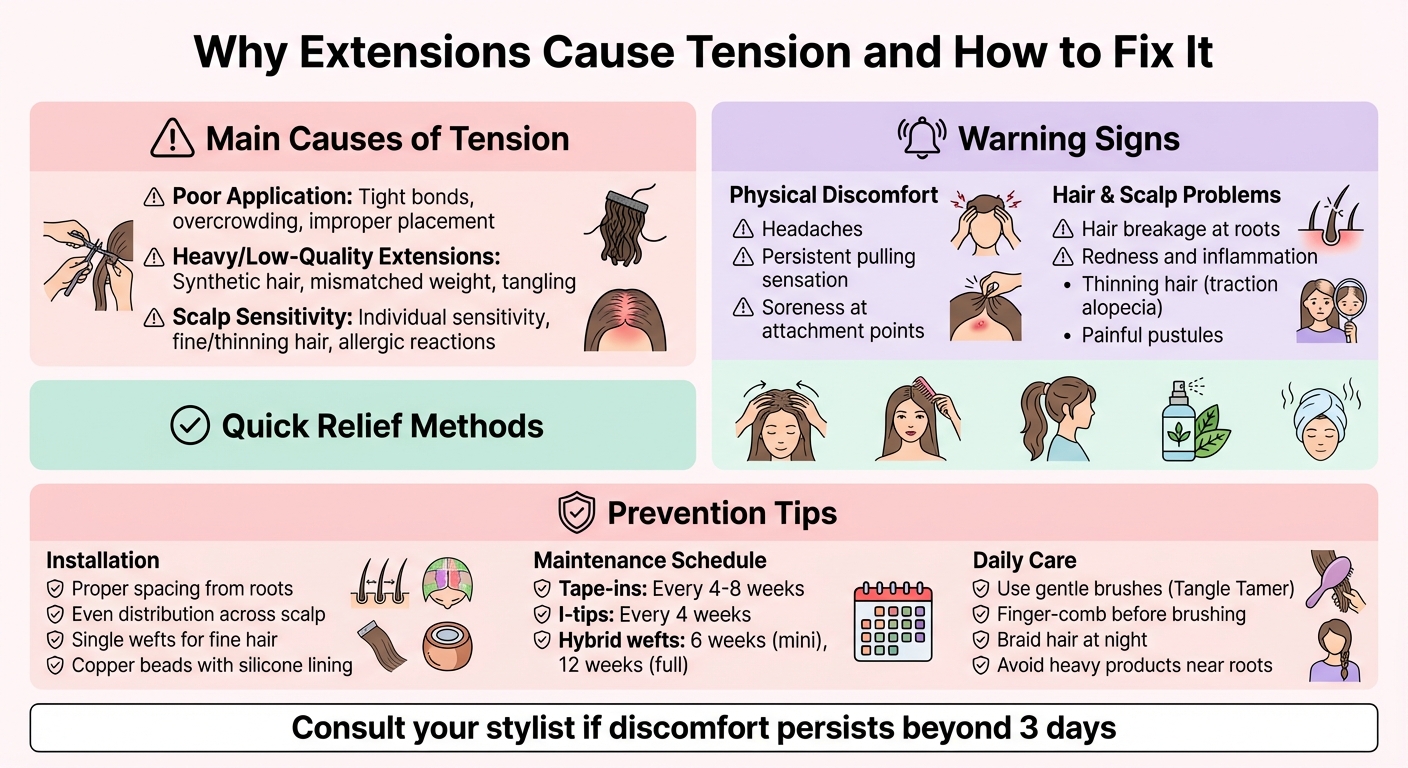
Hair extensions can add length and volume, but discomfort like scalp tension, headaches, and even hair loss can occur if they're not applied or cared for correctly. Common causes include tight application, heavy or low-quality extensions, and individual scalp sensitivity. Here's how to avoid and address these issues:
- Causes of Tension: Tight bonds, heavy extensions, or poor-quality materials can strain your scalp and hair.
- Signs of Excessive Tension: Persistent pain, redness, bumps, or thinning hair are warning signs.
- Quick Relief: Try a gentle scalp massage, adjust your part, or use cooling sprays with soothing ingredients.
- Prevention Tips: Ensure proper application, choose lightweight extensions, and avoid overcrowding attachment points.
- Maintenance: Regular adjustments and maintenance (every 4–8 weeks) and using the right tools can prevent tension and damage. Following a daily care checklist also ensures your scalp remains healthy.
If discomfort persists beyond three days, consult your stylist to adjust the extensions or explore alternatives. By prioritising proper installation, quality materials, and consistent care, you can enjoy extensions without the pain.
How to Prevent and Fix Hair Extension Tension: A Complete Guide
What Causes Tension in Hair Extensions
Understanding what causes tension in hair extensions is crucial if you want to avoid common hair extension problems and discomfort. The main culprits typically fall into three areas: how the extensions are applied, the quality and weight of the hair, and individual scalp characteristics. Each factor - whether it’s the application technique, the materials used, or your scalp’s unique traits - requires its own approach to minimise issues.
Poor Application Methods
How your extensions are installed plays a huge role in your comfort. Extensions that are applied too tightly can create unnecessary stress on your scalp. Placement is just as critical. When bonds, tapes, or beads are positioned too close to the roots, they restrict your hair's natural movement, causing constant pulling and discomfort.
Another frequent issue is overcrowding. If too many extensions are placed in a small area, they create pressure points that weigh down your natural hair. Proper spacing is essential - when bonds are unevenly distributed, some areas of your scalp bear more weight than others, leading to strain and soreness.
Poor Quality or Heavy Extensions
The type of extensions you choose also makes a big difference. Synthetic hair, for example, is often heavier than human hair, which can lead to tension headaches or discomfort. Matching the weight of the extensions to your natural hair is key - fine hair simply can’t handle thick or heavy extensions without risking breakage or strain.
Low-quality extensions come with their own set of problems. They’re more likely to tangle and mat, which causes uneven pulling on your natural hair. Additionally, these materials often trap heat and sweat against your scalp, making you feel itchy or irritated, which only amplifies the sense of tension. Opting for better-quality extensions ensures they blend with your natural hair more seamlessly and comfortably.
Scalp Sensitivity and Personal Differences
Your scalp’s sensitivity and your hair type are also major factors. Some people naturally have more sensitive scalps, which makes them prone to discomfort even when extensions are applied correctly. Certain areas of the scalp may be more reactive, and placing extensions too close to these spots can lead to irritation and tension.
Hair type matters too. Fine or thinning hair struggles to support heavy extensions, which can cause root strain and soreness. Allergic reactions to materials like the metals in micro-rings or nano-rings can also cause irritation, making the experience even more uncomfortable. By understanding your scalp and hair’s specific needs, you can make better decisions about the type and placement of extensions for a more comfortable fit.
sbb-itb-dcde78e
How to Spot Excessive Tension
Catching the early signs of excessive tension can make a world of difference in preventing long-term damage and discomfort. Your body often sends out signals - you just need to know how to interpret them. Tension can show up as physical discomfort and changes in the health of your hair and scalp.
Physical Discomfort
One of the most noticeable signs of excessive tension is physical pain. This could include headaches, a persistent pulling sensation at the roots, or soreness around the attachment points of your extensions. These symptoms often occur when extensions are applied too tightly or are heavier than your natural hair can handle.
For instance, with micro-bead extensions, you might feel a pinching sensation if the beads are clamped too close to your scalp. Similarly, if your hair feels unusually heavy or you notice pressure in specific areas, it could mean that too many extensions have been concentrated in one spot. Pain is your body's way of saying something isn't right, and ignoring these signs can lead to further issues.
Hair and Scalp Problems
Beyond discomfort, excessive tension can cause visible damage to your hair and scalp. Hair breakage is a common issue - if your natural hair starts snapping or thinning at the roots, especially if you have fine hair paired with heavy extensions, it’s a clear red flag. Left unchecked, this can lead to traction alopecia, a condition where chronic pulling results in permanent hair loss .
Your scalp can also reveal signs of trouble. Redness, itching, or inflammation may indicate follicular irritation or even traction folliculitis, which sometimes appears as painful pustules. As your natural hair grows, the bonds holding the extensions may shift, creating new areas of tension. What once felt fine can suddenly become tight and uncomfortable. A gentle scalp massage can help you identify these problem areas, so it’s important to pay attention to what your body is telling you. Spotting these signs early gives you the chance to address the issue before it leads to lasting damage.
Quick Relief Methods
When your scalp feels sore from the tension of extensions, finding relief quickly becomes a top priority. Simple techniques can help ease the discomfort within minutes, giving you breathing room to figure out a more permanent solution. While these tips won’t fix installation issues, they can make you feel a lot better in the moment.
Scalp Massage and Pressure Relief
A gentle scalp massage can be incredibly soothing for tight, sore areas. Use the pads of your fingertips - avoid using your nails—and follow a proper brushing routine to prevent further tugging - and apply light to medium pressure in slow, circular motions. Focus on the spots where your scalp feels the most strained or where the extensions feel heaviest. This can help loosen the tension without disturbing the bonds.
You can also try a kneading motion by pressing, lifting, and releasing small sections of your scalp. This approach improves blood flow and helps alleviate deeper tension. If you’re dealing with a tension headache, massage your temples with gentle circular pressure using your index and middle fingers. Even a short massage session can make a difference - studies suggest that just 20 minutes can significantly reduce muscle tension.
Another quick adjustment is to change your part line. Shifting your part just slightly can redistribute the weight of your extensions, relieving pressure on strained follicles. As hair extension stylist Amy Roland explains:
"A small shift in placement can make a big difference without ruining your whole style".
Additionally, avoid tight hairstyles like high ponytails or braids, which can put extra strain on your scalp. Letting your hair hang loose or choosing a looser style can give your scalp some much-needed relief. Once the immediate discomfort subsides, you can explore longer-term adjustments to prevent recurring tension.
Calming Scalp Sprays
Cooling sprays can offer instant relief. Look for lightweight products with ingredients like aloe, tea tree oil, or peppermint. These are known for their soothing, anti-inflammatory properties and can help calm irritation and itchiness without leaving a heavy residue near your extension bonds. Sprays are often a better choice than serums for quick, on-the-go relief.
If you have sew-in extensions, another effective method is to apply a warm, damp towel to your scalp for a few minutes. The heat and moisture allow the hair and thread to expand slightly, easing the tightness. Tenderness after a sew-in usually lasts 24 to 48 hours, so this trick can help make things more comfortable until you can arrange for a professional adjustment. These simple techniques provide immediate comfort while you work on finding a long-term solution.
How to Prevent Tension
Avoiding tension starts with proper installation and extends to everyday care. By using the right techniques, quality materials, and suitable tools, you can enjoy extensions that feel comfortable and look natural - without causing headaches or scalp discomfort.
Correct Placement and Tension Control
Extensions should be bonded close to the roots but with enough space to allow natural movement. This small buffer prevents strain on your hair follicles and ensures your extensions feel natural, not overly tight.
It's crucial to balance the weight of the extensions with your hair's strength. For finer hair types, single wefts with single-sided tape are a better option as they add volume without putting too much pressure on your scalp.
A clinical study highlighted the risks of excessive weight: a patient wearing 33 braids totalling 80 grams developed significant scalp lesions. Proper placement also avoids tension pulling in the wrong direction, which can lead to headaches and strain on the follicles. When sectioning your hair, distribute extensions evenly across the scalp and create secure, comfortable bonds. Using copper beads with silicone linings instead of heat or glue can provide a gentler, less damaging hold.
Once your extensions are properly placed, choosing the right type of extensions becomes the next priority.
Choose Lightweight, Quality Extensions
The type of extensions you select plays a big role in comfort. Consider lightweight options like Hair Wonderland's Seamless Set 22", which uses Invisi® weft technology. This design offers a light 200-gram feel while delivering natural volume and length, reducing strain on your scalp.
High-quality human hair blends seamlessly with your natural texture, while synthetic or lower-grade hair tends to be stiff, prone to matting, and can increase tension. Double-drawn Russian and Mongolian hair is another excellent choice because it maintains consistent thickness from root to tip. This means you need less hair to achieve the look you want, which helps minimise scalp strain.
Even with the best extensions, using the right tools for maintenance is key to keeping tension at bay.
Use Proper Maintenance Tools
Everyday care tools can either protect your scalp or worsen tension. Brushes like the Tangle Tamer Brush ($21.95) or The Detangle Brush ($29.95) are designed to glide gently through extensions, reducing the risk of pulling on the bonds. Before brushing, finger-combing your hair can help ensure there are no major tangles that could cause unnecessary stress on your scalp.
At night, braiding your hair prevents tangling and minimises accidental tugging while you sleep. When washing, use your fingertips to gently clean near the roots and bonds - avoid using nails, which can weaken the bonds over time. These small adjustments to your daily care routine can make a big difference in reducing scalp strain.
Ongoing Care and Professional Support
After installation, keeping your extensions in top shape requires consistent care. Over time, the attachment points move away from your scalp as your natural hair grows. This shift increases strain on your roots, which can lead to discomfort if not managed properly. Routine professional maintenance and the right products can help minimise tension, keeping your extensions feeling light and secure. Let’s dive into why regular adjustments and smart care choices are essential.
Regular Adjustments and Professional Installation
To maintain comfort and prevent damage, most stylists suggest scheduling adjustments every 6 to 8 weeks. In that time, your natural hair grows about 2.5 to 4 centimetres, which can make extensions more noticeable or uncomfortable. As Kaila Shien Datungputi from LAHH Salon explains:
"The farther the bead or tape moves from the scalp, the more strain it places on your natural hair".
Different types of extensions have specific adjustment timelines. For instance:
- Tape-ins: Require removal and re-taping every 4 to 8 weeks.
- I-tips: Typically need adjustments every 4 weeks.
- Hybrid wefts: Get a "mini move-up" at 6 weeks, with a full reinstallation at 12 weeks.
These appointments also give your stylist a chance to remove naturally shed hair trapped in the attachments. If left unchecked, this buildup can cause matting or irritation. Choosing a skilled stylist from the beginning ensures proper placement and helps avoid tension-related issues.
Avoid Heavy Products Near the Roots
Using heavy styling products close to your roots can weigh down the attachment points, increasing strain on your scalp. This added weight may even cause beads to slip or adhesive bonds to weaken. To avoid this, focus on applying products to the mid-lengths and ends of your hair. Additionally, washing your hair soon after exercise can prevent sweat and oils from building up under the extensions, which could irritate your scalp.
Use Maintenance Accessories
The right tools can make a big difference in maintaining your extensions and reducing scalp strain. Professional-grade accessories are designed to protect both your natural hair and extensions. For instance:
- Hair Wonderland's Tape Sheets ($78.00): Provide strong adhesive for re-taping extensions without pulling on your hair.
- Removal Solution ($54.00): Gently dissolves adhesive bonds, making extension removal easier and less damaging.
These tools not only help maintain your extensions but also ensure a more comfortable experience between salon visits. By investing in proper care and accessories, you can enjoy your extensions longer and with less hassle.
Conclusion
Extensions don’t have to mean discomfort or constant worry about damage. The secret lies in opting for high-quality materials, working with a skilled stylist who knows proper placement techniques, and sticking to a consistent care routine. When done right – with extensions sitting flat against your scalp and allowing natural movement – they should feel as natural as your own hair.
Pay attention to your scalp’s signals. It’s normal to feel mild sensitivity during the first day or two, similar to the tightness of a snug ponytail. But if tenderness, itching, or soreness persists beyond three days, it’s time to consult your stylist. These symptoms might point to issues like trapped hairs or extensions placed too close to the root.
The type of extension you choose also matters. For fine or delicate hair, lightweight options like tape-ins are ideal as they distribute weight evenly and minimise breakage risk. On the other hand, for thicker hair, techniques such as micro-beads or fusion bonds can work well when applied with care.
As A Roland Salon aptly says:
"Stylish hair shouldn't come with daily discomfort. If you take time to prep before getting them, choose the right stylist, and keep up with scalp care, extensions can feel just as natural as your own hair".
At Hair Wonderland (https://hairwonderland.com.au), we are dedicated to providing extensions that prioritise both comfort and a natural look. By choosing quality products and trusting expert application, you can enjoy a hair transformation that feels effortless and tension-free.
FAQs
Is it normal for extensions to hurt at first?
Yes, it’s normal to feel some tightness or mild discomfort when hair extensions are first applied, particularly if they’ve been installed too tightly or incorrectly. However, extensions that are properly applied should not cause pain. If the discomfort continues, it’s a good idea to reach out to your stylist so they can adjust the application and ensure it feels comfortable.
Which extension type is best for fine or sensitive scalps?
Tape-in extensions work well for those with fine or sensitive scalps. They are lightweight and gentle, reducing the chances of irritation or discomfort. With their flat design, they offer a snug and comfortable fit, making them an excellent option for individuals with delicate scalps.
Can extension tension cause permanent hair loss?
Excessive tension from hair extensions can cause traction alopecia - a condition that develops when hair follicles are subjected to prolonged pulling. Over time, this can lead to permanent hair loss. To reduce the risk, make sure extensions are applied properly and maintained with care. Avoid wearing them too tightly, and give your hair regular breaks to relieve the strain.