


Hair extensions can transform your look, but they can also affect your scalp. The way extensions are applied - clip-in, tape-in, or sew-in - determines the level of tension and weight on your hair follicles. If not installed or maintained correctly, they may lead to issues like scalp tenderness, breakage, or even traction alopecia (hair loss from repeated pulling).
Here’s a quick breakdown:
- Clip-ins: Easy to use and removed daily, but repeated use in the same spots can cause localised breakage and soreness.
- Tape-ins: Lightweight and evenly distributed, but improper application or adhesive sensitivity can irritate the scalp.
- Sew-ins: Long-lasting but may strain the scalp if braids are too tight or left in too long.
Signs of scalp stress include tenderness, thinning hair, or increased shedding. A daily scalp care routine, like using sulphate-free shampoos, adjusting placements, and taking breaks, are essential to keep your scalp and hair healthy while wearing extensions. Always consult a professional stylist to choose the best option for your hair type and needs.
1. Clip-in Extensions
Scalp Tension
Clip-in extensions can sometimes cause scalp tension, especially if they're applied too tightly, used repeatedly in the same area, or if the wefts are too heavy. This tension can put pressure on individual hair follicles, potentially leading to traction alopecia. Common signs include thinning around the hairline or soreness where the clips attach.
"Clip-ins are often considered healthier because they're temporary and removed daily. However, clipping into the same area repeatedly or pulling hair during removal can still cause breakage." - Prue, Lady and the Hair
For those with sensitive scalps, opting for silicone-lined or hypoallergenic clips can help minimise friction and irritation. Alternating clip placements and using smaller clips to distribute the weight more evenly is a safer approach than relying on a single, heavy clip. Products like Hair Wonderland's seamless clip-in extensions, which use lightweight Invisi® weft technology at 200 grams, are designed to reduce strain on fine to medium hair types.
Maintenance Requirements
To maintain a healthy scalp, it's important to remove clip-ins every night. This allows your scalp to rest and helps prevent tension-related damage. Changing the clip placement regularly and using a detangling spray with a wide-tooth comb - starting at the ends - can reduce stress and minimise breakage. Washing your extensions with a sulphate-free shampoo will prevent oil and sweat buildup underneath the wefts, while taking a few days off from wearing them each week gives your hair time to recover. These habits are essential for keeping your scalp and hair in good condition.
Impact on Hair Growth
Clip-in extensions typically don't interfere with the natural hair growth cycle at the root. However, they can cause breakage along the hair shaft, which may impact your ability to retain length. Watch out for early warning signs like scalp tenderness, increased shedding, or small bald spots - these could signal the need for a break from extensions. Matching the weight of the extensions to your hair type is crucial: lightweight wefts are better for fine hair, while thicker hair can handle heavier sets if the weight is evenly distributed. When used properly and in moderation, clip-ins can even act as a protective style, reducing the need for daily heat styling. Up next, we’ll dive into how tape-in extensions affect scalp health.
sbb-itb-dcde78e
2. Tape-in Extensions
Scalp Tension
Tape-in extensions rely on medical-grade adhesives to secure your natural hair between two wefts, distributing weight across a 4cm section. Each tape weighs about 2 grams, which helps reduce stress on individual hair follicles compared to more concentrated methods like clip-ins. This flat-panel design creates low to moderate tension, offering a gentler alternative for long-term wear.
That said, even though these adhesives are hypoallergenic, some people may still experience issues like redness, flaking, or contact dermatitis. Adhesive residue can also build up over time, potentially clogging follicles and irritating the scalp. To minimise risks, always request a patch test before committing to a full installation. Placement is crucial - tapes should sit about 1cm away from the roots to avoid pulling and to ensure your hair lies naturally. Regularly monitoring your scalp for irritation is key to maintaining comfort and scalp health while wearing these extensions.
Maintenance Requirements
Tape-ins need professional adjustment every 6 to 8 weeks to prevent problems like matting, tangling, or excessive traction on your hair. After the initial application, allow 48 to 72 hours before washing your hair to ensure the adhesive bonds properly.
Care is essential to keep tape-ins looking good and lasting longer. Stick to sulphate-free, oil-free shampoos, and apply conditioner only from mid-lengths to ends, keeping it at least 2–3cm away from the tape bonds. Always dry your hair completely before bed, securing it in a loose braid or low bun, and use a silk or satin pillowcase to minimise friction. Brushing is also important - use a loop or wide-tooth comb 2 to 3 times daily, starting at the ends and working upward while holding the roots to avoid straining the bonds. In Australia, maintenance sessions, which include removal, cleaning, retaping, and reapplication, typically cost between A$200 and A$365.
Impact on Hair Growth
Tape-in extensions are designed not to interfere with natural hair growth, thanks to their even weight distribution. However, improper application or leaving them in too long can still lead to persistent tension on the follicles, potentially causing damage.
"Tape in extensions are damaging to hair and can even lead to hair loss... due to strong adhesive - and if not removed professionally, expect discomfort and breakage." - Extension Specialist, The Glam House
Avoid removing tape-ins yourself, as professionals use specific alcohol- or oil-based solutions to safely dissolve the adhesive without harming your natural hair. Dermatologists recommend taking breaks from adhesive-based extensions every 4 to 6 months to give your scalp and follicles time to recover. With proper care, high-quality tape-in wefts can be reused up to 3 or 4 times, extending their lifespan to around 6 months or longer.
Can Heavy Extensions Damage Your Scalp Over Time?
3. Sew-in Extensions
Sew-in extensions are installed differently from clip-ins or tape-ins. They’re secured to braided cornrows, which creates a unique tension on the scalp.
Scalp Tension
The tension from sew-in extensions comes from the braided cornrow base that holds the wefts in place. If your stylist braids too tightly, you might feel immediate discomfort, and over time, this could lead to traction alopecia - a type of hair loss caused by constant pulling on the hair follicles [10, 11]. The weight of the wefts can also add strain, especially for those with fine or thin hair. Modern options like the LA Weave, which uses micro rings and thread instead of braids, can help minimise tension. If the braids feel too tight, let your stylist know right away.
Maintenance Requirements
Sew-in extensions need professional upkeep every 6 to 8 weeks to keep your scalp healthy [10, 11]. Leaving them in too long can lead to matting and excessive tension on your roots, which may impact your scalp’s ability to support healthy hair growth. Wash your hair 1–2 times a week, focusing on your scalp to avoid product buildup. After washing, make sure your hair is completely dry to prevent bacteria or mould, which can cause scalp infections [10, 11]. Use a blow dryer to dry the base thoroughly, and apply a light oil to reduce flaking and itching. Before bed, loosely plait your hair to minimise snagging and extra tension. In Australia, installation costs generally fall between A$100 and A$200, while maintenance visits range from A$50 to A$150 every 4 to 6 weeks.
Impact on Hair Growth
Sew-ins don’t directly affect your natural hair growth cycle. However, improper installation or neglect can lead to breakage, which might look like slowed growth. Tight braids or heavy wefts can increase the risk of traction alopecia, especially with prolonged use.
"The weight of the wefts and regular maintenance can put stress on your hair follicles, leading to breakage, thinning, and even traction alopecia." - Lindsay O'Neal, Author, Sew Your Soul
This method works best for thick, coarse, or textured hair. Fine or fragile hair may struggle with the added strain. High-quality human hair wefts can be reused for 6 to 12 months if cared for properly, but it’s important to give your scalp breaks from the weight to allow recovery.
Pros and Cons
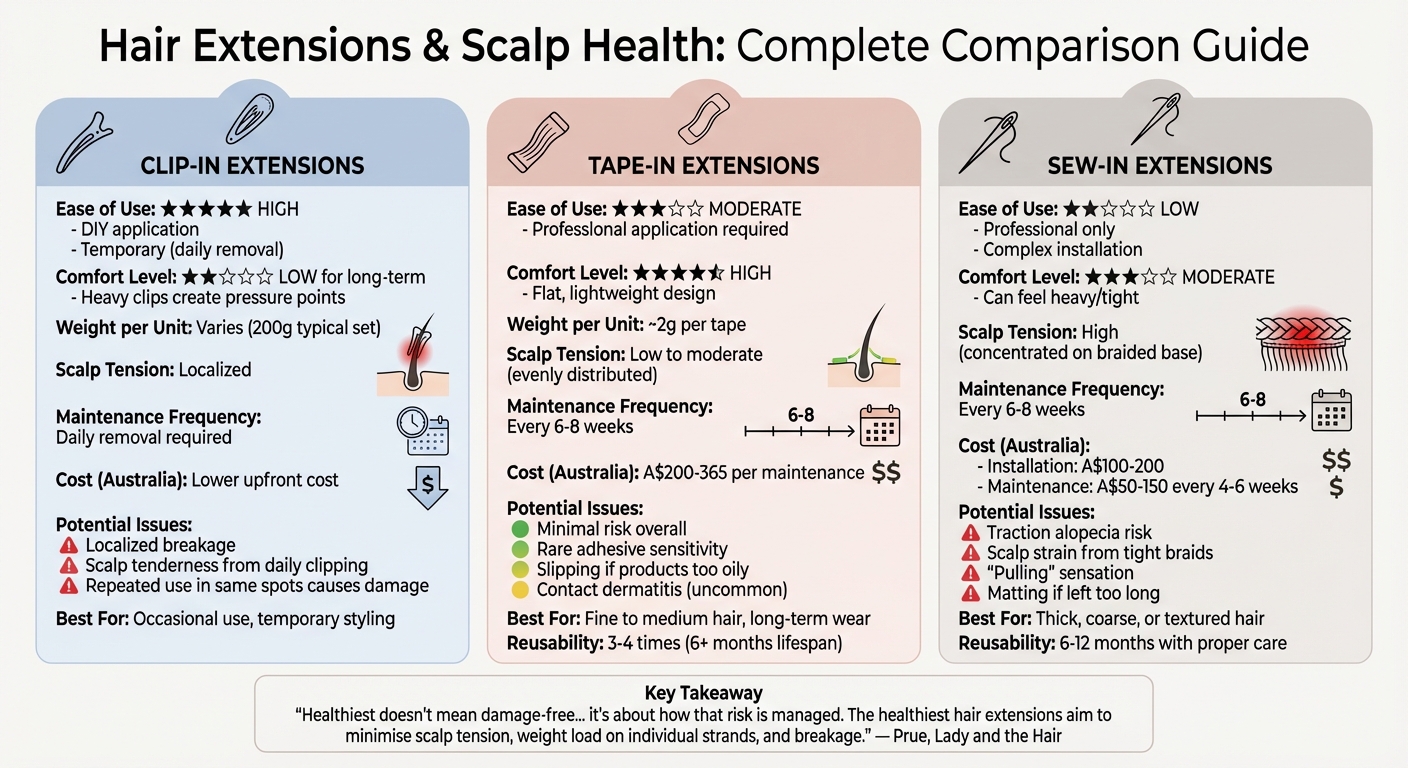
Hair Extension Types Comparison: Scalp Health Impact Guide
Here's a quick look at how different types of hair extensions impact scalp health, based on ease of use, comfort, and potential risks.
| Extension Type | Ease of Use | Comfort Level | Potential Scalp Issues |
|---|---|---|---|
| Clip-in | High (DIY, temporary) | Low for long-term (heavy clips) | Localised breakage, scalp tenderness from daily clipping |
| Tape-in | Moderate (Professional) | High (Flat, lightweight) | Minimal risk; adhesive sensitivity (rare) or slipping if oily |
| Sew-in | Low (Professional only) | Moderate (Can feel heavy/tight) | Traction alopecia, scalp strain, or "pulling" sensation |
This breakdown shows the balance between convenience and potential scalp stress, helping you decide which hair extensions suit your hair type and lifestyle. Clip-ins are great for temporary use and can be removed regularly to give your scalp a break. However, repeated clipping in the same spots can lead to tenderness and breakage. Tape-ins, on the other hand, distribute weight more evenly, making them a comfortable choice with minimal risks - provided they're applied correctly. Research suggests that tape-ins, when done right, are less likely to cause traction alopecia compared to tighter methods like sew-ins.
Sew-ins are a long-lasting option, but they come with a higher risk of scalp strain, especially if the braids are too tight or the wefts are overloaded.
"Healthiest doesn't mean damage-free... it's about how that risk is managed. The healthiest hair extensions aim to minimise scalp tension, weight load on individual strands, and breakage." - Prue, Lady and the Hair
For occasional use, clip-ins are a solid choice. If your hair is fine to medium, tape-ins are often the best option because they're lightweight and gentle on the scalp. For thicker, textured hair, sew-ins can work well, but consistent professional maintenance every 6 to 8 weeks is essential to prevent matting and reduce root tension. No matter the type, managing scalp tension is crucial for maintaining healthy hair while wearing extensions.
Conclusion
Choosing the right hair extensions is also about protecting your scalp and natural hair. Each extension method has its own impact on tension, weight distribution, and scalp health. For example, clip-ins are convenient for daily removal but can cause localised breakage if repeatedly placed in the same spots. Tape-ins, with their flat adhesive panels, distribute weight more evenly, making them a great choice for fine to medium hair. Sew-ins, while durable, require careful installation to avoid excessive tension that might lead to traction alopecia.
It's crucial to consult a qualified stylist before deciding on an extension method. They can assess your hair density and thickness, scalp sensitivity, and growth patterns to help you make the best choice. Regular maintenance is equally important as your natural hair grows. Simple habits, like securing your hair in a loose braid at night, using a silk or satin pillowcase, and brushing gently with an extension-specific brush, can go a long way in maintaining scalp health. These small steps ensure your scalp stays healthy while you enjoy the benefits of hair extensions.
Of course, choosing high-quality extensions is just one part of the equation. Premium extensions can reduce the risk of scalp issues. For example, Hair Wonderland's seamless clip-in sets are made with 100% Remy European human hair and feature Invisi® weft technology, ensuring they blend naturally without adding unnecessary weight. When paired with proper care products like sulphate-free shampoos, gentle detangling brushes, and Moisture Magic (A$39.95), you can maintain the health and appearance of your extensions. In Australia, where quality and professional upkeep are so valued, the right extensions combined with diligent care can protect both your style and your scalp.
FAQs
Which extension type is safest for a sensitive scalp?
Tape-in extensions that use hypoallergenic adhesive are a great option for those with sensitive scalps. Similarly, hand-sewn wefts and clip-in extensions are gentle alternatives, as they help minimise tension and irritation. These choices prioritise comfort, making them less likely to cause scalp discomfort.
How do I know if extensions are causing traction alopecia?
Traction alopecia happens when hair follicles are subjected to long-term tension, often from wearing extensions. Common signs include thinning hair, noticeable hair loss around the hairline or areas experiencing constant pulling, and symptoms like scalp redness or inflammation. If you spot these warning signs, take a close look at your scalp regularly and seek advice from a professional promptly to minimise further harm.
How often should I take breaks from wearing extensions?
Taking regular breaks from wearing extensions is essential for keeping your scalp healthy. By removing extensions at least once a month - or whenever necessary - you give your scalp a chance to breathe and minimise product or residue buildup. This simple step not only promotes better scalp care but also helps your extensions stay comfortable and work well in the long run.