


If your scalp feels sore or irritated after getting hair extensions, you're not alone. Common issues like tight installations, dryness, and product buildup can lead to itching, redness, or even inflammation. Here's how to manage and prevent discomfort:
- Choose lightweight, removable extensions: Clip-ins are gentler than permanent options like tape-ins or bonded extensions. They reduce tension on your scalp and are easy to remove at night.
- Use soothing treatments: Scalp massages, cooling serums with menthol, or natural remedies like aloe vera can ease irritation. Hydrating oils like coconut or jojoba also help combat dryness.
- Prioritise quality: Extensions made from high-grade Remy human hair tangle less, reducing brushing-related irritation. Look for breathable, seamless designs to minimise friction.
- Maintain proper care: Wash extensions gently 2–3 times a week with sulphate-free shampoo. Avoid applying heavy products near the roots or bonds.
For sensitive scalps, Hair Wonderland's Seamless Clip-In Extensions ($499.00) are a great option. Made from 100% Remy human hair, they are lightweight, lie flat against the scalp, and last up to 12 months with the right care. Remember, proper daily and weekly maintenance, along with choosing the right extensions, can make a big difference in keeping your scalp healthy and comfortable.
How to Deal with Hair Extension Allergies and Sensitivities
Selecting Extensions for Sensitive Scalps
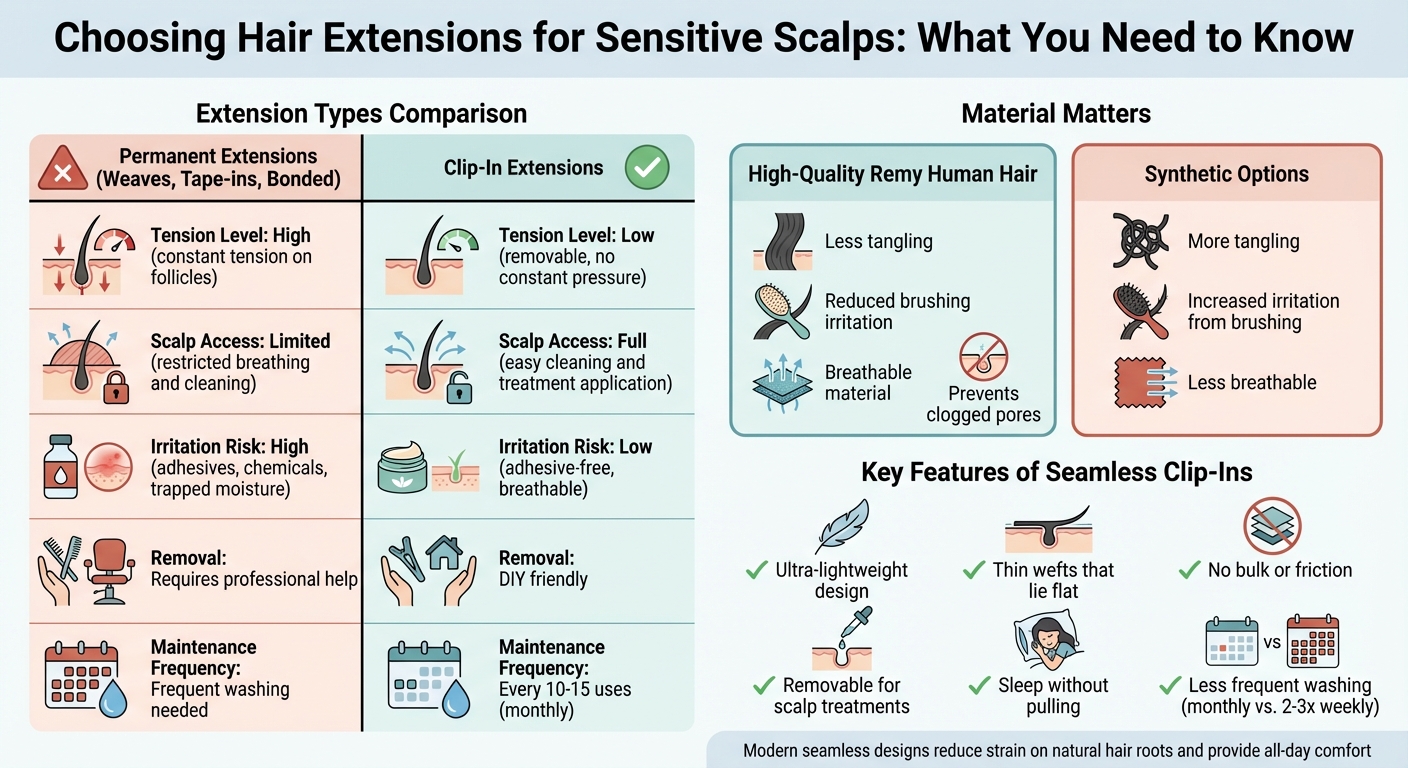
Hair Extension Types Comparison for Sensitive Scalps
Not all hair extensions are created equal, especially when it comes to comfort for sensitive scalps. Permanent options like weaves, tape-ins, and bonded extensions can be harsh on your scalp. They exert constant tension on your hair follicles, which may cause inflammation and ongoing discomfort. Additionally, these methods often rely on adhesives or chemicals that can irritate sensitive skin, leading to allergic reactions or contact dermatitis. Worse still, they restrict your scalp's ability to breathe and rest.
If you're looking for a gentler alternative, clip-in extensions are a game-changer. They’re temporary, adhesive-free, and allow full access to your scalp for proper cleaning. Unlike permanent extensions, which can trap moisture, oils, and styling products, clip-ins minimise product buildup and make scalp care much easier.
The material of the extensions also plays a big role in scalp comfort. High-quality Remy human hair tangles far less than synthetic options, which helps reduce irritation caused by brushing. Extensions made from natural, breathable materials allow moisture to pass through, preventing clogged pores and the itching that often follows.
Benefits of Clip-In Extensions for Scalp Comfort
Clip-in extensions sidestep many of the issues that can trigger scalp sensitivity. Since they’re removable, you can apply hydrating treatments and sleep without worrying about pulling or friction. They also require less frequent washing - typically every 10–15 uses (about once a month) - reducing exposure to shampoos and conditioners that might irritate sensitive skin. Modern seamless clip-ins are designed to be ultra-lightweight, which eases the strain on your natural hair roots. Unlike traditional stitched wefts that can feel bulky, seamless designs use thinner wefts that sit flat against your head, ensuring all-day comfort.
These features make clip-ins an excellent choice for sensitive scalps, especially when considering the advanced designs offered by Hair Wonderland.
Hair Wonderland's Seamless Clip-In Extensions

Hair Wonderland’s Seamless Set 22" ($499.00) is tailored for those with sensitive scalps. Made from 100% ProGrade Remy European Human Hair, these extensions are double-drawn, meaning shorter strands are carefully removed to ensure consistent thickness from root to tip. Using Invisi® weft technology, the extensions feature a super-thin, seamless bond that lies flat against your scalp, eliminating the bulk and friction often associated with traditional wefts. At 200 grams, they provide impressive volume without adding unnecessary weight, so they won’t strain your natural hair. Plus, they shed far less than traditional options, reducing tangling and the tension that comes with brushing.
"These seamless clip-ins are so easy, it's like magic. Plus, they're super lightweight, so they won't put any stress on your natural hair." – Hair Wonderland
Hair Wonderland’s extensions are also well-loved by professionals. Lisa, a hairstylist from Queensland, shares:
"I swear by Hair Wonderland for my clients... The double drawn Russian human hair is a game-changer"
With the right care, these extensions can maintain their quality for 9–12 months, making them a smart choice for anyone dealing with scalp sensitivity.
Quick Relief Methods for Scalp Sensitivity
When your scalp feels sensitive, finding relief quickly can make a big difference. These tips work well alongside proper extension care, whether you're adjusting to new extensions or managing ongoing discomfort.
Gentle Scalp Massages
A simple scalp massage can do wonders. Not only does it ease tension, but it also boosts blood flow, which is great for overall scalp health. Use your fingertips (not your nails) to gently massage your scalp in circular motions for a few minutes each day.
"Gently massage your scalp with your fingertips for a few minutes each day. This stimulates blood flow, which aids in hair growth and keeps your scalp in good condition." – Bombay Hair Australia
For detangling without irritation, try Hair Wonderland's Tangle Tamer Brush (A$21.95). Its flexible teeth glide through hair without pulling, making it safe for both natural hair and extensions. To take your massage to the next level, use a scalp serum containing menthol or colloidal oatmeal for a cooling effect. Follow up with a cooling treatment to further calm irritation.
Cooling and Hydrating Treatments
After improving circulation with a massage, cooling treatments can provide immediate relief. Natural remedies like aloe vera gel work well to soothe inflammation and add moisture. If you're looking for a cooling sensation, mix diluted peppermint or tea tree oil with carrier oils like jojoba or coconut oil, and gently massage the blend into your scalp - avoiding the extension bonds.
For deep hydration, coconut and jojoba oils are excellent choices. Apply them before installing extensions or leave them on overnight to combat dryness. Prefer a ready-made option? Hair Wonderland's Moisture Magic (A$39.95) delivers hydration without leaving heavy residue. Remember, essential oils should always be diluted - add a few drops of tea tree oil to your sulphate-free shampoo instead of applying it directly to your scalp.
Products for Scalp Care
Shampoos and Serums for Sensitive Scalps
If you want to protect your natural oils and maintain the bonds of your extensions, sulphate-free shampoos are a must. Opt for formulas that are also paraben-free and include mild surfactants, as these can keep your scalp comfortable without affecting your extensions.
For relief from itchiness or irritation, anti-itch serums with ingredients like menthol, colloidal oatmeal, or Canadian willowherb are excellent choices. These ingredients work to soothe inflammation, while menthol adds a cooling effect that can ease the tightness often experienced after installing extensions. Here’s a quick guide to ingredients you should look for - and avoid - when choosing scalp care products:
| Product Type | Recommended Ingredients | Ingredients to Avoid |
|---|---|---|
| Shampoo | Sulphate-free, Paraben-free, Mild surfactants | Silicones, Alcohol, Protein, Alkaline |
| Serum | Menthol, Colloidal Oatmeal, Canadian Willowherb | Heavy oils near bonds, High-alcohol formulas |
| Conditioner | Argan oil (for ends only), Lightweight leave-ins | Heavy oils or conditioners near attachment points |
Hair Wonderland Tools and Accessories
Using the right tools is just as important as choosing the right products for keeping your scalp healthy. Hair Wonderland offers tools designed specifically for extension care. For example, their The Detangle Brush (A$29.95) features flexible teeth that gently work through knots without tugging on your scalp or extension bonds. It’s suitable for both wet and dry hair and helps minimise breakage.
"Hair Wonderland's detangling brushes are specially designed so that the teeth flex when needed to ease the knots and detangle painlessly." – Hair Wonderland
Another great option is the Styling Comb (A$12.95), which allows for precise styling without pulling. When brushing, always start at the ends of your hair and work your way up to the roots. Be sure to hold the base of your extensions to reduce tension on your natural hair follicles. This technique also helps prevent matting at the roots, a common cause of scalp itchiness.
sbb-itb-dcde78e
Daily and Weekly Care Routines
Daily Maintenance
Taking care of your hair extensions daily is key to keeping them in great shape and preventing unnecessary stress on your scalp. Brush your extensions 2–3 times a day using a specialised extension brush or a wide-tooth comb. Always start at the ends and work your way up, holding the base of your extensions to avoid tugging on your natural hair.
Never go to bed with wet extensions, as this can lead to tangling and irritation. Before sleeping, gently secure your hair in a loose braid or a low ponytail and use a silk or satin pillowcase to reduce friction. Since extensions don’t benefit from your scalp’s natural oils, apply a lightweight leave-in conditioner or serum to the mid-lengths and ends to keep them hydrated. Be sure to avoid the scalp and attachment points when applying these products. Also, skip tight hairstyles like high ponytails or buns, as they can cause strain on your roots and scalp.
Weekly Care Practices
In addition to your daily routine, a few weekly habits can help maintain both your extensions and your scalp.
Try to limit washing your hair to 2–3 times a week to avoid drying out your scalp or weakening the bonds of your extensions. When washing, keep your head upright - washing it upside down can lead to tangling and put extra pressure on the attachment points. Use a sulphate-free shampoo, lathering it in your hands first, and gently massage it into the scalp between the extensions. Let the shampoo run through the lengths without scrubbing too hard.
If you’re using deep conditioners or hydrating masks, apply them only to the mid-lengths and ends of your hair. Avoid the scalp and attachment areas to prevent the extensions from slipping. After washing, blot your hair with a microfibre towel and blow-dry the roots and attachment points right away on a cool or medium heat setting (below 176°C). This ensures no moisture is left trapped near your scalp, which could cause discomfort or damage. Lastly, check your attachment points weekly for any slipping, matting, or signs of redness on your scalp. Catching these issues early can save you from bigger problems down the line.
Preventing Future Scalp Irritation
Lightweight Extensions and Correct Placement
The weight of your hair extensions plays a big role in scalp comfort. Heavy extensions can tug on your hair follicles, causing inflammation and soreness over time. Choosing lightweight options, like seamless clip-ins, can help reduce this strain. Using high-quality 100% Remy human hair can also make a difference by reducing tangling and the need for excessive brushing, which can irritate the scalp.
Placement is just as important as the weight. Extensions that are installed too tightly or improperly can cause immediate discomfort and even long-term damage. To avoid this, have a licensed professional handle the installation. They’ll ensure the extensions are positioned securely and with minimal tension, allowing the clips to sit flat without digging into your scalp. For example, Hair Wonderland's Seamless Clip-In Extensions use Invisi® weft technology, which makes them lighter at the attachment point and gentler on sensitive scalps.
"The quality of their hair extensions is unmatched. I've tried several brands before, but none have come close." - Sally, Verified Customer
These steps, combined with proper daily care, can go a long way in keeping scalp irritation at bay.
Patch Testing and Hydration
Taking care of your scalp doesn’t stop at installation. Before using any new hair product, it’s wise to do a patch test - especially if the product contains potential irritants like Paraphenylenediamine (PPD). Apply a small amount to your wrist or behind your ear, then wait 24–48 hours to check for any reaction. Catching an issue early can save you from dealing with a full-scalp reaction that could take weeks to heal.
Hydration is another key factor in preventing irritation. Make sure you’re drinking enough water daily and include omega-3-rich foods like salmon and walnuts in your diet to support scalp health from the inside out. For external care, lightweight leave-in conditioners or scalp serums with soothing ingredients like aloe or menthol can help keep your scalp calm between washes. Avoid products with sulphates, parabens, or harsh alcohols (like Ethanol or Isopropyl), as these can strip moisture and lead to dryness.
Conclusion
Scalp sensitivity doesn’t have to stand in the way of achieving the hair you’ve always wanted. The secret lies in choosing extensions that complement your scalp rather than aggravate it. Lightweight options, like Hair Wonderland's Seamless Clip-In Extensions, are a game-changer. Made from double-drawn Russian human hair and featuring Invisi® weft technology, these extensions minimise tension on your scalp while giving you the volume and length you’re after. Priced at $499.00 for a 22" set, they’re a worthwhile investment, lasting 9–12 months with proper care.
As covered earlier, selecting lightweight extensions and placing them correctly are essential for avoiding irritation. Beyond that, your daily care routine plays a big role in maintaining scalp comfort. Simple habits like removing extensions before bed, brushing gently, and treating your scalp to regular massages can make a noticeable difference.
To prevent irritation, take extra steps like patch testing new products, keeping your scalp hydrated, and opting for professional installation when needed. These small measures, combined with consistent care, help maintain a healthy scalp. As Cliphair puts it:
"A healthy scalp provides a stable base for attaching hair extensions, reducing the risk of damage and discomfort."
With the right extensions, tools, and a thoughtful care routine, you can enjoy a seamless hair transformation that feels as good as it looks. Your journey to comfortable, natural-looking hair starts here.
FAQs
How can I soothe scalp sensitivity caused by hair extensions?
Scalp sensitivity caused by hair extensions can be a hassle, but there are practical ways to ease the discomfort. Start by ensuring your extensions are applied with the right amount of tension. Extensions that are too tight can irritate the scalp. A professional stylist can help by adjusting the placement to evenly distribute the weight and reduce any pulling.
Stick to a regular hair care routine by washing your scalp two to three times a week with a gentle, sulphate-free shampoo. This helps remove buildup without stripping your scalp of its natural oils. After washing, apply a few drops of natural oil - like argan or jojoba oil - to keep your scalp hydrated without clogging pores. To avoid unnecessary tugging, use a soft-bristle detangling brush, such as Hair Wonderland’s Detangle Brush, which is designed to be gentle on both your hair and scalp.
If you’re using clip-in or tape-in extensions, try adjusting them from time to time. This allows better airflow and prevents heat or moisture from building up, which can lead to irritation. However, if the sensitivity doesn’t improve, it’s a good idea to consult a professional stylist or a trichologist. They can evaluate your scalp’s condition and may recommend temporarily removing the extensions to give your scalp a break. With the right care, you can enjoy the benefits of hair extensions while keeping your scalp healthy and comfortable.
Why are clip-in extensions a good option for sensitive scalps?
Clip-in extensions are an excellent option for those with sensitive scalps because they skip the need for adhesives, tapes, or sew-in methods that might cause irritation or strain. Instead, they attach with lightweight clips, which ease pressure on the scalp and allow it to breathe, helping to minimise itchiness or discomfort.
Another advantage is how easy they are to adjust. You can distribute the weight evenly across your head, avoiding pressure on sensitive spots. Even better, you can take them out at the end of the day, giving your scalp a well-deserved break and making it easier to maintain proper hygiene. Since there’s no long-term exposure to bonding agents or glues, clip-ins provide a hassle-free and comfortable way to achieve a natural hair transformation without any pain.
How often should I wash my hair extensions to prevent scalp discomfort?
To keep your extensions looking great and avoid scalp irritation, aim to wash them 2–3 times a week. Overwashing can dry them out since extensions don’t get the natural oils from your scalp.
Stick to products made specifically for human hair extensions, like those recommended by Hair Wonderland. These help maintain softness and reduce the risk of irritation. If you’ve been active - whether it’s working out, swimming, or spending time in a polluted area - you can rinse your hair with water. Just try to limit how often you use shampoo. Before washing, gently detangle your extensions with a wide-tooth comb, and avoid scrubbing too hard. This protects both your scalp and your extensions.
By following these steps, you’ll keep your extensions comfortable, looking great, and lasting longer.