


When it comes to caring for hair extensions, the tools you use make all the difference. Brushing and combing serve different purposes, and knowing when to use each can help maintain your extensions and prevent damage.
- Brushing is best for dry hair. It smooths strands, distributes natural oils, and adds shine without stressing the bonds. Use a flexible-bristle brush like the Tangle Tamer ($21.95 AUD) or The Detangle Brush ($29.95 AUD) for daily upkeep.
- Combing is ideal for wet or damp hair. A wide-tooth comb, such as the Styling Comb ($12.95 AUD), gently detangles without pulling on bonds, especially after washing or when handling textured extensions.
Quick Comparison
| Factor | Brushing | Combing |
|---|---|---|
| Best for | Dry hair | Wet or conditioned hair |
| Tool | Flexible-bristle brush | Wide-tooth comb |
| Primary Benefit | Smooths, adds shine, spreads oils | Gently detangles, preserves curls |
| When to Use | Daily, pre-wash prep | Post-wash, styling curly hair |
Using the right tool at the right time protects your extensions, reduces shedding, and keeps them looking flawless. Following a consistent daily care routine ensures long-lasting results. Read on for detailed techniques and product recommendations.
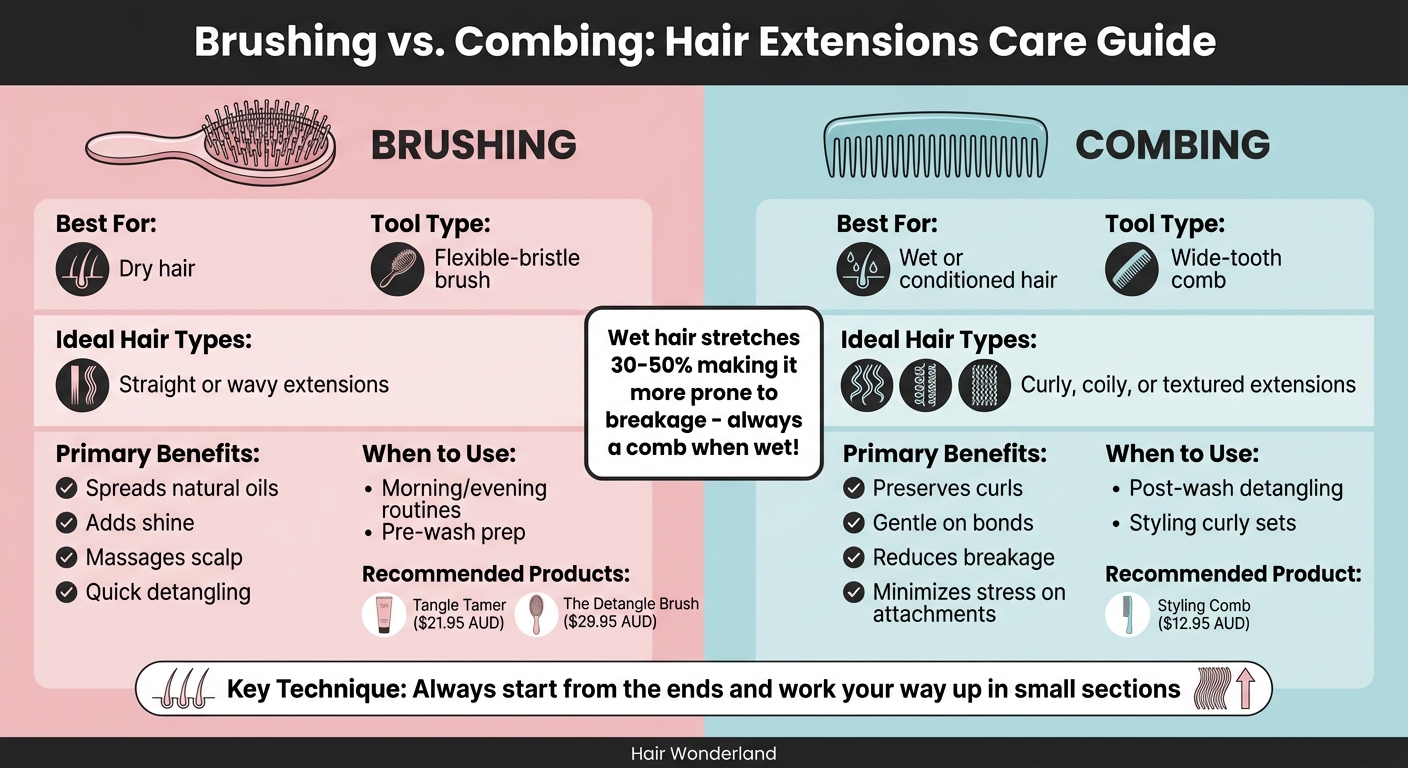
Brushing vs Combing Hair Extensions: Complete Comparison Guide
EVERYTHING YOU NEED TO KNOW ABOUT BRUSHING YOUR GREAT LENGTHS HAIR EXTENSIONS &MORE [ TUTORIAL ]
sbb-itb-dcde78e
How to Brush Hair Extensions
Brushing hair extensions takes a bit of extra care to keep the strands and attachment points intact. The key is to always start brushing from the ends and work your way up in small sections . This approach avoids creating tangles near the bonds or clips and helps reduce shedding.
Hold the extensions securely at mid-length while brushing upward from the ends. To prevent unnecessary strain on the attachment points, consider braiding or loosely tying your hair. Avoid brushing straight from the scalp to the tips, as this can lead to breakage and loosen the bonds.
Make it a habit to brush your dry extensions every day, ideally in the morning. Use gentle strokes - no tugging - and follow up by running your fingers through the hair to ensure the bonds or tape-ins are still secure. Brushing before washing is also a good idea, as it removes loose hair and helps prevent tangling during your shower.
Why Brushing Works for Extensions
Brushing isn’t just about detangling - it also helps distribute natural sebum along the extensions, keeping them nourished and adding shine. Since extensions don’t get nutrients directly from the scalp, this is especially helpful. Plus, the gentle scalp massage that comes with brushing can boost blood flow, which supports the health of your natural hair underneath. Proper dry brushing also reduces breakage and keeps the strands smooth and manageable.
Best Brushes for Hair Extensions
For the best results, consider using brushes specifically designed for hair extensions, like Hair Wonderland's Tangle Tamer Brush ($21.95 AUD) or The Detangle Brush ($29.95 AUD). These brushes feature flexible teeth that bend to ease through knots, minimising damage . Both have received glowing reviews - over 1,000 five-star ratings - with users highlighting how effectively they handle thick hair without snagging.
"Hair Wonderland's Tangle Tamer is specially designed so that the teeth flex when needed to ease knots and detangle painlessly." – Hair Wonderland
The Tangle Tamer’s compact size makes it perfect for touch-ups on the go, keeping tangles at bay throughout the day. Meanwhile, The Detangle Brush, designed by professional hairdressers, boasts a flawless 5.00/5 rating. It’s versatile enough to work on natural hair, extensions, wigs, and weaves. Both brushes glide effortlessly through hair, reducing breakage and split ends while safeguarding your investment in high-quality double-drawn Russian or Mongolian extensions. Up next, we’ll dive into combing techniques tailored for detangling wet extensions without causing damage.
How to Comb Hair Extensions
Combing hair extensions calls for a gentle approach. Start at the ends and gradually work your way up in small sections to avoid putting too much strain on the attachment points. After washing, pat the hair dry with a towel - don’t rub, as this can lead to tangling. Add two pumps of argan oil or a heat protectant to the mid-lengths and ends (essential when heat styling extensions) to make the hair easier to manage. Use a wide-tooth comb to detangle, holding the hair near the base to reduce any stress on the bonds. Keep in mind that wet hair can stretch by 30–50%, which makes it more prone to breakage. Taking these steps ensures your extensions stay in great shape, much like the care required with proper brushing techniques.
Why Combing Works for Extensions
Combing is particularly useful when your extensions are wet or coated with conditioner. The wide spacing between the teeth of a comb reduces the risk of breakage by being gentler on stretched strands. It also helps spread the conditioner evenly, ensuring the hair remains smooth and hydrated. For wavy or curly extensions, combing is a better option than brushing, as it helps maintain their natural texture without flattening them. The best time to comb is right after washing, as the hair is more pliable and easier to manage.
Best Combs for Hair Extensions
For effective styling and gentle detangling, a wide-tooth comb is a must-have. One standout option is Hair Wonderland's Styling Comb, priced at $12.95 AUD. Its wide-tooth design glides smoothly through wet or conditioned hair, avoiding snags on bonds or clips. It’s also perfect for evenly distributing products and achieving precise styling.
This comb is particularly handy after applying leave-in treatments or for taming curls fresh from a styling tong. With a flawless 5.00/5 rating, it’s a trusted tool for maintaining premium extensions, including double-drawn Russian or Mongolian hair. At under $13, it’s an affordable way to elevate your extension care routine with professional-level results.
Brushing Vs. Combing: What's the Difference
Brushing and combing might seem similar, but they serve different purposes and work best in specific situations. Brushing uses tightly packed bristles to smooth hair, spread natural oils, and improve scalp circulation. It's perfect for dry-hair upkeep, adding shine and softness while promoting a healthy scalp. On the other hand, combing relies on widely spaced teeth that glide through hair gently, making it ideal for wet hair, sectioning before styling, and preserving natural curls without disrupting their shape.
Brushes are great for straight or wavy hair, providing a polished look by distributing oils evenly. However, they can be too harsh on wet hair or delicate curls. Combs, with their gentler approach, are better suited for detangling wet strands or managing textured hair, as they minimise breakage and protect bonds, especially when hair is most fragile after washing.
Brushing Vs. Combing Comparison
| Factor | Brushing | Combing |
|---|---|---|
| Best Hair State | Dry hair | Wet or conditioned hair |
| Ideal Hair Type | Straight or wavy extensions | Curly, coily, or textured extensions |
| Primary Benefits | Spreads oils, adds shine, massages scalp, quick detangling | Preserves curls, gentle on bonds, reduces breakage |
| Extension Suitability | Reduces tension on bonds with soft bristles | Minimises stress on attachments |
| Recommended Tool | Flexible-bristle detangling brushes | Wide-tooth comb |
| When to Use | Morning/evening routines, pre-wash prep | Post-wash detangling, styling curly sets |
For those using premium Russian or Mongolian extensions from Hair Wonderland, having both tools is a smart move. The Detangle Brush is designed for daily dry-hair care, with flexible bristles that protect your extensions' bonds. Meanwhile, the wide-tooth Styling Comb is perfect for gently working through wet hair after washing, avoiding unnecessary damage. Choosing the right tool for the job helps prevent issues like split ends, frizz, and shedding, keeping your extensions looking flawless and lasting longer.
When to Brush or Comb Your Extensions
Timing is just as crucial as choosing the right tool when it comes to caring for your extensions. Whether your extensions are wet or dry, using the appropriate method can prevent damage and shedding, helping them stay in great condition for longer.
When Brushing Works Best
Brushing is ideal for dry extensions. Make it a habit to brush your hair in the morning and evening to prevent matting and keep your extensions smooth and polished. This is especially important for straight or wavy extensions, like the seamless clip-ins from Hair Wonderland. Regular brushing helps distribute natural oils, maintaining a healthy and sleek look without straining the bonds.
Before activities like washing or swimming, brushing dry hair can help prevent common hair extension problems like tangles from worsening. For quick fixes during the day, having a tool like the Tangle Tamer ($21.95 AUD) on hand makes it easy to smooth out tangles on the go.
When Combing Is the Way to Go
For damp hair, a wide-tooth comb is your best friend. After washing, combing is a gentler option since wet hair is more prone to breakage. Start at the ends and work your way up, using a tool like Hair Wonderland's Styling Comb ($12.95 AUD) to carefully detangle without causing unnecessary stress.
Combing is also the preferred method for textured or curly extensions. It helps maintain the natural curl pattern without creating frizz or flattening the texture. After swimming, once you’ve rinsed out chlorine or salt water, gently comb through your hair to detangle while protecting the bonds. To minimise tension, hold the hair 2–3 inches above the roots as you comb. By timing your brushing and combing correctly, you’ll complement your overall care routine and keep your extensions looking their best. To stay on track, you can even create a hair extension maintenance schedule tailored to your lifestyle.
Conclusion
Deciding between brushing and combing comes down to the condition of your extensions. Brushing is better suited for dry hair, as it helps distribute natural oils, improves circulation, and smooths out your extensions. On the other hand, combing is the go-to option for wet or damp hair, as a wide-tooth comb gently detangles without causing breakage, especially when preserving curl patterns in textured extensions. Understanding these differences ensures you’re using the right tool for the job.
Using high-quality tools is essential to avoid pulling at knots, causing split ends, or stressing bonds. This is particularly important for premium double-drawn Russian or Mongolian human hair extensions, which need proper care to maintain their long-lasting, natural look. The right tool not only protects your extensions but also helps them last longer, making it a worthwhile investment.
Hair Wonderland offers tools that cater to both brushing and combing needs. The Tangle Tamer Brush ($21.95 AUD) is perfect for quick, on-the-go detangling. For daily maintenance, the Detangle Brush ($29.95 AUD) works through thick hair with flexible teeth that remove knots effortlessly. And for precision styling or gentle detangling after washing, the Styling Comb ($12.95 AUD) provides control without compromising the bonds of your extensions.
FAQs
Can I brush my extensions when they’re wet?
No, brushing wet hair extensions isn't usually a good idea. It can lead to damage and breakage. Instead, allow them to air-dry until they're about 80% dry. Then, carefully detangle them using a wide-tooth comb or a detangling brush. This approach helps protect the extensions and keeps them looking good for longer.
How often should I detangle hair extensions each day?
To keep hair extensions in top condition, gently detangle them 2–3 times a day. Always begin at the ends and gradually work your way up. This method helps reduce breakage and ensures they last longer while looking their best.
Which tool is best for tape-ins, clip-ins, and curly extensions?
For clip-in and curly extensions, stick to gentle brushes such as the Tangle Tamer or a Detangle Brush to avoid pulling and causing damage. If you're using tape-in extensions, wide-tooth combs or detangling brushes are your best bet to keep the adhesive bonds intact. Curly extensions, in particular, work well with flexible-tooth brushes that can detangle without ruining the curl pattern. Always go for tools designed specifically for delicate care to ensure your extensions stay in great condition.