


Hair extensions are a big investment, and how you store them can make or break their lifespan. Proper storage keeps them smooth, shiny, and tangle-free while doubling their usability. Here’s what you need to know:
- Preparation: Always follow a hair extension care routine to clean, detangle, and dry extensions completely before storing. Damp hair can lead to mould, frizz, and odours. Use tools like the Tangle Tamer Brush (AUD $21.95) and lightweight oils to keep them smooth.
-
Storage Options:
- Clip-In Bag (AUD $54.00): Keeps extensions upright, dust-free, and aligned. Perfect for pre-styled hair.
- Hanger Storage: Great for frequent use, ensuring easy access and maintaining alignment.
- Storage Box: Ideal for long-term storage. Use a silk or satin lining to avoid friction and tangling.
- Environmental Protection: Avoid humidity, sunlight, and dust, which can damage extensions. Store in a cool, dark, and dry space.
- Travel Tips: Use silk-lined carriers or the original box for protection. Always pack them in your carry-on to avoid damage from rough handling.
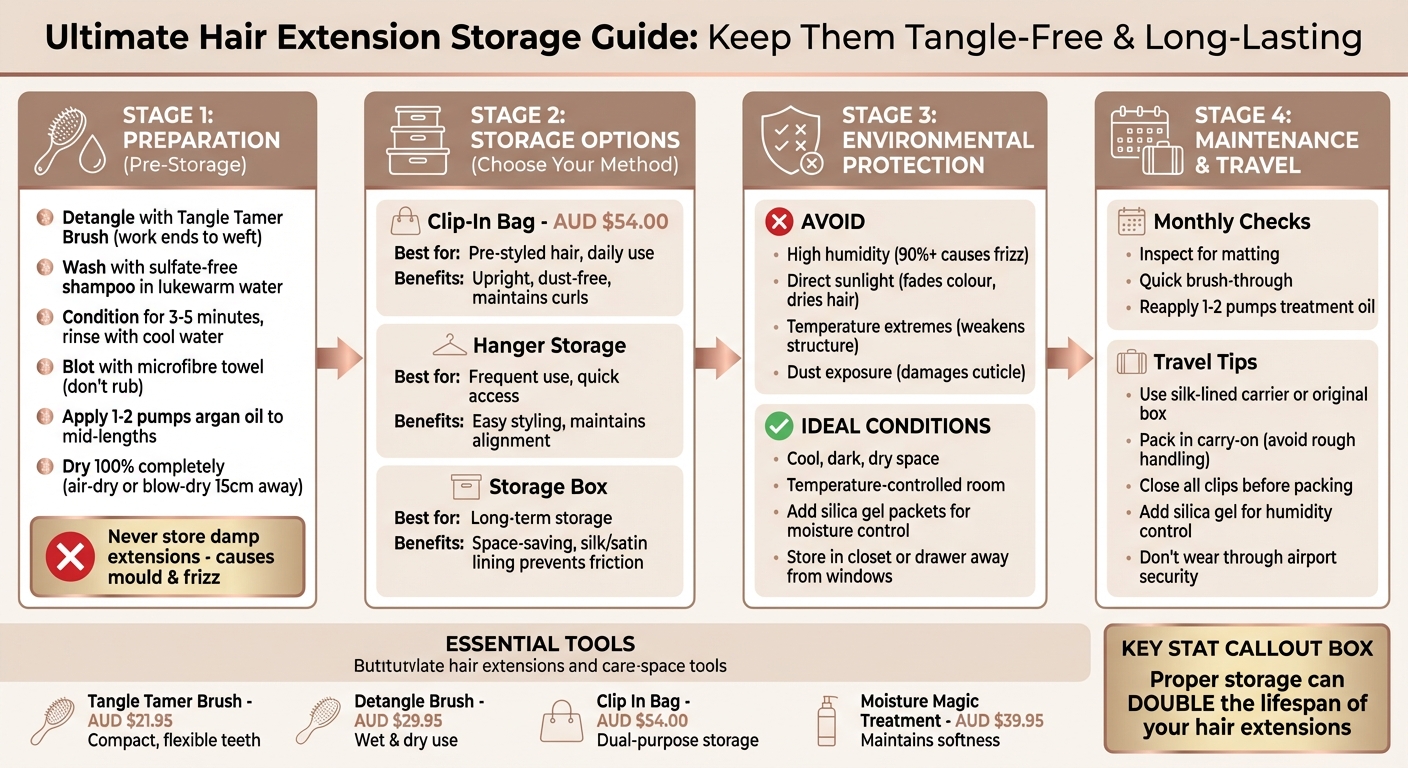
Complete Hair Extension Storage Process: From Cleaning to Long-Term Protection
How to Store Hair Extensions When Not in Use - ft. ZALA Protect Me Bag
sbb-itb-dcde78e
How to Prepare Hair Extensions Before Storage
Taking the right steps to prepare your hair extensions before storage can save them from matting, mould, and long-term damage. Cleaning, detangling, and drying them thoroughly are key to keeping them in good condition. Even small amounts of leftover product or moisture can cause serious issues.
Cleaning and Detangling
Start by gently detangling your extensions with a Tangle Tamer Brush (AUD $21.95) or a wide-tooth comb. Always work from the ends upward toward the weft to avoid breakage. Once detangled, soak the extensions in lukewarm water mixed with a sulfate- and paraben-free shampoo. Gently swish them around - don’t rub, as this can lead to tangling.
After shampooing, apply conditioner to the mid-lengths and ends, letting it sit for 3–5 minutes before rinsing with cool water. This step helps seal the cuticle and keeps the hair smooth. When drying, blot the extensions with a microfibre towel or a soft cotton T-shirt. Avoid rubbing or wringing them out, as this can cause damage. To maintain softness, apply 1–2 pumps of argan oil or a lightweight treatment like Moisture Magic Treatment (AUD $39.95) to the mid-lengths and ends. Once clean and detangled, the extensions need to be completely dry before storage.
Drying Extensions Completely
Drying your extensions thoroughly is non-negotiable if you want to avoid problems like mould, frizz, or lingering odours.
"The storage of damp extensions creates major problems, which include mold growth and frizz formation, and unpleasant odours." – Josef Mohamed, Content Marketer and Web Designer, Thathair AU
After blotting excess water, either air-dry the extensions or use a blow-dryer on a low-to-medium heat setting. For more tips on using tools safely, see our guide to heat styling extensions. Keep the dryer at least 15 cm away from the hair to prevent heat damage. Make sure they are 100% dry before storing. If you’re dealing with humid weather, consider adding silica gel packets to your storage container to absorb any extra moisture. Finish the process with a final brush-through to ensure they’re sleek and ready to be stored.
Storage Methods That Prevent Tangling
Once your extensions are clean, detangled without damage, and completely dry, storing them properly is key to keeping them aligned, free from dust and humidity, and tangle-free. The best storage method depends on how often you use your extensions and the space you have available. Below are three practical options to match different needs and lifestyles.
Using a Clip-In Bag
A Clip-In Bag (AUD $54.00) is a great all-in-one option for storing clip-in extensions. It features a coat-hanger-style hook combined with a zippered enclosure, which keeps your extensions upright, crease-free, and fully protected. By hanging the extensions, they stay aligned, and the zippered bag prevents dust and friction while allowing airflow - something plastic bags can’t do, as they often trap humidity and create static. This method is ideal if you’ve pre-styled your extensions with curls or waves, as the hanging position helps maintain the shape without flattening or crushing the style. Always secure the clips before storing to avoid snagging.
Hanger-Based Storage
If you use your extensions frequently, hanger-based storage offers quick access and helps maintain their alignment. Use a velvet or padded hanger to keep the hair straight and ready for styling. You can even curl or straighten the extensions while they’re hanging. Opt for a hanger with a wide opening or specialised clips that hold the weft securely without causing damage. To protect the extensions from dust, you can drape a breathable fabric cover over the hanger or use a clip-in bag with a hanger attachment. This method is perfect for daily users who want to avoid the hassle of detangling before each use.
Storage Box Technique
For long-term storage or when closet space is limited, a storage box works well. Secure the extensions near the weft with a soft hair tie, then gently roll or lay them in a loose shape to maintain their structure. Use the original box or a clean shoebox lined with silk or satin to minimise friction on the hair cuticles. Store the box in a cool, dark, and dry spot - like a closet or drawer - away from direct sunlight, which can fade the colour and dry out the hair. To ensure they stay in good condition, check your extensions monthly and give them a quick brush if needed to prevent matting.
Tools for Maintaining Tangle-Free Extensions
To complement the cleaning and storage tips mentioned earlier, having the right tools can make all the difference in keeping your extensions in top condition by following an ultimate guide to brushing hair extensions. Hair Wonderland provides three must-have products designed to tackle tangles and maintain your extensions' quality between uses.
The Tangle Tamer Brush (AUD $21.95) is a handy, compact brush that easily fits into your handbag, making it perfect for quick touch-ups throughout the day. Its flexible teeth gently work through knots in both wet and dry hair, helping to minimise breakage and splitting. As Hair Wonderland puts it:
"Hair Wonderland's Tangle Tamer Brush is specially designed so that the teeth flex when needed to ease knots and detangle painlessly."
This brush is great for preparing your extensions before storage and for keeping them smooth while you're out and about.
For a more advanced detangling option, the Detangle Brush (AUD $29.95) is an excellent choice. It effortlessly glides through hair, reducing knots and safeguarding your extensions from damage. Hair Wonderland highlights its versatility:
"This hair brush glides through wet and dry hair helping to reduce hair breakage and splitting, it works wonders on natural hair, hair extensions, wigs and weaves."
Using this brush as part of your daily routine - especially before washing or storing your extensions - can help keep tangles at bay and prolong their lifespan.
Lastly, the Clip In Bag (AUD $54.00) is a dual-purpose tool that not only organises your extensions but also helps maintain their shape and smoothness. By securely hanging your extensions, it ensures they stay neat and ready for use.
With these tools in your arsenal, managing tangles becomes much easier. Up next, learn how to protect your extensions from environmental stressors.
Protecting Extensions from Environmental Damage
Even when stored correctly, extensions can still face challenges from environmental factors. Humidity, temperature changes, sunlight, and dust can all take a toll, leading to tangles, frizz, and a shorter lifespan. Knowing how to counteract these threats is key to keeping your extensions in top condition between uses. These precautions work hand-in-hand with proper storage techniques.
Avoiding Humidity and Temperature Extremes
Humidity is a common culprit when it comes to damaging hair extensions. High humidity levels (around 90%) can cause extensions to absorb moisture, resulting in frizz and a rough texture. As Black Girl Curls explains:
"In high humid conditions (around 90% or so), humectants can actually attract too much water in the air and have a reverse effect to your natural hair causing frizz, fluffiness and your style not lasting as long."
Storing damp extensions or leaving them in moisture-rich environments like bathrooms can lead to unpleasant odours, mildew, and even fibre breakdown. On the flip side, overly dry conditions - often caused by indoor heating during winter - can make extensions brittle and more likely to break. Sudden temperature swings can also disrupt the moisture balance within the hair, weakening its structure.
To protect your extensions, avoid storing them in cars, near heating vents, or in any space prone to temperature extremes. Instead, opt for a temperature-controlled room with moderate humidity. Adding silica gel packets to your storage box can help absorb excess moisture. By maintaining balanced conditions, you can preserve the hair's texture and strength.
Shielding from Sunlight and Dust
Sunlight is another hidden threat to hair extensions. Prolonged exposure to UV rays can fade their colour and dry out the strands. Josef Mohamed from Thathair AU highlights this issue:
"The colour of your extensions will fade when they are exposed to sunlight and other forms of light."
Even indirect sunlight through windows can weaken hair fibres over time. Dust is equally problematic, as it damages the cuticle, leading to tangles, matting, and a dull appearance. Fabulive notes:
"improper storage exposes extensions to friction, moisture, dust, and pressure, all of which weaken the cuticle over time"
To minimise exposure, store your extensions in dark, enclosed spaces like closets or opaque storage boxes. For instance, the Hair Wonderland Clip In Bag (mentioned earlier) is a great option for keeping dust at bay while allowing airflow. If you prefer using drawers, line the bottom with a cotton towel, place your extensions on top, and cover them with another layer of cotton for added protection. Regularly inspect and gently brush your extensions to remove any dust before it causes tangling or matting.
Travelling with Hair Extensions
Taking proper care of your hair extensions while travelling is just as important as storing them correctly at home. Travel can expose your extensions to tangling, friction, and dry cabin air, but with careful packing and smart storage, you can keep them looking their best. Here’s how to protect your extensions on the go.
Choosing Portable Storage Solutions
A travel carrier is a great investment. Look for zippered carriers lined with silk or satin, as these materials help prevent frizz and tangling by reducing friction on the hair cuticle. As Jodi Snowden of HALOCOUTURE notes:
"The material feels 'velvety' which '[helps] keep the integrity of your hair extensions, so they don't get really frizzy'".
One option is the Hair Wonderland Clip In Bag ($54.00), which not only keeps dust out but also allows proper airflow. Some carriers even come with built-in hangers to keep your wefts aligned and prevent them from bunching. If you're tight on space, consider foldable carriers designed to fit snugly into your luggage. Alternatively, your original storage box can provide excellent protection against crushing, though it might be bulkier than a soft carrier.
Once your extensions are stored securely, you’ll want to pack them carefully to avoid damage during travel.
Packing Extensions Safely
Before packing, gently detangle your extensions, working from the ends up to the roots. Ensure they are completely dry and that all clips are securely closed to avoid snagging on the bag lining or other items.
For longer or textured extensions, lightly braiding them can minimise friction and tangling. If you’re using a carrier with a hanger, slide the hanger into the carrier and place it on top of soft clothing in your suitcase. Avoid placing extensions at the bottom of your luggage, where they could be crushed by heavier items.
For added protection, pack your extensions in your carry-on luggage. Checked bags are often subject to rough handling, pressure changes, and temperature fluctuations, all of which could damage your extensions. If you’re going through airport security, it’s best not to wear clip-in extensions, as the metal clips may trigger detectors and require removal in public. Finally, consider adding a silica gel packet to your storage container to help control humidity and reduce frizz, especially if you’re travelling to a humid destination.
Conclusion
Keeping your hair extensions smooth and tangle-free comes down to preparation, smart storage, and the right tools. Before putting them away, ensure they’re detangled, completely dry, and that the clips are securely closed. Storing damp extensions can lead to mould, frizz, and unpleasant smells, while open clips might snag and damage the wefts.
Your storage method matters too. For long-term protection, a storage box works well. For daily use, a hanger system is convenient. Alternatively, the Hair Wonderland Clip In Bag ($54.00) offers breathable, dust-free storage. Wherever you store them, keep extensions away from humidity, sunlight, and dust to avoid colour fading and fibre damage.
Using quality tools makes maintenance easier. The Hair Wonderland Tangle Tamer Brush ($21.95) is designed to detangle gently without causing breakage. To keep your extensions hydrated, apply 1–2 pumps of treatment oil daily. Since extensions don’t get natural nutrients from your scalp, adding moisture externally is key to preventing dryness and brittleness.
Routine checks and careful handling during travel help extend the life of your extensions. Inspect them monthly to catch any issues early and re-brush to avoid matting. When travelling, use a dedicated carrier or the original storage box, and always pack them in your carry-on to protect them from rough handling and temperature changes.
FAQs
How do I know my extensions are fully dry before storing?
To keep your extensions in top condition before storing, ensure every part - roots and attachments included - is completely dry. There should be no trace of dampness. Let them air dry naturally in a warm, well-ventilated space. Storing them while damp can cause problems like mould, frizz, or bad odours, so double-check they’re fully dry before putting them away.
What’s the best storage method for my extension type?
The way you store your extensions plays a big role in keeping them in good condition. For clip-in extensions, use a soft bag, box, or case, and make sure to store them in a cool, shaded spot with low humidity. Before storing, close the clips and gently brush the extensions, starting at the ends and working up to the roots.
When it comes to tape-in or keratin extensions, cleanliness and dryness are key. Lay them flat in a container to prevent tangles and protect them from moisture or heat exposure. Proper storage can help maintain their quality and extend their life.
How often should I check extensions in long-term storage?
To maintain your hair extensions in top shape, give them a thorough inspection every 3–6 months. Check that they’re clean, completely dry, and free from tangles or any signs of damage. Regularly doing this can help you avoid problems like mould, frizz, or tangling - issues that often arise when extensions are stored in places with changing humidity or temperature. Sticking to this easy routine keeps your extensions looking fresh and ready whenever you need them.