


Hair extensions require proper storage to maintain their condition, especially in Australia's varied climates. Humidity can cause swelling, frizz, tangling, and even mould, while dry air dehydrates extensions, leading to brittleness and static. Here's how to protect your investment:
- In humid areas (e.g., Brisbane, Darwin): Store extensions in breathable containers with silica gel sachets to absorb moisture. Ensure they are completely dry before storing to prevent mildew or odours.
- In dry regions (e.g., inland SA/WA, air-conditioned homes): Lightly mist extensions with leave-in conditioner and apply a small amount of oil to prevent dryness. Avoid storing near heaters or vents.
Key tips for all climates:
- Use satin or silk-lined storage bags to reduce friction and static.
- Keep extensions in cool, dark, temperature-controlled areas away from sunlight or heat.
- Regularly inspect and detangle extensions to prevent lasting damage.
How to Store Your LHS Raw Hair Extensions
How Humid Air Affects Extensions
When human hair extensions are exposed to humid air, the strands absorb moisture and swell, which causes the cuticle layer to lift and become rough. This change increases friction between hairs, leading to frizz, puffiness, and difficulty in managing the extensions. Unlike natural hair, extensions react to humidity more dramatically, often resulting in rapid frizz, tangling, and a loss of their styled appearance. These changes create a range of storage challenges, as outlined below.
Problems Caused by Humid Storage
Humidity can wreak havoc on extensions in several ways. First, they lose their styled shape - sleek, straight extensions may develop kinks or bends, while beach waves often turn into undefined frizz or uneven curls. This happens because moisture disrupts the hydrogen bonds in the hair, altering its shape. Additionally, the rough, swollen cuticle causes strands to stick together, leading to tangles and matting, especially if the extensions are loosely coiled or stacked in a box. This tangling not only ruins the style but also increases shedding and breakage when detangling.
Storing damp extensions or keeping them in poorly ventilated spaces can trap moisture, creating the perfect conditions for mould and mildew to grow. These issues often occur on the hair fibres and at the base of wefts or clips. Early signs include a musty or “wet towel” smell, discolouration or dull patches, and strands that feel tacky or rough even after brushing. If you live in areas like coastal Queensland or the Top End, pay close attention to odours, especially after heavy rains or during the wet season.
Humidity also speeds up corrosion and tarnishing of metal parts such as clips, micro-rings, and other attachments. Moisture on exposed metal parts accelerates oxidation, leading to dark spots, rust-like marks, or clips that lose their tension. These roughened edges can snag and damage hair strands. If extensions are stored with traces of sweat, salt from ocean swims, or styling products on the metal, the combination of residue and humidity makes degradation happen even faster.
Recommended Humidity Levels
To keep human hair extensions in good condition, aim for an indoor relative humidity (RH) level of 40–60%. At this range, the hair retains enough moisture to stay soft and flexible without excessive swelling, frizz, or the risk of mildew. Humidity levels above 60% RH significantly increase the chances of musty smells, microbial growth, and metal clip corrosion.
Australians in humid areas can monitor storage conditions using a compact digital hygrometer placed in wardrobes or drawers, or by using colour-changing humidity indicator cards inside storage containers. Avoid storing extensions in bathrooms, laundries, or wardrobes near damp exterior walls, as these spaces tend to stay too humid. Instead, opt for bedroom wardrobes away from ensuites or use interior cupboards in air-conditioned spaces.
How to Store Extensions in Humid Climates
Preparing Extensions Before Storage
After using your extensions, it’s important to clean them thoroughly. Use a sulphate-free shampoo and a hydrating conditioner to remove sweat, salt, and product build-up. Rinse well to ensure no residue is left behind, as this can attract moisture. Gently press out excess water with a microfibre towel to minimise frizz without damaging the strands.
Let the extensions air-dry completely by laying them flat on a clean towel or a mesh rack in a well-ventilated indoor space. Turn them over occasionally to ensure even drying. Never store extensions while they’re still slightly damp, as this can lead to mould or unpleasant odours. Once dry - down to the wefts and attachment points - use a loop brush or the Hair Wonderland Detangle Brush to gently smooth the strands, working from the ends up to the roots. Be careful not to stress the clips or stitching. If the hair feels a bit dry after washing, apply a small amount of lightweight oil, like argan or jojoba, to the mid-lengths and ends. Avoid the roots and clips to prevent build-up. Heavy products like creams, waxes, hairsprays, or strong-hold gels should also be avoided before storage, as they can trap moisture and dust. Once your extensions are fully dry and prepped, it’s time to pick the right storage solution.
Choosing the Right Storage Containers
When it comes to storage, opt for breathable, dust-proof containers that protect your extensions while allowing some airflow. Satin or silk pouches, satin-lined boxes, or storage bags with hangers are great options. These materials reduce friction, which helps prevent frizz and tangling, and they don’t trap humidity like non-ventilated plastic containers might. The Hair Wonderland Clip In Bag is a convenient choice - it combines a hanger with a protective fabric cover, letting you store extensions hanging straight while keeping them safe from dust and excessive light. This is especially handy for humid Australian wardrobes.
Before packing, close all clips to prevent them from snagging on fibres or other wefts. For longer extensions, lay them flat and either fold them gently in half or loosely roll them from the ends toward the base. Avoid tight rolls, as these can create kinks that are more noticeable in humid conditions. Steer clear of airtight plastic bags or rigid, unventilated containers, as these can trap moisture and lead to mildew if any dampness remains.
Controlling Moisture in Storage Areas
To keep your extensions in top condition, store them in a cool, dry, and stable-temperature environment. In Australian homes, ideal spots include an internal wardrobe in a bedroom, a linen cupboard away from the bathroom, or a dressing room with consistent air-conditioning. Avoid areas prone to humidity spikes, such as bathrooms, laundries, kitchens, or spaces near windows and sliding doors.
To manage moisture levels, place silica gel sachets, reusable desiccant canisters, or calcium chloride dehumidifier packs near your storage area. These moisture absorbers are especially useful in coastal or tropical regions. Make sure to replace or recharge them regularly, particularly during the wet season. If the room is especially humid, consider using an electric dehumidifier to maintain an indoor relative humidity of around 40–50%.
For premium extensions, such as double-drawn Russian or Mongolian human hair from Hair Wonderland, it’s a good idea to check on them every four to six weeks. Briefly remove them from storage, inspect for any signs of odour or frizz, gently detangle with a brush, and refresh the moisture absorbers if needed. This small effort can go a long way in keeping your extensions looking flawless.
How Dry Air Affects Extensions
Problems Caused by Dry Storage
When stored in low-humidity environments, extensions lose moisture rapidly. This moisture loss causes the cuticle to lift, leaving the fibres rough, stiff, and prone to brittleness. Unlike natural hair, extensions don’t have the scalp’s natural oils to help maintain elasticity, making them more vulnerable to breakage during brushing or styling.
In these conditions, extensions can feel rough or even squeaky to the touch. Static can also build up, making the hair harder to manage and style. Dry air intensifies texture issues and tangling, leaving the strands more likely to knot. When you try to detangle these knots, the weakened hair may shed or break near the weft. You might notice frayed or thinned ends, with short, broken pieces left behind in your brush. This not only affects the overall appearance but also makes styles harder to maintain - curls may fall flat, and achieving a smooth, polished finish may require extra products or heat tools. These challenges are especially noticeable in Australian indoor environments, where dry air is common.
Dry Air in Australian Homes
The problem is often made worse by the typical indoor conditions found in Australian homes. Air conditioning and heating systems quickly reduce indoor humidity, accelerating moisture loss from hair extensions. During summer, refrigerated air conditioning dries the air further as it cools, which means even humid coastal areas can experience dry indoor conditions with prolonged AC use. Over time, the constant flow of conditioned air across wardrobes or shelves can strip moisture from extensions, especially if they’re not stored in protective containers.
Extensions kept in areas near air-conditioning vents, wall-mounted split systems, or portable heaters are particularly at risk. Walk-in wardrobes with extraction fans can become extremely dry during winter. Homes in drier inland regions or newer, well-insulated buildings with naturally low humidity levels are even more prone to creating dehydrating environments when heating or cooling systems are running. These conditions make proper storage and care for extensions essential to prevent damage.
sbb-itb-dcde78e
How to Store Extensions in Dry Climates
Adding Moisture Before Storage
Before storing your extensions in dry conditions, it’s important to replenish their moisture. Once the hair is completely dry, lightly mist a silicone-free, lightweight leave-in conditioner over the mid-lengths and ends. Then, rub one to three drops of argan or jojoba oil between your palms and gently work it through the hair, steering clear of the roots and attachment points. This step helps combat dryness and keeps your extensions feeling soft and natural. In very dry Australian homes, especially those with constant air conditioning or heating, you may need to repeat this light hydration routine every few wears. However, if the hair feels limp or waxy, skip the oil and use a gentle cleanser to remove any product build-up.
Selecting Storage Containers for Dry Climates
Once you’ve sealed in moisture, choosing the right storage container is essential to keep your extensions in good shape. Satin or silk pouches, satin-lined boxes, or breathable storage bags are ideal, as they minimise friction and static, protecting the hair cuticle and reducing frizz. Avoid using regular plastic bags, which can create static and trap residual product, leading to dullness. Before storing, gently detangle the extensions and loosely braid them into one or two sections, securing the ends with a soft elastic. This keeps the strands aligned, preventing tangling and static, so they’re ready to wear with minimal brushing when you take them out.
Mistakes to Avoid in Dry Climates
Even with proper hydration and storage, certain mistakes can still harm your extensions. Avoid storing them near heaters, fireplaces, air-conditioning vents, or sunny windows. In dry climates, exposure to constant airflow or UV light can quickly deplete moisture, fade colour, and make the fibres brittle. Also, never store your extensions without brushing them first - tangles that dry out can become compacted, leading to matting and breakage when detangling later.
Excessive use of heat tools to dry extensions is another common misstep, as it strips moisture and weakens the cuticle. Instead, always air-dry your extensions fully before storing them. Detangle them gently, limit heat styling, and keep them in breathable, satin-lined containers away from heat and light sources. For regular maintenance, inspect and carefully brush your extensions every one to two weeks. If you notice dryness in clean extensions, lightly mist some leave-in conditioner and apply a drop or two of light oil to the ends before putting them back into storage.
For premium double-drawn human hair extensions, like those from Hair Wonderland, following these care steps can help maintain their softness, protect the cuticle, and ensure a seamless, natural look for months. Consistent care not only keeps your extensions looking their best but also protects your investment over time.
Humid vs. Dry Air: Storage Comparison
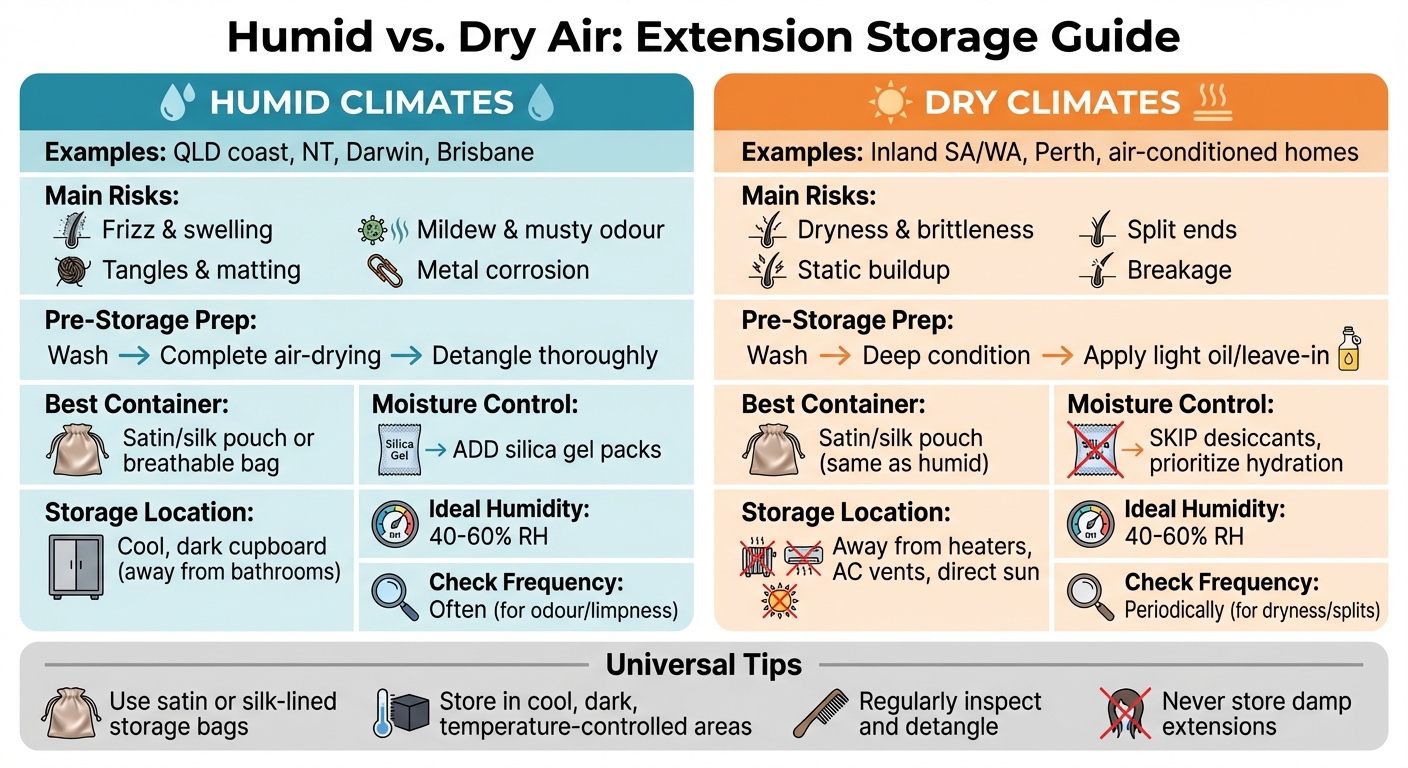
Hair Extension Storage Guide: Humid vs Dry Climate Comparison
Comparison Table
Humidity and dryness can both wreak havoc on hair extensions, but in different ways. Humid air leads to swelling, frizz, and even mildew, while dry air can sap moisture from extensions, causing brittleness and static.
| Factor | Humid Air (e.g., QLD coast, NT) | Dry Air (e.g., inland SA/WA, winter interiors) |
|---|---|---|
| Main risk | Frizz, swelling, tangles, mildew, musty odour | Dryness, brittleness, static, split ends |
| Pre-storage prep | Wash, ensure complete air-drying, detangle thoroughly | Wash, condition deeply, apply light oil or leave-in product |
| Best container | Satin or silk pouch, satin-lined box, or breathable bag | Same satin or silk container to reduce friction and static |
| Moisture control | Add silica gel packs or moisture absorbers to storage area | Skip desiccants; prioritise hydration before storing |
| Storage location | Cool, dark cupboard away from bathrooms and windows | Away from heaters, direct sun, and strong AC vents |
| Check frequency | Check often for odour or limpness | Inspect periodically for dryness and split ends |
This table offers practical tips to help you adjust your storage routine based on the surrounding climate.
Adjusting Storage When Conditions Change
Changing climates call for tweaks in how you store your extensions. If you're moving from humid to dry conditions, focus on adding moisture. Use a richer conditioner during washing or apply a lightweight oil to the mid-lengths and ends before storing. Keep extensions in a satin pouch placed inside an enclosed case to help retain hydration.
On the other hand, if you're heading from a dry to a humid environment (like Perth to Cairns), moisture control becomes the priority. Ensure extensions are completely dry before storage - any leftover dampness can lead to mildew in high humidity. Add a silica gel sachet to your storage pouch and avoid plastic bags, as they can trap condensation. If you notice frizz or limpness after arrival, re-wash your extensions with a gentle, sulphate-free shampoo. Let them air-dry thoroughly in a well-ventilated space, then store them with a moisture absorber.
For high-quality extensions, these adjustments are key to protecting the cuticle and maintaining softness, no matter the climate. Taking a little extra care ensures your extensions stay natural-looking and last longer, whether you're at home or on the move.
Conclusion
Humidity can lead to swelling, frizz, and even mildew, while dry air dehydrates and weakens hair extensions. By understanding how climate impacts your extensions, you can adopt the right storage practices to protect them. Simple steps like using gentle shampoos, ensuring extensions are completely dry before storing, and choosing an appropriate storage location can go a long way in preventing damage across Australia's diverse climates.
Investing in quality storage tools also simplifies daily care. For instance, a satin or silk pouch minimises friction and static, and a detangling brush keeps wefts smooth without causing shedding. If you’re using Hair Wonderland’s premium double-drawn Russian or Mongolian human hair extensions, pairing them with purpose-made accessories helps maintain their natural density and softness. With proper care, these extensions can stay in excellent condition for up to 12 months, ensuring you get the most out of your investment.
For climate-specific care, here are a few quick tips:
- Humid areas (like coastal Queensland): Add silica gel sachets to your storage pouch to combat moisture.
- Dry regions (such as inland South Australia, Western Australia, or air-conditioned homes): Apply a light oil to the mid-lengths and ends before storing to prevent dryness.
These small adjustments help preserve the alignment of the cuticles and prevent long-term damage. Adopting a storage routine tailored to your climate ensures your extensions retain their natural integrity.
Whether you’re navigating Darwin’s humid summers or Perth’s dry winters, quality hair is just the starting point. Proper storage - using breathable containers, gentle brushes, and climate-smart habits - is the key to maintaining the shine, softness, and durability of Hair Wonderland’s premium extensions.
FAQs
How do I stop hair extensions from getting mouldy in humid weather?
To keep your hair extensions mould-free in humid weather, make sure they are thoroughly dry before putting them away. Store them in a cool, airy spot and consider using moisture-absorbing items like silica gel packs to help manage humidity levels.
Steer clear of storing extensions in sealed plastic bags or containers for extended periods, as this can lock in moisture. It's also a good idea to check and clean your extensions regularly to keep them fresh and dry.
How should I store hair extensions in dry air to keep them in good condition?
To keep your hair extensions in good condition during dry weather, store them in a breathable, protective container, like a silk or satin pouch. These materials help maintain their natural moisture, preventing them from becoming dry or brittle. Make sure to place them in a cool, dark spot, away from direct sunlight, heaters, or any other heat sources that could dry out the hair and lead to damage. Storing them properly will keep your extensions smooth, soft, and ready for use whenever you need them.
How does humidity impact the metal components of hair extensions?
Excess moisture in the air can take a toll on the metal parts of hair extensions, like clips or attachment points. Over time, this can lead to corrosion or tarnishing, and in some cases, even rust. Once rust sets in, it can compromise the strength and lifespan of your extensions.
To keep your extensions in top shape, make sure to store them somewhere cool and dry, away from humid conditions. A protective storage bag is a great option to add an extra layer of defence against moisture.