


Hair extensions are an investment, and proper storage is key to maintaining their quality and lifespan. Poor storage can lead to tangles, frizz, and even damage like mould or mildew. Here’s what you need to know to keep your extensions looking their best:
- Clean and Condition: Use sulphate-free shampoo and conditioner to remove buildup and keep extensions soft.
- Dry Completely: Ensure extensions are fully dry before storage to prevent mould or odours.
- Detangle and Organise: Brush carefully and secure extensions using hangers, silk pouches, or storage bags.
- Choose the Right Spot: Store in a cool, dry place, away from sunlight, heat, or humidity.
- Inspect Regularly: Check for moisture or damage and reorganise to avoid compression.
Using tools like extension-specific hangers or satin-lined pouches can help protect your extensions. With the right care and storage techniques, you can extend their lifespan and keep them ready for any occasion.
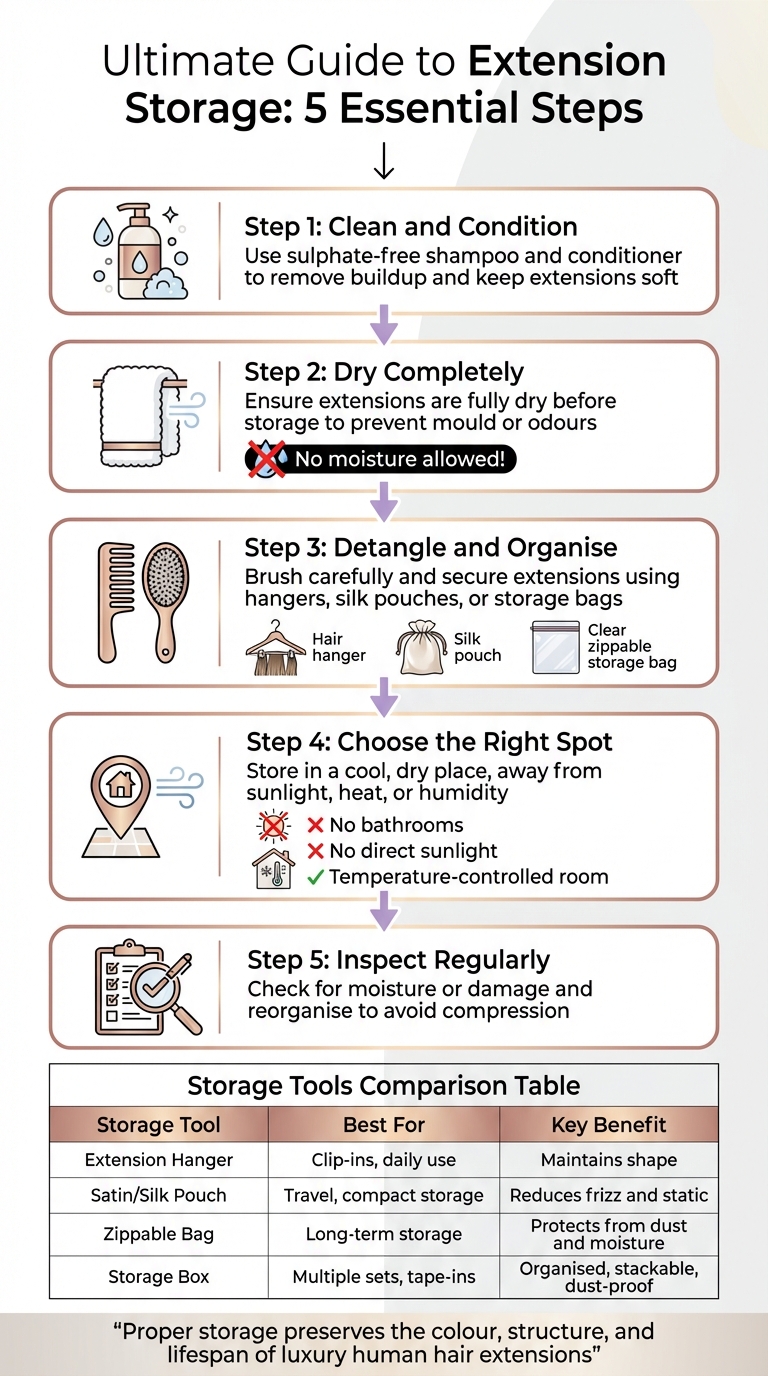
5-Step Hair Extension Storage Process Guide
How to Store Hair Extensions When Not in Use - ft. ZALA Protect Me Bag

Why Storage Methods Matter
How you store your extensions plays a huge role in how long they last and how good they look when you wear them again. Keeping them in the right condition is key to maintaining the quality of premium extensions.
Unlike natural hair, extensions can’t repair themselves. Any damage caused by poor storage is usually permanent, and daily handling only adds to the wear and tear.
Stashing extensions in drawers or plastic bags might seem convenient, but it’s a recipe for trouble. Friction from improper storage can tangle the hair, create static, and lead to shedding or breakage. Over time, dust and pollutants can settle on the extensions, leaving them looking dull and lifeless.
"Proper storage preserves the colour, structure, and lifespan of luxury human hair extensions. It can prevent shedding and density loss, keeping them thick and luscious for years." – The Lauren Ashtyn Collection
Exposure to sunlight and UV rays can fade the colour, while changes in temperature and humidity can weaken the hair, making it brittle. Storing extensions in damp conditions is even worse - it can lead to mould, mildew, and unpleasant odours. Dust and environmental debris can also damage clips, tapes, or bonds, reducing their grip and cutting short the life of your extensions.
Preparing Extensions Before Storage
Getting your extensions ready for storage is a must if you want to keep them looking fresh and salon-worthy. Skipping these steps could leave you with extensions that need extra care later. Start by thoroughly cleaning the extensions to remove any residue or buildup.
Cleaning and Conditioning
Begin by detangling the extensions with a brush designed for extensions. Then, wash them using a sulphate-free shampoo, working from top to ends to clear away buildup, oils, and dirt - especially around the base of the weft, where grime tends to collect. Use a gentle downward motion to avoid matting, and steer clear of scrubbing or twisting. Once clean, apply conditioner to the mid-lengths and ends, leaving it on for 2–5 minutes before rinsing. Since extensions don’t benefit from your scalp's natural oils, conditioning is crucial to keep them soft and manageable.
Finish up with a rinse of cool water. This step helps close the hair cuticles, sealing in moisture and giving the extensions a healthy shine. For added protection, consider applying 1–2 pumps of argan oil or treatment oil to the mid-lengths and ends after washing.
Drying Extensions Fully
Make sure your extensions are completely dry before storing them. Even a little dampness can lead to mildew, bacteria, and unpleasant odours that could ruin their quality.
"If the hair is even a little wet, it could be a haven for mildew and a not so great smell after just a short time of storage." – World Hair Extensions
To dry them, blot or gently squeeze out excess water using a microfibre towel - don’t rub, as it may cause damage. For clip-ins, lay each piece flat on a towel to air-dry, or hang the wefts on a rod or a specialised extension hanger to allow for proper air circulation. If you prefer using a blow dryer, stick to medium or low heat, and avoid direct heat on the clips, tapes, or bonds.
Detangling and Securing
Once the extensions are dry, carefully detangle them. Start at the ends and work your way up in small sections, holding the top of the weft with one hand to minimise tension on the clips or bonds. This process smooths the cuticles, prevents friction, and keeps the extensions looking shiny.
For this task, tools like the Tangle Tamer Brush by Hair Wonderland ($21.95) are ideal, as they gently work through knots without causing shedding or snags. After detangling, organise the extensions into sections and secure them using an extension-specific hanger or storage bag. This keeps them tangle-free and shields them from dust and other elements.
Choosing the Right Storage Location
Where you store your hair extensions matters just as much as how you store them. After cleaning and prepping your extensions, finding the right environment is key to keeping them in great shape. The wrong setting can undo all your efforts, leading to issues like frizz, colour fading, or even mould. Extensions, unlike natural hair, don't get nourishment from the scalp, so they’re more prone to damage from their surroundings.
Temperature and Humidity Control
Hair extensions thrive in a cool, dry, and well-ventilated space. High humidity is a troublemaker - it can cause frizz, tangles, and even promote mould or mildew growth. This makes bathrooms an unsuitable choice for storage. Instead, opt for a temperature-controlled room with stable humidity levels to prevent mustiness and keep the fibres smooth.
"Keep in a cool, dry place, away from moisture and direct sunlight." – Runature
Maintaining the right environment also means protecting your extensions from other external factors.
Avoiding Sunlight and Heat Sources
Exposure to direct sunlight or heat can wreak havoc on hair extensions. UV rays can fade their colour, while heat can leave them dry and brittle.
"Keep them somewhere out of direct sunlight (ideally in a storage bag). Follow those, and you'll have great hair for longer." – Marie Pett, Founder of RiRi Hair Extensions
To avoid these issues, store your extensions away from windows, heaters, or any other heat sources. This helps maintain their natural shine and flexibility.
Selecting a Safe, Organised Space
A clean, dedicated storage area - like a wardrobe or enclosed shelf - is ideal for keeping extensions free from dust, pollutants, and light. If you own multiple sets, labelling storage bags or boxes can save you the hassle of unnecessary handling. The original packaging box works well too, as long as the extensions are completely dry before storing them. Even a trace of dampness can lead to mildew, so ensure they’re fully dry.
To maximise the lifespan of your extensions, use the right tools and storage solutions. This simple step can make all the difference in keeping them looking their best.
sbb-itb-dcde78e
Storage Methods and Tools
Once you've secured the perfect storage space, it's time to choose the right tools to keep your hair extensions in top condition. Your choice will depend on factors like how often you wear them, whether you travel frequently, and how many sets you own.
Extension-specific hangers are a practical option. These hangers are designed with wide mouths or soft clips that securely hold wefts without damaging the bonds or clips. They help keep the hair straight, prevent matting at the base, and preserve the original style - whether that's sleek and straight or softly waved. If you wear your extensions often, hangers allow for easy access while maintaining their shape. For extra protection, pair your hanger with a breathable storage bag to shield your extensions from dust.
Satin or silk pouches are another excellent choice, especially for reducing friction and minimising frizz. Unlike rougher materials, these smooth fabrics protect the hair cuticles, helping to retain moisture and reduce static. These pouches are particularly handy for travel or compact storage. For example, Hair Wonderland offers a Clip In Bag for $54.00, designed to protect and organise your extensions whether you're at home or on the go.
If you're looking for long-term storage options, breathable zippable bags are a great solution. They shield extensions from dust, pollutants, and moisture while preventing dampness from becoming trapped inside. These bags work well with hangers or can be used on their own. If you have multiple sets, labelling each bag with details like length, colour, and texture can save you from unnecessary handling. For added convenience, storage boxes or containers - including the original packaging your extensions came in - offer stackable, dust-proof organisation. They're especially useful for tape-in extensions, as they help protect the adhesive bonds from compression. Lining the boxes with a silk or satin scarf adds an extra layer of protection against friction.
| Storage Tool | Best For | Key Benefit |
|---|---|---|
| Extension Hanger | Clip-ins, daily use | Maintains shape |
| Satin/Silk Pouch | Travel, compact storage | Reduces frizz and static |
| Zippable Bag | Long-term storage | Protects from dust and moisture |
| Storage Box | Multiple sets, tape-ins | Organised, stackable, dust-proof |
Before storing your extensions, make sure they are completely dry and detangled. Even the slightest moisture can lead to mould. To keep them fresh, consider adding silica gel packets to your storage containers to absorb excess humidity.
Storage Tips by Extension Type
Keep your hair extensions in great condition by using storage methods tailored to their type. Here’s how to care for them properly.
Clip-In Extensions
Clip-ins are super convenient and versatile, making storage straightforward. A great option is the hanger method - attach the wefts to a specialised extension hanger and place them in a protective carrier bag. This keeps them safe from dust and moisture. If you don’t have a specialised hanger, a pants hanger with soft clips works too; just cover the extensions with a breathable cloth to protect them. For travel or compact storage, the Hair Wonderland Clip In Bag ($54.00) is a handy choice. It keeps your extensions organised and well-protected while you’re on the move.
"Storing hair extensions properly is pretty much life or death. Not for you. But for your extensions." – Marie Pett, Founder of RiRi Hair Extensions
Tape-In Extensions
Tape-ins require extra attention due to their adhesive bonds. The best way to store them is in a box or silk pouch, ensuring the adhesive tabs stay aligned and free from damage. Avoid folding or creasing the wefts, as this can weaken the adhesive. For added protection, line the storage box with a silk or satin scarf to minimise friction and keep dust away. If you’re storing them for a longer period, wrapping the tape-ins in plastic wrap can help protect the adhesive tabs. Remember to avoid using products with sulphates, protein, keratin, or high alcohol content on tape-ins, as these can interfere with the adhesive.
Weft Extensions
Weft extensions are best stored by hanging. Use a hanger with a wide mouth or secure clips to hold the weft at the top without putting strain on the bonds. This keeps the hair neat and prevents tangling. For added protection, place the hung extensions inside a zippable storage bag to shield them from dust and moisture. Always ensure the wefts are completely dry and detangled before storing. When brushing, hold the hair near the bond to avoid pulling or damaging it. If you have multiple sets, labelling the storage bags can help you stay organised and reduce unnecessary handling, which could introduce moisture or tangles.
Maintaining Extensions During Storage
Preserving the quality of your extensions goes beyond just storing them correctly. Regular upkeep ensures they stay in great condition and are always ready to wear when needed.
Regular Inspections for Moisture or Damage
It's a good idea to check your stored extensions periodically for any signs of moisture or damage. Extensions need to be completely dry before storage to avoid issues like mould or mildew. However, even if they were dry initially, changes in the environment can introduce moisture over time. Make sure the storage area is consistently cool, dry, and free from direct sunlight or humidity, as these conditions can lead to frizz or even bacterial growth. If you notice moisture or cramped conditions, adjust the setup immediately to protect your extensions.
Reorganising to Prevent Compression
Crowded or cramped storage spaces can cause extensions to develop unwanted kinks or creases. To avoid this, ensure that your extensions aren’t folded or squashed. If your storage area becomes too crowded, take the time to reorganise. Extensions should either hang naturally or lie flat without pressure from surrounding items.
Refreshing Extensions Before Use
Once you've inspected and reorganised your extensions, it’s time to prepare them for wear. Start by gently shaking them out to remove any tangles. Use a wide-toothed comb or a detangling brush, working from the ends upwards to avoid putting unnecessary stress on the clips or bonds. To restore hydration, apply 1–2 pumps of a treatment oil or a lightweight moisture spray to the mid-lengths and ends. It's important to remember that extensions don’t produce natural oils like your scalp does, so they need a little extra care. If they’ve lost their style during storage, use a heat protectant and styling tools to bring back their original texture. Products like the Tangle Tamer Brush ($21.95) and Moisture Magic Treatment ($39.95) from Hair Wonderland can make this process much easier.
"If you don't care for your hair extensions by properly storing them when they aren't worn, their life span will seriously reduce." – Marie Pett, Founder of RiRi Hair Extensions
Conclusion
Keeping your hair extensions looking salon-fresh starts with proper storage. Here’s a quick recap of the key preparation steps: gently detangle, clean only when necessary with sulphate-free products, ensure they’re completely dry to prevent mould or mildew, and condition the mid-lengths and ends before storing. For storage, consider using extension-specific hangers, silk or satin pouches, or storage boxes to minimise tangling and frizz.
Since extensions lack natural scalp oils, they need extra moisture care. Store them in a cool, dry spot, away from direct sunlight, and check occasionally for any signs of moisture or compression.
"Storing your hair extensions properly is part of a healthy, TLC-packed care routine that will keep your precious investment safe, improving its longevity." – Brenda L., Cliphair
For all your extension care needs, Hair Wonderland has you covered. From the Tangle Tamer Brush ($21.95) and Moisture Magic Treatment ($39.95) to the Clip In Bag ($54.00) made specifically for storing extensions, the right tools and routine make all the difference. Before wearing, give your extensions a refresh with a detangling brush and a touch of treatment oil to keep them looking their best.
FAQs
How do I store hair extensions to prevent mould and mildew?
To keep mould and mildew at bay, always make sure your hair extensions are fully dry before storing them. After washing, gently squeeze out any excess water and allow the extensions to air-dry in a well-ventilated space. Even a little leftover moisture can lead to the growth of mould and bacteria.
When it comes to storage, opt for a breathable container like a dedicated storage box or a clean drawer with some airflow. Avoid using sealed plastic bags, as they can trap moisture. Adding a reusable silica gel packet or a small sachet of dried rice can help absorb any extra humidity. Place the container in a cool, dry spot, such as a wardrobe, and steer clear of damp areas like bathrooms or heat sources like radiators or direct sunlight.
For added care, loosely roll each weft into a ring shape and secure it with a soft hair tie before putting them away. This helps the hair retain its shape while also allowing for airflow. By following these tips, your extensions will stay fresh, shiny, and free from mould or mildew.
What are the best tools to store different types of hair extensions?
Proper storage is key to keeping your hair extensions in top condition, and the right approach depends on the type of extensions you have.
For clip-in extensions, gently roll each weft into a loose ring, secure it with a soft hair tie, and place it in a sturdy box or resealable bag. This protects the extensions from dust and moisture. You can also keep a detangling brush, like Hair Wonderland’s The Detangle Brush, handy to ensure they’re always ready to use.
For tape-in, sew-in, or weft extensions, lay them flat in a breathable fabric pouch or a dedicated storage bag. If you have a hanging organiser, drape the wefts carefully to avoid creases. Use a soft tie at the base to keep them from tangling.
For micro-link, fusion, or glued extensions, store them individually in a small resealable bag or a hard case. Placing them inside a silk or satin pouch helps minimise friction and protects the bonds. A lightweight tie can keep the strands together without damaging the links.
By using the right storage tools, you can preserve the natural quality and longevity of Hair Wonderland’s premium extensions, ensuring they’re always ready for flawless styling.
Why should hair extensions be stored away from direct sunlight and heat?
Keeping hair extensions away from direct sunlight and heat is essential for maintaining their condition and lifespan. Too much heat or UV exposure can leave extensions dry, brittle, and faded in colour.
For best results, store your extensions in a cool, dry spot. Using a protective case or storage bag can go a long way in preserving their texture, keeping them soft, shiny, and ready to wear whenever you need them.