


Storing hair extensions correctly is critical to maintaining their quality and lifespan. Whether you're a salon professional managing large inventories or an individual with a few personal sets, proper storage prevents damage like tangling, mould, and breakage. Here's a quick breakdown:
- Salon Storage: Designed for efficiency and hygiene, salons use tools like professional hangers, labelled bags, and climate-controlled spaces. Pre-storage care includes detangling, washing, and drying extensions. Costs for these setups often start at A$50.
- Home Storage: Focuses on compact solutions like breathable bags, DIY setups, or original packaging. Affordable options range from A$14.95 to A$54.00. Maintenance involves gentle detangling, washing, and ensuring extensions are completely dry before storing.
Quick Comparison
| Criterion | Salon Storage | Home Storage |
|---|---|---|
| Primary Tools | Professional hangers, bulk racks, labelled bags | Silk bags, shoeboxes, DIY setups |
| Capacity | High (multiple sets) | Low (1–3 sets) |
| Accessibility | Organised for professional use | Quick daily access |
| Cost (AUD) | Higher (A$50+) | Low (A$0–A$54.00) |
| Space Requirements | Dedicated shelving or storage rooms | Minimal (closets, drawers) |
| Portability | Stationary | Travel-friendly |
To extend the life of your extensions, always detangle carefully, store them dry, and avoid exposure to sunlight and humidity. Whether at home or in a salon, the right storage routine makes all the difference.
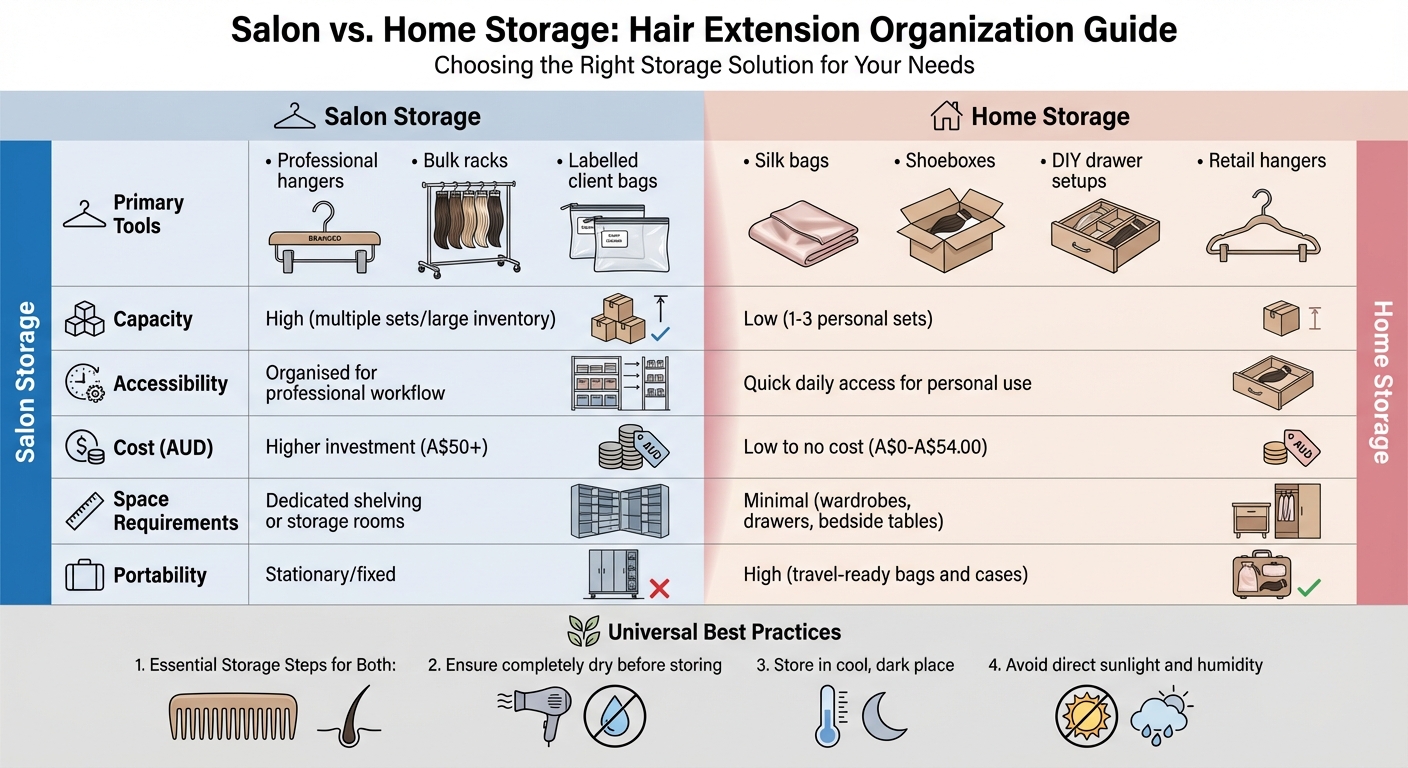
Salon vs Home Hair Extension Storage Comparison Chart
Salon Storage Methods
Professional Storage Tools
Salons depend on specific tools to keep hair extensions organised and ready for use throughout the day. Professional extension hangers, equipped with wide-mouth openings or felt-lined clips, are a favourite. These hangers not only hold the wefts securely without causing damage but also come in handy during washing, blow-drying, or heat-styling.
Zippable storage bags are another essential. They shield extensions from dust, moisture, and friction, while their transparent design allows for quick checks. When it comes to detangling, salons often turn to tools like the Hair Wonderland Tangle Tamer Brush (A$21.95) or boar bristle brushes, which glide smoothly over bonds without tugging or snagging.
Managing Large Extension Inventories
Handling a wide variety of extensions requires a system. Many salons label storage bags with client names, hair types, or colour codes, ensuring quick access and maintaining cleanliness.
Extensions are best stored in climate-controlled areas, such as dedicated wardrobes or storage spaces, to avoid exposure to sunlight, heat, and humidity. High-end salons often use silk or sateen bags to minimise friction and protect the delicate cuticles. For bulk storage, many rely on original brand boxes, which are sturdy and stackable, making organisation a breeze.
Salon Maintenance Routines
Proper storage is only part of the equation - routine maintenance is just as important. Before storing any set of extensions, salons follow a detailed pre-storage process. Extensions are carefully detangled, starting from the ends to prevent shedding. If there’s any product buildup, they’re washed using sulfate-free, extension-safe shampoos and conditioners.
Ensuring extensions are completely dry before sealing them in storage bags or cases is a critical step. Any trapped moisture could lead to mildew growth. Salons also avoid using products with protein, keratin, sulfates, or high alcohol content, as these can make the extensions difficult to manage over time. Once removed from storage, extensions are gently shaken out and treated with a lightweight moisture spray or heat protectant to restore their shine and prepare them for styling.
"Storing your hair extensions properly is part of a healthy, TLC-packed care routine that will keep your precious investment safe, improving its longevity." – Cliphair
Home Storage Methods
Space-Saving Storage Options
When space is tight, practical storage solutions can make all the difference. Consider using extension hangers in your closet alongside breathable bags made from cotton, silk, or mesh. These materials help keep your extensions untangled and shielded from moisture and friction, ensuring they stay in great condition.
For a tailored option, the Hair Wonderland Clip In Bag (A$54.00) is a compact storage solution designed specifically for hair extensions. It allows you to neatly fold or roll your wefts for easy drawer storage. If you're looking for something more affordable, AiryHair Storage Bags (around A$14.95) offer similar breathable protection. Alternatively, reusing the original packaging boxes can be a smart choice for long-term storage. These stackable boxes are perfect for keeping your extensions safe and organised. Want to save even more space? DIY storage ideas can help you maximise your home storage setup.
DIY Storage Ideas
A simple pants hanger with soft clips works wonders for keeping your wefts straight and tangle-free. Just cover them with a breathable cloth to protect against dust. Another clever hack is attaching ribbons to a wooden hanger and using clothespins to clip individual wefts. This method keeps multiple sets visible and easy to access.
If you're storing extensions in a drawer, line it with a silk scarf or cotton towel and place the extensions in a "U" or "J" shape to avoid kinks. Clear plastic totes are another great option for stacking multiple sets. Their transparency makes it easy to spot colours and lengths at a glance. For added organisation, label each set with sticky notes or tags, such as "22-inch wavy blonde", so you can quickly grab what you need. These DIY methods reflect salon techniques, ensuring your extensions are cared for properly at home.
Home Maintenance and Protection
Maintaining your extensions at home is just as important as proper storage. Start by detangling them gently with a wide-tooth comb or extension brush, working from the tips upward. Make sure all clips are securely closed to prevent snagging during handling. If your extensions have product buildup, wash them with a sulfate-free shampoo and conditioner, and always ensure they are completely dry before storing. Moisture left behind can lead to mould or unpleasant odours.
For box storage, secure the base of your extensions with a soft scrunchie and roll them into a loose circle to maintain their shape. Adding silica gel packets to your storage container can help absorb any excess moisture. Store your extensions in a cool, dark space like a closet or drawer to protect them from direct sunlight, which can cause fading and dryness. When it's time to use them again, give your extensions a gentle shake and apply a light heat protectant or moisture spray to restore their shine.
"It's really important to get into a good storage routine... because good habits = longer lasting extensions." – Luxy Hair
#211: HOW I STORE MY HAIR EXTENSIONS
sbb-itb-dcde78e
Salon vs. Home Storage: Direct Comparison
Let’s break down the differences between salon storage and home storage. While both serve the purpose of keeping hair extensions in good condition, they cater to very different needs. Salons handle large inventories, relying on specialised shelving and professional tools to organise and access extensions efficiently. On the other hand, home storage is all about simplicity, designed for a few personal sets with compact and affordable solutions.
When it comes to capacity and accessibility, the contrast is clear. Salons often store a wide variety of extensions, neatly arranged on racks or in labelled bags, making it easy to grab what’s needed during appointments. At home, you’re likely managing just one to three sets, stored in a way that makes them easy to access for daily use and removal before bed.
Cost is another major factor. Professional salon setups often require a higher investment, with equipment costs starting at around A$50.00. For home use, you can get by with inexpensive DIY options or invest in quality storage bags, which typically range from A$14.95 to A$54.00.
Portability is where home storage shines, especially for frequent travellers. Travel bags or the original extension boxes are compact and easy to carry. In contrast, salon storage is stationary, built into workstations and designed for professional use rather than mobility.
Here’s a quick summary of the key differences:
Comparison Table: Salon vs. Home Storage
| Criterion | Salon Storage | Home Storage |
|---|---|---|
| Primary Tools | Professional hangers, bulk racks, labelled client bags | Silk bags, shoeboxes, DIY drawer setups, retail hangers |
| Capacity | High (multiple sets/large inventory) | Low (1–3 personal sets) |
| Accessibility | Organised for professional workflow | Quick daily access for personal use |
| Cost (AUD) | Higher investment (A$50+) | Low to no cost (A$0–A$20 for basic cases) |
| Space Requirements | Dedicated shelving or storage rooms | Minimal (wardrobes, drawers, bedside tables) |
| Portability | Stationary/fixed | High (travel-ready bags and cases) |
Recommendations and Final Thoughts
Storage Best Practices
Taking care of your hair extensions, whether at a salon or at home, starts with proper detangling and drying. These steps are key to making sure your extensions last as long as possible.
When detangling, use a loop brush or a wide-tooth comb, working from the tips upward. This prevents matting and keeps the hair flowing naturally. Extensions should always be completely dry before being stored - any leftover dampness can lead to mould or bacteria growth. Also, make sure all fastenings are secured to avoid any snagging.
Investing in quality storage tools can make a big difference. These tools help reduce friction and shield extensions from dust, moisture, and UV rays. For example, the Hair Wonderland Clip In Bag (A$54.00) provides excellent protection, while the Tangle Tamer Brush (A$21.95) simplifies the detangling process before storage. Always store your extensions in a cool, dry place away from direct sunlight to avoid UV damage, which can weaken the hair and fade its colour.
"Storing your hair extensions properly is part of a healthy, TLC-packed care routine that will keep your precious investment safe, improving its longevity" – Cliphair.
Closing Remarks
The best storage method for hair extensions depends on your specific needs and environment. Salons often need durable systems to handle large inventories and maintain professional workflows, while at-home storage focuses on convenience and portability. Despite these differences, the goal remains the same: to extend the life of your extensions through proper care.
FAQs
How do I store hair extensions to avoid mould and tangling?
To keep your Hair Wonderland extensions looking their best, proper storage is key. First, make sure they’re clean and completely dry - any moisture left behind can cause mould. Use a sulphate-free shampoo and conditioner, and allow the extensions to air-dry thoroughly.
Before storing, gently detangle the hair using a wide-toothed comb or a loop brush, starting at the ends and working your way up. For wefts, loosely tie the base with a soft hair tie and coil them into a loose ring. If you’re storing clip-ins, close the clips to keep them secure.
Store your extensions in a breathable container like a storage box or a zip-lock bag. Keep them in a cool, dry place, such as a bedroom drawer, and steer clear of humid areas like bathrooms. Make sure the storage spot is well-ventilated to prevent mould. By following these steps, you’ll help your extensions stay durable, comfortable, and effortlessly natural-looking.
What are the cost differences between storing hair extensions at home and in a salon?
The cost of storing hair extensions largely depends on whether you’re keeping them at home or in a professional salon. Salons often invest in specialised equipment like racks or climate-controlled cabinets, which can come with a higher price tag. At home, storage tends to be more affordable, with options like storage boxes, weft rings, or basic shelving doing the job.
That said, it’s hard to pin down exact costs for salon-grade storage compared to home solutions. For a better idea, it’s worth looking into specific storage products or asking a salon professional for advice that suits your particular needs.
Why is it important to control the climate when storing hair extensions in salons?
Maintaining proper climate control is key to keeping hair extensions in top-notch condition within a salon. Extreme heat, high humidity, or excessive dryness can wreak havoc on extensions, leading to a loss of their natural texture, brittleness, or even troublesome tangles.
Storing extensions in a cool, dry space with consistent humidity levels helps protect their softness, shine, and overall quality. This not only keeps the extensions looking flawless but also ensures that clients leave the salon with a product that feels fresh and luxurious, boosting their overall satisfaction.