


If your hair feels dry under extensions, you're likely making one or more of these common mistakes. Extensions don’t get natural oils from your scalp, so keeping your hair hydrated is essential to avoid dryness, breakage, and damage. Here’s what you could be doing wrong:
- Washing too often: Frequent washing strips moisture and weakens extension bonds. Stick to once or twice a week for permanent extensions.
- Using harsh products: Products with sulfates, alcohol, or protein can dry out and damage extensions. Opt for sulphate-free shampoos and lightweight conditioners.
- Skipping heat protection: Heat styling without protection makes extensions brittle and shortens their lifespan. Always use a heat protectant spray.
- Brushing wet hair aggressively: Wet hair is fragile. Use the best brushes for extensions and avoid yanking at knots.
- Sleeping with wet or unprotected hair: Damp hair tangles easily. Dry it fully, secure it in a braid or ponytail, and switch to a silk pillowcase.
Avoid these habits to keep your natural hair and extensions healthy, smooth, and long-lasting.
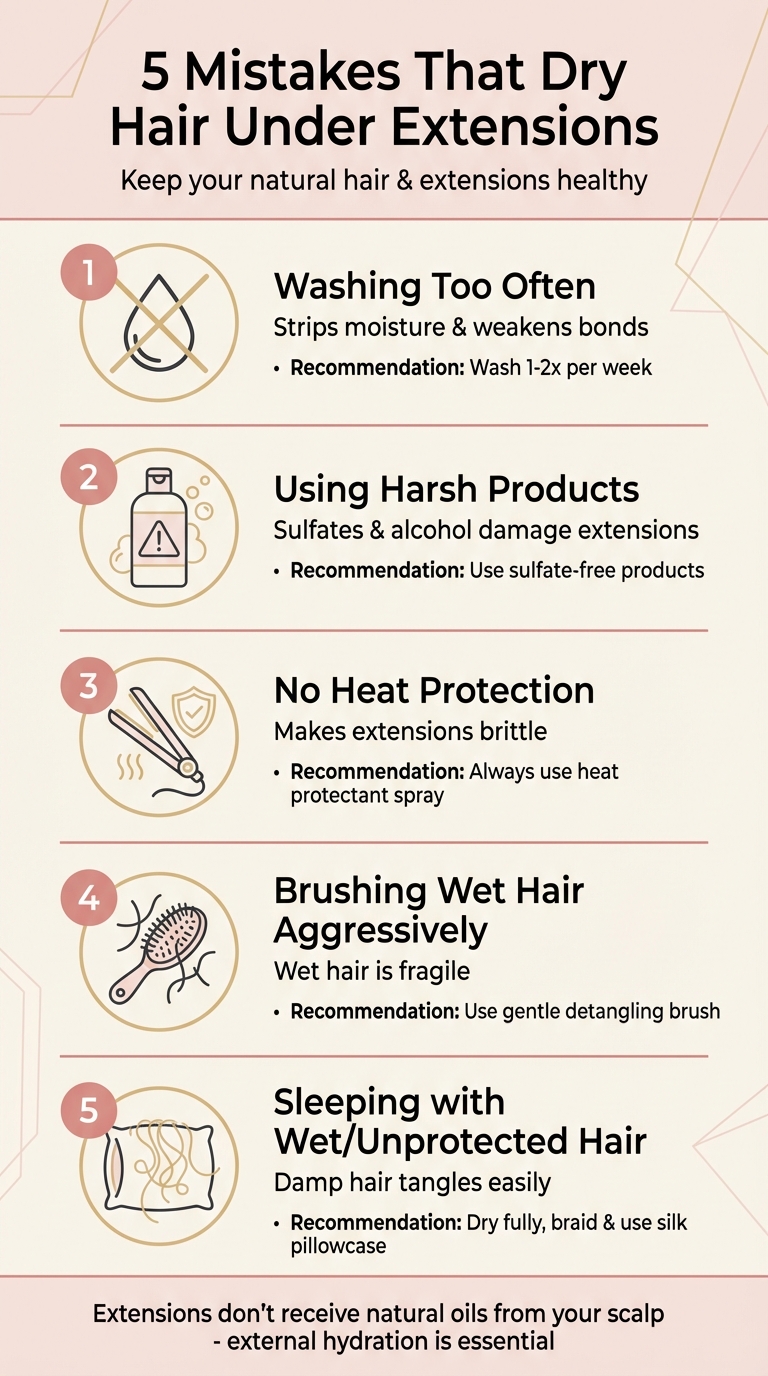
5 Common Mistakes That Cause Dry Hair Under Extensions
1. Washing Your Natural Hair Too Often
Impact on Hair Moisture Retention
Natural hair has the advantage of producing sebum, a natural oil that helps retain moisture. Extensions, however, don’t have this connection to the scalp and rely entirely on external hydration. Overwashing can strip away what little protection they have, leaving them dry, brittle, and prone to tangling. Experts in the field agree on this point:
"Washing too often can leave hair extensions dry, unlike natural hair, they don't receive protective oils from the scalp." – EH Hair Extensions
Even if your roots feel oily, the mid-lengths and ends of your hair remain dry. Washing too frequently - such as every other day - only speeds up moisture loss and reduces the lifespan of your extensions.
Compatibility with Extensions
For permanent extensions like tape-ins, sew-ins, or keratin bonds, washing once or twice a week is ideal. Overexposure to water and shampoos can weaken tape adhesives and damage keratin bonds, causing them to loosen prematurely. On the other hand, clip-in extensions don’t need frequent washing as they aren’t exposed to daily scalp oils. Washing them every 10–15 wears is usually enough.
Ease of Integration into Hair Care Routines
If you lead an active lifestyle, you can incorporate a ‘half wash’ into your hair extension care routine. This involves rinsing your scalp with warm water and applying conditioner to the mid-lengths, skipping shampoo entirely. When a full cleanse is necessary, use a double-shampoo technique: cleanse the scalp thoroughly with shampoo, then apply conditioner to the mid-lengths and ends. Be careful to avoid the bonds or tapes to prevent slippage.
sbb-itb-dcde78e
2. Using Products That Strip Moisture
Impact on Hair Moisture Retention
Hair extensions already face challenges in retaining moisture since they don't get nourishment from your scalp. Using harsh products only makes things worse. Sulfates and high alcohol content are major offenders, stripping away essential moisture from both your natural hair and extensions. As Hair Wonderland points out:
"Hair extensions are dead hair and do not receive nutrients from your scalp. Avoid using products with protein, keratin, sulfates, and high alcohol contents. These can damage your extensions and make them unmanageable after just one use."
Understanding these effects is key to maintaining the health and longevity of your extensions.
Compatibility with Extensions
Some products do more than dry out your hair - they can directly harm your extensions. Sulfates, for instance, weaken the adhesive bonds in tape and keratin extensions. Heavy oils can loosen these bonds, while dry shampoos and salt sprays leave behind residue that leads to slippage and further damage.
Prevention of Damage or Breakage
When moisture is stripped away, your hair becomes fragile, especially at the points where extensions are attached. Unlike natural hair, extensions can’t repair themselves. This often results in tangling, shedding, and a shorter lifespan - potentially cutting their usability from 6–12 months down to just 3–6 months. Using the right products can help prevent this kind of damage and keep your extensions looking their best.
Ease of Integration into Hair Care Routines
Adopting an extension-friendly routine isn’t complicated. Swap out your regular shampoo for a sulphate-free option and follow up with a lightweight, moisturising conditioner, focusing on the mid-lengths and ends. To keep your extensions hydrated, apply 1–2 pumps of treatment oil daily, concentrating on the lower lengths while avoiding the bonding areas. Brands like Hair Wonderland offer specialised products designed to care for their double-drawn Russian and Mongolian extensions, making it easier to maintain your investment.
3. Heat Styling Without Heat Protection
Impact on Hair Moisture Retention
learning how to safely heat style hair extensions using tools like flat irons, curling wands, or blow dryers can strip moisture from both hair extensions and your natural hair. Since extensions lack the natural oils produced by your scalp, they are especially prone to dryness. This moisture loss makes extensions more brittle and shortens their lifespan, highlighting why heat protection is crucial.
Compatibility with Extensions
Unprotected heat doesn't just dry out extensions - it can actually change their structure. According to Great Lengths, "Excessive heat can lead to dryness, frizz, and even melting of hair extensions". Damaged extensions may become tangled or matted, requiring specific techniques to detangle hair extensions without damage, making them stand out against your natural hair. High heat can also weaken the bonds in tape-in or keratin extensions, causing them to slip or fail altogether. This means that skipping heat protection not only affects appearance but also impacts the functionality and durability of your extensions.
Prevention of Damage or Breakage
The simplest way to guard against heat damage is by using a heat protectant spray. Great Lengths recommends, "Always apply a heat protectant spray or serum before using heat tools such as flat irons, curling wands, or blow dryers. This simple step will shield your extensions from heat damage, maintaining their integrity and prolonging their lifespan". For best results, apply the spray before styling, keep your blow dryer on a low or medium heat setting, and avoid using products too close to the extension bonds. These precautions help retain moisture in your natural hair and extensions while also preventing damage to the bonds.
Ease of Integration into Hair Care Routines
Adding heat protection to your daily routine is simple and highly effective. Start with a heat protectant spray before styling, then follow up with 1–3 pumps of treatment oil on the mid-lengths and ends to restore moisture. For instance, Hair Wonderland's Moisture Magic treatment ($39.95) is a great option for this step. This quick addition to your routine helps maintain the health of your natural hair and ensures your extensions stay in top condition for longer.
Caring For Hair Extensions- EVERYTHING you NEED to be doing to get your extensions to last SO LONG!
4. Brushing Wet Hair Too Aggressively
Aggressively brushing wet hair can seriously compromise the health of both your natural hair and extensions, leaving them more prone to damage.
Impact on Hair Moisture Retention
Wet hair is at its weakest. When saturated with water, the hair shaft swells, making it more fragile and susceptible to breakage. Aggressive brushing during this vulnerable state can damage the hair cuticle - the outer layer that helps retain moisture. A compromised cuticle leads to dryness, brittleness, and a dull appearance. For extensions, this can mean losing their shine and smooth texture, signalling surface damage that’s hard to reverse.
Compatibility with Extensions
Brushing wet hair too harshly doesn’t just harm moisture retention; it can also weaken the bonds of your extensions. Whether you have tape-in or keratin extensions, tugging or yanking on wet hair places undue strain on the adhesive or keratin bonds, potentially reducing their longevity. According to Great Lengths, "be mindful of any knots or tangles and avoid pulling or yanking on the extensions". Wet hair is also prone to tangling, and forceful brushing can cause matting near the roots, making detangling even more challenging.
Prevention of Damage or Breakage
Protecting wet hair starts with adopting a gentler approach. Great Lengths recommends, "After washing, carefully squeeze out excess water and pat dry with a soft towel. Avoid rubbing or twisting, as this can cause tangles". Use a microfibre towel to gently blot your hair instead of rubbing it. When brushing, start at the ends and work your way up, holding the hair above any knots to minimise tension. For stubborn tangles, use your fingers first before reaching for a tool. These small adjustments can make a big difference in maintaining both moisture and bond integrity.
Ease of Integration into Hair Care Routines
Incorporating gentler brushing habits is simple and effective. Before washing, brush through your extensions to reduce tangles. Opt for tools designed specifically for extensions, such as Hair Wonderland's Tangle Tamer Brush ($21.95) or The Detangle Brush ($29.95), both of which are gentle on bonds. Wide-tooth combs or loop brushes with nylon bristles are also excellent choices. For added protection, apply a leave-in conditioner or detangling spray before brushing. Some experts even suggest waiting until your hair is about 90% dry before brushing, as hair is less fragile when it’s only slightly damp.
5. Going to Bed with Wet or Unprotected Hair
How you treat your hair at night is just as important as your daytime care routine. Sleeping with damp hair or leaving extensions unsecured can lead to dryness, damage, and common hair extension problems like tangling by morning.
Impact on Hair Moisture Retention
Cotton pillowcases are notorious for absorbing your hair’s natural oils and any treatments you’ve applied. This leaves both your natural hair and extensions feeling dry and brittle. As Sleep Dreams Online explains:
"Cotton sucks up your hair's natural oils (and any treatment you've used). Silk helps your hair stay hydrated and glossy."
If you sleep with wet hair, the moisture loss is even greater. This not only affects the appearance of your hair but can also weaken the hold of your extensions, making them more prone to slipping or damage.
Compatibility with Extensions
Damp hair is especially vulnerable to matting and tangling, particularly where extensions are bonded. According to SimplyHair, 90% of cases where people sleep with wet or damp extensions result in tangled hair that requires intense brushing the next day:
"Slightly greasy hair is a much better option than potentially tangled hair extensions."
Aggressive brushing to detangle can put unnecessary strain on the bonds, causing further damage.
Prevention of Damage and Breakage
To avoid these issues, always ensure your hair is completely dry before bed. If drying your hair isn’t an option, it’s better to leave it unwashed until the next day. Once dry, gently brush your extensions while holding them at the roots to minimise pulling. Secure your hair in a loose braid or low ponytail to reduce movement during the night. Switching to a silk pillowcase or using a silk bonnet can also help by reducing friction and keeping moisture locked in.
Integrating Protection into Your Nighttime Routine
A simple five-minute routine can make all the difference in keeping your extensions in great condition. Before bed, ensure your hair is dry, brush it gently, and secure it in a protective style like a braid or ponytail. Use a silk pillowcase or bonnet to further protect your hair and maintain its moisture. If you’re wearing clip-in extensions, always remove them before sleeping to prevent unnecessary tugging and tangling.
Conclusion
Looking after your natural hair while wearing extensions doesn’t have to be complicated - it’s all about using the right methods. Common mistakes like overwashing, using harsh products, skipping heat protection, brushing too roughly, or sleeping with wet or unprotected hair can take a toll. These habits can strip away moisture, cause breakage, and leave both your natural hair and extensions looking worse for wear. By following a hair extension care schedule, you can keep your hair hydrated and your extensions looking their best.
Hair extensions don’t produce their own moisture, so they rely entirely on external hydration. A simple routine can make all the difference: apply 1–2 pumps of treatment oil in the morning and 2–3 pumps in the evening, focusing on the mid-lengths and ends. This helps replace the moisture extensions can’t create on their own.
Choosing the right products and tools is just as important. Steer clear of anything containing sulfates, protein, keratin, or high alcohol content, as these can dry out and damage extensions. Instead, look for extension-friendly options like Hair Wonderland's Moisture Magic, and use specialised brushes designed to minimise pulling and breakage. These small steps keep your Remy extensions smooth, manageable, and long-lasting.
Don’t forget about regular professional maintenance. Visiting your stylist every 5–6 weeks is essential. Natural hair sheds about 100 strands per day, which can become trapped in your extensions. Over time, this can lead to tangling and strain on the hair supporting your extensions. Regular salon visits allow your stylist to reposition extensions onto healthier sections, preventing damage and ensuring everything stays secure.
With the right care, you can maintain gorgeous extensions while keeping your natural hair nourished and healthy. Hair Wonderland offers everything you need, from premium double-drawn Russian and Mongolian human hair extensions to extension-safe products and brushes, making it easier than ever to care for both your extensions and the hair beneath them.
FAQs
How can I moisturise hair under extensions without loosening the bonds?
To keep your hair moisturised under extensions without affecting the bonds, try using a water-based spritz to add hydration. Follow this with a light oil to lock in the moisture. This approach helps maintain hydration while minimising any disturbance to the bonds, lowering the chances of damage or loosening. Be gentle and avoid overhandling your hair to preserve both the extensions and your natural hair.
What products should I avoid if my extensions feel dry and frizzy?
To keep your hair and extensions in great condition, steer clear of products with harsh ingredients like sulfates. These can strip away moisture, leaving your hair dry and brittle. Also, avoid shampoos or styling products that dehydrate your strands. Limit the use of heat styling tools, as excessive heat can worsen dryness in both your natural hair and extensions. Instead, choose gentle, moisturising products that help maintain softness and make your hair easier to manage.
How do I stop tangles and matting while I sleep with extensions?
To keep your hair extensions in great shape and avoid tangles or matting, consider switching to a silk or satin pillowcase. These materials reduce friction while you sleep. Another option is wearing a bonnet for added protection. Before heading to bed, style your hair in loose braids, a low ponytail, or a twist bun to limit movement. Make sure to gently brush your extensions with a wide-tooth comb, working from the ends up to the roots. Steer clear of rough fabrics like cotton, as they can create friction and lead to damage.