


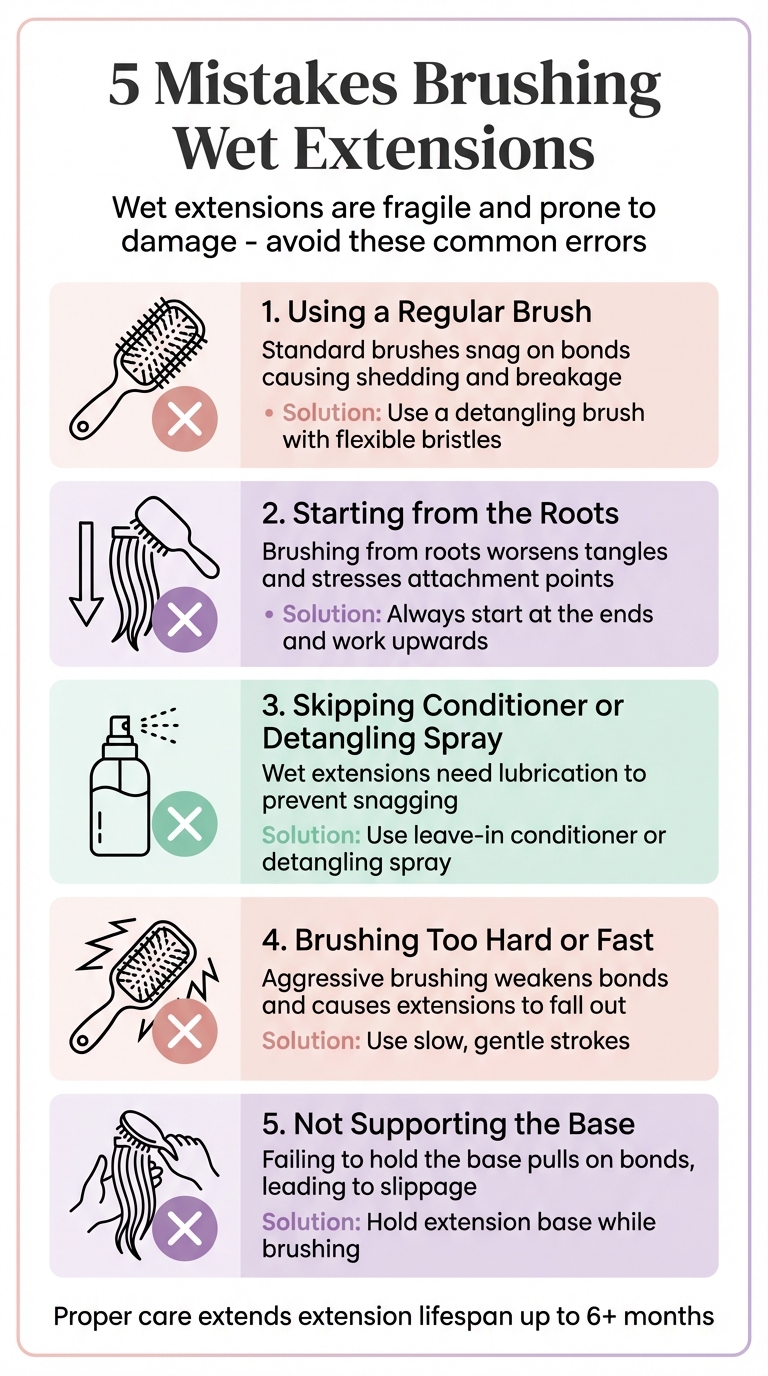
Brushing wet extensions the wrong way can lead to damage, breakage, and even shorten their lifespan. Wet hair extensions are fragile because they lack natural oils and are more prone to snapping or stretching. Here are the five most common mistakes to avoid:
- Using a regular brush: Standard brushes can snag on bonds and cause shedding or breakage. Opt for a detangling brush with flexible bristles.
- Starting from the roots: Brushing from the roots downwards can worsen tangles and stress attachment points. Always start at the ends and work upwards.
- Skipping conditioner or detangling spray: Wet extensions need lubrication to prevent snagging. Use a leave-in conditioner or detangling spray for smoother brushing.
- Brushing too hard or fast: Aggressive brushing can weaken bonds and cause extensions to fall out. Use slow, gentle strokes.
- Not supporting the base: Failing to hold the extension base while brushing can pull on bonds, leading to slippage or damage.
5 Common Mistakes When Brushing Wet Hair Extensions
How To Brush Hair Extensions When Wet | SimplyHair

1. Using a Regular Brush Instead of a Detangling Brush
Regular brushes, typically designed for natural hair, can be a nightmare for extensions. Their stiff, beaded bristles often snag on bonds, tapes, or wefts, creating tension that can pull your extensions out completely. Since extensions don’t receive natural nutrients like your real hair, they’re especially prone to breakage when handled roughly.
When your extensions are wet, the risk gets even higher. Standard brushes with nodular bristles tend to tighten knots instead of loosening them, catching on attachment points and weakening the bonds. This not only increases shedding but can also lead to premature damage.
That’s why investing in a specialised detangling brush is crucial. Detangling brushes, like the Tangle Tamer Brush ($21.95), are designed with flexible bristles that glide through hair smoothly, avoiding attachment points and reducing breakage. These brushes are gentle yet effective, helping to preserve your extensions and keep them looking their best for longer.
Using the wrong tool, especially on wet extensions, risks damaging your investment. The tension caused by regular brushes can lead to bond failure and the need for early replacement.
2. Starting from the Roots
Brushing your hair from the roots can push knots further down the shaft, creating larger tangles that strain extension bonds.
Extensions are particularly delicate when wet. Their elasticity makes them prone to damage, as brushing from the roots places unnecessary pressure on the attachment points, potentially causing them to loosen or slip. Additionally, daily shedding can weaken natural hair, adding extra tension to the bonds. To avoid these issues, adjust your brushing technique using the expert advice below.
"Gently brush your hair... starting at the ends and working your way up to the top. Take care around the top of your head – don't pull on the bonds."
– Angel Extensions
Start by detangling the ends of your hair, then gradually work your way up through the mid-lengths before reaching the roots. To reduce strain, support the extension weft with one hand while brushing gently with the other.
If your extensions are soaking wet, let them air-dry until they’re about 80% dry, or use a cool blow-dryer. This helps prevent fibre snapping and keeps the bonds secure.
3. Brushing Without Conditioner or Detangling Spray
When extensions are wet, they’re more fragile because they lack natural oils. Brushing them without any kind of lubrication can cause snagging, stretching, and even breakage.
Using detangling products is key because they provide that all-important "slip" to the hair cuticle. This allows your brush to glide through knots without pulling or catching on the bonds. Plus, it helps minimise frizz and protects the hair from damage. Experts in the field strongly recommend this approach.
Caitlin Dennehy, an Expert Advice Writer at Beauty Works, shares her tip:
"If you do need to detangle after washing, apply the Beauty Works 10-in-1 Miracle Spray first to help soften knots and protect the hair."
To make this part of your routine, start by towel-drying your hair gently. Then, spritz a lightweight, alcohol-free detangling spray or leave-in conditioner onto damp hair. Focus on the mid-lengths and ends, steering clear of the bonds to avoid loosening them. For particularly stubborn tangles, apply a little extra product directly to the knot and carefully use your fingers to separate the strands before brushing.
For the best results, try Hair Wonderland's Moisture Magic treatment ($39.95) to bring hydration back to your hair. Pair it with the Tangle Tamer Brush ($21.95) to make detangling as smooth and gentle as possible.
sbb-itb-dcde78e
4. Brushing Too Hard or Too Fast
Brushing wet extensions in a hurry can lead to serious damage. Unlike your natural hair, extensions don’t benefit from the oils and nutrients produced by your scalp, making them more vulnerable to rough treatment.
Being too aggressive with your brush can put unnecessary strain on the bonds, tapes, or wefts, which can loosen the extensions or even cause them to fall out.
"Hair extensions and natural hair tends to be more fragile when wet, thus there's a greater chance for your hair extensions to break or fall out." – Cosmetic Capital
This highlights how important it is to treat your extensions with extra care, especially when they’re wet.
If you notice increased shedding, strands breaking, extensions slipping down, or a pulling sensation on your scalp, these are clear signs you might be brushing too harshly. When this happens, it’s time to adjust your technique.
To keep your extensions in good shape, stick to slow, gentle strokes and always start brushing from the ends, working your way up. Hold the hair just above the section you're brushing to reduce tension on the bonds. For stubborn knots, resist the urge to yank - use light, repeated strokes to gently work through tangles. This careful method not only protects your extensions but also keeps your scalp comfortable and your look intact for longer.
5. Not Supporting the Extension Base
One common mistake people make when brushing wet extensions is forgetting to support the base. If you brush without holding the attachment points, every stroke pulls on the bonds, tapes, or wefts. Over time, this repeated tugging can weaken the attachments or even cause them to slip out completely.
This problem becomes worse due to natural hair shedding. On average, we lose about 50 to 100 strands of hair daily, which reduces the volume of natural hair supporting the extensions. As a result, the attachment points become more vulnerable to the weight and tension caused by brushing. Without proper support, fewer strands are left to handle the pulling force.
Cosmetic Capital offers this advice:
"Remember to support your extensions at the roots and try not to tug at the bonds and roots of your hair." – Cosmetic Capital
To protect your extensions, try the "hold and brush" technique. Use one hand to firmly hold the base of the extension - right where the bond, tape, or weft is attached. With your other hand, start brushing from the ends of the hair and work your way upward. This method ensures that the tension from brushing is absorbed by your hand rather than pulling on your scalp or the attachment points.
For dealing with knots close to the base, you can use the "ponytail grip" method. Gather the hair just below the bonds as if you're holding a ponytail, and then brush the section below your grip. This technique helps distribute the pulling force, keeping both your natural hair and the extensions safe from unnecessary strain.
Incorporating these methods into your routine will add an extra layer of care to your extensions, complementing other gentle practices you’ve already learned.
How to Brush Wet Extensions Properly
When it comes to maintaining your extensions, knowing the right brushing techniques is essential. Wet and dry brushing serve different purposes, and using the correct method at the right time can significantly extend the life of your extensions.
Wet Brushing vs Dry Brushing
Wet brushing is all about detangling. It helps remove knots that form during washing, stopping them from drying into stubborn tangles later on. However, it’s important to note that extensions are at their most fragile when wet. The hair becomes more elastic, making it prone to stretching or breaking. On the other hand, dry brushing is a daily routine that smooths the hair, distributes natural oils from the scalp, and preps your extensions for washing.
| Aspect | Wet Brushing | Dry Brushing |
|---|---|---|
| Purpose | Detangling and preventing knots post-wash | Smoothing and styling |
| Tools | Detangling brush or wide-tooth comb | Boar bristle or paddle brush |
| Technique | Gentle, starting from the ends upwards | Firm strokes, starting from the roots |
Wet extensions are delicate and require extra care, while dry extensions are more durable. This distinction makes tool selection even more important for wet detangling.
The Right Tools for Wet Extensions
The tools you use for wet extensions can make all the difference. Regular brushes are too harsh and can damage the bonds. Instead, look for brushes with flexible bristles designed to glide through knots without pulling. For example, the Tangle Tamer Brush ($21.95) and The Detangle Brush ($29.95) from Hair Wonderland are excellent options. These brushes feature bristles that bend under pressure, reducing stress on both the hair and the attachment points.
Wide-tooth combs are another great option. They gently separate larger sections of hair, reducing friction and preventing tangles. Avoid using boar bristle brushes on wet hair, as these are better suited for dry brushing when they can effectively distribute oils.
Step-by-Step: Brushing Wet Extensions
Here’s how to properly brush your wet extensions to keep them looking their best:
- After washing, gently blot your hair with a microfibre towel to remove excess water. Avoid rubbing, as this can cause matting.
- Apply a lightweight, alcohol-free detangling spray or leave-in conditioner. This adds slip and reduces friction, making brushing easier.
- Hold the base of the extensions securely with one hand to protect the bonds, which are more vulnerable when wet.
- With your other hand, start brushing from the tips of the hair and work your way upwards. Focus on a few centimetres at a time to avoid creating new knots.
This bottom-up technique not only detangles efficiently but also safeguards the bonds, ensuring your extensions remain in great condition.
Conclusion
Taking care of your extensions with the right techniques, especially when wet, can significantly extend their lifespan. Wet extensions are more delicate since they don't benefit from natural scalp oils, so your attention is crucial to prevent issues like bond weakening, breakage, or matting.
"Brushing is one of the most important habits when caring for hair extensions." - Shakira Dickinson, Stylist, Hair Candy
The way you brush truly matters. Starting at the ends and working your way up with gentle, careful strokes helps protect the bonds. It’s also essential to use a detangling brush specifically designed for extensions - these brushes have flexible bristles that glide smoothly through wet hair without tugging at the attachment points.
When cared for properly, high-quality human hair extensions can stay smooth and manageable for six months or even longer. A little extra care while brushing goes a long way in keeping your extensions looking flawless and ensuring they remain a worthwhile investment.
FAQs
Why should you use a detangling brush on wet hair extensions?
Using a detangling brush made specifically for extensions is a smart move, especially since wet hair - extensions included - is more delicate and prone to breakage. When extensions are wet, they can form tighter knots, and their cuticles are more susceptible to damage. A brush with soft, widely spaced bristles can gently work through tangles without pulling or breaking the strands. This not only preserves the extensions' length but also protects the health of your natural hair.
Brushing your extensions before they’re completely soaked is another helpful step. It tackles any existing knots beforehand, so you won’t have to tug at wet hair - a common culprit behind split ends and hair loss. Adding an extension-friendly brush to your routine can also smooth the hair, spread natural oils evenly, and keep your extensions looking flawless for longer.
How can I stop my extensions from slipping while brushing?
To keep your Hair Wonderland extensions from slipping, using the right brushing technique and tools is essential. Start by making sure your extensions are securely attached to your natural hair before you begin.
Opt for a soft-bristled or wide-tooth brush designed specifically for extensions. Hold the base of the extension with one hand to stabilise it while gently brushing with the other. This helps avoid putting too much pressure on the attachment points, ensuring they stay in place. Steer clear of brushing when your hair is wet, as wet hair is more elastic and can stretch, potentially loosening the extensions. If you need to detangle damp hair, use a gentle detangling brush, working carefully in small sections to avoid tugging.
Before styling, double-check that all clips are firmly in place or that tape and glue bonds are clean and dry. By following these steps, you can reduce slipping and keep your extensions looking polished and secure all day long.
What should I use on wet extensions before brushing to prevent damage?
To keep your wet extensions in good condition, start by applying a leave-in detangling spray or a heat protectant. This step reduces the risk of breakage and makes detangling much smoother. When brushing, opt for a gentle, extension-safe brush to maintain their quality and extend their lifespan.