


Hair extensions can transform your look, but improper care can ruin them fast. From brushing the wrong way to using unsuitable products, small mistakes can lead to dryness, tangling, and damage. Here's what you need to know to keep your extensions in top condition:
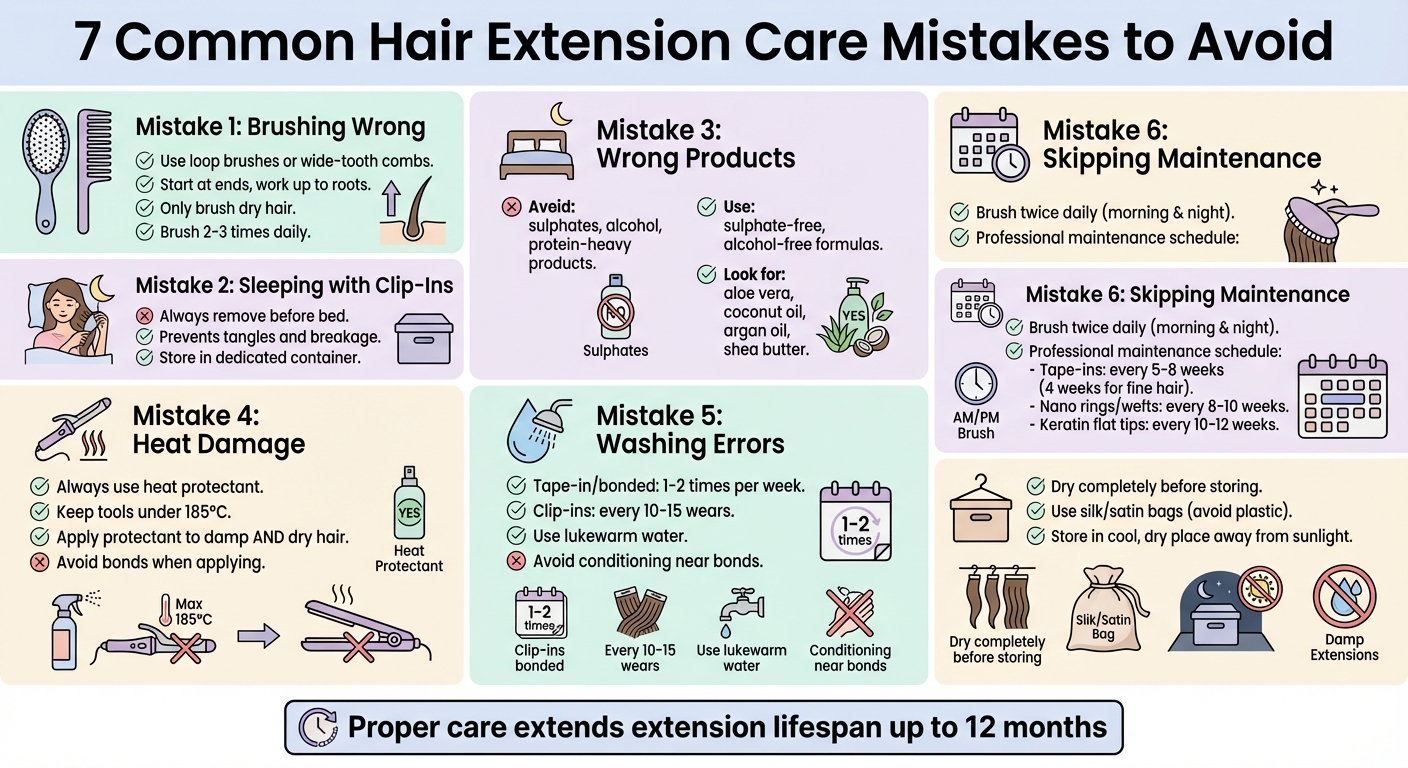
- Brushing Mistakes: Use a loop brush or wide-tooth comb. Start at the ends, not the roots, and only brush dry hair.
- Sleeping with Clip-Ins: Always remove clip-in extensions before bed to avoid tangles and breakage.
- Wrong Products: Avoid sulphates, alcohol, and protein-heavy products. Stick to gentle, extension-safe shampoos and conditioners.
- Heat Damage: Use a heat protectant and keep styling tools under 185°C.
- Washing Errors: Wash extensions 1–2 times a week for bonded types or after 10–15 wears for clip-ins. Avoid vigorous scrubbing.
- Skipping Maintenance: Brush daily and schedule professional maintenance every 4–12 weeks, depending on the extension type.
- Improper Storage: Dry extensions completely before storing them in a cool, dry place using a silk bag or dedicated container.
Proper care can extend the lifespan of your extensions, keeping them smooth and manageable while protecting your natural hair. Follow these tips to avoid common pitfalls and make the most of your investment.
7 Common Hair Extension Care Mistakes to Avoid
Hair Extensions Gone Wrong? How to Avoid Damage and Protect Your Hair | Texture+Sage
Mistake 1: Brushing Extensions the Wrong Way
Brushing your hair extensions incorrectly can lead to tangles, shedding, and even breakage. The wrong tools or techniques can wreak havoc on the delicate structure of extensions, leaving them looking far from their best.
One expert put it simply:
"Tangles are your hair extensions' worst nightmare."
- Angel Extensions
Harsh brushing or using an unsuitable brush can seriously damage your extensions, so it's important to get it right.
Using the Wrong Brush
Not all brushes are created equal, especially when it comes to extensions. Many standard brushes have hard plastic bristles with nodules at the tips. These can snag on tape or keratin bonds, leading to shedding and damage.
For extensions, loop brushes are a game-changer. Their looped bristles glide through hair without catching on bonds or wefts, making them ideal for daily use. For instance, Hair Wonderland's Tangle Tamer Brush ($21.95) is specifically designed to detangle gently without risking your extensions.
Other tools to consider include:
- Wide-tooth combs: Perfect for detangling damp hair without pulling.
- Boar bristle brushes: Great for smoothing hair and distributing natural oils along the strands.
Poor Brushing Technique
Even the best brush won't help if you're using the wrong technique. A common mistake is starting at the roots and dragging the brush down through knots. This can put unnecessary tension on the bonds, potentially pulling extensions out.
The right approach? Start brushing at the ends and work your way up towards the roots. Always support the hair above the bonds as you brush to minimise stress. Aim to brush your extensions two to three times a day to keep tangles at bay, but only when the hair is dry - brushing wet extensions can lead to matting and damage.
Mistake 2: Sleeping with Clip-In Extensions
Taking care of your extensions isn't just about brushing; how you use and store them is just as important for keeping them in good condition.
Sleeping with clip-in extensions is a no-go. Why? Overnight wear can harm both your extensions and your natural hair. The friction between your hair, the extensions, and your pillowcase can lead to serious tangling and matting.
As Intacte Hair explains:
"Sleeping with clip in hair extensions can cause discomfort and increase the risk of tangling, breakage, and damage." - Intacte Hair
Why Sleeping in Extensions Is Risky
When you sleep with clip-in extensions, the clips rub against your natural hair, creating tension that can cause breakage and thinning. This added strain often results in knots and tangles that require forceful washing and detangling, which can wear out your extensions much faster.
Storing Your Extensions the Right Way
To keep your extensions in top shape, take them out before bed. Start by gently detangling them with a wide-tooth comb or an extension-friendly brush. Make sure they're completely dry before putting them away. For storage, consider using a dedicated container, like Hair Wonderland's Clip In Bag ($54.00), which helps protect against mould and damage. Lay the clips flat to avoid bending, and store the bag in a cool, dry spot away from direct sunlight to maintain the colour.
Following this storage routine, along with proper brushing, will help your extensions stay in great condition for longer.
Mistake 3: Using Unsuitable Hair Care Products
Extensions depend heavily on moisture to maintain their look and feel. Using the wrong products can strip away hydration, leaving them dry, dull, and lifeless.
Why You Should Avoid Sulphates and Alcohol
Certain ingredients can wreak havoc on your extensions, especially when it comes to moisture retention and durability.
- Sulphates: These harsh detergents are notorious for drying out hair, leading to brittleness and breakage. For tape-in extensions, they can even weaken the adhesive bond, causing them to slip or fall out.
- Alcohol: Alcohol-based products are another culprit. They dry out hair strands, making them brittle and prone to damage. This is especially true for colour-treated extensions, which can end up looking dull and lifeless.
Hair Wonderland warns against using products containing protein, keratin, sulphates, or high alcohol content. These ingredients can damage extensions, leaving them stiff and unmanageable.
Choosing the Right Products for Extensions
To keep your extensions in top condition, it's important to use gentle, specially designed products.
Look for shampoos and conditioners labelled "sulphate-free" and "alcohol-free". Products formulated specifically for extensions are your safest bet. Ingredients like aloe vera, coconut oil, argan oil, shea butter, and baobab oil are excellent natural moisturisers that help maintain hydration without causing damage.
When applying conditioners, masks, or oils, concentrate on the mid-lengths and ends of your extensions. Avoid the bond or tape areas to prevent weakening the attachment or causing buildup. For a product tailored to extension care, Hair Wonderland’s Moisture Magic is a great choice. At $39.95, it’s designed to hydrate extensions without harsh ingredients.
If your extensions start feeling weighed down by product buildup, use a clarifying shampoo sparingly - no more than once every two weeks. This will gently remove residue without stripping away essential moisture.
Mistake 4: Using Too Much Heat Without Protection
Using heat styling tools can give your extensions that sleek, polished look, but it comes with risks. Unlike your natural hair, extensions don’t benefit from the oils and nutrients your scalp provides. Since extensions are essentially "dead hair", they’re far more prone to damage from heat exposure. Knowing how heat impacts the hair’s structure is essential to avoid lasting damage.
How Heat Affects Extensions
Excessive heat causes water within the hair to evaporate, which changes its protein structure. Emma Wilson, Senior Stylist at Hairhouse, explains:
"As heat is applied, natural oils are stripped from the hair, water molecules evaporate and the hair's natural protein structure changes".
This process leaves extensions dry and brittle, often with a straw-like texture. High temperatures can also weaken or even melt attachment points like tapes and keratin bonds. Unfortunately, once the damage is done, it’s permanent. While products like oils and masks can temporarily improve the appearance, they can’t restore the hair’s original structure.
Protecting Extensions with Heat Protectants
To minimise damage, always apply a heat protectant before using styling tools. Hair Wonderland stresses the importance of this step:
"heat styling improves the look and feel of your extensions [only if] you always apply a heat protectant spray".
For the best results, apply heat protectant to damp hair before blow-drying, and again to dry hair before using flat irons or curling tools. Focus on the mid-lengths and ends, steering clear of the bonds. Keep your tools set to no higher than 180°C–185°C, as 185°C is considered the sweet spot for effective styling with minimal damage. To restore some lost moisture, finish with 1–2 pumps of a treatment oil on the mid-lengths and ends.
sbb-itb-dcde78e
Mistake 5: Washing Extensions Incorrectly
Getting your washing routine wrong can seriously harm your extensions. Washing too often strips away much-needed moisture, while washing too rarely allows product buildup, sweat, and oils to accumulate. This buildup can weigh down your extensions and even weaken the adhesive bonds. Finding the right balance is key to keeping your extensions looking and feeling their best.
Washing Too Often or Too Rarely
Over-washing is a mistake many make. Unlike natural hair, extensions can't restore their moisture. EH Hair & Extensions cautions:
"Washing too often can leave hair extensions dry."
Stick to washing tape-in or bonded extensions about 1–2 times per week. For clip-in extensions, aim for every 10–15 wears to avoid drying them out or causing product buildup.
On the flip side, under-washing can be just as harmful. Residue from styling products like hairsprays and gels can pile up over time, leaving your extensions feeling heavy and looking dull. Worse, this buildup can lead to the bonds slipping prematurely.
How to Wash Extensions the Right Way
Once you've nailed the right washing frequency, it’s time to focus on technique. Proper washing can make all the difference.
Start by detangling your extensions with an extension-safe brush or a wide-tooth comb to prevent matting. Use lukewarm water - hot water can weaken both the strands and the bonds. When shampooing, opt for a sulphate-free formula and apply it only to the scalp and roots. Use gentle, downward strokes instead of vigorous scrubbing. Rinse thoroughly, letting the shampoo flow through the lengths.
When conditioning, focus on the mid-lengths to the ends and avoid the bonds. As EH Hair & Extensions advises:
"Never apply conditioner or masks near tapes, wefts, or bonds, as this can cause slipping."
Finish with a cool rinse to seal the cuticle and lock in moisture. Gently blot your extensions with a microfibre towel to remove excess water. If blow-drying, stick to medium or cool heat, ensuring the roots and attachment points are completely dry to prevent slippage and scalp irritation.
Mistake 6: Neglecting Regular Detangling and Maintenance
Skipping regular detangling can wreak havoc on your extensions. Unlike your natural hair, extensions don’t benefit from the oils produced by your scalp - they’re essentially "dead hair" that depends entirely on your care routine to stay smooth and manageable. Ignoring knots can lead to severe matting, which often means replacing your extensions far sooner than you'd like.
Daily Detangling Habits
Make it a habit to brush your extensions twice a day - once in the morning and again before bed. Start at the ends and work your way up to minimise breakage. Holding the hair near the roots with one hand can also reduce tension on the attachment points, which is particularly important for permanent extensions. This technique helps prevent naturally shed hairs from wrapping around bonds or tape tabs, causing tangles.
Always detangle your extensions when they’re dry. Wet hair is more prone to tightening knots, especially during washing. A specialised extension brush - like Hair Wonderland's Detangle Brush ($29.95) - is designed to glide over bonds without snagging. Also, avoid sleeping with wet extensions. Instead, dry your hair thoroughly and secure it in a loose, low plait or ponytail to minimise friction and tangling overnight.
While daily detangling is essential, professional maintenance is just as important for keeping your extensions in top condition.
Planning Regular Maintenance
In addition to your daily care routine, scheduling regular professional maintenance is critical for both your extensions and your natural hair. Hair Wonderland emphasises:
"Leaving extensions in for too long can damage your natural hair. As your extensions grow, the section of natural hair they're attached to becomes smaller due to daily shedding".
For tape-in extensions, book repositioning appointments every 5–8 weeks. If you have fine hair, aim for every 4 weeks to keep the extensions close to the roots and to catch any hidden matting that daily brushing may miss.
Different extension types have their own maintenance needs. Nano rings and weft extensions usually require attention every 8–10 weeks, while keratin flat tips can last 10–12 weeks between appointments. Regular upkeep not only extends the life of your extensions but also protects your natural hair by evenly distributing weight and reducing traction damage.
Mistake 7: Storing Extensions Improperly
Storing hair extensions the wrong way can drastically shorten their lifespan. Tangling, matting, and frizz are just a few of the issues caused by improper storage. Leaving extensions loose on a benchtop or crammed into a drawer exposes them to dust, humidity, and friction. As Brenda L. from Cliphair explains:
"Improper storage can lead to tangles, matting, damage, frizz, dust and bacteria's growth".
Another big mistake? Storing extensions while they’re still damp. This creates the perfect environment for mould and bacteria to thrive. Proper storage isn’t just a nice-to-have - it’s essential for keeping your extensions in great shape.
How to Store Extensions Correctly
Start by brushing through your extensions with an extension brush to remove tangles. Make sure they’re completely dry before storing them - moisture can lead to unpleasant odours and bacterial growth.
For a practical storage solution, consider investing in Hair Wonderland's Clip In Bag ($54.00). It keeps extensions neatly organised while protecting them from dust and other harmful elements. Alternatively, you can use the original packaging box, provided the extensions are bone dry. Avoid plastic bags, as they cause friction that roughens the hair cuticles, leading to frizz. Silk or satin materials are a better choice because they help maintain smoothness.
Store your extensions in a cool, dry place, away from direct sunlight. Sun exposure can fade the colour and dry out the hair fibres. A cupboard or drawer in your bedroom is ideal. If you’re storing clip-in extensions, make sure all the clips are fastened securely to prevent snagging.
Storage Mistakes to Avoid
To keep your extensions in top condition, steer clear of these common errors:
- Leaving extensions loose on furniture or bathroom rails: This exposes them to dust, tangling, and humidity. Bathrooms, in particular, are a no-go due to the high moisture levels, which can cause frizz and dullness.
-
Storing extensions while damp: Damp extensions are a breeding ground for bacteria and can lead to unpleasant odours. Abbey Wilson from Cliphair highlights the risks:
"Leaving attachments damp can lead to slippage, frizzing, and scalp irritation".
Clip-in extensions, which spend most of their time off your head, need extra care when stored. By following these tips and avoiding common mistakes, you can extend their lifespan from months to years. Proper storage isn’t just about convenience - it’s an investment in keeping your extensions looking their best.
Conclusion
Hair extensions can be a fantastic way to enhance your style, but they also require care to ensure they last. With the right attention, high-quality Remy human hair extensions can stay in great condition for up to 12 months.
The common mistakes highlighted - like brushing wet hair or storing damp extensions - can not only shorten their lifespan but also impact the health of your natural hair. Taking the time to care for your extensions properly benefits both.
To keep them looking their best, stick to a few key habits: use sulphate-free products, brush gently starting from the ends, limit washing to 2–3 times per week, always use a heat protectant before styling, and store them in a cool, dry place. These small steps can make a big difference in maintaining your extensions and protecting your natural hair.
FAQs
What type of brush should I use for hair extensions?
To keep your hair extensions looking their best, invest in a soft-bristle loop brush. This type of brush has flexible bristles that slide smoothly through your hair, reducing the risk of pulling on the bonds. Always start brushing at the ends and gradually work your way up to the roots - this method helps protect the attachment points and prevents unnecessary strain.
When your hair is wet, switch to a wide-tooth detangling comb. Wet hair is more fragile, and using a comb instead of a brush minimises the chance of weakening the bonds. Steer clear of nylon or hard-bristle brushes, as these can be too rough and might damage tape, keratin, or clip-in extensions.
Incorporating a gentle brushing routine into your daily care is key. Brands like Hair Wonderland offer brushes specifically designed for extensions, helping to keep your hair smooth, shiny, and securely in place for longer.
How often should I wash my hair extensions to keep them in good condition?
For permanent hair extensions like tape-ins, sew-ins, or keratin bonds, it's ideal to wash them once or twice a week. Washing too often can weaken the bonds and lead to premature wear. For clip-in extensions, you can wash them after 10–15 uses or whenever they start to feel dirty or weighed down by product build-up.
Stick to gentle, sulphate-free shampoos and conditioners to keep your extensions in good shape. Be mindful not to apply conditioner near the roots of permanent extensions, as this can cause slippage. With the right care routine, your extensions will look great and last much longer.
Why should I use a heat protectant on my hair extensions?
Using a heat protectant is a must when styling your hair extensions with tools like straighteners, curling wands, or blow dryers. These tools can expose your extensions to high temperatures, which may weaken the fibres, leaving them dry, brittle, or prone to breakage.
A good heat protectant acts like a shield, creating a barrier that helps preserve the extensions' smooth texture and keeps them looking their best. By taking this small step, you can extend their lifespan and ensure they stay silky, natural, and healthy-looking for longer.