


Clip-in hair extensions are a quick and easy way to transform your look, but incorrect use can lead to discomfort, visible extensions, or even damage to your hair. Here are the five most common mistakes people make with clip-ins and how to avoid them:
- Placing Clips Too High or Too Close to the Scalp: Attach clips below the eyebrows and avoid tight placements to prevent discomfort and visibility.
- Mismatched Colour and Poor Blending: Match the extensions to your mid-lengths and ends, not roots, and blend using styling techniques like curling or backcombing.
- Skipping Preparation or Using the Wrong Tools: Start with clean, dry hair, use sectioning clips and a detangling brush, and add texture for a secure hold.
- Overloading with Too Many Wefts: Distribute wefts evenly, leaving gaps between sections, to avoid bulkiness and strain on your scalp.
- Choosing the Wrong Length or Ignoring Placement: Pick extensions that suit your height and hair type, and layer them properly for a natural look.
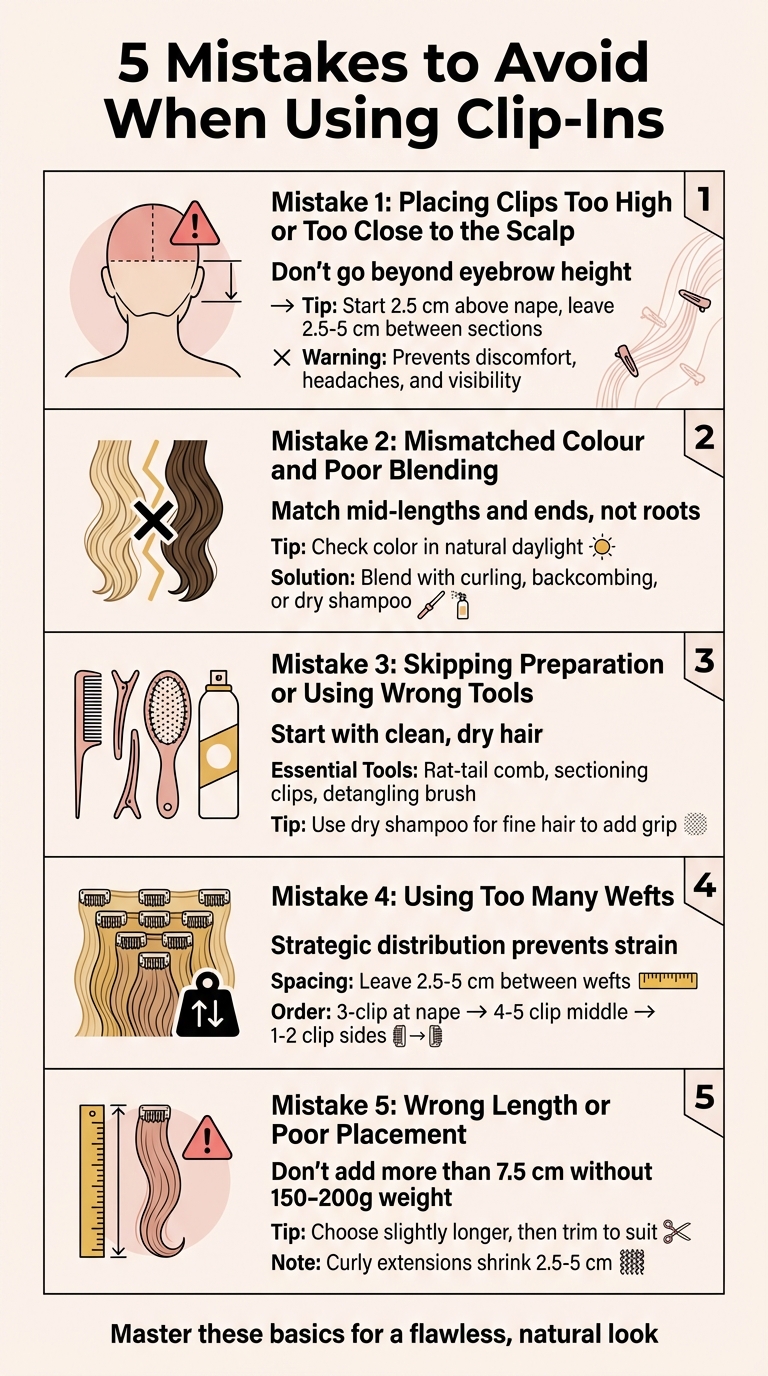
5 Common Clip-In Hair Extension Mistakes to Avoid
1. Placing Clips Too Close to the Scalp or Crown
Placement and Positioning of Clip-Ins
Attaching clip-ins too high on your head can lead to a look that's far from natural - and it’s not comfortable either. The crown area usually has less natural hair to cover the Russian or Mongolian hair extensions, making them more noticeable. As Zen Hair explains:
"It's crucial not to go beyond the height of your eyebrows when installing clip-in hair extensions, or else you risk them being easily noticeable."
Start placing your clip-ins at the nape of your neck, roughly 2.5 cm above your hairline, and work your way up in horizontal sections. Leave about 2.5–5 cm of space between each section. This approach ensures the extensions stay hidden under enough natural hair, helping them blend in smoothly. Proper placement not only improves the overall look but also prevents unnecessary discomfort.
Clipping extensions too close to your scalp can cause pinching, pulling, and even headaches. Platform Hair Extensions advises:
"If they're too tight, they can pull on your scalp and cause discomfort. Secure them snugly so they stay in place without straining your hair."
When clips are too tight or positioned too high, they can put strain on your hair follicles, leading to breakage or even traction alopecia over time. To avoid these problems, make sure each clip snaps firmly into place without pulling at your scalp. If you feel any tugging, unclip and reposition it slightly lower on the hair shaft. Getting the placement just right is essential for both comfort and achieving a seamless, natural look.
sbb-itb-dcde78e
2. Failing to Match Colour and Blend Properly
Colour Matching and Blending Techniques
Nothing gives away clip-in extensions faster than a mismatched shade. Many people mistakenly think extensions should match their root colour, but the key is to align them with your mid-lengths and ends. Natural hair typically has a mix of highlights, lowlights, and undertones, which can shift depending on the lighting - especially in natural daylight.
To find the best match, always check your hair colour in natural daylight to identify its true undertones. If your hair features balayage or grown-out roots, opt for multi-tonal or rooted hair extensions that mimic the natural colour gradient.
After clipping in your wefts, brush your natural hair and extensions together to blend the layers seamlessly. Styling can also help: curling or waving both your hair and the extensions creates a cohesive look. If shorter layers peek through, try braiding or pinning the lower section of your natural hair flat against your scalp before attaching the first weft. This step helps disguise any blunt ends and creates a more polished finish.
For those with fine or silky hair where clips might slip, backcombing the roots or adding a bit of dry shampoo can add texture, ensuring the extensions stay secure all day long. These blending tricks make all the difference in achieving a natural, flawless look.
3. Skipping Preparation or Using Incorrect Tools
Tools and Preparation for Application
Once you've nailed placement and blending, the next step is preparation - and it’s just as important. Using the wrong tools or skipping prep altogether can lead to clip-ins that slip, look uneven, or feel uncomfortable.
Start with clean, dry hair. Why? Because oily or damp hair makes it harder for clips to stay in place. As expert Prue points out:
"Oily or knotted hair makes it harder for the clips to grip, which affects the hold".
The right tools can make all the difference. A rat-tail or pintail comb helps you create neat, horizontal sections, while sectioning clips (like duckbill or croc-style clips) keep your natural hair out of the way. A detangling brush is also a must - it smooths out knots from the ends up without causing breakage. Without these tools, you risk messy sections, discomfort, and an uneven look.
For those with fine or silky hair, a little extra prep is key. Use dry shampoo or a texturising spray at the roots to add grip for the clips. Backcombing the roots where the clips will sit also helps anchor them securely, stopping the wefts from sliding down.
Before you’re done, grab a mirror and check the back of your head to make sure everything is concealed and aligned. Planning to style your hair? Apply a heat protectant spray before using hot tools to keep your hair and extensions safe from damage.
Skipping these steps doesn’t just affect how your extensions look - it can shorten their lifespan. As Prue emphasises:
"If you skip this step [preparation], the extensions may slip or look uneven".
Taking a few extra minutes to prepare properly can transform your application from average to flawless. Not only will your clip-ins stay secure, but they’ll also set the stage for seamless styling later on. For best results, try Hair Wonderland's premium clip-in extensions and application tools, designed to combine durability, comfort, and a secure hold.
4. Using Too Many Wefts or Distributing Them Unevenly
Weft Distribution and Weight Balance
When it comes to clip-in extensions, it's tempting to think that more is better - but that's not always the case. Adding too many wefts can strain your scalp and natural hair, causing discomfort and even damage. Heather Collier from Cliphair highlights this concern:
"Overloading your head with extensions can put unnecessary strain on your natural hair and lead to discomfort."
The trick to achieving a natural, comfortable look is all about strategic distribution. Most clip-in sets come with multiple wefts, typically ranging from one to five clips per piece. Start with smaller 3-clip wefts at the nape of your neck. As you work your way up, use wider 4- or 5-clip wefts across the middle of your head to build volume. Save the smallest 1- or 2-clip wefts for the sides or temples to frame your face naturally.
Spacing is just as crucial as placement. Aim to leave about 2.5 to 5 centimetres between each weft as you move upwards. If the wefts are clipped too close together, it can create a bulky look or even visible bumps. Proper spacing ensures the extensions blend seamlessly with your natural hair and distribute weight evenly. When attaching multi-clip wefts, start by securing the centre clip first, then stretch the weft gently and fasten the outer clips. This method helps achieve a flat, secure fit while keeping the extensions discreet.
Another key consideration is choosing extensions that suit your hair type. Lightweight, seamless extensions work best for thin or fine hair, as they minimise slipping and prevent excess bulk. For thicker hair, while you may be able to handle heavier sets, using every single weft in the pack can still cause unnecessary strain. Prue, an expert in hair extensions, cautions:
"Using too many pieces... may cause overloading, which could cause the clips to slip."
Brands like Hair Wonderland offer clip-in extensions designed with balanced weight distribution and secure clips, making it easier to add volume without overburdening your scalp.
5. Selecting the Wrong Length or Ignoring Weft Placement
Length Selection and Natural Integration
Picking the wrong extension length can throw off your entire look. Heather Collier from Cliphair puts it perfectly:
"Selecting the wrong length for your extensions can throw off your entire look. Too long, and they'll appear unnatural; too short, and you won't achieve the desired effect."
Adding more than 7.5 centimetres of length without the proper weight (150–200 grams) can lead to sparse, uneven ends that don’t blend well with your natural hair. Your height also plays a role - extensions that are 18 inches long might hit mid-back on someone taller, but fall to the lower back on a shorter person.
A good rule of thumb is to choose extensions slightly longer than your desired length, then have them trimmed or layered to suit your face shape. For curly extensions, keep in mind they naturally shrink by about 2.5 to 5 centimetres, so plan accordingly . Once you’ve nailed the length, proper weft placement is key to achieving a seamless, natural look.
Placement and Positioning of Clip-Ins
Even if you’ve chosen the perfect length, proper weft placement is what makes extensions blend naturally. All wefts should sit below the crown and eyebrow level to stay hidden and flow naturally with your hair.
For those with short hair, avoiding a visible "shelf" effect is crucial. Heather Collier suggests this handy trick:
"If your hair is short, braid or pin the lower layer tightly against your scalp before applying your first weft. This helps disguise shorter layers and creates a smooth base for blending."
When adding side wefts near your temples, angle them upwards to create a more natural fall. Hair Wonderland’s seamless clip-in extensions are a great option - they feature lightweight wefts that lie flat against the scalp, making placement easier and ensuring a polished, flawless finish.
Clip in Hair Extensions - The 5 Worst Mistakes You Can Make | Instant Beauty ♡
To keep your extensions looking their best, follow these hair extension care tips tailored to your specific hair type.
Conclusion
Creating a flawless look with hair extensions begins by avoiding common mistakes. The top five to watch out for are: poor placement, mismatched colour, insufficient preparation, uneven weft distribution, and incorrect length. As Zen Hair puts it:
"The proper use of hair extensions is the key to achieving a flawless, natural look without any flaws."
To maintain a natural appearance, ensure clips are placed slightly below the eyebrows with a small gap for natural movement. Matching the colour and evenly distributing the wefts are also essential steps to keep your extensions secure and seamless.
FAQs
How do I know if my clip-ins are too heavy for my hair?
If you're noticing certain issues with your clip-in extensions, they might be too heavy. Here are some common signs:
- Scalp discomfort or a sense of heaviness: If your scalp feels sore or weighed down after wearing the extensions, this could be a red flag.
- Slipping or shifting: Extensions that refuse to stay put may indicate they're too heavy for your natural hair.
- Hair damage: Strain or breakage in your natural hair is another sign that the extensions are causing too much stress.
To avoid long-term damage, you might want to switch to lighter extensions or consult a professional for guidance.
What can I do if my clip-ins keep slipping out?
If your clip-ins keep sliding out, try placing them where your hair has more grip, like the mid-lengths or ends, instead of near the crown. Begin with clean, dry hair, making sure it's free of oils or heavy products. Using texturising sprays or dry shampoo can help improve the hold. When securing the clips, fasten them firmly, but don’t overtighten to avoid discomfort. If they still slip, consider adjusting their placement or reapplying them for a better fit.
Can I trim or layer clip-ins to match my haircut?
Yes, you can trim or layer clip-in extensions to match your haircut. These techniques make it easier to blend the extensions with your natural hair, giving you a smooth and natural appearance. By adjusting the length or adding layers, you can customise the extensions to fit your style and achieve a flawless finish.