


Hair extensions are more prone to heat damage than natural hair, making safely heat styling your extensions is a must. Using heat shields and protectant sprays can prevent dryness, breakage, and bond damage during styling. Key steps include:
- Check heat limits: Human hair extensions can handle 180–230°C, but 180°C is safest. Synthetic extensions should stay under 150°C.
- Prepare extensions: Always detangle and dry extensions completely before applying heat.
- Use the right protectant: Choose sulphate-free, low-alcohol sprays designed for extensions. Avoid protein and keratin-based products.
- Style cautiously: Keep heat tools away from bonds and use the lowest effective temperature.
- Inspect after styling: Check for dryness, brittleness, or loose bonds. Apply argan oil or conditioner to restore moisture if needed.
Follow these steps to maintain the health and lifespan of your extensions while styling.
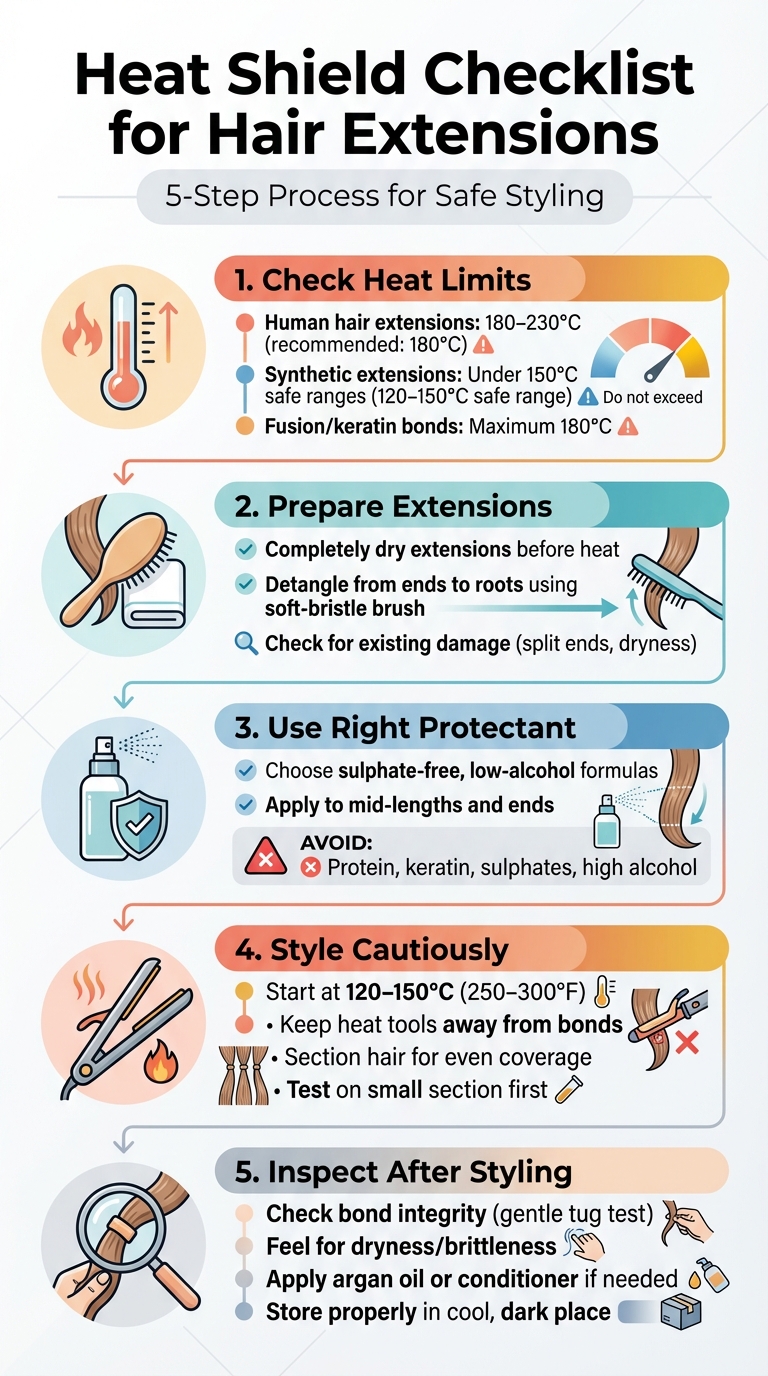
5-Step Heat Shield Checklist for Hair Extensions
Best Heat Protectant for your Human hair Extensions and Natural Hair #shorts
sbb-itb-dcde78e
Preparing Extensions Before Heat Styling
To keep your premium extensions looking their best and lasting longer, follow these essential preparation steps.
Check Extension Type and Heat Limits
Before reaching for your styling tools, it's important to confirm the type of extensions you’re working with. Human hair extensions - like Hair Wonderland's premium Russian and Mongolian options - can typically handle heat between 180–230°C, while synthetic extensions are far more delicate, with a safe range of 120–150°C. Knowing these limits is key to avoiding heat-related damage.
If you’re using fusion or keratin bond extensions, extra care is needed. Excessive heat can melt the adhesive, potentially ruining the bonds. For Hair Wonderland's double-drawn extensions, the maximum recommended temperature is 180°C, which is sufficient for most styles without risking harm.
If you’re unsure of the manufacturer’s guidelines, play it safe. Test a small, inconspicuous section of hair at a low temperature - start around 120°C - and gradually increase if needed. This cautious approach can save your extensions from irreversible damage.
Finally, make sure your extensions are completely dry and free of tangles before applying any heat.
Detangle and Dry Extensions
Proper preparation is just as important as the styling itself. Extensions should always be completely dry before heat styling. Damp hair is much more prone to breakage and tangles, and applying heat to wet extensions can weaken bonds or even cause permanent damage. After washing, gently pat your extensions with a microfibre towel to remove excess water. Let them air-dry overnight if possible, or use a blow dryer on its lowest heat setting.
Once dry, detangle carefully using a soft-bristle or loop brush - Hair Wonderland's Tangle Tamer Brush is a great option. Start at the ends and work your way up to the roots, being gentle to avoid pulling on wefts or bonds, which could lead to shedding. In Australia's dry and windy climate, extensions can dry out quickly, so check for any dryness or damage, such as split ends, before styling. Remember, heat can worsen existing issues, so addressing them beforehand is essential.
Using Heat Protectants and Shields
Once your extensions are dry and free of tangles, it’s time to prepare them for heat styling. This step transitions your hair from being prepped to actively protected during the styling process.
Choose the Right Heat Protectant
When it comes to heat protectants, make sure you’re using one designed specifically for human hair extensions. Not all products are suitable, and using the wrong one can cause serious damage.
"Avoid products containing: protein, keratin, sulfates, and high alcohol content. These can damage your extensions and make them unmanageable after just one use." - Hair Wonderland
Why avoid these ingredients? Sulphates and high alcohol content strip moisture, leaving your extensions dry and prone to breakage. Since extensions don’t benefit from your scalp’s natural oils, it’s crucial to use sulphate-free, low-alcohol formulas tailored for human hair extensions. A good protectant spray not only shields your extensions but also keeps them looking and feeling smooth.
When applying the product, focus on the mid-lengths and ends - these areas are most exposed to heat damage. Avoid applying too much near the bonds to prevent buildup. Once applied, section your hair to ensure every strand gets proper protection.
Section Your Hair for Even Coverage
Sectioning your hair ensures the heat protectant is evenly distributed. Use clips to divide your hair into four to six sections. Then, gently comb through each section with a wide-tooth comb or a tangle teaser. This step helps spread the product evenly, avoiding any weak spots that could be vulnerable to heat damage.
Give the product a minute or two to soak in before blow-drying. Use medium heat and always direct the airflow away from the bonds to minimise any stress on the extensions. Proper preparation here makes all the difference in maintaining the health and longevity of your extensions.
Heat Styling Best Practices
Once your extensions are protected and neatly sectioned, it's time to apply heat carefully. Using the right temperature, proper techniques, and being cautious around bonds will help maintain the health and longevity of your extensions.
Use the Right Temperature Settings
Extensions are more sensitive to heat, so always start with the lowest temperature and increase only if needed.
"For hair extensions, a temperature range of 250-300°F (120-150°C) is usually sufficient." - Sam Conan, CEO of USAHair
Opt for ceramic or tourmaline tools with adjustable settings to ensure even heat distribution. This also helps to minimise damage while styling. Additionally, take extra care to avoid exposing the bonds to direct heat.
Keep Heat Away from Bonds
Bonds are especially delicate, and direct heat can weaken or even melt them. When styling, keep tools away from the roots. For curling, wrap the hair around the barrel without overlapping strands. For straightening, use smooth, steady strokes and avoid re-styling the same section multiple times. This approach not only protects the bonds but also ensures a more polished look.
Test on a Small Section First
Before styling your entire head, test the heat on a small, hidden section of hair. Check for any signs of brittleness or dryness. If the section looks shiny and smooth, your settings are likely safe. Once confident, work systematically with sectioning clips, and let each section cool completely before moving on. Following a daily care checklist can further help maintain your style. This helps the style hold better and minimises potential damage.
After Styling Care
Taking care of your extensions after styling is just as important as the styling process itself. Proper aftercare helps to maintain their appearance and extend their lifespan, especially when heat has been used.
Check Extensions for Damage
After styling, take a moment to inspect your extensions for any signs of heat damage. Run your fingers through the hair to check for rough or brittle textures, which could indicate a loss of moisture. Tug gently on the bonds to ensure they're still secure - if they feel loose or shift easily, it's best to avoid further heat and consult your stylist for reapplication. Also, look for any dullness or fading in the colour, as these can be signs of heat exposure.
| Factor | Inspection Tip | Action if Issue Found |
|---|---|---|
| Bond Integrity | Gently tug to check security | Avoid heat; seek professional reapplication |
| Hair Texture | Feel for dryness/brittleness | Apply argan oil or conditioner to mid-ends |
| Colour Fade | Visual check for dullness | Use UV/heat protectant for future styling |
If you notice dryness, applying a lightweight argan oil or deep conditioner to the mid-lengths and ends can help restore moisture. Leave the treatment on for 10–20 minutes before rinsing. This step replenishes hydration without affecting the bonds, as heat often depletes the natural oils in human hair extensions.
Once you've assessed the condition and applied any necessary treatments, you can move on to brushing and storing your extensions.
Brush and Store Extensions Properly
To keep your extensions smooth and tangle-free, use a soft-bristle detangling brush. Start at the ends and work your way up to the bonds to avoid unnecessary pulling. For clip-in extensions, it's a good idea to store them in a protective Clip In Bag in a cool, dark place. This helps shield them from Australia's strong UV rays, which can accelerate colour fading and damage the texture.
If you're wearing bonded extensions, loosely braid or tie your hair before bed and sleep on a silk or satin pillowcase. These materials reduce friction, helping to protect your extensions overnight.
Conclusion
Heat shields and protectants are essential for maintaining moisture and minimising damage during heat styling. This is especially important for extensions, which lack the natural oils from the scalp and are more susceptible to dryness - particularly in Australia's often arid climate.
To keep your extensions looking their best, remember these key tips: check the heat limits of your tools, stick to temperatures below 180°C, and apply a heat protectant thoroughly from the mid-shaft to the ends. Experts emphasise that heat protectants should be non-negotiable for every styling session, and quick, controlled styling motions can help prevent overheating. Following these precautions will help you maintain the health and longevity of your extensions.
For those looking to elevate their styling routine, Hair Wonderland provides a range of products designed to complement these practices. From seamless clip-in extensions designed to blend extensions with natural hair seamlessly to detangling brushes and care essentials, their premium double-drawn Russian and Mongolian human hair extensions are a trusted choice across Australia, offering both durability and a natural finish.
FAQs
How often can I heat style my extensions?
To keep your extensions in great condition and make them last longer, try to limit heat styling to just twice a week. Always apply a heat protectant before using any tools, and stick to the lowest temperature that gets the job done. By using heat sparingly, you'll help your extensions stay strong and keep their natural appearance intact.
Can I use heat shields on tape-ins, keratin bonds and clip-ins?
Yes, you can use heat shields and heat protectants on tape-ins, keratin bonds, and clip-ins to help minimise heat damage. Just make sure the products are designed specifically for extensions. Also, avoid applying direct heat to the bonds or wefts, as this can compromise their durability.
What ingredients should I avoid in heat protectant sprays?
Avoid heat protectant sprays that include alcohols (like denatured or isopropyl), silicones such as dimethicone, formaldehyde-releasing preservatives, parabens, sulfates, phthalates, synthetic fragrances, or petroleum-based ingredients like mineral oil. These ingredients can lead to dryness, build-up, irritation, or make your hair feel heavy. Instead, choose sprays with nourishing and lightweight formulas to shield your hair while keeping it healthy.