


Tangled hair extensions can ruin your style and shorten their lifespan. Proper care is crucial to keeping them smooth and manageable. Here’s how you can prevent tangling and maintain your extensions for longer:
- Brush daily with a detangling brush like the Tangle Tamer ($21.95). Start at the ends and work upwards.
- Use sulfate-free shampoo and deep condition weekly to keep extensions hydrated.
- Apply leave-in conditioner or light hair oil daily to the mid-lengths and ends for added moisture.
- Sleep on a silk pillowcase and braid your hair loosely to reduce friction overnight.
- Store extensions properly in a silk or satin bag to avoid tangling when not in use.
- Limit heat styling and always apply heat protectant to prevent dryness and damage.
- Avoid heavy products that cause buildup, which can lead to tangles.
- Detangle wet hair gently using your fingers or a wide-tooth comb to prevent breakage.
- Invest in high-quality extensions like double-drawn Remy human hair for smoother, tangle-resistant strands.
- Reduce friction by securing hair during activities and avoiding rough fabrics.
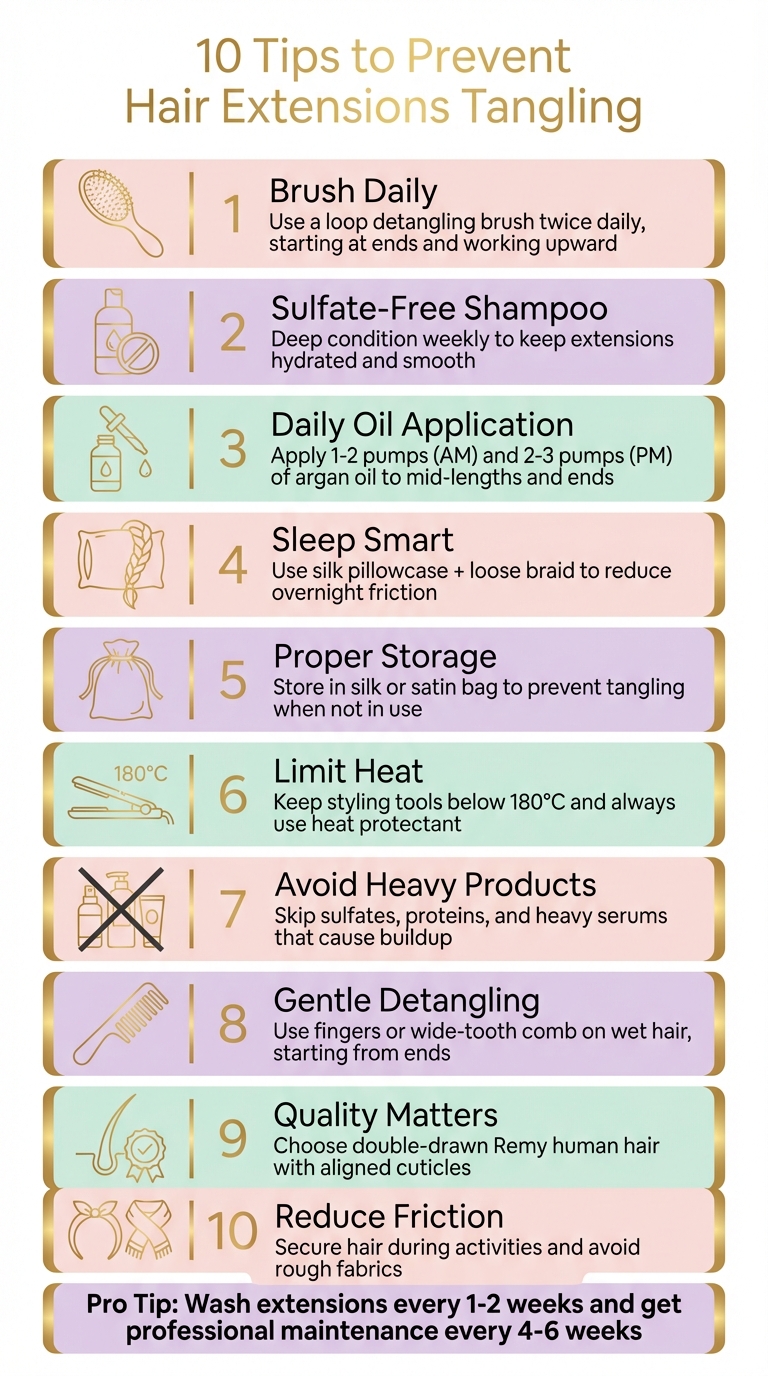
10 Essential Tips to Prevent Hair Extension Tangling
1. Brush Extensions Daily with a Detangling Brush
Preventing Tangles and Reducing Friction
Brushing your extensions twice a day - once in the morning and again before bed - can stop minor knots from turning into major tangles. Since extensions lack the natural oils that protect your real hair, constant contact with clothing or pillows can lead to friction and tangling. A consistent brushing routine, using the right tools, ensures your extensions stay smooth and manageable.
Specialised brushes, like loop detangling brushes, are designed to glide over bonds and clips without causing damage. As Shakira Dickinson from Hair Candy Extensions Australia puts it, "Using the right brush can make a significant difference in reducing tangles and prolonging the lifespan of your extensions." Products like the Tangle Tamer Brush ($21.95) or The Detangle Brush ($29.95) from Hair Wonderland are excellent options for working through knots while keeping your extensions in great shape.
Simplifying Maintenance
When brushing, always start at the ends and work your way up in small sections. Hold the hair near the bonds to avoid putting unnecessary strain on them. For clip-in extensions, make it a habit to brush them thoroughly before attaching and after removing them.
Extending the Life of Your Extensions
Regular brushing also helps distribute any applied oils evenly, reducing friction and wear over time. However, avoid brushing your extensions when they’re wet, as this can lead to stretching and breakage, shortening their lifespan.
sbb-itb-dcde78e
2. Use Sulfate-Free Shampoo and Deep Condition Often
Keeping Extensions Hydrated and Healthy
Sulfates are strong detergents that strip away natural oils, which can leave your hair extensions dry and brittle. Unlike natural hair, extensions don't benefit from the moisture your scalp provides. Without proper care, they can develop a straw-like texture, making them more prone to knots and tangles.
Preventing Tangles with the Right Products
Sulfate-free shampoos are a game-changer for extensions. They help keep the hair cuticle smooth, which reduces friction and tangling. Pair this with a weekly deep conditioning session - leave a treatment or hair mask on for at least 30 minutes. Focus the conditioner on the mid-lengths and ends, steering clear of the bonds or attachment points to avoid loosening them. This routine not only keeps your extensions tangle-free but also helps them last longer.
Extending the Life of Your Extensions
Smooth, well-cared-for cuticles mean less friction and longer-lasting extensions. Using sulfate-free products consistently preserves the integrity of the hair. For daily upkeep, apply a small amount of treatment oil - like argan oil - on the mid-lengths and ends. Use 1–2 pumps in the morning and 2–3 pumps at night to keep your extensions moisturised and soft.
Making Maintenance Easier
Well-hydrated extensions are simpler to brush and style. Aim to wash them every 1–2 weeks, and always finish with a cool water rinse. This step seals the cuticles, locking in moisture and making detangling easier. Products like Hair Wonderland's Moisture Magic Treatment ($39.95) provide the deep hydration your extensions need to stay soft and manageable between washes.
3. Apply Leave-In Conditioner or Light Hair Oil Daily
Hydration and Care for Human Hair Extensions
Unlike natural hair, extensions don't benefit from the scalp's natural oils, so they need extra hydration to stay soft and tangle-free. Using 1–2 pumps of treatment oil in the morning and 2–3 pumps in the evening on the mid-lengths and ends can help maintain their moisture. Argan oil is a great option - it’s lightweight, absorbs quickly, and doesn’t leave a greasy feel. However, avoid applying any products near the bonds, tapes, or clips, as this can weaken the attachment and lead to slippage. This step is crucial in keeping extensions healthy and manageable.
Reduction in Tangling and Friction
Lightweight oils are excellent for reducing friction by creating a smooth, protective layer on each strand. This helps minimise knots and matting by allowing the hair to glide easily instead of catching. Proper hydration also seals the cuticles, which is particularly helpful in humid Australian climates where extensions can swell and frizz.
"A good leave-in conditioner or hair oil can work wonders for your extensions, helping to seal in moisture and reduce tangling." - Shakira Dickinson, Hair Extension Expert
Before taking a dip in salt water or chlorinated pools, apply a leave-in cream to shield your extensions from dryness and tangling caused by environmental factors. If you encounter common hair extension problems like knots, a small amount of leave-in conditioner applied directly to the tangle can make it much easier to separate before brushing.
Ease of Maintenance
Keeping extensions hydrated makes daily care and brushing much simpler, reducing the risk of breakage. Stick to sulfate-free, professional-grade products and steer clear of anything with protein, keratin, or high alcohol content, as these can quickly make extensions difficult to manage.
4. Sleep with Loose Braids on a Silk Pillowcase
Keeping Tangling and Friction at Bay
Cotton pillowcases might seem harmless, but they can create a lot of friction during the night. This friction causes your extensions to rub together, leading to tangles and frizz. Silk pillowcases, on the other hand, provide a smooth surface, letting your hair glide effortlessly without snagging or tangling. Pair this with a loose braid to keep your extensions secure and reduce the chances of matting at the roots or bonds [8,2]. To get the best results, gently brush through your extensions before braiding to remove any existing knots. This small step works alongside your daily detangling routine, offering added protection overnight.
Extending the Life of Your Extensions
Loose braids are not just about reducing tangles - they help preserve the integrity of your extensions too. Tight braids can pull on the attachment points, leading to breakage or discomfort. A low, loose plait at the nape of your neck keeps your hair contained without putting strain on your scalp. Use soft hair ties or silk scrunchies instead of elastic bands to avoid unnecessary tension or damage. If you’re using clip-in extensions, always take them out before bed to prevent tangling and protect both the extensions and your natural hair [3,9].
"What I always recommend is using a silk bonnet... It stops your hair rubbing and tangling while you sleep, keeps your hair feeling softer for longer, and helps the extensions last." - Hairdresser, Sleep Dreams Online
Hydration Tips for Human Hair Extensions
Silk doesn’t just reduce friction - it’s also better at retaining moisture compared to cotton. This helps your extensions stay hydrated and shiny. However, sleeping with wet hair is a big no-no, as it can lead to matting and even mildew near the bonds [8,2]. Before braiding, apply a small amount of treatment oil to lock in moisture and keep your extensions looking their best. This simple care step can make all the difference in maintaining their softness and shine.
5. Store Extensions in a Proper Storage Bag
Preventing Tangling and Friction
Leaving your extensions out in the open can lead to tangling caused by friction. A silk or satin storage bag is a much better option, as these materials minimise friction and help keep the hair fibres smooth and aligned. Unlike cotton, which can snag and pull on hair, silk and satin are gentler and reduce the risk of matting. Plus, using a storage bag protects your extensions from catching on jewellery, bobby pins, or other items that could cause damage. This simple step works hand-in-hand with your daily care routine to keep your extensions in great shape.
Extending the Lifespan of Extensions
Storing your extensions properly helps protect the hair cuticle from unnecessary wear and tear, reducing the risk of permanent damage. A breathable storage bag is ideal because it allows airflow while shielding your extensions from dust, humidity, and harsh sunlight - factors that can dry out the hair and leave it brittle. Experts agree that proper storage and care can significantly extend the life of high-quality extensions, from just a few months to over a year.
"Storage is essentially an extension of your care routine, and treating it seriously can double the usable life of your hair extensions." - Fabulive
Simplifying Maintenance
Before storing your extensions, always brush them gently, starting at the ends, to remove tangles. Make sure they're completely dry, as storing damp extensions can lead to mildew, unpleasant odours, and even fibre damage. For clip-in extensions, fasten all clips to avoid snagging, and consider loosely braiding the hair for long-term storage to limit unnecessary movement. Keep the storage bag in a cool, dark spot, like a wardrobe or drawer, to protect against UV rays and temperature fluctuations. Products like Hair Wonderland's Clip In Bag ($54.00) are specifically designed to organise and safeguard your extensions, making it easier to maintain their quality over time. These thoughtful storage habits fit seamlessly into your overall hair extension care routine.
6. Reduce Heat Styling and Always Use Heat Protectant
Durability of the Extensions
Using too much heat on your extensions can strip away moisture, leaving them dry and brittle. When this happens, the strands are more likely to fray and snag on each other, creating tangles that can be a nightmare to deal with. To avoid this, keep your styling tools below 180°C. High temperatures can disrupt the cuticle alignment, leading to increased friction and tangling. By limiting heat exposure, you’ll help maintain the health and smoothness of your extensions.
Hydration and Care for Human Hair Extensions
Unlike your natural hair, extensions don’t benefit from the oils and nutrients produced by your scalp. This makes them especially vulnerable to heat damage. To combat this, always use an alcohol-free heat protectant spray before styling. Opt for lightweight formulas to avoid further drying out the hair. For daily hydration, follow the care routine detailed in Section 3 to keep your extensions nourished. This combination of hydration and protection not only shields your extensions but also helps reduce friction - particularly important in humid conditions where heat-damaged hair tends to swell and frizz.
Reduction in Tangling and Friction
Protecting your extensions from heat and keeping them hydrated is key to preventing tangles. When the hair is well-hydrated, the cuticle layer stays smooth, reducing friction between strands and making tangles less likely.
"Heat styling can make extensions dry and brittle, leading to tangling over time." - Shakira Dickinson, Hair Candy Extensions Australia
Whenever possible, let your extensions air dry to minimise heat damage. If you do use heat tools, apply styling products sparingly. Overusing hairsprays or serums can cause sticky buildup, which attracts tangles. A cool water rinse after washing can also help - this simple step closes the hair cuticles and locks in moisture, keeping your extensions manageable and less prone to matting between washes.
7. Avoid Heavy Products That Cause Buildup
Ease of Maintenance
While heavy products might seem helpful at first, they often lead to more headaches than they're worth. Ingredients like sulfates, protein, keratin, and high alcohol content can wreak havoc on your extensions, leaving them dry and difficult to manage. Since extensions are essentially "dead hair", they lack the ability to recover from damage caused by sulfates, which strip away natural oils. To keep your extensions in good shape, opt for sulfate-free, hydrating shampoos and wash them every 1–2 weeks. This routine helps manage buildup without drying them out. Excess buildup doesn’t just make styling harder - it also weakens the overall health of your extensions.
Durability of the Extensions
Using heavy serums or conditioners near the bonds or clips of your extensions can lead to serious problems. Buildup in these areas can cause bonds to slip or tapes to peel, ultimately ruining the installation. To avoid this, keep leave-in conditioners and oils focused on the mid-lengths and ends of your hair - far away from the attachment points. For added shine and smoothness, lightweight oils like argan oil are a great choice. Just 1–2 pumps a day can help maintain moisture without making your extensions feel heavy or greasy. Avoiding heavy products ensures your extensions stay smoother and last longer.
Reduction in Tangling and Friction
Buildup doesn’t just affect the installation; it also increases friction. If your extensions start to feel sticky or straw-like, it’s likely due to product residue. This buildup can lead to tangling and matting, making your extensions harder to manage. Lightweight leave-in conditioners or detangling sprays can give your extensions the hydration they need without leaving behind a sticky residue that attracts dirt and tangles. Since extensions can’t process heavy, protein-based repair products like natural hair, these products often leave them stiff and unmanageable. Stick to lighter options to keep your extensions soft and tangle-free.
8. Detangle Wet Hair Gently, Starting from the Ends
Handle Wet Extensions with Care
Wet hair extensions are far more delicate, so treating them gently is key. Always start detangling from the ends, working your way up to avoid tightening knots and putting unnecessary strain on the attachment points. Before using a brush, use your fingers to loosen larger tangles. This approach helps minimise breakage and makes combing smoother, especially when the hair is hydrated.
Hydration for Smooth Detangling
Before you begin detangling, apply 1–2 pumps of argan oil or a lightweight leave-in conditioner to the mid-lengths and ends. This step reduces friction and makes combing easier. After washing, a cool water rinse can help seal the hair cuticles, locking in moisture and leaving the surface smooth. Adding a light leave-in treatment after detangling can further enhance manageability and keep your extensions looking sleek.
Protecting the Life of Your Extensions
To maintain your extensions' quality, gently pat them dry with a towel to reduce friction and prevent matting. When detangling, hold the base securely to protect both your natural hair and the extension bonds. After applying oil and blotting dry, use a wide-tooth comb or a specialised tangle teaser to carefully work through the strands. And remember - never go to bed with wet extensions. Sleeping on damp hair is a common culprit behind severe tangling and damage.
9. Choose Premium Double-Drawn Human Hair Extensions
Reduction in Tangling and Friction
Daily care plays a big role in keeping hair extensions tangle-free, but starting with high-quality extensions makes all the difference. Premium Remy human hair extensions are designed with cuticles aligned in a single direction, reducing friction - the main culprit behind knots and tangles. As Shakira Dickinson from Hair Candy Extensions Australia puts it:
"High-quality hair extensions, like those made from 100% Remy human hair, have cuticles aligned in one direction, making them less prone to tangling".
Double-drawn vs single-drawn extensions take this a step further by removing shorter strands, resulting in an even thickness from root to tip. This uniformity not only enhances the look but also ensures the hair moves smoothly against your natural hair and clothing, making tangles less likely.
Durability of the Extensions
When it comes to longevity, premium human hair extensions outshine their lower-quality counterparts. Thanks to their aligned cuticle structure, they resist fraying and dryness, staying soft and smooth for much longer. On the other hand, synthetic fibres - lacking natural cuticles - are prone to static and friction, which lead to a dull, tangled mess over time. For instance, Hair Wonderland offers seamless 22" extensions for $499.00, crafted from double-drawn Russian and Mongolian hair extensions, ensuring long-lasting durability.
Hydration and Care for Human Hair Extensions
Even with their premium quality, these extensions need proper hydration to stay at their best. Since extensions don't benefit from your scalp's natural oils, following the hydration routine mentioned in Section 3 is key to keeping them smooth and manageable. Use a sulfate-free shampoo and finish with a cool rinse to help seal the cuticles and lock in moisture, giving your extensions the care they deserve.
10. Reduce Friction from Clothing and Activities
Tangling and Friction
Friction is one of the biggest culprits behind tangles and matting, especially when your hair rubs against clothing or other surfaces. Fabrics like cotton, with their rougher texture, can pull at the strands, leading to shedding and even breakage over time. If you lead an active lifestyle - whether you're hitting the gym, swimming, or spending time outdoors in windy conditions - this constant movement increases the chances of tangles forming.
A simple way to combat this is by wearing a protective headband or scarf during activities. This not only reduces friction but also keeps your extensions in place.
Everyday Habits for Maintenance
Reducing friction isn’t just about special occasions; your daily habits play a massive role too. For example, securing your hair in a loose, low braid during workouts can keep strands from rubbing together excessively. After washing your hair, gently blot it with a towel instead of rubbing, as this prevents unnecessary friction. If you're planning to swim, applying a leave-in conditioner or a lightweight hair oil beforehand creates a barrier that protects against drying elements like chlorine or saltwater.
Prolonging the Life of Your Extensions
Minimising friction does more than just prevent tangles - it also helps your extensions last longer by reducing shedding and breakage. Dry hair is particularly prone to damage, so keeping your extensions hydrated is crucial. Using products that maintain the natural "slip" of your hair ensures the strands glide past each other smoothly, reducing wear and tear. These small, consistent habits can make a big difference in maintaining the look and durability of your extensions over time.
How to Detangle Hair Extensions & Prevent Tangles | Instant Beauty ♡
For more personalized advice, you can use our hair extension care tips generator to get a custom routine based on your hair type.
Conclusion
Keeping your hair extensions tangle-free comes down to a mix of consistent care and using the right tools. Simple habits like brushing twice a day with a specialised extension brush, applying treatment oils to the mid-lengths and ends, and sleeping with a loose braid on a silk pillowcase can make a world of difference.
Of course, the quality of your extensions also matters. High-grade options like Hair Wonderland's double-drawn Russian/Mongolian Remy human hair are designed with aligned cuticles, which naturally help resist tangling. Pair these with sulfate-free products and proper heat protection (keeping tools under 180°C), and you can enjoy that fresh-from-the-salon look for months.
"Consistent care ensures your extensions remain tangle-free, natural-looking, and long-lasting." - Shakira Dickinson, Writer, Hair Candy Extensions Australia
Don’t forget professional maintenance every 4–6 weeks. This allows your stylist to re-section the extensions, avoiding heavy build-up and root tangling. It’s a small step that helps protect both your extensions and your natural hair.
FAQs
Why do my extensions tangle more than my real hair?
Hair extensions are more prone to tangling compared to natural hair, and there are several reasons behind this. First, the processing and styling that extensions undergo often reduce their flexibility, making them more susceptible to knots. Additionally, build-up from oils, dirt, or leftover product residue can cause strands to stick together. Everyday habits, like using the wrong brushing techniques or tools, can also play a role in creating tangles.
On top of that, environmental factors - like Australia's humidity - can make the situation worse by affecting the texture of the extensions. To keep them smooth and manageable, regular gentle brushing and proper care are absolutely essential.
How can I stop knots forming at the roots or bonds?
To keep your hair extensions free of knots at the roots or bonds, focus on gentle care and smart styling practices. Start brushing from the ends and work your way up, using a detangling brush specifically made for extensions. Be mindful not to tug or handle the bonds roughly. Opt for hair care products that reduce tangling and keep your extensions smooth. Consistent upkeep and cautious styling will help maintain your extensions in great condition.
What should I do if my extensions tangle after swimming or the gym?
To keep your extensions in great condition, rinse them right away with fresh water after exposure to salt, chlorine, or sweat - these can lead to tangling if left unchecked. Use a gentle, sulphate-free shampoo and make sure your roots are completely dry afterward. For added protection against tangling, tie your hair into a loose braid or a low ponytail before swimming or exercising. After workouts, give your extensions a thorough brush to avoid matting and product build-up.