


Hair extensions can last longer and stay in great condition if stored properly. Failing to store them correctly can lead to dryness, tangling, mildew, and damage to the cuticle alignment. Here’s a quick guide to ensure your extensions remain in top shape:
- Clean properly: Use a sulfate-free shampoo and avoid products with protein, keratin, or high alcohol content.
- Detangle gently: Use the best brushes for extensions to protect the cuticles.
- Dry completely: Ensure no dampness before storage to avoid mould.
- Secure carefully: Close clips, separate by weft, and use silk or satin accessories to reduce friction.
- Choose the right container: Use breathable silk-lined bags or airtight boxes with silica packets for moisture control.
- Control storage conditions: Keep them in a cool, dry, shaded area with stable temperatures (15–24°C) and humidity (40–60%).
- Inspect regularly: Check every few months for tangles, dryness, or mildew.
Proper storage not only protects your investment but also ensures your extensions look natural and last longer.
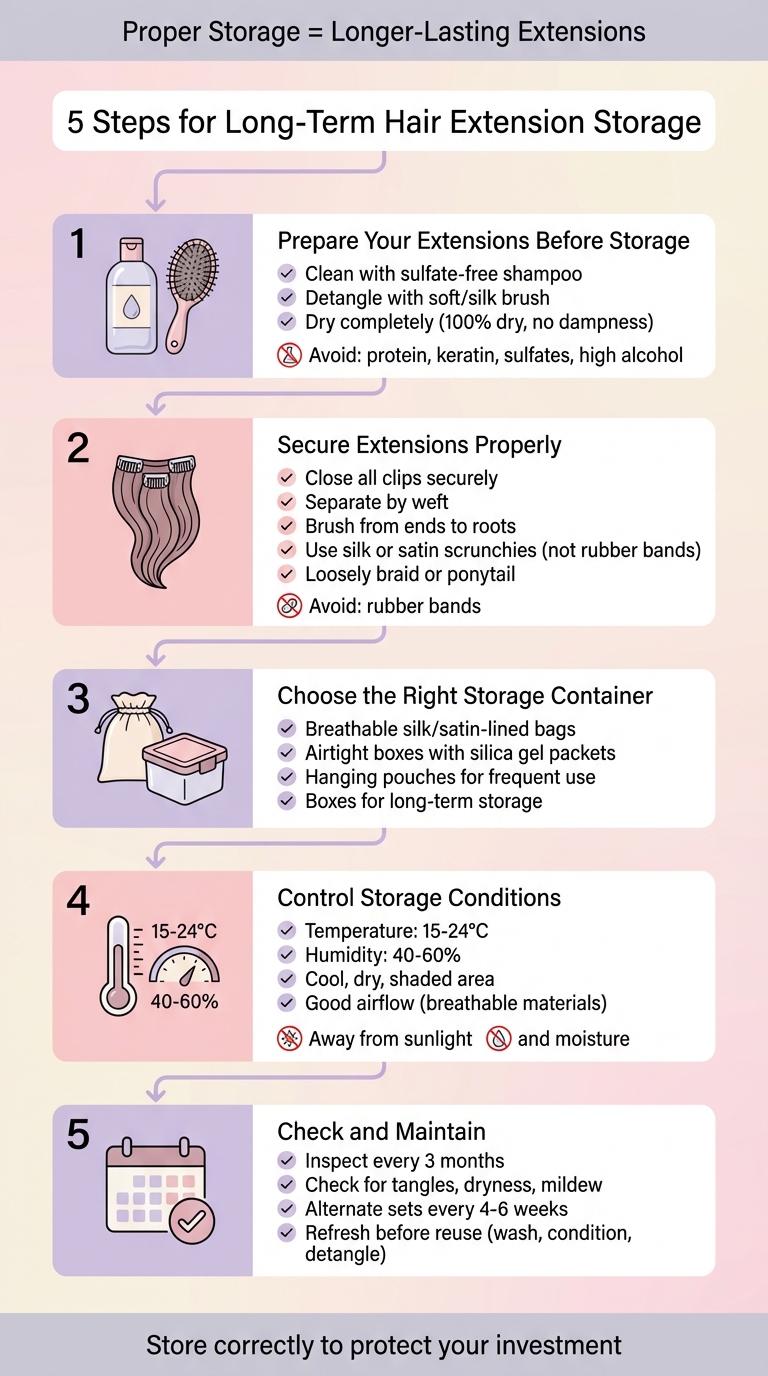
5-Step Guide to Storing Hair Extensions Long-Term
Storing Your Extensions
sbb-itb-dcde78e
Step 1: Prepare Your Extensions Before Storage
Getting your extensions ready for storage is key to keeping them in top condition. Proper prep can help you avoid issues like matting, mould, or damage. Here’s how to do it right.
Clean Your Extensions
Start by washing your extensions with a sulfate-free shampoo. This removes oils, dust, and residue without stripping away moisture or harming the texture. After shampooing, apply a moisturising conditioner to the mid-lengths and ends, then rinse with cool water to seal the cuticles. Hair Wonderland emphasises:
Avoid products containing: protein, keratin, sulfates, and high alcohol content. These can damage your extensions and make them unmanageable after just one use.
Using harsh products can speed up wear and tear, reducing the lifespan of your extensions.
Detangle Carefully
Once your extensions are dry, gently detangle them with a soft or silk brush, such as Hair Wonderland's Tangle Tamer Brush or The Detangle Brush. Start at the ends and work your way up to minimise breakage and protect the cuticles. These specialised brushes create less friction than plastic ones, helping to maintain the softness and manageability of your extensions.
Dry Completely
Before storing, make sure your extensions are 100% dry. Lay them flat in a well-ventilated space to air dry. If they still feel cool, seem heavier than usual, or have a slight odour, they’re likely not fully dry. Storing damp extensions can lead to mildew, weakened fibres, and unwanted kinks. Given Australia's fluctuating humidity levels, silica packets can be a handy addition to your storage setup to keep moisture at bay.
Step 2: Secure Extensions Properly
Now that your extensions are clean, detangled, and dry, it’s time to store them correctly. How you secure and organise them plays a big role in keeping them smooth and tangle-free, rather than turning into a knotted mess.
Separate by Weft
Start by closing all the clips on each weft. This step is crucial because open clips can snag hair strands or even bend out of shape. As au.thathair.co points out, "Check that all clips are securely shut because this prevents them from getting damaged or bent". Open clips can act like little hooks, catching on other wefts and causing tangles that are tough to undo.
Next, brush each weft gently, starting from the ends and working your way up, to smooth out and align the strands. Once brushed, secure the hair in a loose ponytail or braid to keep everything in place. If you’re using box storage, tie the weft near the base and loosely roll it into a circle to help maintain its natural shape.
Use Silk or Satin Accessories
The material you use to secure your extensions matters just as much as the method. Silk and satin are ideal because they minimise friction, which helps prevent tangling, matting, and static. These materials also help retain moisture and protect the outer layer of the hair.
Swap rubber bands for silk or satin scrunchies to avoid leaving creases or kinks in the hair. For styled extensions, like those with curls or waves, lightly braid them before placing them in a silk-lined pouch to help preserve their texture. This is especially important if you plan to blend extensions with natural hair for a seamless look later. If you’re storing extensions in a box, add a layer of acid-free tissue paper between wefts to further reduce friction.
Step 3: Choose the Right Storage Container
Once your wefts are secured, the next step is finding the right storage container to keep them safe. The container you choose acts as a shield against dust, moisture, and UV rays, ensuring your extensions stay in great shape. As Josef Mohamed from ThatHair explains, "The storage method of your extensions determines their lifespan and their appearance when you use them again".
Storage Bags
Breathable fabric bags with silk or satin linings are excellent for reducing friction and tangling. For example, Hair Wonderland's Clip In Bag ($54.00 AUD) comes with a coat-hanger style hanger, making it convenient to store your extensions flat or hang them in your wardrobe. These bags are not only dust-proof but also portable, keeping your extensions neat and ready for use.
Compartment Boxes
For long-term storage, laying each weft flat in a drawer or box is a smart move. Airtight boxes, paired with silica gel packets, help protect your extensions from humidity and mould. Just make sure the extensions are completely dry before sealing the box. This approach ensures your hair extensions stay in top condition when they’re not being used regularly.
Hanging Options
Hanging storage is ideal for maintaining the style and structure of your extensions. Using a satin-lined hanging pouch with a zippered closure keeps dust away. While this method is great for extensions you use often, boxes are better for long-term storage to avoid any stretching or distortion over time.
Step 4: Control Storage Conditions
Once your extensions are safely stored, managing the storage environment becomes just as important. Even the best storage solution won't help if the surrounding conditions aren't ideal. To keep your extensions in top shape, store them in a cool, dry, and shaded area.
Temperature and Humidity Levels
Aim to maintain a stable environment with a temperature between 15‑24°C and humidity levels of 40‑60%. Extreme temperatures can weaken the weft bonds and damage the fibres, while high humidity can lead to frizz or even mould. To combat excess moisture, consider using silica gel packets. During humid seasons like summer or the rainy months, check humidity levels more frequently. In winter, avoid storing your extensions in areas that are drafty or exceptionally cold. Shielding them from direct light and moisture is equally critical.
Keep Away from Sunlight and Moisture
Direct sunlight can fade the colour of your extensions and degrade the hair pigments over time. As Josef Mohamed, Content Marketer and Web Designer, notes:
The colour of your extensions will fade when they are exposed to sunlight and other forms of light.
Avoid storing your extensions in places like bathrooms, cars, or on windowsills. Always ensure they are completely dry before putting them away to prevent damage from moisture.
Provide Good Airflow
Good airflow is another key factor in maintaining your extensions. While protecting them from dust and light is crucial, they also need ventilation to avoid unpleasant odours or mould. Opt for breathable storage materials, such as satin or silk pouches, instead of plastic bags that trap moisture. Make sure your storage space allows air to circulate, and give your extensions enough room in your wardrobe or drawer. Check them monthly to ensure there’s no dampness or musty smell. Adding a silica gel sachet can provide an extra layer of moisture control.
Step 5: Check and Maintain Stored Extensions
Taking care of stored extensions is just as important as the effort you put into storing them initially. Even in ideal conditions, extensions can develop issues like tangles, dryness, or buildup over time if left unchecked.
Inspect Regularly
Make it a habit to inspect your extensions every three months. During each check, gently unbraid a weft and run your fingers through it to feel for knots, stiffness, or dryness. Keep an eye out for tangling, product residue, mildew, dust, or even pests. If you live in a humid coastal area, you might want to inspect them every two months instead. Always store your extensions in a controlled environment, ideally between 18–22°C, as Australian summers can sometimes hit 40°C, which can damage the hair. Regular inspections help ensure your extensions stay in great condition.
Alternate Sets
Owning multiple sets of extensions? Rotating between them can prevent overuse and help maintain their quality. Giving each set a break allows them to recover their natural oils, reducing shedding and preserving their texture. A good rule of thumb is to alternate sets every 4–6 weeks. To stay organised, store each set separately based on colour, length, and type. Use labelled bags or compartments with acid-free tags to note details like the purchase date, hair type (e.g., Russian vs Mongolian hair), and last use date. This simple system makes it easy to track usage and select the least-worn set.
Refresh Before Reuse
Before wearing your extensions again, take time to refresh them. Since premium human hair extensions, like those from Hair Wonderland, are "dead hair" and don’t get nutrients from the scalp, they rely on external care to stay hydrated. Start by detangling with an extension brush or a wide-tooth comb. Wash them using a sulfate-free, protein-free shampoo, and follow up with conditioner applied from the mid-lengths to the ends. Leave the conditioner on for at least five minutes. For extra hydration, use a deep treatment mask and rinse with cool water to seal the cuticles. While the hair is still damp, apply 1–2 pumps of argan oil to make styling easier. Blow-dry using medium heat, avoiding high heat near the bonds, and ensure they’re completely dry before storing. For synthetic extensions, skip the oils and instead use cool water and a static-reducing spray to keep frizz at bay.
Conclusion
Proper long-term storage of hair extensions involves a few key steps to keep them in top condition. Start by making sure your extensions are clean, free of tangles, and completely dry before putting them away. Opt for silk or satin accessories to minimise friction, and use breathable containers that shield against dust while allowing airflow. Store them in a cool, dry place, away from direct sunlight and high humidity.
It's also a good idea to check on your extensions regularly to spot any potential issues early. Before using them again, refresh them with a gentle wash and conditioning treatment to keep them looking their best. For added convenience, Hair Wonderland offers handy storage tools like the Clip In Bag and the Tangle Tamer Brush to simplify the process and keep your extensions well-protected.
FAQs
How do I know my extensions are fully dry before storing?
Make sure your extensions are completely dry before putting them away. Storing damp extensions can lead to mildew or mould, which can cause long-term damage. Before storage, ensure they are dry, free of tangles, and at room temperature. Keep them in a dry, breathable space to help preserve their condition and extend their lifespan.
Is it better to store extensions in a bag, box, or hanging pouch?
To store your extensions long-term, opt for a breathable, dust-proof bag or pouch, preferably lined with satin or silk. These materials are gentle and help preserve the quality of the extensions while preventing damage. Steer clear of boxes or hanging pouches, as they may not provide the same level of protection.
What should I do if my stored extensions smell musty or feel sticky?
If your extensions have a musty smell or feel sticky, it's a sign they need some attention. Start by washing them with a sulphate-free shampoo and conditioner. After cleaning, make sure they’re completely dry before putting them away - this step is crucial to avoid any moisture-related issues. For storage, choose a breathable, dry, and cool spot, like a ventilated bag or container, to minimise moisture buildup. With regular cleaning and careful storage, you can keep your extensions feeling fresh and looking their best.