


Choosing the right blonde hair extensions depends on your skin tone, hair colour, and maintenance preferences. Here’s a quick breakdown:
- Ash Blonde: Cool tones with grey, blue, and violet undertones. Best for cool skin tones (pink or blue undertones). Requires high maintenance with toning shampoos to avoid brassiness.
- Honey Blonde: Warm, golden hues with caramel undertones. Suits warm or neutral skin tones (yellow or peachy undertones). Easier to maintain with a focus on hydration.
- Beige Blonde: Neutral sandy tones that balance warm and cool pigments. Works for most skin tones, especially neutral ones. Moderate upkeep with occasional toning.
Quick Comparison
| Feature | Ash Blonde | Honey Blonde | Beige Blonde |
|---|---|---|---|
| Undertones | Cool (grey, blue) | Warm (golden, caramel) | Neutral (sandy, wheat) |
| Best Skin Tones | Cool (pink/blue) | Warm (yellow/peach) | Neutral (most tones) |
| Maintenance | High (frequent toning) | Moderate (hydration) | Moderate (balanced care) |
| Effect | Subdued, matte | Radiant, sunlit glow | Soft, natural blend |
For the best match, compare extensions to the mid-lengths and ends of your natural hair in daylight to blend extensions with natural hair seamlessly. Each shade offers something unique - ash for a cool, bold look, honey for warmth, and beige for versatility.
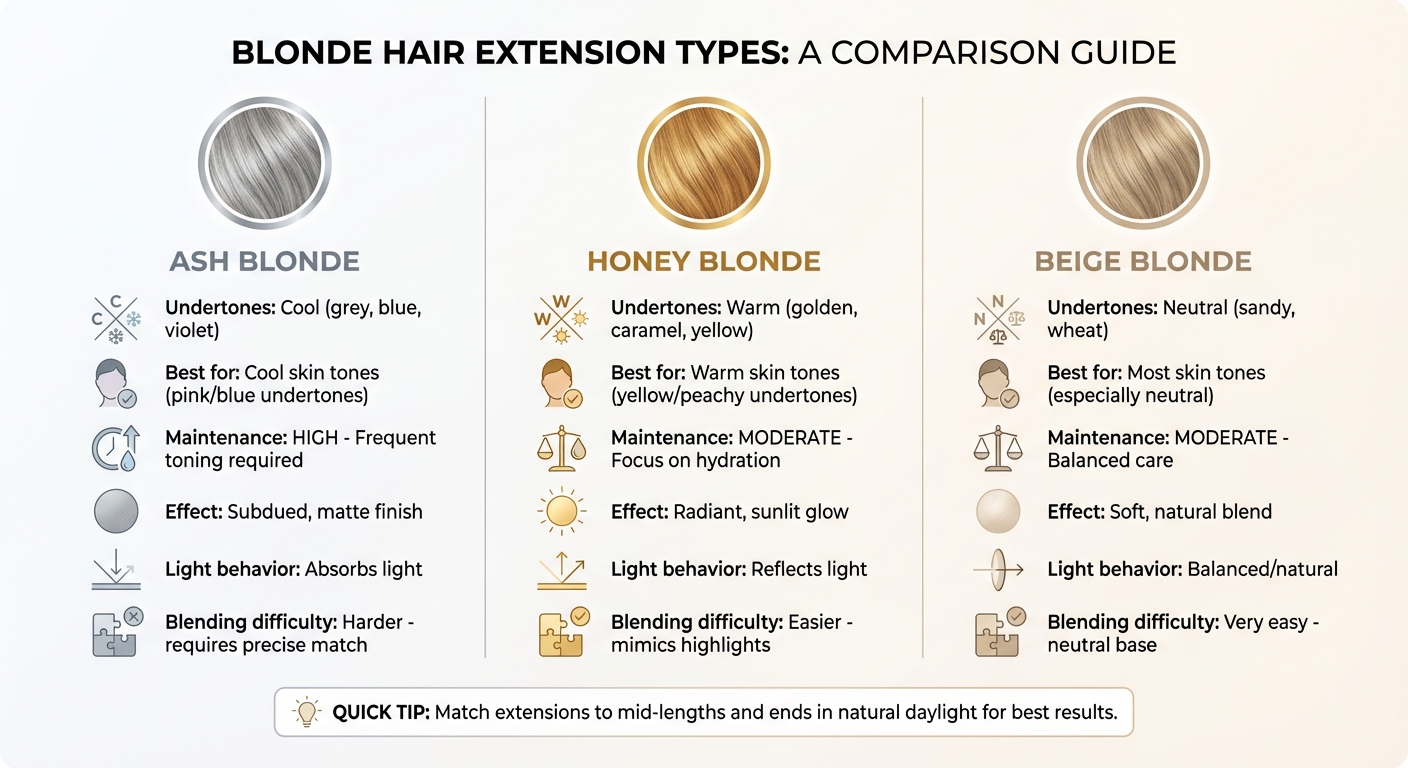
Ash vs Honey vs Beige Blonde Hair Extensions Comparison Chart
1. Ash Blonde Extensions
Undertones
Ash blonde is all about cool undertones, with hints of grey, blue, and violet that work to neutralise any natural warmth like yellow or orange. Unlike warmer blonde shades that reflect light to give off a golden or honey-like glow, ash blonde absorbs light, creating a muted, smoky, matte finish. As Victoria Michael, Colour Specialist at Salon Eunoia, puts it:
"Ash blonde works by counteracting those warm tones with cool pigments, creating that coveted icy, almost metallic finish."
Ash blonde shades are grouped into levels that help define the tone and its best uses. Levels 7–8 include darker ash or mushroom blonde tones with a mix of grey and brown. Level 9 offers a medium ash or steel blonde with beige and silver undertones. Levels 10–11 are the lightest, featuring icy, platinum hues with violet, pearl, and blue pigments. These levels give you a clear guide for choosing the right tone to suit your style.
Best Skin Tones
Ash blonde extensions are ideal for those with cool skin undertones - think pink, red, or bluish hues. A quick test? Check the veins on your wrist; if they appear blue or purple, you likely have cool undertones. Another trick is to drape a white towel over your shoulders in natural light - if your skin looks red or pink, ash blonde is a great match. These shades especially complement winter skin tones, which naturally lean cool, and they can make blue or green eyes pop.
Blending Tips
For a flawless look, match your ash blonde extensions to the mid-lengths and ends of your natural hair. If your roots are on the warmer side, techniques like a "root melt" or "shadow root" can help create a smooth transition. Multi-tonal extensions, which incorporate slightly varied shades, add natural depth, and styling your natural hair with the extensions ensures a cohesive finish.
Maintenance Needs
Caring for ash blonde extensions involves a bit of extra attention to maintain their cool tones. Use a purple shampoo once or twice a week to combat yellowing and a blue shampoo to tackle any orange tones. Stick to sulphate-free, colour-safe products to protect the pigments, and always use a heat protectant before styling. Weekly deep conditioning treatments are essential for keeping the extensions moisturised and looking their best.
sbb-itb-dcde78e
2. Honey Blonde Extensions
Undertones
Honey blonde is all about creating a warm, radiant look. It blends caramel and blonde tones with red, orange, and golden undertones, giving it a luminous quality. Unlike the cooler tones of ash blonde, honey blonde reflects light beautifully, adding depth and dimension. This makes it an ideal choice for spring, offering a bright yet soft change that feels both fresh and natural.
Best Skin Tones
Honey blonde extensions work best with warm, golden, or peachy skin tones. Maria Uva, a Wella Colourist and owner of Uva Salon, shares her expertise:
"Golden strands, rich honey hues and buttery shades complement warmer skin tones... these hues are the perfect way to go lighter and give your hair some dimension without committing to monthly salon visits."
If the veins on your wrist appear greenish, it’s a good indicator that you have warm undertones, which pair wonderfully with honey blonde. Neutral skin tones also suit this shade well, and even those with cool undertones can incorporate honey blonde to add a touch of warmth.
Blending Tips
To achieve a natural look, focus on matching your honey blonde extensions to the mid-lengths and ends of your hair rather than the roots. When choosing a shade, always check samples in natural daylight, as artificial lighting can distort the colour’s warm tones. Honey blonde’s multi-tonal depth makes it easy to blend with varied warm hues for a natural highlighted effect. If you’re stuck between two shades, go for the lighter option - it’s much easier to darken extensions than to lighten them. For a polished finish, style your extensions and natural hair together using heat tools to seamlessly blend the textures.
Maintenance Needs
To keep honey blonde extensions looking their best, use sulphate-free, colour-safe products that protect the warm tones and prevent fading. Regular hydrating treatments are essential to maintain moisture. Always apply a heat protectant spray before styling to minimise damage. To preserve vibrancy, consider using a colour-refreshing toner, as warm shades like honey blonde can lose their glow over time. Next, we’ll dive into beige blonde extensions to round out your colour options.
3. Beige Blonde Extensions
Undertones
Beige blonde is all about balance, blending cool and warm pigments into a neutral, sandy hue. Unlike ash blonde, which leans icy with silver or blue undertones, beige blonde offers a softer, muted cool tone that avoids looking overly frosty. It also steers clear of the golden richness seen in honey blonde, instead maintaining a subtle sandy vibe. Kyle White, Lead Colourist at Oscar Blandi Salon, advises:
"If you have pink undertones, avoid having warmth in your blonde. It will make the skin look flushed... Opt for cool tones like sandy blondes and beige blondes."
Best Skin Tones
Beige blonde is a perfect match for neutral skin tones. If the veins on your wrist appear as a mix of blue and green, this shade is likely to suit you. Victoria Michael, a Colour Specialist at Salon Eunoia, highlights:
"Neutral blondes sit comfortably in the middle with beige and wheat tones that flatter almost everyone"
This shade also complements fair to light-medium complexions beautifully, especially in champagne blonde variations. If you find that both silver and gold jewellery look equally good on you, beige blonde could be your ideal pick.
Blending Tips
For a natural, multi-tonal result, match your beige extensions to the mid-lengths and ends of your hair. Once installed, style your natural hair and extensions together using heat tools, working from roots to ends for a seamless look. If you're unsure about the shade, examine samples in natural daylight. This is crucial because yellow-toned indoor lighting can make neutral blondes appear warmer than they actually are.
Maintenance Needs
Keeping beige blonde extensions looking their best requires some extra care. Use sulphate-free, colour-safe shampoos, deep condition weekly, and incorporate a purple shampoo treatment occasionally. Since blonde extensions undergo more processing than darker shades, they tend to need a bit more attention. If brassy or orange tones appear, a purple toning shampoo can help neutralise them - leave it on for 10–20 minutes as needed. Always use a heat protectant before styling to preserve the soft, neutral tone.
Next, weigh the pros and cons of each blonde shade to help finalise your decision.
How to Choose Blonde Extensions for Perfect Match
If you're still unsure, try our hair extension shade finder for a personalized recommendation.
Advantages and Disadvantages of Each Shade
When deciding on a blonde shade, it helps to weigh the perks and challenges of each option. Every shade offers something different, and your choice might depend on the look you're after and the level of care you're willing to commit to.
Ash blonde gives a bold, cool-toned finish, perfect for those seeking a platinum vibe. It’s eye-catching, but it’s also the most demanding in terms of upkeep. Those cool pigments tend to fade fast, often within four to six weeks, leaving behind brassiness that needs toning to correct.
Honey blonde, on the other hand, leans into warmth, offering a soft, sunlit glow. Its golden tones are more stable than ash and don’t need as much toning. Instead, the focus is on keeping the hair hydrated to maintain its healthy shine. The warm tones also reflect light beautifully, creating a radiant effect. However, this warmth might not pair well with cooler or pink undertones, which could make it tricky for some.
Beige blonde lands in the middle ground, offering a neutral tone that’s incredibly versatile. Victoria Michael, a Colour Specialist at Salon Eunoia, explains:
"Neutral blondes sit comfortably in the middle with beige and wheat tones that flatter almost everyone"
This makes beige blonde a go-to for many, as it blends effortlessly with most skin tones. Maintenance is moderate - less toning than ash blonde, but regular hydration is still key to prevent it from looking too warm or dull over time.
Regardless of shade, all blonde extensions share a common challenge: they’re more porous and fragile due to the chemical processing involved in achieving lighter tones. This means they need consistent deep conditioning and careful handling to keep their colour vibrant and their texture soft.
| Feature | Ash Blonde | Honey Blonde | Beige Blonde |
|---|---|---|---|
| Primary Undertones | Cool (grey, blue, violet) | Warm (golden, yellow) | Neutral (wheat, sand) |
| Best Skin Tones | Cool or olive complexions | Warm or peachy complexions | Most skin tones (universal) |
| Maintenance Level | High (frequent toning needed) | Moderate (focus on hydration) | Moderate (balanced care) |
| Light Effect | Absorbs light (subdued) | Reflects light (luminous) | Balanced (natural/soft) |
| Blending Ease | Harder; requires precise match | Easier; mimics highlights | Very easy; neutral base |
These comparisons can help you narrow down your choice while keeping your desired style and maintenance routine in mind. Whether you’re drawn to the cool elegance of ash, the sunny warmth of honey, or the adaptable neutrality of beige, the key is finding what feels right for you.
Conclusion
Deciding between ash, honey, and beige blonde extensions is all about knowing your skin's undertones and the style you're aiming for. Each shade complements different undertones - ash for cool tones, honey for warm tones, and beige as a versatile option that works across a range of undertones.
For the best match, compare your extensions to the mid-lengths and ends of your hair in natural daylight. This ensures a seamless blend that looks effortlessly natural.
If you're looking for a flawless finish, the Hair Wonderland Seamless Set 22" is a standout choice. Featuring advanced Invisi® weft technology, these extensions replicate the look of natural hair regrowth. They weigh 200 grams, measure 22 inches, and add impressive volume and length without the bulkiness often associated with traditional clip-ins.
To maintain your extensions' vibrancy and longevity, invest in high-quality products and follow an ultimate hair extension care guide. A little upkeep goes a long way in preserving their look and feel.
The perfect blonde shade can enhance your features and boost your confidence. Whether you're drawn to the cool elegance of ash, the glowing warmth of honey, or the adaptable charm of beige, choose a shade that complements your undertones and fits your lifestyle.
FAQs
How can I figure out my skin undertone to pick the right blonde extensions?
To figure out your skin's undertone and pick the ideal blonde extensions, start by examining the veins on your wrist under natural light. If they look blue or purple, you probably have cool undertones, while greenish veins point to warm undertones. If it's a mix of both, you might have neutral undertones.
Another trick is to consider jewellery: gold jewellery usually enhances warm undertones, while silver tends to complement cool tones. You can also check your eyes - gold or hazel flecks suggest warm undertones, while blue or grey hints at cool undertones. Once you know your undertone, you can choose from ash, honey, or beige blonde extensions to perfectly match your natural colouring for a smooth and polished finish.
How do ash, honey, and beige blonde extensions differ in maintenance?
The maintenance of ash, honey, and beige blonde extensions depends on their tones and how well they're cared for.
Ash blonde extensions have cooler tones, making them less prone to brassiness. However, they can accumulate product build-up or mineral deposits over time. To maintain their crisp, cool appearance, use colour-safe, sulphate-free shampoos and incorporate occasional toning treatments into your routine.
Honey blonde extensions, with their warm, golden tones, demand more attention to stay vibrant. These shades are more likely to fade or become dull due to heat styling or harsh shampoos. To keep their warmth intact, choose colour-enhancing products for golden tones and limit heat exposure.
Beige blonde extensions strike a balance between warm and cool tones but require regular toning or glossing to maintain their neutral hue and avoid brassiness. Protecting them from sun exposure and using gentle styling products can go a long way in preserving their colour.
No matter the shade, using the right shampoos and occasional treatments is key to keeping your extensions looking polished and fresh.
Can I combine different blonde shades in my hair extensions for a natural look?
Mixing 2-3 shades of blonde extensions - like ash, honey, or beige - can give your hair a natural, multidimensional look. This approach mimics the subtle variations found in real hair, making your extensions blend effortlessly with your own strands.
For the best outcome, compare the extension shades to your natural hair under natural light to ensure they match your hair and complement your skin tone. Combining different blonde tones creates depth and dimension, steering clear of that flat, one-dimensional colour.