


When your extensions don’t blend well, the issue often lies in mismatched undertones - not the shade itself. Undertones are the subtle hues beneath your hair's main colour, like golden warmth in honey blonde or cool silver in ash brown. Matching these is just as important as matching the shade for a natural look. Here’s what you need to know:
- Warm undertones: Yellow, orange, or red pigments (e.g., caramel, honey).
- Cool undertones: Blue, green, or violet pigments (e.g., ash, platinum).
- Neutral undertones: A balance of warm and cool tones.
To identify your undertone, use the vein test (green veins = warm, blue/purple veins = cool) or the white paper test (yellow/orange skin tone = warm, pink/blueish = cool). Matching extensions to your undertones ensures they blend seamlessly with your natural hair. If mismatched, toners, dyes, or styling techniques like waves can help fix the issue. Always choose quality extensions, such as double-drawn options, for consistent thickness and better blending. Regular care, like using sulphate-free shampoos and hydration treatments, helps maintain the look over time.
How to ReColor and Tone Hair Extensions
What Hair Undertones Are and Why They Matter
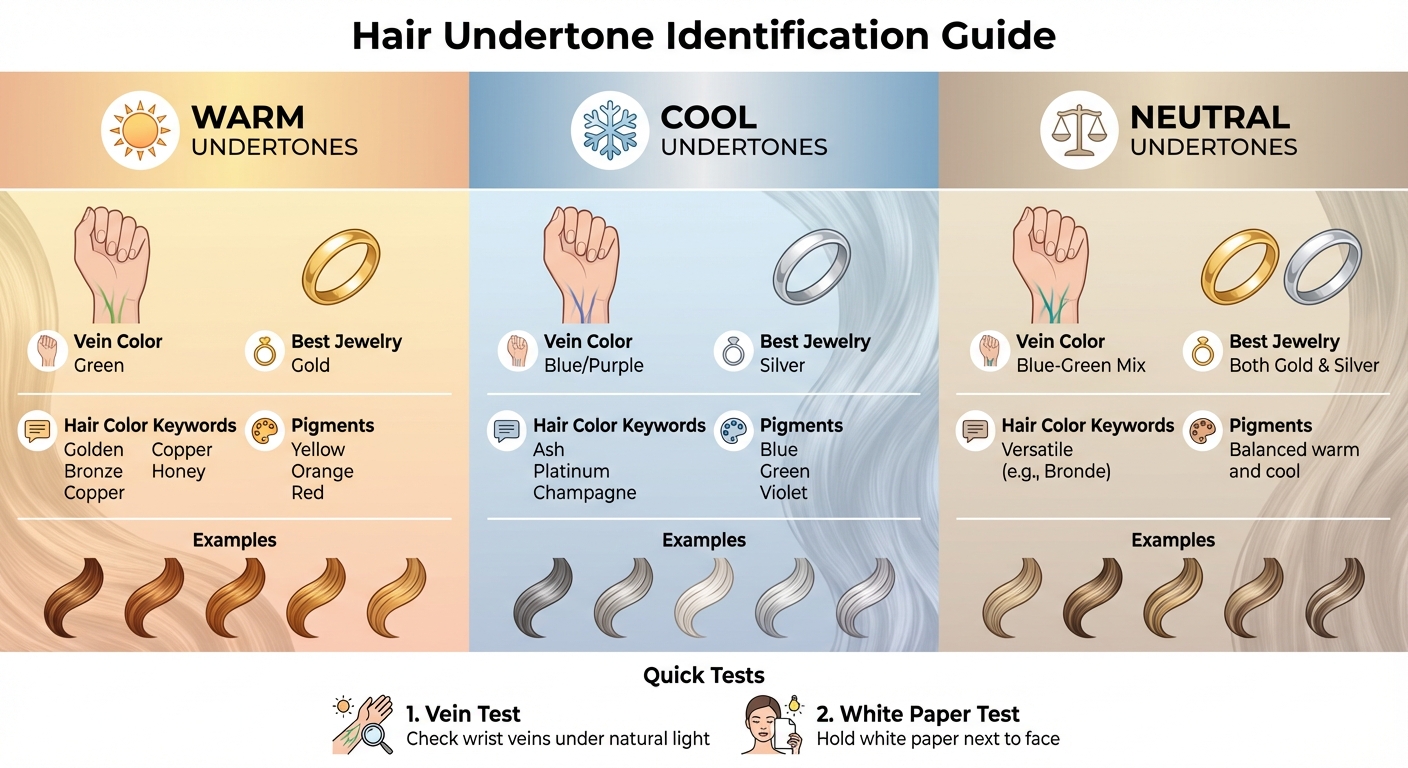
Hair Undertone Identification Guide: Warm, Cool, and Neutral Characteristics
Hair undertones refer to the subtle pigments beneath your hair’s surface colour. They’re different from the depth of your hair’s shade. While the shade depth reflects how light or dark your hair is, the undertone determines the colour that comes through in various lighting conditions.
"Hair undertones are the underlying hair pigments." - Reliable Beauty Supply
If you’re considering extensions, matching undertones is just as crucial as matching the shade. A mismatch can not only make your hair look off but also affect how your complexion appears, potentially washing out your skin tone or introducing unwanted redness.
Warm, Cool, and Neutral Undertones Explained
Warm undertones are rich in yellow, orange, or red pigments, giving hair a golden, honey, caramel, or copper appearance. Natural brunettes often have warm red or orange undertones, while natural blondes tend to lean toward yellow.
Cool undertones feature blue, green, or violet pigments, resulting in ashy, silvery, platinum, or beige tones. When browsing extensions, you’ll often see terms like "ash", "platinum", or "champagne" used to describe these cool shades.
Neutral undertones strike a balance between warm and cool pigments, with no single colour dominating. If you have neutral undertones, you’ll likely find it easier to pull off a wide variety of extension colours.
How to Identify Your Natural Undertones
The vein test is a quick way to determine your undertones. Look at your wrist veins under natural light - if they appear blue or purple, you’re cool-toned; if they’re green, you’re warm-toned. If both silver and gold jewellery flatter you equally, you’re likely neutral.
Another method is the white paper test. Hold a white piece of paper or fabric next to your face in a mirror. If your skin looks pink or blueish against the white, you have cool undertones. If it seems yellow or orange, you’re warm-toned.
Lastly, examine your eyes. Golden or hazel flecks usually indicate warm undertones, while blue or grey flecks suggest cool undertones.
| Undertone Category | Vein Colour | Best Jewellery | Hair Colour Keywords |
|---|---|---|---|
| Warm | Green | Gold | Golden, Bronze, Copper, Honey |
| Cool | Blue/Purple | Silver | Ash, Platinum, Champagne |
| Neutral | Blue-Green Mix | Both | Versatile (e.g., "Bronde") |
Now that you know your undertones, you’re ready to explore how to choose extensions that blend seamlessly with your natural tones.
Selecting Extensions That Match Your Undertones
Choosing extensions that complement your undertones is key to achieving a natural look. The goal is to match the extensions to the mid-lengths and ends of your hair for a seamless blend. Always assess colours in soft, natural light to get an accurate sense of the shade. Pay attention to colour descriptions: terms like ash, platinum, or champagne point to cooler tones, while words like golden, bronze, honey, or copper indicate warmer tones.
If you're unsure which shade to pick, go for the lighter option - it's much easier for a professional to darken extensions than to lighten them. For those with highlighted or balayage hair, extensions with built-in dimension can help mask the line where your hair meets the extensions. These tips will guide you towards selecting extensions that blend effortlessly, especially when opting for high-quality double-drawn options.
Why Double-Drawn Extensions Work Better for Matching
Double-drawn extensions are a game-changer when it comes to achieving a flawless match. These extensions are crafted to maintain uniform thickness from root to tip, which ensures consistent colour throughout. This evenness prevents that "stringy" or thin look at the ends, which can make undertone mismatches more noticeable.
"Meticulously double drawn to ensure thickness from root to ends." – Hair Wonderland
Hair Wonderland’s Russian and Mongolian double-drawn extensions are a favourite among Australian salons for their reliable colour density. Unlike single-drawn extensions, which taper at the tips, double-drawn hair keeps its fullness all the way through. This makes it much easier to blend with your natural hair and its undertones. Plus, the subtle tonal variations built into these extensions make the final result even more seamless.
Using Highlights and Lowlights for Better Blending
To create a more natural look, consider adding highlights and lowlights to your extensions. These subtle variations add depth and dimension, helping to blur the line between your hair and the extensions. Extensions with pre-blended balayage effects or mixed tones are particularly effective at mimicking the multi-dimensional quality of natural hair.
For instance, if your hair has warm, golden highlights, look for extensions that incorporate similar hues. On the other hand, if your hair features cool, ashy lowlights, choose extensions that reflect those cooler tones. Styling your hair with waves or curls can further enhance the blend, making the transition even less noticeable.
sbb-itb-dcde78e
Correcting Undertone Mismatches in Your Extensions
Even with careful planning, hair extensions might not always blend perfectly with your natural hair. Undertones that are too warm, too cool, or simply don’t match can stand out. Fortunately, there are effective ways to fix these mismatches and achieve a seamless look.
Adjusting Extension Colour with Toners or Dyes
When extensions appear too brassy or ashy, professional toning can help neutralise those unwanted hues. A skilled stylist can apply toners to adjust the colour, ensuring it complements your natural hair. It's best to leave this process to the experts - not only to avoid potential damage but also to maintain any warranty coverage on the extensions.
For at-home adjustments, slightly warm extensions can benefit from purple shampoo diluted in warm water. For example, mix a quality purple shampoo like De Lorenzo Nova Fusion Silver Shampoo into a bowl of warm water. Immerse each weft for less than a minute, testing a small section first to ensure the desired result. Use this method sparingly to protect the integrity of the hair.
It’s also worth noting that darkening extensions or adding depth is generally easier than trying to lighten them. Semi-permanent dyes with a low-volume developer can help achieve a richer tone, but professional application is highly recommended.
"The key to having beautiful hair and natural-looking hair extensions is to match the colour of your own hair to the hair extensions as closely as possible to create a flawless finish." – Showpony Hair Extensions
For ombre or dark-rooted styles, your stylist might tone the roots of your natural hair to better match the extension colour. However, when colour correction isn’t enough, styling techniques can play a key role in blending.
Tools for Styling and Blending Adjustments
Styling can work wonders when it comes to blending extensions with your natural hair. Heat styling tools, like curling wands or straighteners, help unify textures and can mask small tonal differences. Wavy or curled styles are particularly effective at softening harsh lines and merging undertones for a more cohesive look.
Using the right brush also matters. A product like Hair Wonderland's Tangle Tamer Brush ($21.95) is specifically designed to blend extensions with natural hair without damaging bonds or pulling on clips. Start brushing at the ends and work your way up gently to avoid tangling. To protect both the colour and texture, always apply a heat protectant spray before using any hot tools.
With the right combination of colour adjustments, tools, and styling techniques, minor undertone mismatches can often be resolved, leaving your extensions looking natural and flawless.
Keeping Your Extensions Blended Over Time
Once you've perfected that seamless look, keeping your extensions in harmony with your natural hair requires consistent care. Since extensions don’t benefit from the natural oils your scalp produces, they’re more prone to dryness, colour fading, and texture changes. Maintaining their blend over time means sticking to a thoughtful routine that complements the undertones you’ve matched.
Choosing the Right Hair Care Products
The products you use can make or break the longevity of your extensions. For starters, sulphate-free shampoos are a must - they help retain both moisture and colour without stripping away vibrancy. Limit washing to 2–3 times per week, focusing shampoo on the scalp and applying conditioner to the mid-lengths and ends to protect the bonds and maintain softness.
"Avoid products containing: protein, keratin, sulfates, and high alcohol content. These can damage your extensions and make them unmanageable after just one use." – Hair Wonderland
Hydration is key. Use treatment oils like argan oil daily - 1–2 pumps in the morning and 2–3 pumps at night - to keep your extensions soft and shiny. Hair Wonderland’s Moisture Magic ($39.95) is specially designed to nourish extensions without weighing them down.
For blonde or highlighted extensions, purple shampoos can help combat brassiness. However, use these sparingly - no more than once every two weeks - and try the shampoo bath method for an even application. When heat styling, keep your tools under 180°C to avoid thermal damage that could dull the colour.
Regular Trimming and Styling Practices
Regular trims and styling are just as important as daily care. Scheduling maintenance every 5–6 weeks keeps your extensions looking natural as your hair grows. If you have finer hair, you might need appointments every 4 weeks. During these visits, your stylist can trim and layer the extensions to blend them seamlessly with your natural hair, removing any blunt edges that might give them away.
Daily styling also plays a big role. Heat tools can help merge the textures of your natural hair and extensions, while brushing 2–3 times a day with an extension-friendly brush prevents matting. Start brushing at the ends and work your way up to minimise breakage. At night, loosely secure your hair and sleep on a silk or satin pillowcase to reduce friction and tangling.
Environmental factors can also affect your extensions. UV rays, for example, can fade their colour, so consider wearing a hat or using a UV-protectant spray if you’ll be in the sun for long periods. Before swimming, dampen your extensions with clean water and apply a leave-in conditioner to shield them from chlorine and salt water. Rinse thoroughly as soon as you’re out of the water.
Conclusion
Creating a seamless blend starts with recognising your hair's undertones. Whether your natural shade leans warm, cool, or neutral, identifying these nuances is key when choosing the right extension colour. If you're unsure, go for a slightly lighter shade - it’s generally easier for a stylist to darken extensions than to lighten them.
The harmony between quality and colour is just as important. Double-drawn extensions are a great choice for achieving a uniform and natural appearance. Professional techniques like layering, cutting, or adding curls and waves can further refine the texture, ensuring your extensions blend effortlessly.
Once you’ve nailed the blend, proper upkeep is vital. Use sulphate-free products and hydrating treatments, such as Moisture Magic ($39.95), to keep dryness and colour fade at bay. Regular salon visits every 5–6 weeks will help maintain your extensions, keeping them trimmed and balanced as your natural hair grows.
Ready to enjoy a flawless, natural look? Visit Hair Wonderland at hairwonderland.com.au to achieve the perfect blend that lasts.
FAQs
How can I figure out my hair's undertones for better extension blending?
Understanding your hair's undertones, which are influenced by your skin tone, is essential for creating a seamless look with hair extensions. Here’s how you can figure out your undertones:
- Look at your veins: Step into natural light and examine the veins on the inside of your wrist. If they appear greenish, you likely have warm undertones. Blue or purple veins suggest cool undertones. Can’t decide? A mix of both points to neutral undertones.
- Notice your eyes: Warm undertones often pair with golden, hazel, or amber flecks in your eyes. On the other hand, cool undertones tend to match with blue, grey, or green flecks.
- Try jewellery: Gold jewellery typically complements warm undertones, while silver tends to flatter cool undertones. If both suit you equally, you’re probably neutral.
Once you’ve nailed down your undertone, you’ll be better equipped to pick Hair Wonderland extensions that blend perfectly for a natural finish.
What can I do if my hair extensions don’t blend due to mismatched undertones?
If your hair extensions don’t seem to blend naturally, mismatched undertones might be the culprit. Start by figuring out whether your skin has warm, cool, or neutral undertones. Once you’ve nailed that down, pick extensions that work with your undertone for a more seamless blend. Another option? Go for a slightly lighter shade and have it professionally toned to better suit your colouring.
For a truly polished look, it’s worth consulting a professional stylist. They can customise your extensions to perfectly match your natural hair and undertones, giving you a flawless finish that complements your overall style.
What makes double-drawn extensions ideal for seamless blending?
Double-drawn extensions are designed to maintain consistent thickness from root to tip by ensuring nearly all strands are the same length. This evenness helps them blend seamlessly with your natural hair, steering clear of the uneven or wispy look that single-drawn extensions can sometimes have.
These extensions are ideal for creating a sleek, full-bodied appearance. Their balanced volume makes it easier to achieve a smooth, natural finish that not only looks great but is also durable and simple to style.