


Hair extensions can be a fantastic addition to your look, but Australia's sun, saltwater, and chlorine present real challenges. These elements can cause dryness, colour fading, tangling, and even bond weakening. Unlike natural hair, extensions lack natural oils, making them more vulnerable to damage. Here's how to protect and maintain them:
- Sun Damage: UV rays can fade colour, weaken bonds, and cause brittleness. Use UV-protectant sprays, wear hats, and avoid sunscreens with avobenzone or octocrylene to prevent discolouration.
- Saltwater Issues: Salt crystals dry out extensions, leading to tangling and fragility. Wet your hair with fresh water before swimming, rinse immediately after, and apply leave-in conditioners.
- Chlorine Risks: Chlorine strips oils, alters colour, and weakens bonds. Use swim caps, pre-wet hair, and follow up with clarifying shampoos and moisturising treatments.
Quick care tips: Always rinse extensions after exposure, use sulphate-free products, and never leave extensions wet overnight. Proper maintenance and choosing the right Russian or Mongolian hair extensions can extend their lifespan up to 12 months.
Vacationing With Hair Extensions - What NOT To Do!!
sbb-itb-dcde78e
How Sun, Salt, and Chlorine Damage Hair Extensions
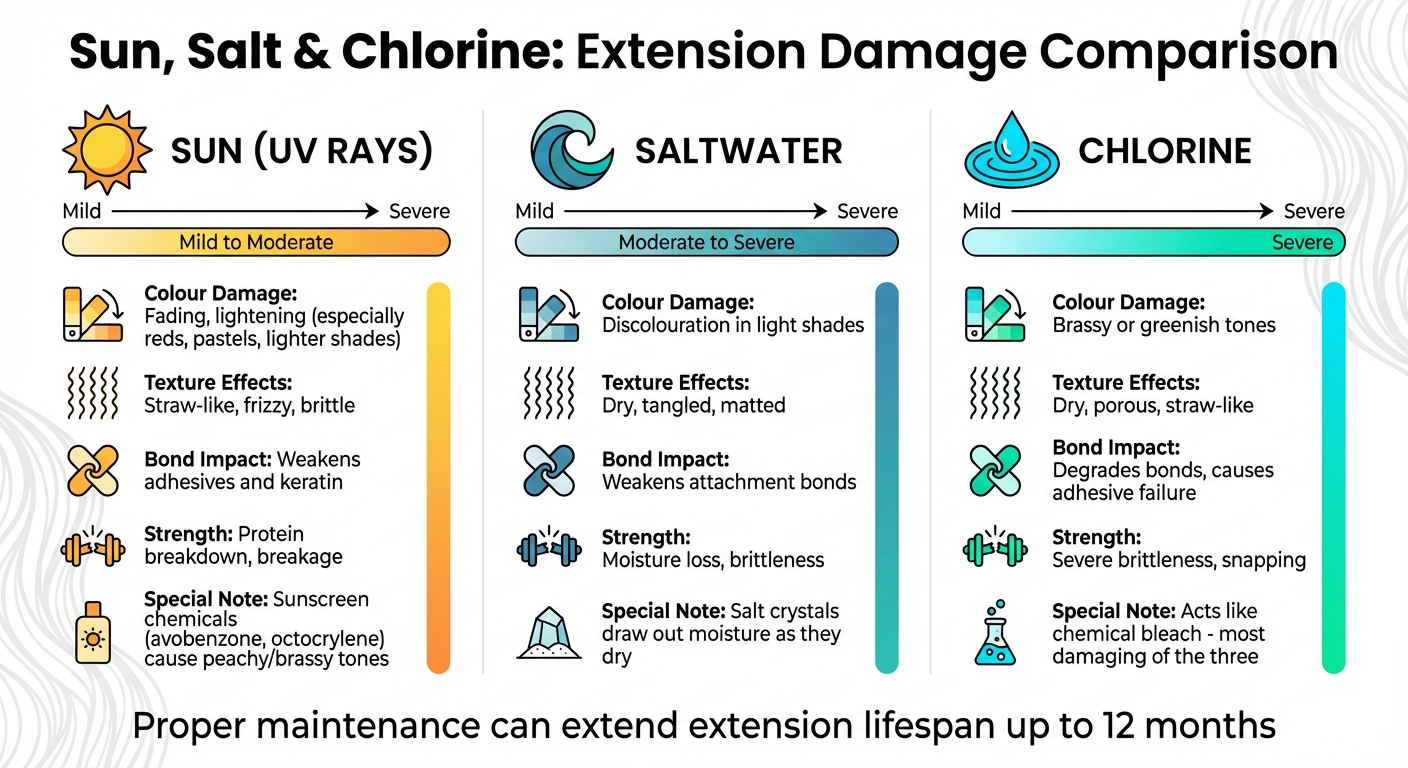
How Sun, Salt, and Chlorine Damage Hair Extensions: Complete Comparison Guide
Let’s break down how these environmental factors can wreak havoc on your hair extensions.
UV Rays and Sun Damage
Australia's harsh UV rays are particularly tough on hair proteins, causing colour to fade and leaving extensions feeling brittle and rough, almost like straw. This is especially noticeable in red, pastel, or lighter-coloured extensions, where prolonged exposure can result in a stark colour mismatch with your natural hair. Kate Soloshenko, Hair Expert at I Love Slavic Hair, highlights:
"Prolonged exposure to sunlight can cause hair color to fade or change, resulting in a mismatch between extended and natural locks."
The sun doesn’t just affect colour - it also weakens adhesives in tape-in extensions and softens keratin in K-tip extensions, making them more prone to slipping. Since extensions lack the natural oils produced by your scalp, they’re even more vulnerable to sun damage. Another thing to watch out for: sunscreens containing avobenzone or octocrylene. These chemicals can lead to peachy or brassy tones, particularly in lighter extensions.
While UV rays have their effects, saltwater brings its own set of challenges.
Saltwater Effects: Dehydration and Buildup
Saltwater damage often sneaks up on you - it’s not the swim itself but what happens afterward that causes trouble. As seawater dries, it leaves behind salt crystals that draw moisture out of your extensions, making them dry and brittle.
The lingering salt, combined with sand, can cause severe tangling and matting, especially around attachment points. Salt buildup also weakens keratin bonds and tape adhesives, further compromising the extensions. As one expert notes:
"Saltwater is particularly aggressive on natural hair and extensions. It is not necessarily swimming or diving in saltwater itself that is damaging but rather the subsequent drying process."
Unlike natural hair, extensions don’t benefit from the protective sebum produced by your scalp, which means they soak up saltwater more easily. To prevent lasting damage, it’s crucial to rinse your extensions with fresh water right after a swim in the ocean. You should also learn how to detangle hair extensions properly to prevent breakage after salt exposure.
But if you think saltwater is bad, chlorine takes things to another level.
Chlorine Damage: Colour Changes and Weakening
Chlorine is the harshest of the three culprits. Acting like a chemical bleach, it can cause irreversible damage to hair extensions. Light-coloured extensions are especially at risk, often developing brassy or greenish hues after exposure to chlorinated pools.
The damage isn’t just cosmetic. Chlorine strips away the hair’s natural oils, increases porosity, and leaves extensions brittle and prone to breaking. Emilly Hadrill Hair & Extensions warns:
"Chlorine can be very damaging to Remy hair extensions since it is a bleach. This means that it can alter and affect the colour of your extensions, as well as dry them out and get them tangled. This all leads to irreversible damage."
Chlorine also seeps into attachment points, weakening keratin bonds and adhesives. The resulting dehydration can lead to severe tangling and matting, making maintenance a nightmare. Hot tubs, with their higher chemical concentrations, pose an even bigger threat.
| Damage Type | Sun (UV) | Saltwater | Chlorine |
|---|---|---|---|
| Colour | Fading, lightening | Discolouration in light shades | Brassy or greenish tones |
| Texture | Straw-like, frizzy, brittle | Dry, tangled, matted | Dry, porous, straw-like |
| Bonds | Weakens adhesives and keratin | Weakens attachment bonds | Degrades bonds, causing adhesive failure |
| Strength | Protein breakdown, breakage | Moisture loss, brittleness | Severe brittleness, snapping |
How to Protect Extensions from Sun, Salt, and Chlorine
Taking steps to safeguard your extensions before exposure can help maintain their quality and extend their lifespan.
Protecting Extensions from Sun
To shield your extensions from sun damage, consider wearing hats, scarves, or bandanas, or use a UV/heat protectant spray. These sprays help seal the cuticle and reduce harm from UV rays. Opt for protective hairstyles like high ponytails, buns, or braids to keep your extensions away from sweat and sunscreen. Why is this important? Ingredients in many sunscreens, such as Avobenzone, Oxybenzone, and Octocrylene, can temporarily alter the tone of lighter extensions. Switching to mineral-based sunscreens with Zinc Oxide or Titanium Dioxide can help avoid this issue. Also, make it a habit to wash your hands after applying sunscreen to prevent accidental transfer to your hair.
Protecting Extensions from Saltwater
Saltwater can be tough on extensions, but a little preparation goes a long way. Before heading into the ocean, wet your extensions with fresh water to reduce salt absorption. As Kate Soloshenko, Hair Expert at I Love Slavic Hair, notes:
"Wet strands will not absorb salt or chlorine as much as dry hair."
Adding a leave-in conditioner, hair mask, or pre-swim treatment can create an extra layer of protection. Secure your hair in a high bun, braid, or pigtails to limit the surface area exposed to water and reduce tangling. Once you're out of the ocean, rinse your extensions thoroughly with fresh water to remove salt crystals before they dry out your hair. Follow up with a clarifying shampoo and a deep moisturising treatment, focusing on the mid-lengths and ends, to keep your extensions hydrated and healthy.
Protecting Extensions from Chlorine
Chlorine requires careful attention to avoid damage. Before swimming, brush your extensions to remove knots and pre-wet them with tap water. This helps reduce chlorine absorption. Apply a leave-in conditioner or hair mask to the mid-lengths and ends, but skip oily products near the attachment points to prevent slippage. For maximum protection, use a swim cap designed to accommodate extensions. If a swim cap isn’t an option, style your hair in a loose braid or high bun to minimise water exposure. Emilly Hadrill Hair & Extensions offers this advice:
"Avoid chlorine altogether so when swimming in a chlorine pool, use a cover for your hair or tie it up high and avoid getting it wet."
After swimming, rinse your hair immediately with fresh water and use a sulphate-free clarifying shampoo to remove chlorine residue. Apply a moisturising mask to replenish hydration, and make sure to blow-dry the roots and attachment points thoroughly - sleeping with wet extensions can weaken bonds and lead to slippage. For the best results, continue with the aftercare routine outlined in the next section.
Aftercare: Restoring Extensions After Exposure
Taking quick action to care for your extensions after swimming or sunbathing is essential. The sooner you begin, the better your chances of keeping them soft, shiny, and free of tangles. These steps connect your pre-exposure protection with the necessary post-exposure care.
Rinsing and Washing Extensions
Fresh water is your best ally after exposure. If you can’t wash your extensions straight away, at least rinse them thoroughly to minimise the drying effects of salt or chlorine.
When it’s time to wash, start by gently detangling your extensions from the ends up to the roots using a wide-tooth comb or an extension-safe brush like the Tangle Tamer Brush. This helps prevent matting during washing. Use a sulphate-free shampoo, gently massaging it into your scalp and letting the suds flow through the lengths. Avoid scrubbing the extensions directly or washing them upside down, as this can lead to tangling. For stubborn residue, a clarifying shampoo can give your extensions a deeper clean. Follow up with a conditioner applied only to the mid-lengths and ends, steering clear of the scalp and attachment points to prevent oils from loosening the bonds. Finish with a cool water rinse to seal the cuticle and enhance shine.
Moisturising and Repairing Extensions
Once clean, it’s time to replenish the moisture lost during exposure. Unlike natural hair, extensions don’t benefit from your scalp's natural oils, making them prone to dryness. Apply a deep-conditioning mask to the mid-lengths and ends, leaving it on for 10–30 minutes depending on the level of damage. If your extensions feel especially dry or frizzy after exposure to sun or saltwater, soak them in a high-quality conditioner for 30 minutes to an hour for more intensive repair. As SunnyHair advises:
"Condition your hair after every wash. Your extensions don't receive the natural oils from your scalp".
Drying Extensions Correctly
Drying your extensions properly is just as important as washing them. Use a microfibre towel to gently squeeze out excess water - avoid rubbing, as this can cause tangles. Apply a heat protectant and heat-style your extensions safely by blow-drying using cool or medium heat settings to prevent over-drying. Work in small sections, and direct the nozzle downward to keep the cuticles smooth and reduce matting. For semi-permanent extensions like tapes or U-tips, it’s crucial to blow-dry the roots and bonds immediately. Leaving these areas wet can cause the bonds to swell, loosen, or irritate your scalp. As Beauty Works highlights:
"Always blow dry hair extensions, never leave them to dry naturally".
Lastly, never go to bed with wet extensions. The friction between wet hair and your pillow can lead to severe matting and may even damage the bonds. Proper drying ensures your extensions stay intact and looking their best.
Recommended Products for Extension Care
Taking care of your extensions doesn’t stop with aftercare routines - using the right products is just as important. The right tools and treatments not only maintain the quality of your extensions but also protect them from external factors like sun, saltwater, and chlorine. Hair Wonderland offers a variety of products to help keep your extensions in excellent condition.
Brushes and Combs for Extensions
When it comes to brushing extensions, not all tools are created equal. Hair Wonderland’s brushes are specially designed with flexible teeth to gently detangle without causing damage - an essential feature, especially when extensions are dry or exposed to UV rays and salt. According to Hair Wonderland:
"Hair Wonderland's detangling brushes are specially designed so that the teeth flex when needed to ease the knots and detangle painlessly".
Here’s a quick look at some of their top-rated brushes and combs:
| Product | Price (AU$) | Key Features | Compatibility |
|---|---|---|---|
| Tangle Tamer Brush | $21.95 | Compact and ideal for quick knot removal | Suitable for all extension types |
| The Detangle Brush | $29.95 | Flexing teeth for easy detangling; works on wet or dry hair; minimises breakage | Extensions, natural hair, wigs, and weaves |
| Styling Comb | $12.95 | Fine-tooth design for precise sectioning and teasing at the roots | Clip-ins and professional wefts |
Daily brushing is essential, as the average person sheds roughly 100 hairs a day. Without brushing, these shed hairs can cause matting in your extensions. For best results, start brushing from the ends and work your way up to avoid unnecessary strain on the bonds - especially after swimming.
Moisturising and Repair Products
Extensions don’t benefit from your scalp’s natural oils, so keeping them hydrated is crucial. Moisture Magic ($39.95) is a must-have for restoring hydration. It can be applied as a pre-treatment before sun or water exposure, or as a deep conditioner afterward. Hair Wonderland emphasises:
"If you show your extensions some love and care, they'll last longer – but since extensions aren't attached to your scalp, they miss out on all those natural oils and nutrients your hair normally gets".
To get the most out of products like Moisture Magic, focus on applying them to the mid-lengths and ends of your extensions. Avoid the scalp or attachment points to prevent slippage. With consistent care, high-quality human hair extensions can stay in great shape for 9–12 months.
Storage and Maintenance Accessories
Proper storage is another key factor in keeping your extensions in top condition. The Clip In Bag ($54.00) is perfect for keeping clip-in extensions organised and free from dust, making it especially handy during holidays when you might want to give your extensions a break from saltwater or intense sun.
For tape-in extensions, Tape Sheets ($78.00) are a must. These sheets help maintain the adhesive quality, especially after exposure to oils, sunscreen, or water. To ensure a secure hold, replace the tape sheets every 4–6 weeks during regular maintenance. Additionally, avoid sleeping with clip-in extensions, as doing so can strain both your natural hair and the extension clips.
Conclusion
Taking care of your extensions against the effects of sun, salt, and chlorine is easier than you might think with a bit of preparation and the right tools. Before hitting the beach or pool, use a UV-protectant spray or a leave-in conditioner to shield your hair. Adding a wide-brimmed hat or styling your hair into a loose braid can also help reduce exposure. After swimming, rinsing your extensions with fresh water is a must - it helps wash away salt or chlorine that can dry out and weaken the hair fibres. This daily care routine lays the groundwork for keeping your extensions in great shape.
Keeping your extensions hydrated is just as important. Products like Moisture Magic ($39.95) work wonders in restoring lost moisture, while tools like the Tangle Tamer Brush ($21.95) make detangling easy and prevent unnecessary breakage. With proper care, your extensions can stay looking their best for longer. To stay on track, use a maintenance planner to schedule your upkeep.
FAQs
How can I protect my hair extensions from sun damage?
To keep your hair extensions safe from sun damage, use a UV-protectant spray or a leave-in conditioner that includes sun protection. Covering your extensions with a hat or scarf is another great way to block harmful UV rays. Additionally, try to minimise direct sun exposure by sticking to shaded areas, especially during the hottest parts of the day. These easy precautions can help your extensions stay vibrant and healthy.
How can I protect my hair extensions from saltwater damage?
To protect your hair extensions from saltwater damage, try these simple yet effective steps:
- Rinse with fresh water beforehand: Wetting your extensions with fresh water before swimming can reduce how much salt they absorb.
- Use a protective product: Apply a lightweight leave-in conditioner or a hydrating oil to shield your extensions from salt exposure.
- Rinse right after swimming: Remove salt residue by washing your extensions with clean, lukewarm water as soon as possible.
- Dry with care: Gently pat your extensions dry using a soft towel, squeezing out excess water without rubbing or twisting.
- Detangle with caution: When damp, brush your extensions starting from the tips and work upwards, holding the base to prevent unnecessary pulling.
These steps will help you avoid dryness, tangles, and breakage, ensuring your extensions stay smooth and beach-day ready.
Why should you rinse your extensions immediately after swimming?
Rinsing your extensions immediately after swimming is a must to wash away chlorine and salt, both of which can rob the hair of moisture and cause dryness, brittleness, and potential damage. Taking this quick step helps preserve the smooth texture, natural shine, and lifespan of your extensions.
By acting promptly, you safeguard your extensions, keeping them soft, vibrant, and healthy-looking - even after exposure to saltwater or pool chemicals.