


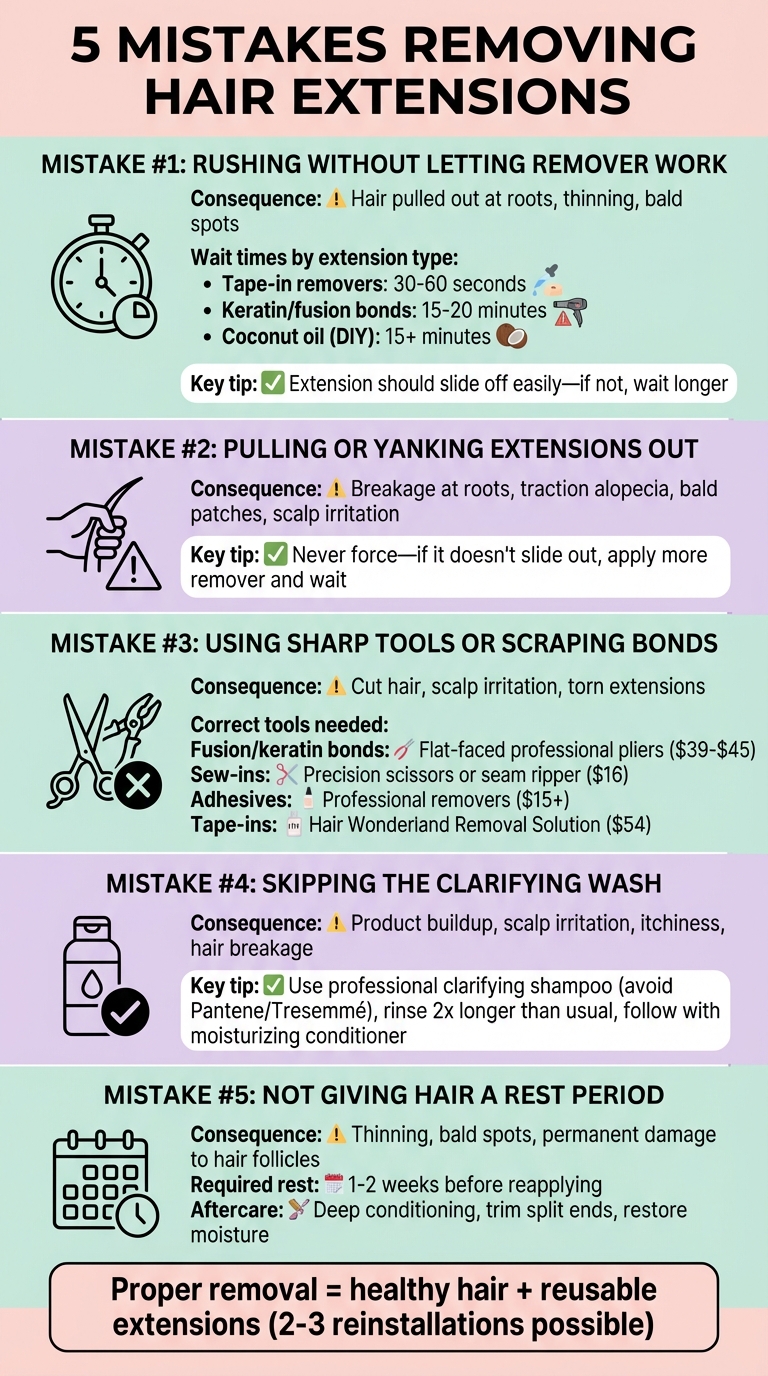
Removing hair extensions the wrong way can cause serious damage to your natural hair and make your extensions unusable. The most common mistakes include rushing the process, pulling extensions out, using improper tools, skipping a clarifying wash, and not giving your hair a rest period. These errors can lead to hair breakage, thinning, bald spots, or scalp irritation. Here's a quick overview of what to avoid:
- Rushing: Not allowing removal solutions enough time to work can tear hair at the roots.
- Pulling: Yanking extensions causes strain on hair follicles, leading to thinning or bald patches.
- Improper Tools: Using sharp household tools can cut or damage hair and bonds.
- Skipping a Wash: Failing to cleanse your scalp after removal leaves product buildup and residue.
- No Rest Period: Reapplying extensions immediately strains your hair and scalp.
To avoid these issues, use proper removal products (like Hair Wonderland's Removal Solution, $54.00), take your time, and let your hair recover for 1–2 weeks before reapplying extensions. Proper care ensures your hair stays healthy, and extensions remain reusable.
5 Common Mistakes When Removing Hair Extensions and How to Avoid Them
How to Remove Hair Extensions at Home (without ruining your hair)
sbb-itb-dcde78e
1. Rushing Without Letting Remover Work
Hurrying through the removal process can stop the adhesive from fully dissolving, leading to extensions pulling and tearing at natural hair. This creates unnecessary tension at the roots, as the bond hasn't had enough time to break down properly.
Damage to Natural Hair
Forcing off extensions before the adhesive softens can cause significant harm. Hair may be pulled out at the root, resulting in thinning or even bald spots. Additionally, this can lead to "cross hairs" and severe damage to the hair cuticle. The breakage caused by rushing is entirely avoidable with proper care.
Effectiveness of Removal
Each extension type has specific wait times for safe removal. For instance, professional tape-in removers usually need 30–60 seconds, while keratin or fusion bonds might take 15–20 minutes. If you're using DIY options like coconut oil, allow at least 15 minutes for it to absorb fully. The extension should slide off easily - if not, give it more time. Using the right tools and being patient are critical to preventing unnecessary damage.
Use of Appropriate Tools or Products
A product like Hair Wonderland's Removal Solution ($54.00) is specially formulated to break down adhesives gently and effectively. Apply it to both sides of the tape-in "sandwich" and wait the recommended time. If an extension feels stuck, don’t pull - reapply more remover and wait another 30–60 seconds. Avoid using acetone nail polish remover, as it can lead to chemical burns on your scalp and severe dryness. Proper tools and patience go a long way in protecting your hair.
2. Pulling or Yanking Extensions Out
Yanking out hair extensions might seem like a quick fix, but it’s one of the worst things you can do for your natural hair. Forcing out a bond or weft without properly releasing it puts intense strain on your hair follicles. This can lead to breakage - not just at the ends, but also at the root, which may result in thinning patches or even bald spots caused by traction alopecia.
Damage to Natural Hair
Trying to remove extensions without dissolving adhesives or opening beads can cause long-term damage. Your scalp may also become tender and irritated from this rough treatment. Beyond that, pulling can create misaligned strands, leading to further cuticle damage. This makes it much harder to blend extensions with natural hair for a seamless look later on. As Priyanka Swamy, Founder of Perfect Locks, explains:
"Improper removal is the number one cause of hair extension breakage complaints we see. In almost every case, it wasn't the extensions that caused the damage - it was the removal."
The key to avoiding these issues is to use the correct tools and techniques.
Use of Appropriate Tools or Products
Each type of extension has its own safe removal process. For tape-ins, oil- or alcohol-based removers are essential to dissolve the adhesive. Peeling them off manually can tear the hair cuticle and cause significant damage. Beaded or I-tip extensions require professional flat-nose pliers (costing around $39.00–$45.00) to open the metal bonds. Household tools are not a good substitute as they’re often too sharp and lack the proper grip. Fusion or keratin bonds, on the other hand, need a specialised remover and bond-breaking pliers to minimise breakage.
If an extension doesn’t slide out easily after applying remover, don’t force it - apply more product and try again later. Pulling against resistance can lead to severe damage.
Proper Aftercare Steps
If your hair has already suffered from tension damage, taking immediate aftercare steps can help reduce further harm. Start by gently detangling with your fingers and then use a brush to prevent additional stress on fragile strands. Incorporate weekly deep conditioning treatments to restore moisture, as your natural hair may have been deprived of scalp oils while wearing extensions. After washing, finish with a cool rinse to seal the cuticles and retain moisture.
Finally, schedule a trim to remove split ends caused by tension and give your scalp a break. Allow at least 1–2 weeks of recovery time before applying new extensions. Taking these steps ensures your hair stays healthy and ready for future styling.
3. Using Sharp Tools or Scraping Bonds
Removing hair extensions with household scissors or pliers can lead to serious problems. Tools with sharp or serrated edges can cut your natural hair, irritate your scalp, and damage the bonds holding the extensions. This often results in hair loss, scalp irritation, and torn extensions. As with any removal method, taking your time and using the right technique is essential to protect your natural hair.
Damage to Natural Hair
Skipping proper softening agents and scraping bonds directly creates tension at the roots, which can lead to breakage and stress on hair follicles. If you use serrated household pliers instead of flat-faced professional ones, you risk shredding individual strands when trying to break keratin bonds. Using improper tools on micro rings can crumple them, making removal even harder and causing additional damage to your hair. Rough handling during removal can also result in scalp irritation, redness, or even sores.
Use of Appropriate Tools or Products
To avoid these issues, it’s crucial to use the correct tools for each type of extension. For fusion or keratin bonds, flat-faced professional pliers (costing roughly $39.00–$45.00) apply precise pressure to break the bonds without harming your natural hair. When removing sew-in extensions, small precision scissors or a seam ripper (around $16.00) allow you to cut only the thread while keeping the blade angled away from your scalp. For adhesives, professional removers (approximately $15.00) are specially designed to dissolve bonds, letting extensions slide off easily instead of being scraped away. For tape-in extensions, Hair Wonderland's Removal Solution provides a gentle yet effective option that protects your hair throughout the process.
Effectiveness of Removal
Scraping adhesives without letting them dissolve fully can cause extensions to tear rather than slide off smoothly. This also damages the extension bonds or wefts, making them unusable for future applications. If an extension doesn't come out easily after applying a remover, it's better to wait an additional 30–60 seconds for the product to fully saturate the bond before trying again. These careful steps help ensure a safer, smoother removal process.
4. Skipping the Clarifying Wash After Removal
Taking the time to cleanse your hair properly after removing extensions is just as important as removing them correctly. Once extensions are out, your hair is often left with weeks or even months of accumulated hairspray, styling products, and natural oils. Unfortunately, regular shampoos aren’t always enough to remove this buildup, which can lead to scalp irritation, itchiness, and even hair breakage. On top of that, the products used during removal can leave an oily or sticky residue that needs to be thoroughly washed away.
Damage to Natural Hair
Allowing product buildup to linger creates an unhealthy environment for your scalp. Showpony Hair Extensions highlights this issue:
"Anything you put on your natural hair for a long time can cause irritation due to buildup, itchiness, and new hair growth".
If not properly cleansed, this residue can block moisturising treatments from penetrating the hair shaft, leaving your hair feeling heavy, greasy, and lifeless. Combine that with the physical stress of removing the extensions, and your scalp and hair can end up in a fragile state. A thorough cleanse is essential to restore balance and promote healthy hair growth.
Proper Aftercare Steps
Start by using a residue remover to lift any leftover adhesive before washing. Carefully detangle your hair without damage with your fingers first, and then use a comb, starting at the ends and working your way up. When using a clarifying shampoo, focus on the scalp and the areas where the extensions were attached. Rinse thoroughly - double the time you’d usually spend - to ensure all residue is gone.
Use of Appropriate Tools and Products
Choose a professional-grade clarifying or volumising shampoo to tackle buildup effectively. Avoid common supermarket brands like Pantene or Tresemmé, as these can sometimes worsen the problem. Once the clarifying wash is complete, follow up immediately with a high-quality moisturising conditioner, focusing on the mid-lengths and ends to replenish hydration. As Showpony Hair Extensions advises:
"Shampooing your hair also helps calm your scalp".
5. Not Giving Hair a Rest Period
One mistake people often make with hair extensions is skipping the recovery time for their natural hair. Reapplying extensions immediately after removal doesn’t give your scalp or hair follicles the chance to recuperate. After carrying the extra weight of extensions for weeks - or even months - your hair needs a breather.
Damage to Natural Hair
Extensions can trap shed hair within their bonds, which weakens the small sections of natural hair supporting them. Over time, this can lead to strain and damage. Hair Wonderland highlights this issue:
"Leaving extensions in for too long can damage your natural hair. As your extensions grow, the section of natural hair they're attached to becomes smaller due to daily shedding."
If you skip the rest period, the constant pulling at the roots may lead to thinning, bald spots, or more permanent damage to your natural hair.
Proper Aftercare Steps
To help your hair recover after removing extensions, follow these steps:
- Gently detangle your hair with your fingers.
- Use a moisturising conditioner or a deep treatment mask and leave it on for a few minutes before rinsing with cool water.
- Book a trim with your stylist to tidy up split ends.
Allow your hair some time to regain strength before considering new extensions. A little care now can make a big difference later.
Conclusion
Taking the time to properly remove hair extensions is crucial for protecting your natural hair and ensuring you get the most out of your extensions. Maintaining a hair extension care routine throughout their wear is equally vital for longevity. Rushing the process or using incorrect techniques often leads to breakage, scalp irritation, and thinning at the roots - issues that are entirely avoidable with the right approach.
The key is patience and care. Allow removal solutions to work fully, avoid tugging or scraping, and follow up with a clarifying wash to remove any residue. Priyanka Swamy, Founder of Perfect Locks, highlights the importance of this step:
"The removal process is just as important as the installation, and when it's done right, your hair stays healthy and your extensions can often be reused".
When done correctly, tape-in extensions can often be reused for two or three reinstallations.
It’s also a good idea to give your hair a 1–2 week break after removing extensions. This downtime allows your scalp and hair follicles to recover from the extra weight of the extensions. Use this period to trim split ends, apply deep conditioning treatments, and replenish moisture, giving your hair a healthy reset before the next application.
To make the removal process easier and safer, invest in high-quality products designed for this purpose. For example, Hair Wonderland's Removal Solution ($54.00) gently breaks down adhesives without harming your hair or extensions. Following up with a product like their Moisture Magic ($39.95) helps restore hydration after removal, promoting both scalp health and the longevity of your extensions. Proper care ensures your natural hair remains strong and your extensions stay reusable.
FAQs
How do I know my extensions are ready to slide out?
When your extensions start to feel loose and can be removed easily with gentle tension, that's a sign they're ready to come out. If you experience any resistance or difficulty, it means they’re still securely attached. Be cautious to avoid harming your natural hair, and don’t hesitate to seek advice from a professional if you’re uncertain.
What should I do if I accidentally pulled out some hair?
If you've accidentally pulled out some hair while removing extensions, it's important to stop immediately to avoid causing further harm to your natural hair or scalp. Consider reaching out to a professional stylist who specialises in extension removal - they'll have the expertise to handle the situation safely. Alternatively, if you're removing them yourself, use proper tools like bead removers to carefully loosen the extensions without tugging.
Once the extensions are out, treat your hair with care. Keep it well-moisturised and stick to a gentle care routine to help it recover. This will not only support the healing process but also help minimise the risk of future damage.
Can I reuse my extensions after taking them out?
Yes, you can reuse hair extensions after taking them out, but it largely depends on the type you’re using. Tape-in extensions, for example, can often be reused if they’re handled carefully and maintained well. You might just need to replace the adhesive strips before reapplying them. On the other hand, bonded extensions may not last as long, as they often require new adhesive or professional reattachment.
To get the most out of your extensions, treat them gently and stick to the recommended care routine. Proper maintenance can make a big difference in preserving their quality and extending their lifespan.