


When your hair extensions don’t look right, it’s usually due to colour fading or colour mismatch - two distinct issues with different causes and solutions.
- Fading happens over time as your extensions lose their vibrancy, often turning brassy, dull, or orange. This is caused by UV exposure, hard water, heat styling, or harsh products.
- Mismatch is noticeable straight away when the extension shade doesn’t blend with your natural hair. This often results from matching extensions to your roots, clashing undertones, or poor lighting during selection.
Quick Comparison
| Aspect | Fading | Mismatch |
|---|---|---|
| When It Happens | Gradually over weeks or months | Immediately after application |
| Signs | Brassy, dull, or unwanted tones | Sharp, unnatural contrast in colour |
| Causes | UV, hard water, heat, harsh shampoos | Wrong shade or undertone selection |
| Solutions | Toning, clarifying treatments, UV sprays | Replace extensions or professional toning |
To prevent fading, limit washing, use UV protection, and avoid heat over 180°C. For mismatch, match extensions to your mid-lengths and ends in natural light. If unsure, consult a stylist for the best fix.
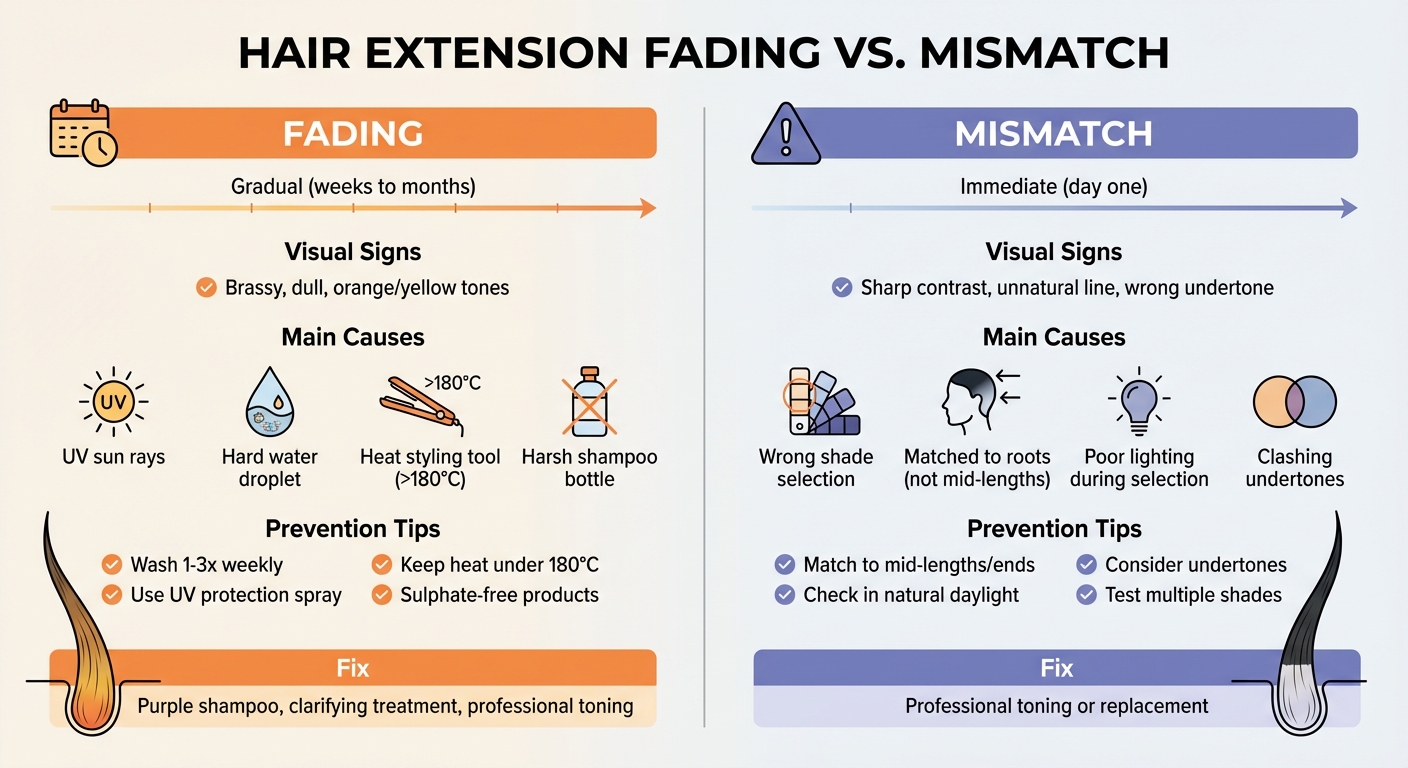
Hair Extension Fading vs Mismatch: Visual Comparison Guide
Color Lockdown: Ultimate Guide to Color Fade Prevention 🌈 | Aqua Hair Extensions
sbb-itb-dcde78e
What Is Hair Extension Colour Fading?
Colour fading, often referred to as oxidation, is a chemical reaction that causes the pigments in your hair extensions to break down, shift, or lose their intensity. Unlike natural hair, extensions lack the protective oils produced by the scalp, making them vulnerable to elements like oxygen, light, heat, water, and certain products.
Most extensions begin as dark brown and are chemically treated to achieve lighter shades. This process makes the hair more porous, increasing its susceptibility to pigment loss. Christian Michael Hair Extensions describes oxidation as:
"Oxidation is a chemical reaction that happens when hair is exposed to oxygen, light, heat, water, or certain hair products. The pigments in the hair begin to break down, shift, or fade."
Because extensions don’t have the natural oil coating that protects real hair, lighter shades of extensions tend to lose their vibrancy much faster.
What Causes Colour Fading
Several factors can strip colour from your extensions, leaving them dull or brassy:
- Chlorine and salt water: These can wash out ashy and violet pigments, leaving extensions dry and brassy.
- Sun exposure: UV rays act as a natural lightener, breaking down dye molecules more quickly in extensions than in natural hair.
- Hard water: Minerals like calcium, magnesium, and iron in hard water form a film on the hair, dulling the colour and causing brassy or orange tones.
- Heat styling: Using tools above 180°C can damage the hair and strip away cooler tones, revealing warmer pigments underneath.
- Harsh shampoos and products: Shampoos with sulphates, high alcohol content, or an elevated pH can strip colour molecules. Additionally, sunscreen ingredients like Avobenzone or Octocrylene may react with UV light, turning blonde extensions pink or orange in as little as an hour.
How to Spot Colour Fading
Colour fading doesn’t happen overnight - it’s typically a gradual process. Here’s what to look out for:
- Blonde extensions: You might notice the loss of ash or cool tones, with the hair turning yellow, brassy, or orange as violet pigments fade.
- Brunette extensions: Fading often shows up as a loss of richness and vibrancy, with the hair appearing dull or developing unwanted red or warm undertones.
- Pastel and vibrant shades: These colours fade even faster, requiring more frequent touch-ups to maintain their look.
If your extensions seem lighter after sun exposure or contact with chemicals, chances are they’re fading. Up next, we’ll explore how fading differs from colour mismatch.
What Is Hair Extension Colour Mismatch?
A colour mismatch happens when your hair extensions don’t seamlessly blend with your natural hair. Think of it like wearing the wrong shade of foundation - something feels off right away. As Heather Collier from Cliphair explains:
"Much like makeup, it's as if you're wearing the wrong foundation shade – it sticks out like a sore thumb."
This mismatch becomes obvious as soon as the extensions are installed. The issue isn’t that the extensions have changed colour; they were simply never the right shade to begin with.
What Causes Colour Mismatch
A few common missteps can lead to a mismatch:
- Matching to the roots: Many people mistakenly choose extensions based on their roots, but extensions sit primarily along the mid-lengths and ends. Since roots are often darker and change as they grow, it’s crucial to match the visible part of your hair instead.
- Clashing undertones: Hair undertones play a big role. Whether your hair has warm (golden/honey), cool (ash/platinum), or neutral undertones, choosing extensions with a mismatched tone can make the blend look unnatural. For instance, pairing cool ash blonde extensions with warm caramel hair can create a dull, greyish effect.
- Lighting during selection: The lighting you use to pick your extensions makes a difference. Incandescent lighting tends to emphasise red, orange, and yellow tones, while fluorescent lights can make hair appear cooler and flatter. A match that looks perfect indoors may clash in natural daylight.
- Ignoring multi-dimensional tones: If your natural hair has highlights or lowlights but you choose flat, single-tone extensions, the difference will stand out. Similarly, dyeing your hair after selecting extensions can also lead to a mismatch.
By understanding these causes, you can avoid common pitfalls and identify mismatches right away.
How to Spot Colour Mismatch
A mismatch is easy to notice. You’ll see a sharp, visible line where your natural hair ends and the extensions begin, with no gradual blending.
The issue might be in the shade (how light or dark the hair is) or the tone (warm versus cool). Even if the shade seems correct, mismatched undertones can make the extensions look unnatural. This is something you’ll spot as soon as the extensions are installed. However, if your extensions initially looked fine but later seem off, that’s likely due to fading rather than a mismatch.
Fading Vs. Mismatch: Main Differences
While both fading and mismatch affect how your extensions look, they’re distinct issues with different causes and timelines. The easiest way to tell them apart is timing. A mismatch is obvious immediately after applying the extensions - it’s there from day one. Fading, on the other hand, happens gradually over time, often taking weeks or months as you wash and style your extensions.
The visual differences are also clear. Faded extensions lose their vibrancy, often appearing dull or taking on unwanted brass, pink, or orange tones. With mismatched extensions, the problem is an immediate lack of harmony between your natural hair and the extensions, either in shade or undertone, making them stand out from the start. While fading is a slow shift in tone, mismatch is an instant and noticeable clash.
The causes behind these problems are also unrelated. Fading happens due to factors like UV exposure, mineral build-up from hard water, frequent washing, and heat styling, all of which gradually strip away pigment. Mismatch, however, results from choosing the wrong shade before application. This often happens when extensions are matched to the wrong part of your hair - like the roots instead of the ends - or when colour is assessed under artificial light.
Here’s a quick comparison to make things even clearer:
Comparison Table
| Aspect | Fading | Mismatch |
|---|---|---|
| Timeline | Gradual; develops over weeks or months | Immediate; noticeable from day one |
| Visual Characteristics | Dullness, brassiness, or pink/orange tones over time | Discrepancy in shade or undertone |
| Primary Causes | UV rays, hard water, frequent washing, heat styling | Incorrect shade selection or lighting issues during matching |
| Prevention Methods | Use UV-protective sprays, limit washing to three times weekly, lower heat styling temps | Match to mid-lengths and ends, view swatches in natural light, focus on undertones |
| Correction Options | Purple shampoos, clarifying treatments, mineral removers, or professional toning | Professional colour correction or replacing extensions |
If you’re unsure which issue you’re dealing with, try looking at photos from when you first got your extensions. If they initially blended well but now look off, you’re likely facing fading. If they never matched from the start, it’s a mismatch.
How to Prevent and Fix Colour Fading
Prevention Tips
If you want your extensions to stay vibrant and natural-looking, managing how often you wash them is key. Stick to washing them just 1–3 times a week to help preserve the colour. When you do wash, use cool or lukewarm water - this helps keep the hair cuticles sealed, which locks in both moisture and pigment.
Choose your hair products wisely. Go for sulphate-free shampoos and conditioners specifically designed for extensions. Steer clear of anything that’s heavy on alcohol, protein, or keratin since these can dry out the hair. After washing, finish with a cold water rinse to seal the cuticles further.
Sun exposure can be a sneaky culprit for colour fading. Protect your hair by using a UV-protective spray or wearing a hat when you’re out in the sun. When heat styling extensions, tools should stay under 180°C–190°C, and always apply a heat protectant to avoid damage - especially for blonde extensions, which can turn brassy or yellow from excessive heat. If you’re swimming, rinse your hair with fresh water beforehand and apply a leave-in conditioner to form a protective barrier. For those dealing with hard water, consider installing a shower filter to reduce mineral build-up that can lead to discolouration.
By following these tips, you can limit fading. But if your extensions do lose their colour, there are ways to fix it.
How to Fix Faded Extensions
If your extensions have started to fade, the solution depends on the root cause. For mineral build-up from hard water (which often causes orange or brassy tones), a clarifying treatment or a product like Malibu C Hard Water Wellness can help remove iron and magnesium deposits. Blonde extensions that have turned brassy or yellow can benefit from a purple or silver shampoo used once every two weeks. Be cautious, though - overusing these shampoos can lead to over-toning.
For extensions that have lost their pigment entirely, a demi-permanent toner or colour gloss can bring back depth and vibrancy. Use a low-volume developer (3–6 volume) to minimise damage to the cuticles. These professional glosses can last up to six weeks and are a great way to maintain colour between salon appointments. After any clarifying or toning treatment, follow up with a deep conditioning mask to rehydrate the hair.
If you’re unsure or dealing with severe fading, it’s always a good idea to consult a professional stylist. They can assess the condition of your extensions and recommend the safest and most effective restoration method.
How to Prevent and Fix Colour Mismatch
Prevention Tips
Getting the colour right from the start saves both time and money. The key is to match your extensions to the mid-lengths and ends of your natural hair, not the roots. Roots are often darker and can create a noticeable line where your natural hair meets the extensions.
Always check colours in natural daylight - preferably near a window with indirect light. Artificial lighting can throw off tones, leading to poor shade choices. Look at your hair from different angles, as light reflects differently depending on movement. If you're stuck between two shades, go for the lighter one. It’s usually easier for a professional to darken extensions than to lighten them.
Pay close attention to undertones. Does your hair have warm hues like golden or honey, or cool tones like ash or platinum? A quick way to figure this out is by holding a strand of your hair against a plain white sheet of paper. Warm undertones will appear yellow or golden, while cool undertones may look grey or slightly greenish. If you've recently dyed your hair, wait a few washes before choosing extensions. This gives the colour time to settle into its final shade.
For hair with highlights or natural dimension, blending two or more extension shades can create a more realistic, multi-tonal effect. Many suppliers, such as Hair Wonderland, offer tools like hair extension shade finder services or sample packs so you can try shades at home before making a full purchase.
If these steps don’t work out, it’s best to seek professional help to correct the mismatch.
How to Fix Mismatched Extensions
Minor mismatches can often be fixed with professional toning. A skilled stylist will assess your hair’s porosity and use a demi-permanent toner to adjust the colour. Avoid DIY toning, as it can lead to uneven or overly saturated results.
For major mismatches, replacing the extensions is usually the better choice. Extensions are already chemically processed, so trying to lighten them further can cause permanent damage. A professional stylist can evaluate your situation and suggest the most effective solution.
Conclusion
If your extensions are losing their colour over time or never matched properly to begin with, identifying the issue is the first step towards the right solution. Fading extensions typically need restorative toning, while mismatched ones may require expert blending or replacement.
For fading, stick to washing your extensions 2–3 times a week with cool water and sulphate-free shampoos. Protect them from UV exposure using sprays or hats. If the issue is a mismatch, always match the colour to the mid-lengths and ends of your natural hair in natural light - never to your roots.
To ensure longer-lasting results, it’s worth investing in high-quality extensions. Better extensions hold their colour and blend seamlessly with your hair. For example, premium Remy human hair extensions retain their natural cuticle layer, making them less porous and better at resisting damage from the environment. Hair Wonderland’s Seamless Set 22" ($499.00) is a great option, offering consistent colour from root to tip and a durable double-drawn Russian/Mongolian design.
When in doubt, consult a professional stylist. They can determine whether your extensions need toning, blending, or even replacing. Regular in-salon maintenance every 5–6 weeks will help keep your extensions looking flawless as your natural hair grows. You can also use a hair extension maintenance planner to stay on top of your home care schedule. With the right choice, proper care, and professional advice, your extensions can always look effortlessly natural.
FAQs
Can faded extensions be re-coloured safely?
Yes, you can re-colour faded extensions safely, but it’s a good idea to leave this to a professional stylist. Extensions tend to be more porous than natural hair, which means they can absorb colour unevenly or react unpredictably. A stylist has the expertise to minimise the risk of damage and achieve a more consistent, polished result.
How do I tell undertone mismatch from brassiness?
To tell the difference between undertone mismatch and brassiness, focus on the tones in the hair. Brassiness typically shows up as warm yellow or golden shades, while undertone mismatch leans towards cooler bluish or pinkish hues. Brassiness happens due to excessively warm tones, whereas undertone mismatch stems from the hair having an overall cool or neutral tone.
Will purple shampoo damage my extensions?
Purple shampoo can be used on hair extensions, but it requires caution. If overused, it may dry out the extensions and lead to damage. To avoid this, use it sparingly and only when needed. Always follow up with a moisturising conditioner to help keep the extensions soft and in good condition.