


Balayage and highlights are two popular hair colouring techniques in Australian salons, and choosing the right extensions for either style depends on how each method blends with your natural hair. Balayage creates a soft, natural gradient, while highlights add defined, bright streaks. Extensions not only add length but also enhance colour depth. Here's what you need to know:
- Balayage Extensions: Match mid-lengths and ends to replicate the gradient. Use multi-tonal or "balayage melt" extensions for a natural look. Clip-ins and tape-ins work best.
- Highlighted Extensions: Match the lightest tones in your highlights. Multi-tonal or double-drawn vs single-drawn extensions are ideal for precision. Tape-ins, clip-ins, and nano rings are good options.
Key Differences:
- Balayage is low-maintenance (touch-ups every 12–16 weeks) and blends easily with extensions.
- Highlights require more frequent upkeep (every 6–8 weeks) and need precise colour matching for extensions.
Quick Tip: Always check colours in natural daylight for accuracy and style extensions with soft waves for a unified look.
Quick Comparison
| Feature | Balayage Extensions | Highlighted Extensions |
|---|---|---|
| Colour Match | Focus on mid-lengths and ends | Match lightest tones in highlights |
| Best Extensions | Multi-tonal, balayage melt, clip-ins | Multi-tonal, double-drawn, tape-ins |
| Maintenance | Low (12–16 weeks) | High (6–8 weeks) |
| Styling | Soft, sun-kissed look | Defined, structured streaks |
Balayage offers a natural, low-maintenance option, while highlights provide a bold, structured effect. Choose extensions based on your colouring style and maintenance preferences.
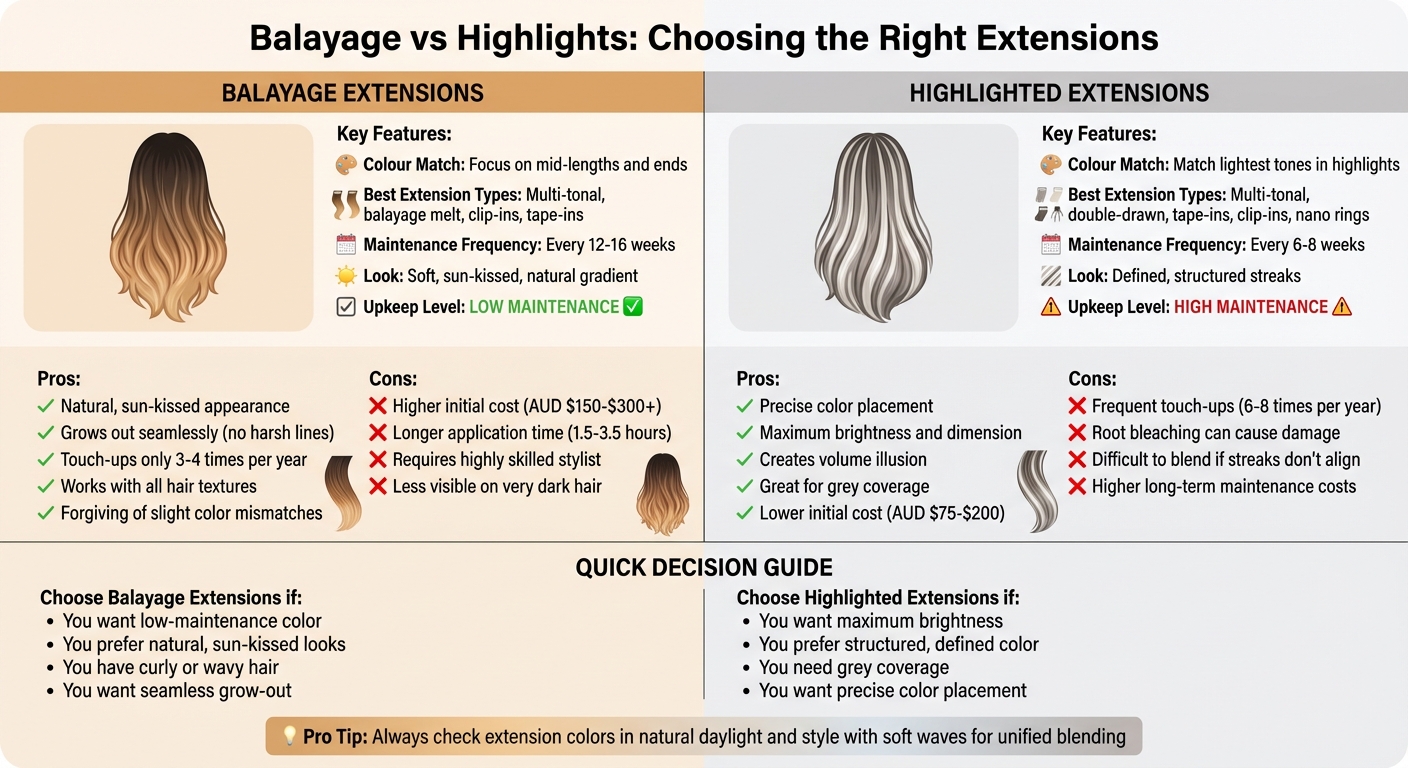
Balayage vs Highlights Extensions Comparison Guide
How to blend Balayage Highlights Extensions - LUXURY FOR PRINCESS
sbb-itb-dcde78e
Blending Extensions with Balayage
Balayage offers that soft, natural colour transition that feels effortlessly sun-kissed, but it also means you need a more nuanced approach when blending hair extensions. Instead of matching a single solid shade, the goal is to replicate the multi-dimensional, hand-painted effect.
Choosing the Right Shades for Balayage
Getting the right colour match is crucial when working with balayage and extensions. Focus on matching the extensions to the mid-lengths and ends of your hair, where the balayage effect is most visible. Multi-tonal extensions are a great choice since they feature a mix of shades in each strand, mimicking the natural variation of hand-painted highlights.
"Always match your extensions to the lightest tone in your hair, not your darkest. It's easier to tone down warmth with gloss or purple shampoo than to lift a shade that's already too dark."
Pay attention to your hair's undertones. If your balayage leans towards warm honey or caramel tones, extensions with cool ash shades will stand out in a way you don’t want. For a smooth blend, look for "rooted" or "balayage melt" extensions that naturally transition from darker roots to lighter ends. And here’s a tip: always check colours in natural daylight, as indoor lighting can distort the tones.
Best Extension Types for Balayage
Clip-in extensions work wonderfully with balayage because they can be positioned to align with your hair’s natural colour transition points. Plus, they’re low-maintenance - you can skip professional appointments and simply remove them whenever you want to show off your natural hair. If you’re looking for a more seamless, everyday option, tape-ins are a great alternative. They sit flat against the scalp, creating an invisible blend.
For the best results, opt for 100% Remy human hair rather than synthetic options. Human hair can be heat-styled to match your natural texture, which is essential for blending those multi-tonal colours. High-quality balayage clip-in sets typically range from 130 g for subtle volume to 220 g for a more dramatic, fuller look. Once you’ve chosen the right extensions, style them to merge flawlessly with your natural hair.
Styling Tips for Balayage Extensions
To create a cohesive look, add soft curls or waves with heat tools. This helps mask any visible distinctions between your natural hair and the extensions. It’s all about creating that effortless, blended finish.
Blending Extensions with Highlights
When working with highlighted hair, achieving a seamless blend with extensions requires attention to detail. Unlike balayage, which has a softer, more natural gradient, highlights are more defined and structured. This means your extensions need to match the lighter sections of your hair pattern and tone perfectly.
Colour Matching for Highlighted Hair
Highlights often combine lighter shades with contrasting tones, making colour matching a bit of an art. Focus on matching your extensions to the mid-lengths and ends of your hair, where highlights are most prominent, rather than the roots. Multi-tonal extensions - strands that include two or three shades - are ideal for replicating the natural variations created by highlights.
To ensure accuracy, check your colour match in natural daylight. When in doubt, choose extensions that match the lightest highlight in your hair. It’s easier to tone down lighter extensions with purple shampoo or a gloss treatment than to lighten darker ones. If you’re unsure, consulting a professional can help you avoid a mismatched look. Once the shade is sorted, selecting the right type of extension ensures everything blends smoothly.
Best Extension Types for Highlights
Certain extension types work particularly well with highlighted hair:
- Double-drawn extensions provide consistent thickness from root to tip, which complements the structured look of highlights.
- Tape-in extensions are a great choice for daily wear, as they lie flat against the scalp, creating a nearly invisible finish.
- Clip-in extensions are perfect for temporary use, allowing you to add dimension and depth without long-term commitment.
- Nano ring extensions are discreet and ideal for placement near the face or hairline, thanks to their small, undetectable bonds.
Regardless of the type, choosing 100% Remy human hair ensures the extensions can be heat-styled and toned to match your natural texture.
Maintaining Extensions with Highlighted Hair
Proper care is crucial for maintaining the vibrancy of both your highlights and extensions. Highlighted hair, along with extensions, is prone to dryness, so hydration and colour care should be priorities. Use sulphate-free shampoos and hydrating conditioners to preserve the brightness of your highlights and prevent fading of the multi-tonal shades. When washing, focus shampoo on the scalp and avoid applying conditioner near the extension bonds to prevent slipping.
Detangle gently with a wide-tooth comb or a brush designed for extensions, starting at the ends and working your way up to minimise breakage. Always use a heat protectant before styling, and opt for low heat settings to maintain your colour tones. If your highlights take on unwanted brassy tones, a gentle purple shampoo can help neutralise the warmth without causing damage.
For the most natural look, have a stylist perform a "blend-cut" on your extensions while they’re in place. This technique involves layering the extensions to mimic the pattern of your natural highlights, ensuring a flawless finish.
Balayage vs Highlights for Extensions
Key Differences in Colour Blending
Balayage and highlights each bring distinct challenges when it comes to blending with extensions. Balayage, with its freehand sweeping technique, gradually builds brightness toward the ends, resulting in soft, natural transitions without harsh lines. This subtle gradient makes it easier to conceal attachment points and minor colour variations. In contrast, highlights rely on foils to create uniform ribbons of colour from root to tip. For extensions to blend seamlessly with highlighted hair, the streaks must match the natural highlights with precision, both in placement and tone.
The overall look also differs significantly. Balayage offers a relaxed, sun-kissed effect with smooth transitions, while highlights provide a more defined, high-contrast appearance with noticeable brightness. This means balayage extensions are more forgiving of slight mismatches, whereas highlighted hair reveals inconsistencies more easily. Tape-in extensions work well with both styles but are particularly effective with hand-painted balayage. These differences influence the advantages and limitations of each technique, much like choosing between Russian and Mongolian hair.
Pros and Cons of Balayage Extensions
Balayage’s blending style comes with its own set of benefits and challenges when paired with extensions.
| Pros | Cons |
|---|---|
| Creates a natural, sun-kissed look that mimics hair's natural growth | Higher initial salon cost (AUD $150–$300+) |
| Low maintenance, requiring a custom maintenance timeline with touch-ups only every 12–16 weeks | Longer application time (1.5–3.5 hours, depending on hair density) |
| Grows out seamlessly without harsh lines | Needs a highly skilled stylist to replicate the freehand pattern |
| Complements all hair textures, especially curly or wavy hair | May be less visible on very dark hair |
Pros and Cons of Highlighted Extensions
The structured nature of highlights offers a different set of strengths and weaknesses for extensions.
| Pros | Cons |
|---|---|
| Allows precise colour placement for maximum brightness | High maintenance, with touch-ups required every 6–8 weeks |
| Adds depth and dimension, creating the illusion of volume in thinner hair | Frequent bleaching at the roots can lead to damage |
| Works well for grey coverage and more structured styles | Difficult to blend if extension streaks don’t align with the foil pattern |
| Lower initial colouring cost (AUD $75–$200) | Higher long-term costs due to more frequent salon visits (6–8 times per year compared to 3–4 for balayage) |
Choosing the Right Extensions for Your Hair
When it comes to perfecting the look of balayage or highlights, selecting the right extensions is a game-changer. Instead of focusing on your roots, match the extensions to your hair's mid-lengths and ends - these are the key areas for balayage and highlights. Always let the lightest tones in your hair guide your choice. Why? Because it's much easier to tone down warmth with a gloss or purple shampoo than to lighten extensions that are too dark.
For the most natural effect, go for multi-tonal extensions. These include several shades within a single strand, mirroring the natural variation and shimmer of highlighted hair. If you're rocking balayage, look for extensions that mimic a natural fade for seamless blending. On the other hand, those with traditional foil highlights should opt for extensions that replicate the uniform streaks of this style.
Final Tips for Better Blending
Once you've chosen the perfect extensions, blending them properly is the next step. Professional cutting and styling are essential for achieving a flawless, natural finish. To ensure the best colour match, always compare extensions in natural daylight. After installation, ask your stylist to blend-cut the extensions, adding long layers or face-framing pieces that mimic your natural highlights.
Styling also plays a big role. Use soft curls or waves to merge your natural hair with the extensions. Curl them together in the same sections to create a unified texture and tone. As Maiden Hair Extensions explains:
The most natural blends don't match exactly; they mimic the way light moves through your real hair.
Why Hair Wonderland Extensions Work Well
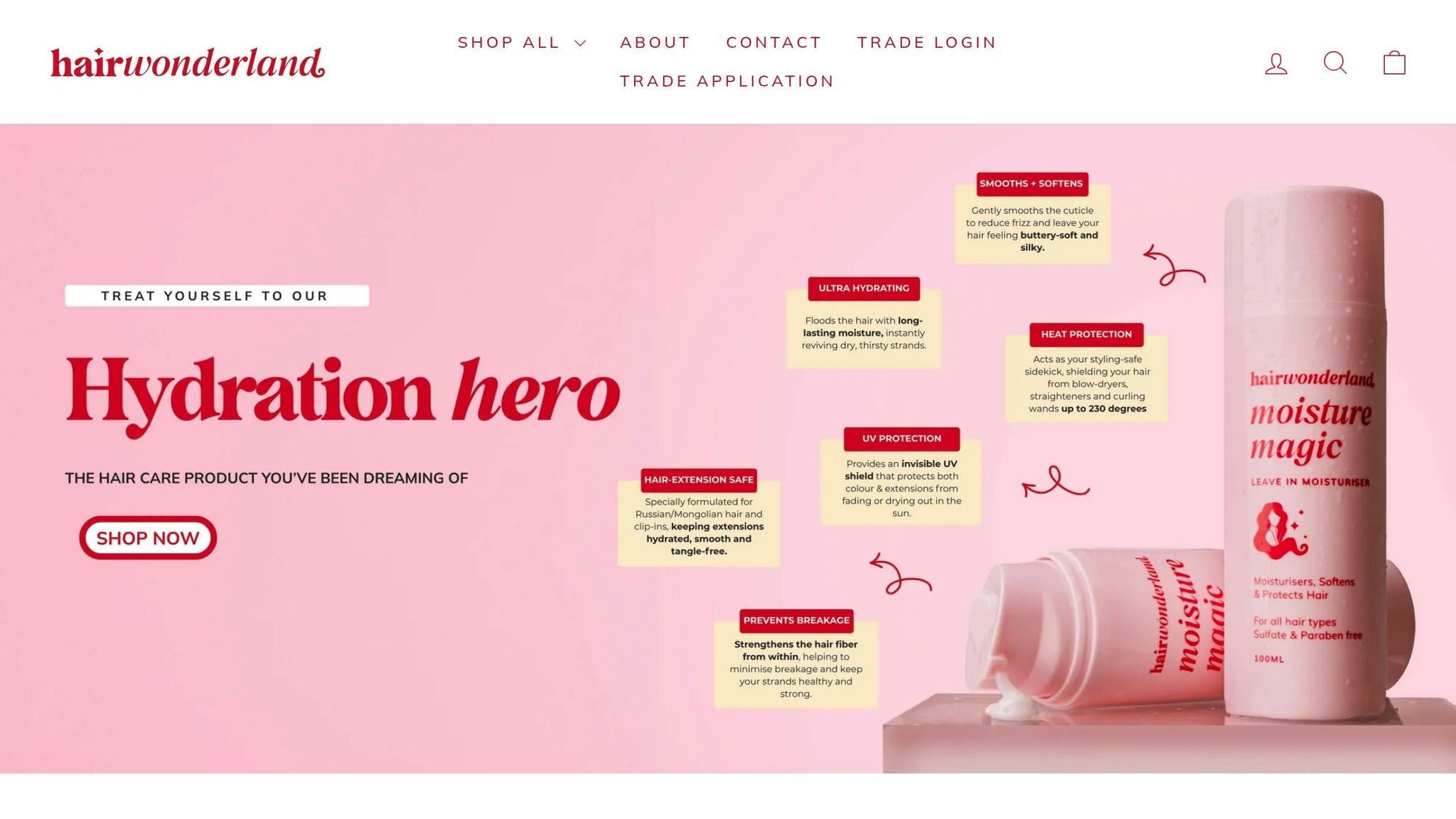
If you're looking for extensions designed specifically for seamless blending, Hair Wonderland has you covered. Their premium Russian hair extensions are crafted to maintain consistent thickness from root to tip. This feature is crucial for creating a smooth, voluminous blend with your natural hair. The double-drawn quality ensures the extensions retain their density, making them ideal for both the soft transitions of balayage and the structured patterns of highlights.
What sets these extensions apart is their premium human hair construction. By preserving a healthy cuticle structure, they not only look natural but also offer better durability. Whether you're going for sun-kissed balayage or defined highlights, Hair Wonderland extensions are built to blend effortlessly while delivering the comfort and longevity you need for a stunning transformation.
FAQs
Can I use the same extensions for balayage and highlights?
Yes, you can absolutely use the same extensions for both balayage and highlights. The key lies in how they’re applied and the look you’re aiming for. Balayage offers a soft, natural, sun-kissed appearance, while highlights bring more pronounced contrast and definition. High-quality extensions, such as those from Hair Wonderland, are designed to blend effortlessly with either style. For the best results, consult your stylist to ensure the extensions match your chosen colouring technique perfectly.
How do I choose the right tone and undertone for my extensions?
Matching your hair extensions to your natural hair involves more than just picking a similar shade - it’s about getting the tone and undertone right. Whether your hair has cool, warm, or neutral undertones, your extensions should complement these for a seamless blend. For instance, cool-toned hair works best with cool-toned extensions, while warm undertones pair better with warmer shades.
If you're unsure, seeking advice from a professional or using a colour-matching service can make all the difference. These experts can help align the tone and undertone of your extensions with your natural hair, creating a polished and natural look.
Should I get a blend-cut after installing extensions?
A blend-cut is the go-to finishing touch after getting extensions. It helps eliminate blunt or uneven ends, creating a smooth transition between your natural hair and the extensions. This step is especially crucial for styles like balayage or highlights, as it ensures the extensions match your hair’s colour and texture perfectly, giving you a polished, natural look.