


Clip-in extensions slipping out? Here's why it happens and how you can fix it:
- Why They Slip: Fine or silky hair, oily roots, improper sectioning, and skipping backcombing can make clips lose their grip.
-
Quick Fixes:
- Use dry shampoo or texturising spray for better grip.
- Backcomb the roots before clipping in extensions.
- Avoid freshly washed or overly oily hair.
- Choose the Right Extensions: Lightweight options like double-drawn Russian/Mongolian hair with flat wefts work best for fine hair.
-
Pro Tips:
- Add bobby pins in an 'X' at the roots for extra hold.
- Use light hairspray or anchor braids for all-day security.
- Proper sectioning ensures even weight distribution and a natural look.
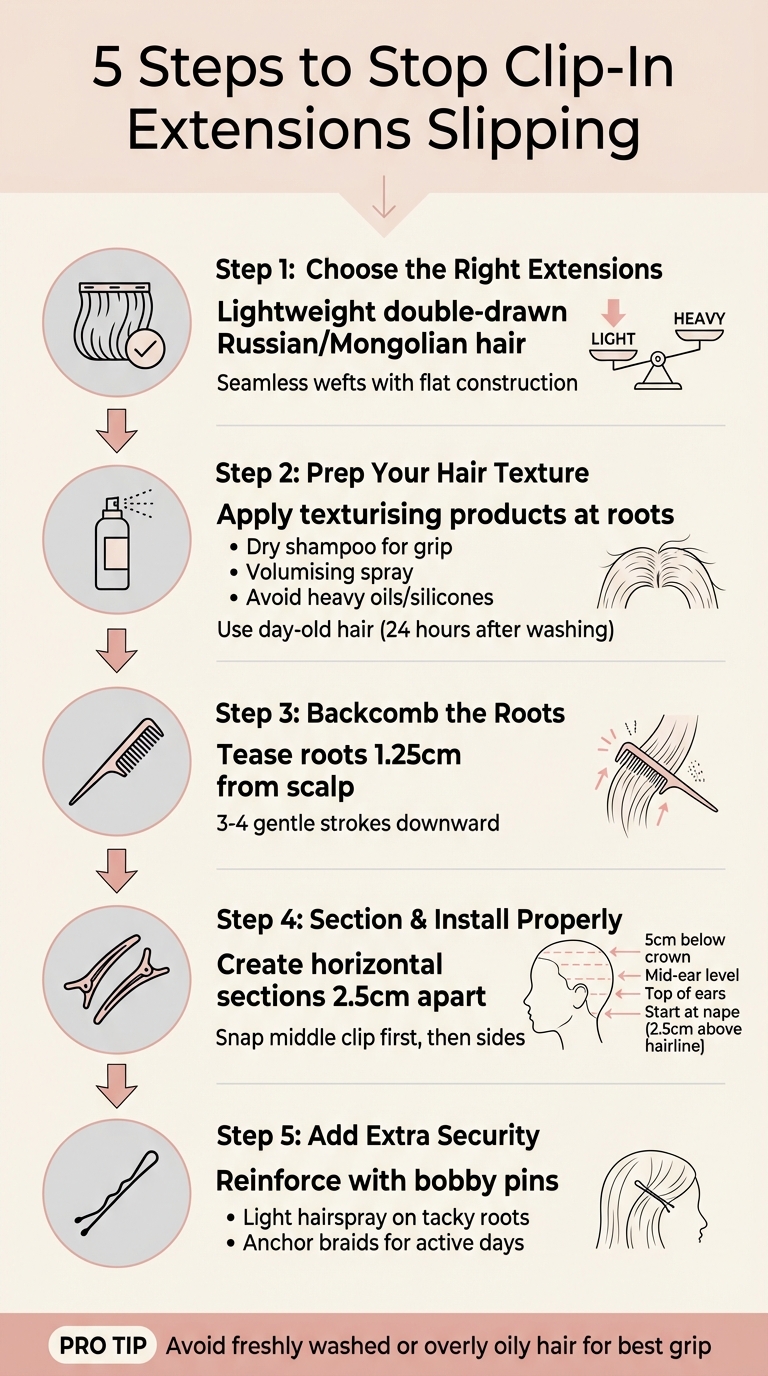
5-Step Guide to Prevent Clip-In Hair Extensions from Slipping
How to put in clip in extensions so they wont slip or fall out | 408beautybygreta
Why Clip-In Extensions Slip
Clip-in extensions can slip for a few key reasons: your hair's texture, how they’re installed, or the condition of your hair when applied. Let’s break down what might be causing the issue.
Fine or Silky Hair Texture
If your hair is fine or silky, it creates a surface that’s too smooth for the clips to grip effectively. Imagine trying to hold onto a silk scarf - it’s slippery, and the same principle applies here.
"Fine or thin hair can be slippery, making it hard for clips to grip." - CanadaHair.ca
The challenge isn't just the texture. Fine hair is often too delicate to handle the weight of extensions, particularly if you’re using thick, heavy wefts. It also lacks the bulk that provides a cushion for the clips to latch onto. Over time, the weight of the extensions can cause the clips to slide, especially compared to how they hold in thicker, coarser hair.
Incorrect Installation Methods
Even high-quality extensions can slip if they’re not installed correctly. One common mistake is skipping the backcombing step, which is especially important for smooth hair types. Backcombing at the roots creates the texture needed for the clips to anchor securely.
"Backcomb your tresses at the root... This insider tip creates texture for your clip-ins to stay put." - Abbey Wilson, Author, Cliphair
Another issue is poor sectioning. If you use uneven or crooked sections instead of straight, horizontal ones, the weight of the extensions isn’t evenly spread across your hair. This imbalance makes it harder for the clips to stay in place. Additionally, placing extensions too high - above the eyebrow line - leaves less hair for the clips to grip, making slippage almost inevitable.
Freshly Washed or Oily Roots
The state of your roots can also make or break the hold of your clip-ins. Freshly washed hair, while clean and silky, is often too smooth for the clips to grip securely.
"Extensions need something to grip onto. Freshly washed, silky hair can be too smooth, making clips slide." - Foxy Locks
On the flip side, oily roots can also cause problems. Natural oils act like a lubricant, coating the hair and making it slippery. If you add heavy styling products or conditioners near the roots, they can create a slick film that further reduces the clips' grip.
The ideal scenario? Hair that hasn’t been washed for about 24 hours. This "second-day" hair strikes a balance, offering just the right amount of texture without being weighed down by excess oil.
Selecting Clip-In Extensions for Fine Hair
If you have fine or silky hair, picking the right extensions is all about finding lightweight options that attach securely without causing stress to your roots. Heavy or bulky extensions can lead to slippage and even damage over time, so it's essential to choose wisely.
Lightweight and Seamless Options
Fine hair is easily weighed down, so lightweight extensions are a must. Seamless wefts are particularly effective because they provide a secure, low-profile attachment. Unlike traditional machine-sewn clip-ins, seamless extensions - like those using Invisi® weft technology - lie flat against your scalp. This not only ensures a more secure grip but also keeps the extensions virtually invisible, even under thin layers of hair.
For example, Hair Wonderland's Seamless Set 22" ($499.00) incorporates Invisi® weft technology, making it lightweight and comfortable. It also features silicone band technology, which offers a better grip compared to standard clips.
"These seamless clip-ins are so easy, it's like magic. Plus, they're super lightweight, so they won't put any stress on your natural hair." - Hair Wonderland
The quality of the hair itself is another factor that plays a big role in achieving a secure and natural look.
Double-Drawn Russian/Mongolian Hair Extensions
Double-drawn hair is specially processed to remove shorter strands, ensuring consistent thickness from root to tip. This creates a fuller look without adding unnecessary bulk where the extensions attach - an important consideration for fine hair that can’t handle extra weight.
Russian and Mongolian hair are popular choices because of their soft, silky texture and lightweight feel. These extensions blend seamlessly with fine hair, offering a natural appearance. When cared for properly, high-quality Russian/Mongolian hair extensions can last between 9 and 12 months.
"The double drawn Russian human hair is a game-changer." - Scarlett, Hairstylist
To protect your natural hair, it’s crucial to select extensions that match your hair’s density. Extensions that are too heavy can cause tugging, leading to slippage and potential damage.
Once you’ve chosen the right extensions, the next step is preparing your hair to ensure they stay securely in place.
Preparing Your Hair for Better Grip
Extensions won't stay in place if your hair is too smooth. For secure clip-ins, you need some friction at the roots. Spending a few minutes on this preparation can make all the difference between extensions that stay put and those that slide out.
Apply Texturising Products
Dry shampoo is a go-to solution for creating grip. Spray it directly at the roots to add texture and help the clips stay secure. Similarly, texturising and volumising sprays can work wonders. These products coat your hair strands, making them feel thicker and providing the friction needed to keep the clips in place.
Focus on the areas where you'll be attaching the extensions instead of treating your entire head. This method keeps the rest of your hair looking natural and free to move. If you're blow-drying, flip your head upside down to add lift and texture before clipping in the extensions.
Steer clear of products with mineral oil, petrolatum, or heavy silicones like dimethicone. These can make fine hair slippery and heavy - exactly the opposite of what you want. Instead, choose lightweight, water-based products like mousses or volumising foams that won't leave your hair looking greasy.
Once you've added texture, take it up a notch by teasing the roots.
Tease the Roots
Backcombing is crucial for creating the texture clips need to stay secure. Start by sectioning off the hair where you'll place the weft. Take a small section of hair, hold it taut, and use a fine-tooth comb or teasing brush to gently brush downward toward the scalp about three or four times. Focus on the first 1.25 cm of hair near the roots - this ensures a textured base that stays hidden once the extensions are clipped in.
"In most cases, especially with fine or straight hair, backcombing is a must as it creates a mini nest of texture for the clips to grip on too preventing them from slipping." - Brenda L., Cliphair US
Don’t go overboard, though. Too much teasing can lead to tangles or make the extensions sit unnaturally far from your scalp. For the best results, apply dry shampoo or texturising spray before teasing, then clip the extension directly into the backcombed section.
With your roots prepped, there’s one more thing to keep in mind: avoid freshly washed hair before applying extensions.
Skip Washing Before Application
Freshly washed hair is often too smooth and slippery for extensions to hold properly. Day-old hair, with its natural texture, provides much better grip.
"Avoid applying extensions on freshly washed hair. Clip-in extensions hold best on second-day hair or hair that has some natural texture." - Foxy Locks
If you must wash your hair before applying extensions, skip heavy conditioners, masks, or oils near the roots. These products can make your hair too slick for the clips to stay in place.
Once your hair is prepped with texture and grip, you're ready to move on to installing the extensions securely.
sbb-itb-dcde78e
How to Install Clip-In Extensions Correctly
Once your hair is prepped and ready, the next step is installing your extensions properly. The way you place them plays a huge role in keeping them secure and comfortable all day. Start at the nape of your neck and work your way up in horizontal layers for the best results.
Section Hair Properly
Grab a rat-tail comb to part your hair neatly at the nape, about 2.5 cm above the hairline [26,7]. Clip the rest of your hair up to keep it out of the way. As you move upward, continue creating horizontal sections: one at mid-ear level, another at the widest part of your head (in line with the tops of your ears), and the last section about 5 cm below your crown. For the sides, part your hair around 5 cm above your ears and at least 2.5 cm back from the hairline - this keeps the clips hidden. Always leave at least 2.5 cm of natural hair between the clips and your part to keep the extensions invisible. Proper sectioning ensures the extensions stay secure and distribute weight evenly.
Snap Clips Firmly Into Place
Open the clips and press them firmly onto your teased roots before snapping them shut [26,7]. Start with the middle clip when attaching multi-clip wefts. This ensures even placement and prevents sagging or shifting. Stretch the weft gently as you secure the remaining clips, keeping it flat and smooth against your head.
"Secure clips firmly but not too tight – comfort is key for all-day wear." - Heather Collier, Cliphair US
If a clip feels too tight or pulls, adjust it to a larger section of teased hair for better comfort.
Position Larger Wefts at Wider Areas
Place the larger wefts at the broadest parts of your head, typically around mid-ear level [24,25]. This helps distribute the weight evenly and prevents uneven pulling. Use smaller 2-clip wefts for the sides of your head and single-clip pieces to fill in sparse spots near the crown. Positioning the wefts based on your head's shape ensures a natural look and keeps them securely in place throughout the day.
Using these steps, you can achieve a flawless and secure fit with Hair Wonderland's premium clip-in extensions.
Additional Methods for All-Day Hold
Once you've nailed the basics of installation and hair prep, there are a few extra tricks to keep your extensions secure, especially if you have fine hair or plan to wear them all day. These methods are perfect for adding that extra layer of security and comfort.
Add Bobby Pins for Extra Grip
For a simple yet effective solution, use two bobby pins in an 'X' pattern at the root of each section. Snap the clip over the intersection of the bobby pins. This creates a solid anchor point for the clip, making it especially useful for areas where slipping is more common or for finer hair types. The best part? It adds grip without creating unnecessary bulk.
Use Light Hairspray on Roots
After teasing your roots, lightly mist them with an extension-safe, light-hold hairspray. Wait a few seconds until it feels tacky - this added texture helps the clips stay put. Just make sure to avoid heavy or alcohol-laden sprays, as these can lead to buildup over time.
Anchor Braids for Active Days
If you're planning a workout or have very fine hair, anchor braids can be a game-changer. Create small horizontal braids close to your scalp using the cornrow technique, leaving about 2.5 cm of space before your hairline. Secure each braid with a small elastic, then attach the clip directly onto the braid.
"The braided texture gives the clips something firm to grip onto, ensuring they stay in place even during active days." - Emma Howe, Hair Stylist
For extra hold, lightly spray the braid with hairspray before attaching your extensions. This combination not only keeps the clips securely in place but also spreads the weight of the extensions evenly, making them more comfortable during movement or high-energy activities.
Caring for Extensions While Maintaining Hold
Once your extensions are installed securely, taking good care of them is key to keeping them in place and in great condition. Proper maintenance ensures your clip-in extensions stay textured for a firm grip, while the right tools and storage methods protect both the extensions and your natural hair.
Use Proper Detangling Tools
When brushing your extensions, always hold them firmly at the clip base to avoid unnecessary pulling. Use a brush with soft, flexible bristles to reduce tension on your natural hair. Start brushing from the ends and work your way up towards the clips - this approach minimises breakage and stress on the hair shafts.
Consider tools like Hair Wonderland's Tangle Tamer Brush ($21.95) or The Detangle Brush ($29.95), both designed specifically for extensions. These brushes help protect the clips' grip while being gentle on the hair.
If you’re using detangling sprays or conditioners, apply them only to the mid-lengths and ends of the extensions. Keep these products away from the clips and roots to maintain their hold. For stubborn knots, use your fingers to gently tease them apart before brushing - this helps preserve the extensions and reduces shedding.
Store Extensions Correctly
Always ensure your extensions are completely dry before storing them. Damp extensions can cause the fibres to stick together, leading to tangles that require aggressive brushing, which can loosen the clips.
For optimal storage, Hair Wonderland's Clip In Bag ($54.00) offers satin-lined protection to minimise friction and static-induced tangling. This storage solution keeps your extensions neatly organised and maintains their natural flow, ensuring they're ready for secure application next time. Store the bag in a cool, dry place, away from moisture and dust, to keep your extensions in peak condition.
With proper detangling and storage routines, high-quality human hair clip-in extensions can last anywhere from one to three years.
Conclusion
Securing your clip-in extensions comes down to a few key factors: investing in quality extensions, preparing your hair properly, and using the right installation techniques. As Fabulive puts it, "Even premium extensions slip if applied incorrectly." Nail these basics, and you’ll enjoy all-day hold.
Premium double-drawn Russian or Mongolian clip-ins, like Hair Wonderland's seamless options, are designed with high-quality weft construction and balanced weight distribution. This thoughtful design minimises slipping by reducing downward pull, while durable clips ensure a firm grip that stands the test of time.
But it doesn’t stop at installation. Proper preparation is just as important. Adding texture, backcombing the roots, and steering clear of heavy conditioners near the scalp create the friction needed for your extensions to stay secure. For extra hold, consider reinforcing with additional techniques when necessary.
Maintaining your extensions is another essential step. Tools like the Tangle Tamer Brush ($21.95) and storage solutions such as the Clip In Bag ($54.00) help keep your extensions in top condition, making application easier and more secure every time.
Explore Hair Wonderland's seamless clip-in extensions and accessories, crafted to deliver natural, slip-free results you can rely on.
FAQs
How can I stop clip-ins slipping without teasing my hair?
To keep clip-in extensions from slipping without teasing, start with clean, dry hair since oily or damp strands can make it harder for the clips to hold. Choose high-quality extensions that blend well with your hair's texture for a more secure fit. When attaching, make sure to section your hair properly and close the clips firmly. If your hair is fine or silky, avoid using extensions that are too heavy, as this can cause discomfort and make them harder to stay in place.
How do I know if my clip-ins are too heavy for fine hair?
If you're wondering whether your clip-in extensions are too heavy for fine hair, watch out for signs like slipping or a feeling of heaviness that feels uncomfortable. Using extensions that are too heavy or not sectioning your hair properly can put unnecessary strain on your scalp and even lead to damage. Fine hair tends to hold lighter extensions much better, so choosing lightweight clip-ins and applying them carefully can make a big difference in avoiding these problems.
Can I wear clip-ins while exercising without them moving?
Yes, you can wear clip-in extensions while working out, but it’s important to take a few precautions to keep them in place. Make sure they’re clipped securely and choose hairstyles like braids or buns to limit movement. This helps reduce the chances of them slipping, even during intense workouts.