


Weft hair extensions can slip for several reasons, including improper installation, product buildup, or using extensions too heavy for your hair type. Slippage not only affects appearance but can also cause hair damage over time. To prevent this, follow these steps:
- Professional Installation: Ensure proper tension, bead size, and spacing during installation. Thin sections or loose beads increase slippage risks.
- Hair Preparation: Clean your hair thoroughly before installation to remove oils or product buildup.
- Choose the Right Weft: Use lighter, hand-tied wefts for fine hair and machine-sewn wefts for thicker hair.
- Regular Maintenance: Reposition extensions every 4–8 weeks to avoid strain and ensure secure attachment.
- Daily Care: Avoid oils near the roots, detangle gently, and use sulphate-free shampoos.
High-quality products like Hair Wonderland’s Invisi® wefts and tools like the Tangle Tamer Brush can help maintain secure, long-lasting extensions. Proper care extends weft lifespan by months, reducing slippage and preventing damage.
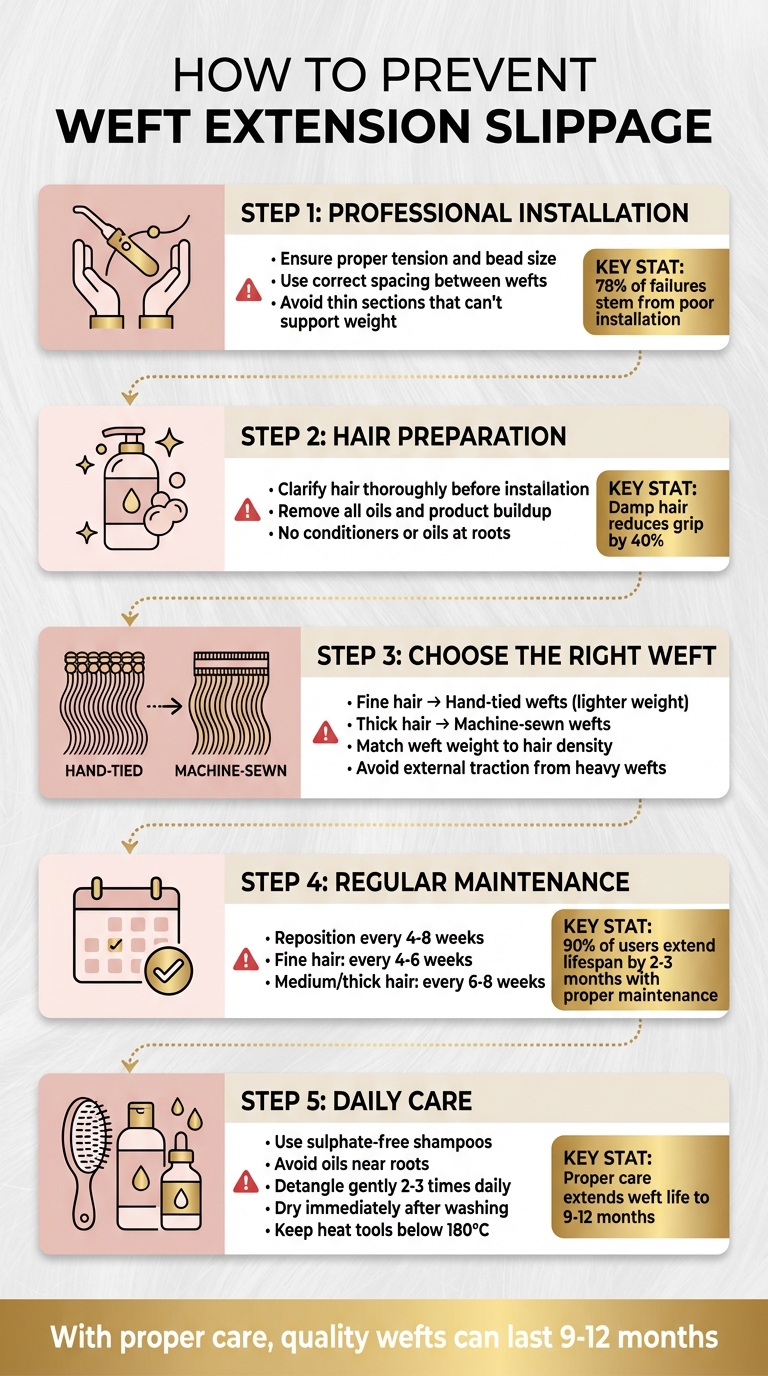
5 Essential Steps to Prevent Weft Extension Slippage
How to fix a slipped bead on weft hair extensions #weftextensions #wefthair #hairextensions #hacks
Why Weft Extensions Slip
Understanding the reasons behind weft extensions slipping can help prevent it from happening. Often, the root cause comes down to installation mistakes. Errors like uneven tension, loose beads, or improper spacing can lead to the weft sliding down the hair shaft over time. As Prolonged Hair explains:
Slippage often occurs when the hair sections are too fine to support the weft, the bead size is incorrect, or styling products have built up at the root.
Let’s break down the key factors that impact the grip and longevity of weft extensions.
Installation Mistakes
Proper technique is everything when it comes to securely installing wefts. Using sections that are too thin can create excessive tension and leave too few anchor hairs to hold the weft in place. Similarly, choosing the wrong bead size for the hair’s thickness can reduce the grip needed for stability. Yovanka Loria highlights this:
Tension is the foundation of a healthy scalp when it comes to weft extensions.
Another common issue is failing to clarify the hair before installation. Residual oils or product buildup can act as a lubricant, making the weft more likely to slip. Additionally, not sealing the cut edges of the weft can weaken the track’s structure, further compromising its hold.
Hair Type and Texture Problems
The texture and density of your hair play a big role in how well wefts stay in place. Fine or slippery hair offers less friction for beads and threads to grip, making slippage more likely. Very thin hair might also lack the density needed to support the weight of a standard weft without causing strain. For these hair types, hand-tied wefts are often recommended because they are lighter, thinner, and less bulky than machine-sewn options. On the other hand, extremely smooth or factory-finished extensions can also be too slick for secure attachment.
Product Buildup and Oil at the Roots
Natural oils and heavy styling products around the roots can reduce grip by acting as lubricants. Harper Ellis Hair advises:
Clarify the client's hair thoroughly before installation - no conditioners, no oils.
For adhesive methods like tape-ins, exposure to oils or silicone-based products can weaken the bond, causing extensions to detach or slide down.
Wrong Weft Size or Weight
Choosing the wrong weft size or weight for your hair can also lead to slipping. If the weft is too heavy, it can cause the beads to slide down - a problem known as "external traction". This not only affects the extension’s hold but can also risk damaging the scalp. Onlypro Hair explains:
A proper weft installation is about precision, balance, and intention... even weight distribution [and] a foundation that respects the scalp.
For those with fine hair, hand-tied wefts are often the better option due to their lighter weight. Machine-sewn wefts, on the other hand, work well for thicker hair that can handle the added bulk.
Poor Care and Heat Damage
Maintenance is just as important as the installation itself. Allowing tangles to form adds weight and creates tension at the attachment points, while excessive heat styling without protection can weaken both the natural hair and the weft. Over time, this reduces the grip and can lead to slippage. Additionally, not repositioning the wefts regularly allows oil buildup, which can cause the extensions to shift downward.
How to Keep Wefts Secure
Securing wefts and keeping them in place involves a mix of professional care, quality products, and consistent daily maintenance. By following these strategies, you can ensure your wefts stay secure and last longer.
Professional Reinstallation Methods
Schedule a check-up and reinstallation every 6–8 weeks. As your hair grows, wefts naturally move away from your scalp, which can loosen their hold. During these appointments, a stylist can tighten attachment points and redistribute the wefts evenly.
Techniques like the LA Weave (using micro-rings and sewing) and the Beaded Weft Foundation (micro or nano rings paired with stitching) are excellent options for a secure and discreet finish. These methods, combined with a well-adjusted daily routine, provide lasting results.
Adjust Your Hair Care Routine
Your everyday hair care habits are crucial for keeping wefts in place. Avoid applying conditioners, oils, or heavy serums near the roots to prevent slippage. Instead, focus on hydrating treatments for the mid-lengths and ends of your hair.
When washing, use lukewarm water and shampoos free of sulphates and parabens. After washing, ensure the weft area is thoroughly dried - damp wefts can lead to bacterial growth and weaken their hold.
Statistics show that over 90% of extension wearers find that proper care can extend the life of their extensions by 2 to 3 months. Detangle your hair gently with a specialised brush, starting from the ends and working upward, to minimise stress on the wefts.
Choose Quality Wefts and Tools
The quality of your extensions and tools makes a significant difference in preventing slippage. For instance, Hair Wonderland's Seamless Set 22" ($499.00) is crafted from 100% Remy European Human Hair with aligned cuticles, reducing tangling and ensuring a natural look. The 200-gram weight and Invisi® weft technology provide a seamless blend without unnecessary bulk.
Invest in tools like the Tangle Tamer Brush ($21.95) or The Detangle Brush ($29.95), which are gentle on extensions and help reduce breakage. Always brush from the ends upward while supporting the top of the weft to avoid pulling on the attachment points.
Before installation, consider sealing your wefts with fabric glue or a weft sealer. Apply the sealant to both sides of the weft using a pointed nozzle, let it dry completely (this can take about an hour), and you’ll significantly reduce shedding and extend the life of your extensions.
Strengthening and Prevention Techniques
In addition to professional care, your daily habits can strengthen weft security. Use heat protectants and cooler styling settings to protect the weft threads. Stick to lightweight, non-greasy products, and use a soft-bristle brush or wide-tooth comb to detangle gently. After washing, pat dry with a microfibre towel and focus your blow-dryer on the roots using low heat to avoid moisture-related loosening.
On average, natural hair sheds 100–150 strands daily. Sealing your wefts and maintaining them properly ensures extension shedding stays within this natural range. Additionally, double-wefted hair - two tracks sewn together - provides better security, reduces shedding, and gives a fuller appearance.
sbb-itb-dcde78e
Maintaining Wefts Over Time
Brushing and Washing Guidelines
When brushing, always start detangling from the ends and work your way up, gently supporting the weft base to avoid unnecessary pulling. Aim to brush your extensions 2–3 times a day to prevent matting, and make sure to detangle thoroughly before washing.
When it’s time to wash, avoid circular motions that can lead to tangling. Instead, use vertical strokes to clean your extensions. Use a sulphate-free shampoo, focusing on your scalp and roots, while leaving the mid-lengths and ends for conditioner. Keep the conditioner away from the bonds and weft spine to minimise the risk of slippage. Rinse with lukewarm water to help smooth the hair cuticle, and always dry your extensions immediately using a blow dryer on a low-medium heat setting. Air-drying or sleeping with wet wefts is a no-go, as it can weaken the bonds and lead to matting.
When styling, keep heat tools below 180°C and always apply a heat protectant. Tools like the Styling Comb from Hair Wonderland ($12.95) are great for detangling without causing damage to the weft. Aim to wash your extensions every 7–10 days to maintain their freshness without stripping away essential moisture. With proper care, high-quality wefts can last up to 9–10 months.
Regular Repositioning Schedule
Proper cleaning and drying are essential, but don’t overlook the importance of regular repositioning to maintain your extensions and prevent scalp tension.
As your natural hair grows, the gap between your scalp and the weft widens, causing the extensions to swing more freely. This movement can strain your roots, potentially leading to damage or even bald spots. Additionally, since natural hair sheds around 100–150 strands daily, the section supporting the weft gradually thins, increasing the pressure on your hair over time.
To keep your extensions secure and your scalp healthy, schedule professional repositioning appointments. For medium to thick hair, plan these every 6–8 weeks, while those with fine hair should aim for every 4–6 weeks. During these visits, your stylist will redistribute the weight to a stronger section of hair and tighten the attachment points. With this routine, you can extend each installation cycle from 4–6 weeks to as long as 8–12+ weeks. In fact, over 90% of extension wearers report that regular maintenance adds an extra 2–3 months to the lifespan of their wefts.
Conclusion
Slipping wefts often stem from installation errors, product buildup, or mismatched weft weight - like using heavy machine wefts on fine hair. Additionally, damp hair can reduce grip by as much as 40%. To avoid these issues, ensure professional installation with proper tension control, select high-quality extensions, and schedule repositioning every 6–8 weeks. Ignoring these key steps can lead to breakage or failure in 78% of cases. A consistent approach like this not only prevents slippage but also helps extensions last longer.
For lightweight durability and consistent thickness, premium options such as Hair Wonderland's double-drawn Russian and Mongolian human hair extensions are a great choice. Pairing them with tools like the Tangle Tamer Brush ($21.95) can extend their lifespan to 9–12 months.
Keep your wefts secure by following essential care tips: install on dry hair, avoid heavy products near the roots, and reposition regularly. These simple practices can make all the difference in maintaining secure, long-lasting extensions.
Discover Hair Wonderland's premium extensions and maintenance tools at hairwonderland.com.au and see how quality and care can transform your experience.
FAQs
How can I tell if my weft extensions are slipping?
If your weft extensions are slipping, you might notice they feel loose or shift out of place during your daily routine. You may also see strands shedding when brushing or handling your hair, which can point to weak or improperly secured bonds. Another sign is if your extensions don’t feel as secure as they did initially or if you experience discomfort or tightness - these could all indicate slipping.
To avoid this, make sure your extensions are installed correctly and stick to a proper hair care routine. If you think your wefts are slipping, it’s a good idea to consult a professional stylist who can assess the situation and make adjustments. Opting for high-quality extensions, such as those from Hair Wonderland, can also help provide a secure and durable fit.
How often should I adjust my weft extensions to keep them secure?
To keep your weft extensions secure and comfortable, it’s best to have them adjusted or moved up every 6 to 8 weeks. This timeframe aligns with your natural hair growth, ensuring your extensions blend seamlessly and avoid issues like tangling or uneven tension.
Your exact maintenance schedule might differ based on factors like how quickly your hair grows, the attachment method used, and the care routine you follow. Regular upkeep doesn’t just maintain the natural look of your extensions - it also helps protect your hair’s health. By sticking to this schedule, you can keep your wefts secure and looking great for longer.
Can product buildup cause my weft extensions to slip?
Yes, product buildup can weaken the hold of your weft extensions. When oils, heavy conditioners, or styling products collect near the attachment points, they can reduce the grip, causing the extensions to slip. To avoid this, steer clear of heavy products and make sure your hair is thoroughly cleansed before installation. Regular upkeep and using products specifically made for extensions can help keep them in place and extend their lifespan.